I could say many things about All You Need is Kill, and all of them, no matter how contradictory, would be correct. This film has me more excited for the potential future of animation driven by humans than almost any other in the last few years. It was also disappointing. This film feels like a culmination of what the team at Studio 4C have learned over the past two decades. It feels like they learned nothing. This is a fresh take on a familiar story. It suffers the same problems, though.
What I can confirm without contradiction is this. All You Need is Kill is the latest film from Studio 4C directed by Kenichiro Akimoto, a debut work for the the man behind much of the CGI rigging and animation on the studio’s CG-driven featured over the past 10 years. This includes serving as the CGI director on Children of the Sea and art director on Poupelle of Chimney Town. The story, however, is no stranger to the big screen - Hiroshi Sakurazaka's light novel also became a Hollywood blockbuster when the Tom Cruise and Emily Blunt-fronted Edge of Tomorrow hit cinemas in 2014.
The story is a time loop action spectacle searching for meaning. In the original novel, Keiji Kiriya is a recruit for the United Defense Force fighting a war against alien invaders known as Mimics. One time in battle, facing certain death, he receives their hidden ability to transport back in time, causing him to endlessly repeat the day. One other, Rita Vrataski, also has the power and together they use the power to help turn the tide of battle.
While the Hollywood story sticks to this rather closely, the anime subverts this entirely. Rather than a sudden alien invasion, one night, a large alien tree named Darol falls from a meteor and begins to grow on the planet. Rita (Ai Mikami), the protagonist of this adaptation, is one of a number of people tasked with clearing it, which mostly occurs without incident. One year on, however, it suddenly sprouts monsters, and it’s only be ingesting its blood that she gains the power to loop back and repeat the day. Rough on the rules of combat at first she chooses to learn to save her colleagues and break from this, meeting one other, Keiji (Natsuki Hanae), who shares the power.
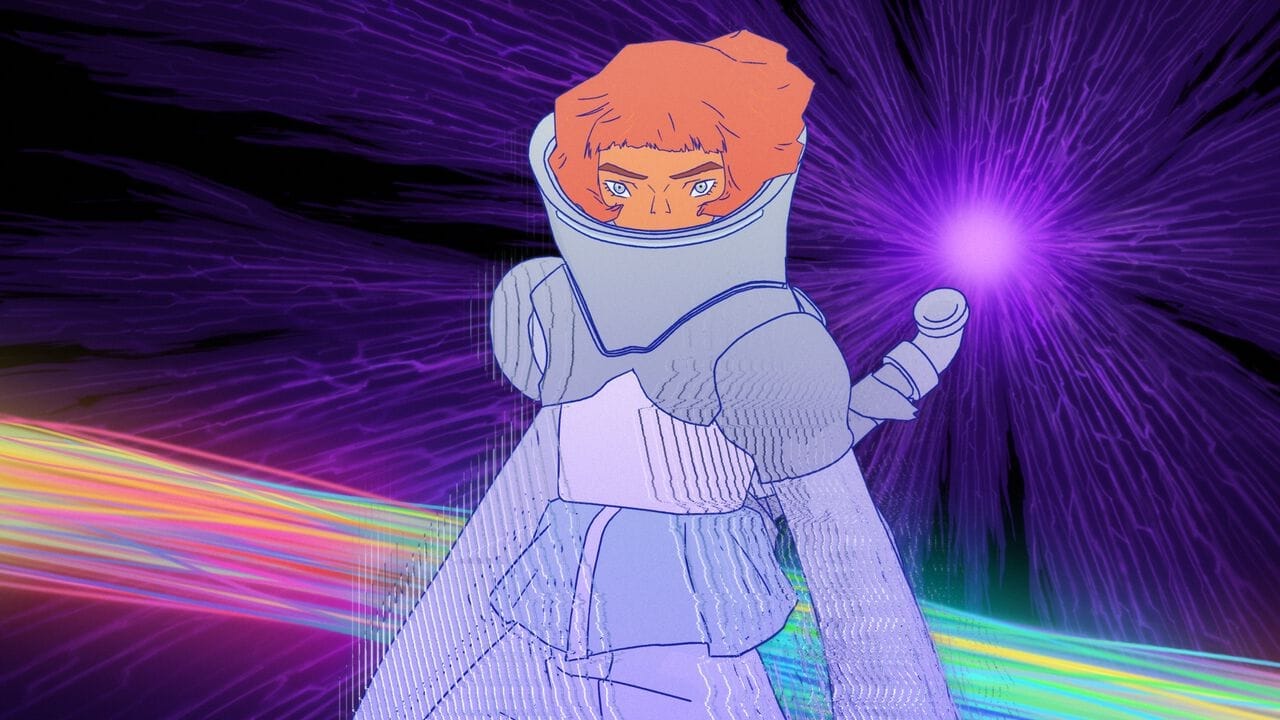
It’s an uplifting of setting and even protagonist that matches the drastic visual shift the movie also enjoys. Compared to the cover art of the original light novel or its manga adaptation, as well as the grungy sci-fi look of the 2014 film, this is a film bleeding with color. The lakes and nature around the tree burst into technicolor rainbows across the landscape, complimenting the bold character designs this film adopts. It’s this striking visual language that you’ll first notice, but it’s more than just for show in terms of the broader story.
More than in other adaptations that drop this for the spectacle of the action and time loop, this story’s core conceit is in drilling into the toll the time loop takes upon our duo, and the question of what could keep someone going after dying 100 times or more. It’s all about finding something worth fighting for.
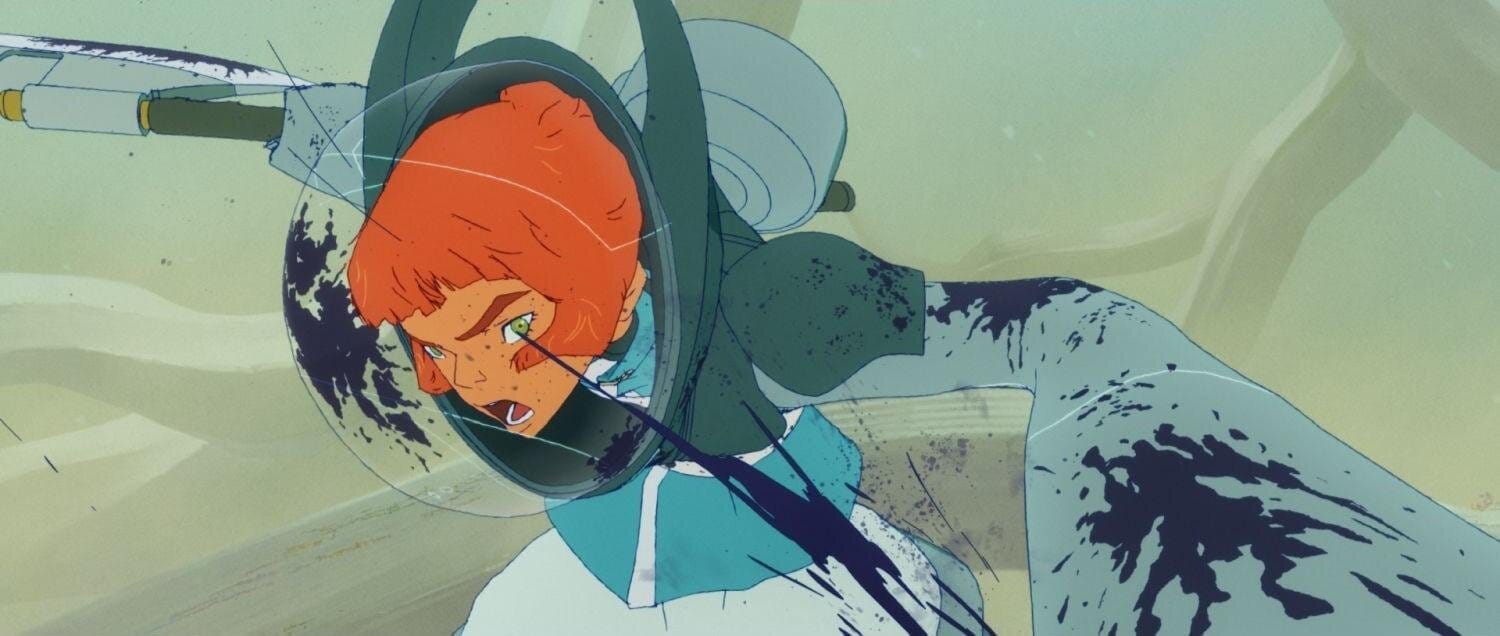
Rita cuts an isolated figure in the opening moments of the film. Having found her way to the job alone after events only explained towards its climax, she’s barely connected with any of her colleagues who more often bully her for her weird demeanor. She cuts a solitary presence as she works on the plant, and her first rough loops of death learning how to use her plantation suit-turned-combat uniform are as engaging to witness growth in repetition as it is painful to see her suffer.
Why should she bother to keep fighting to save people who don’t appreciate her? That’s when Keiji comes along, seeing her as a hero from afar and going as far as to silently upgrade her suit. It’s a shift in the core relationship of the duo that gives these characters a more natural connection than that of unusual colleagues with the same affliction. These are two outcasts who, for the first time, see hope and a reason to live and die and live again in the other. That allows them to see the beauty and color elsewhere, even in the things that seem broken like their hidden observatory.
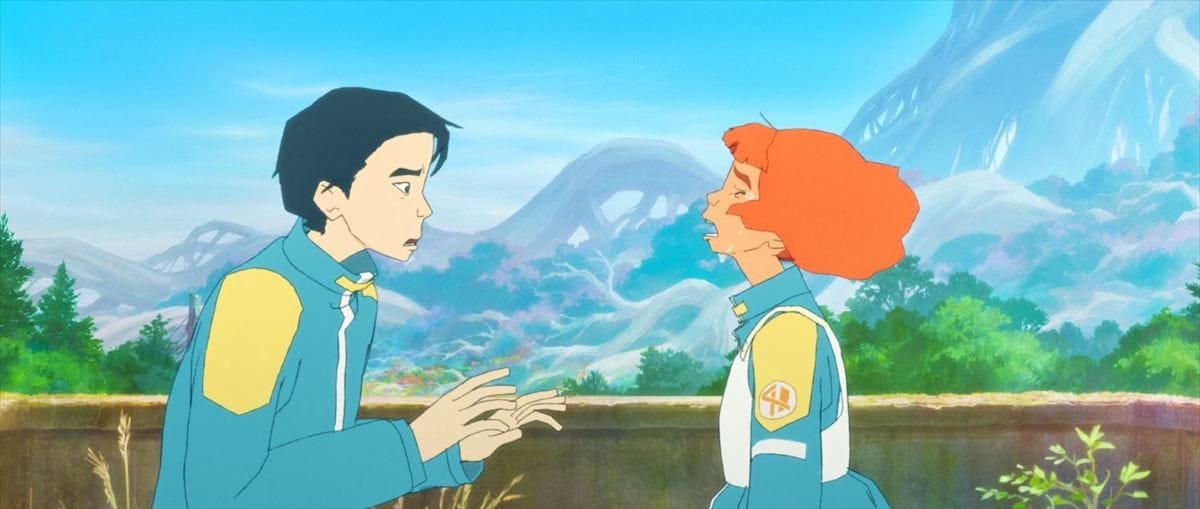
With this in mind, such bright visuals for such a bloody action-packed affair make sense and the core dynamic of our main due is also far stronger. When in motion, this film is also a genuine wonder. Casting minds back to 2008 and the release of Tekkonkinkreet by the same studio, you can see comparisons to this film in their approach to character and world design. Whereas that film used CG and imposed traditional animation over the top, however, All You Need is Kill is almost-entirely CG, as much as it can trick you otherwise in places, with some of the most genuinely-jawdropping artistic choices I’ve witnessed.
Using a flat and highly-stylized look to get as close to 2D animation while retaining the flexibility and fluid movement of CG animation, this movie feels like a genuine leap forward for what the Japanese industry has been capable of doing with the technology to date. It pushes what is possible to new levels, giving us battle sequences with the Mimics that I can’t recall seeing on screen quite like this. It is, in many ways, one of the best-looking animated films of the last few years, and one I can imagine teams both inside and out of Japan will gain inspiration from. The stylistic influence this film will inevitably have in pushing CG animation closer to the look of 2D will be interesting to follow in the coming years.
For this alone, the price of admission is worth it. I also can’t help but feel that I should be more infatuated with this film than I was. A film with such incredible progression of the medium and a testament to the innovation of human minds is saddled by a story that never feels able to match its intensity. With Rita alone for the first third of the film the constant self-monologue and heavy-handed learning curve feels repetitive, and while the relationship with Kaiji brings something new and sells the reason to keep fighting more than other attempts, it often labors the point.
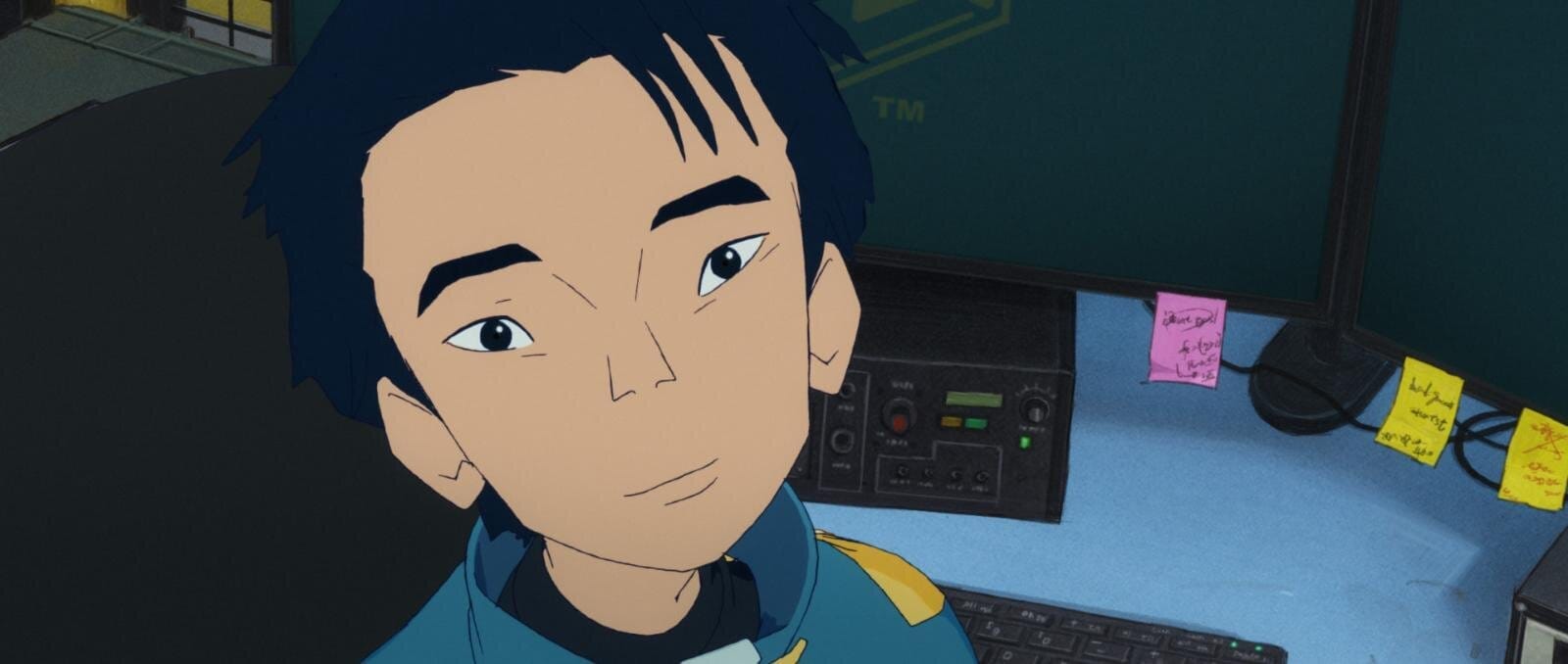
There’s only so many times we need to see them work together and improve the suit and see that gaming-esque continue screen before the point of the story becomes a bit too obvious. Without any other characters given more than a reactive one-liner or an exposition dump, only having these two interwoven characters robs this world of a humanity to protect beyond an occasional reoccurring face.
For a story whose emotional core is about more than believing in a self or partner but also in a world worth saving, particularly in this adaptation after both feel so wronged by a world is rendered so beautifully, why don’t we get to know its people more? Heck, why don’t we know more about our own duo’s difficult experiences before the loop until all-too-sudden flashbacks near the finale? Without that connection, or a third character to represent the world they fight for, the rush of this groundbreaking animation can at-times feel hollow and empty.
The story is lacking, an issue similarly felt with the studio’s most recent work on ChaO.
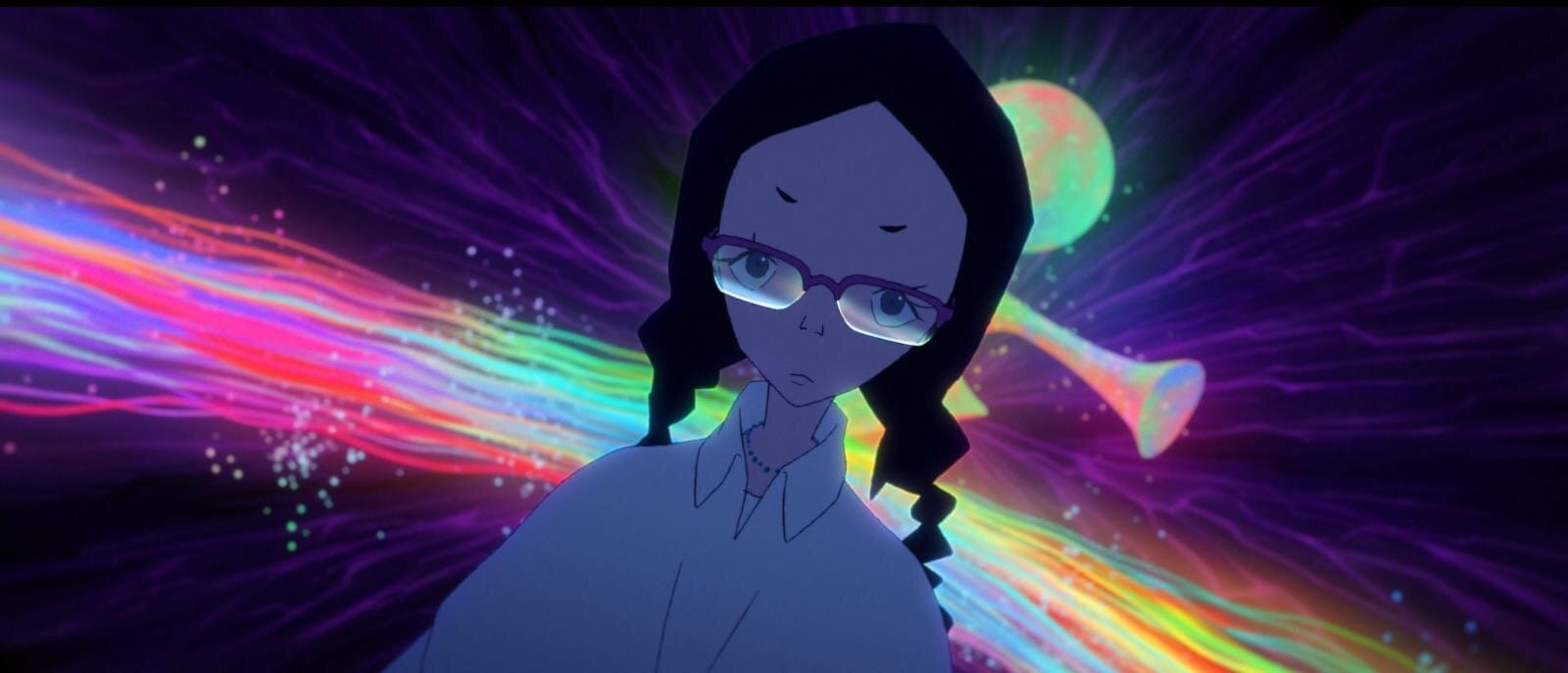
This is still a worthy cinematic experience, and one which will certainly become one of the more influential anime films of the early 2020s for the leaps forward it takes in its animation alone. As a piece of entertainment, however, for as good as it is in parts, a rough final act and a lack of depth motivated more by an attempt to keep the runtime below 90 minutes rob the film of its full potential. All You Need is Kill is an unconventional, idiosyncratic, singular, messy film, but I’m so glad it exists.