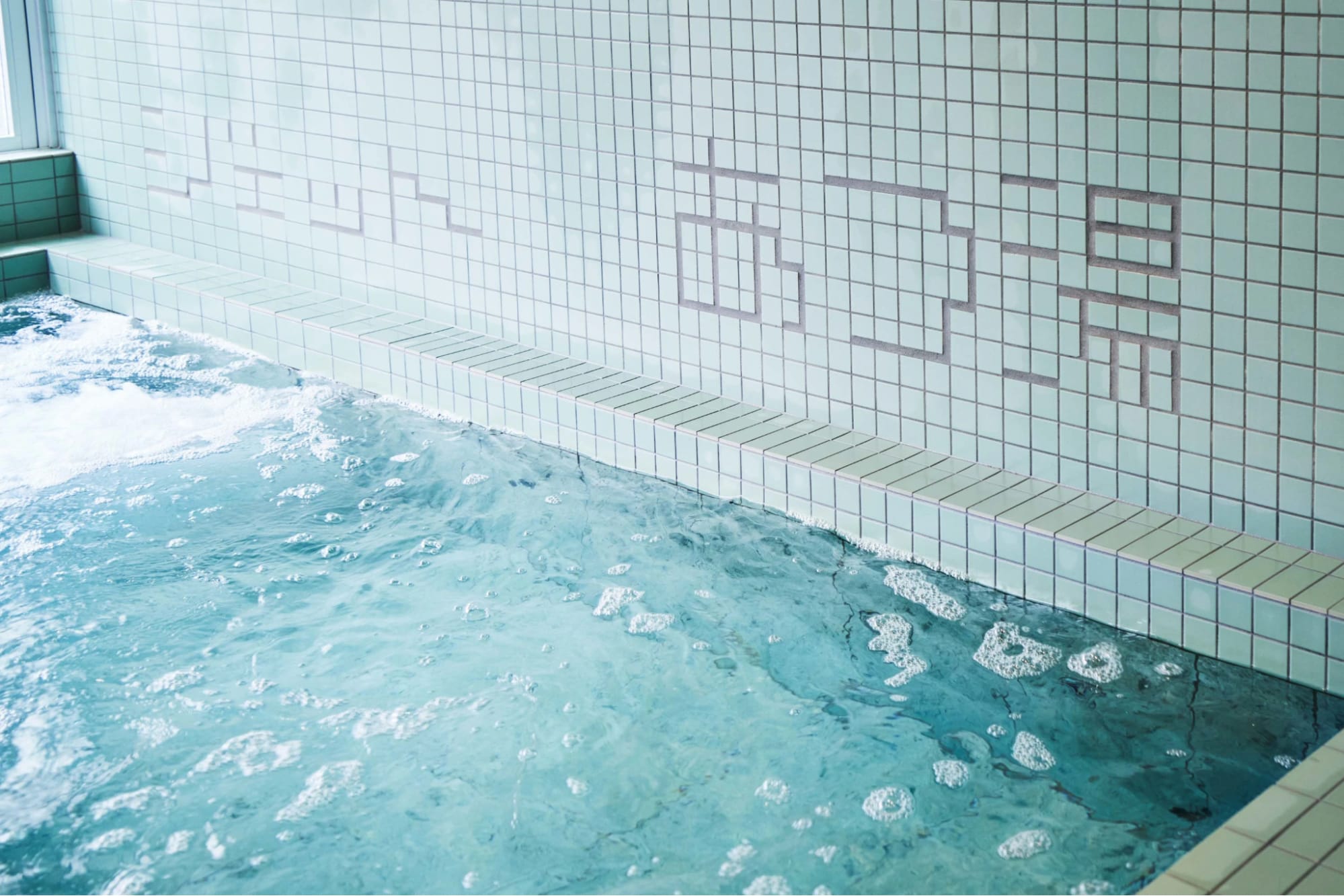
Summer has come and sloughed its humid body on the city once again. I often describe moving around in Tokyo during summer as “Swimming down the street” – the air is just that thick.
The oppression of the heat and humidity requires a total re-orientation of your relationship with the body: You start sweating from places you never even knew could sweat, and you envy the creatures lucky enough to have evolved gills instead of lungs. An old Japanese expression describes a futile effort as “pouring water on a hot stone”, as in ‘evaporating without effect’. Drinking water in summer feels the same. You’ve already sweat it out by the time you raise the bottle to your lips.
When leaving the house already feels like stepping into a sauna, you might as well visit a real one. This is how I’ve developed an expensive bathhouse habit: two showers a day doesn’t cut it any more. Whenever I’m visiting somewhere new, I find myself reaching for my maps app to check what bathhouses are nearby. If it’s a vice, at least it’s a clean one.
There’s something completely re-centring about the bathhouse experience that goes beyond the satisfaction of cleansing yourself. Maybe it’s the inevitable camaraderie of naked strangers. I’m no nudist, but the experience of stripping your vanity and pride in the process of collective bathing feels almost spiritual. If the heat of summer reminds you that your body is the subject of its environment, then its cleaning reminds you that it’s still yours to inhabit.
This is a guide to some of my favourite Onsen and Sento in Tokyo. It’s based on personal experience, so don’t take this as an absolutist ‘best of’ – there are over 420 Sento to experience in Tokyo alone! And if you’re a newcomer to the world of Japanese Bathhouses, check out our introduction to the key concepts and etiquette here.
Kosugi-Yu, Koenji
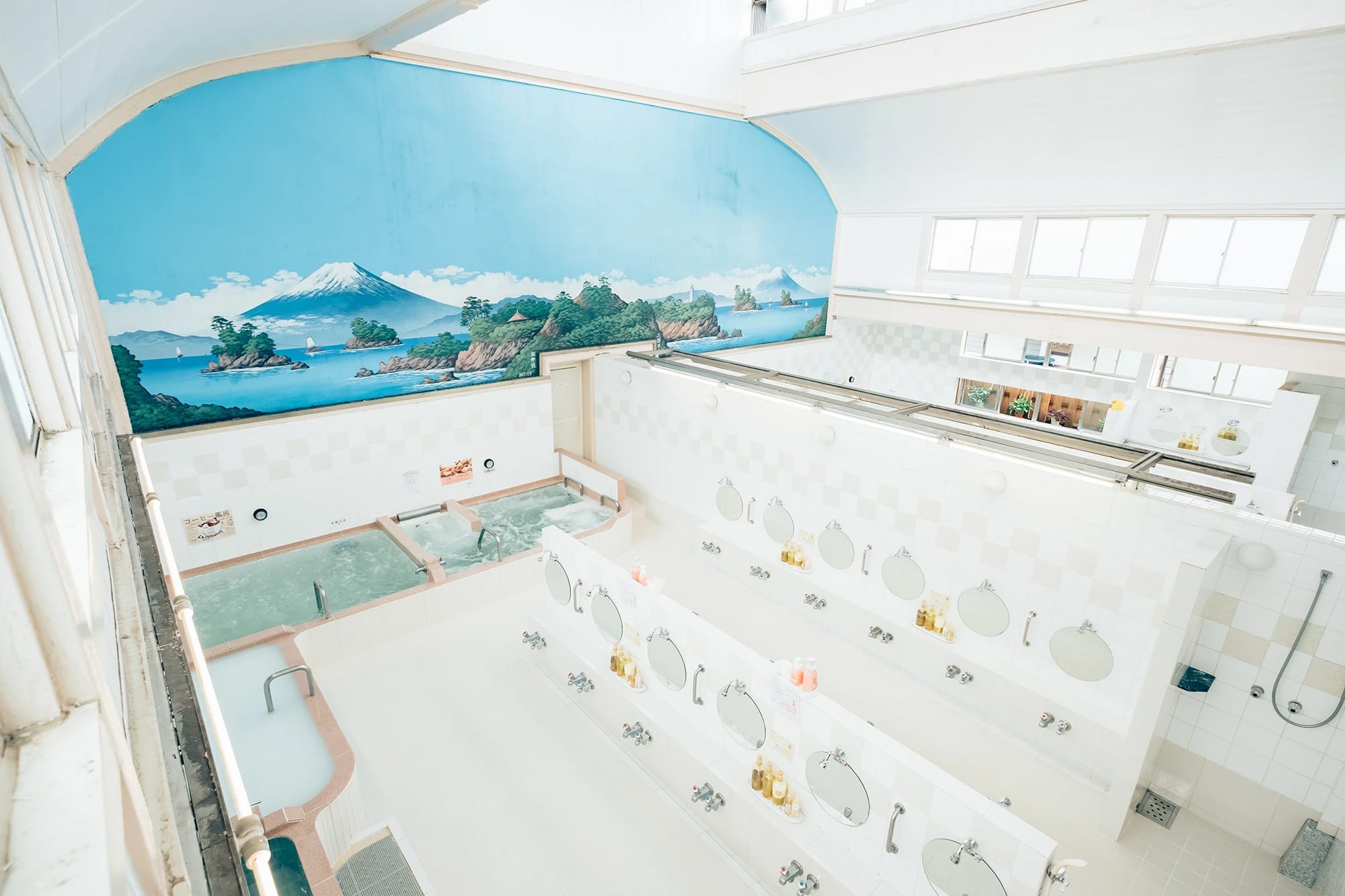
Located in Tokyo’s stylish Koenji neighbourhood, Kosugi-Yu is famous for its milk baths and authentic 1930s building. Although registered as a Tangible Cultural Property in 2020, the business’ third-generation owner continues to update and expand the bathhouse’s activities: The sento has recently opened an art gallery in its lobby and coworking space in the building adjacent, as well as a sister location in Harajuku’s Tokyu department store.
| Hours |
Mon–Fri: 14:00–25:30 Sat–Sun / Holidays: 8:00–25:00 |
|---|---|
| Closed | Thursdays |
| Entry Fee | ¥550 |
| Website | kosugiyu.co.jp |
Komae-yu, Komae
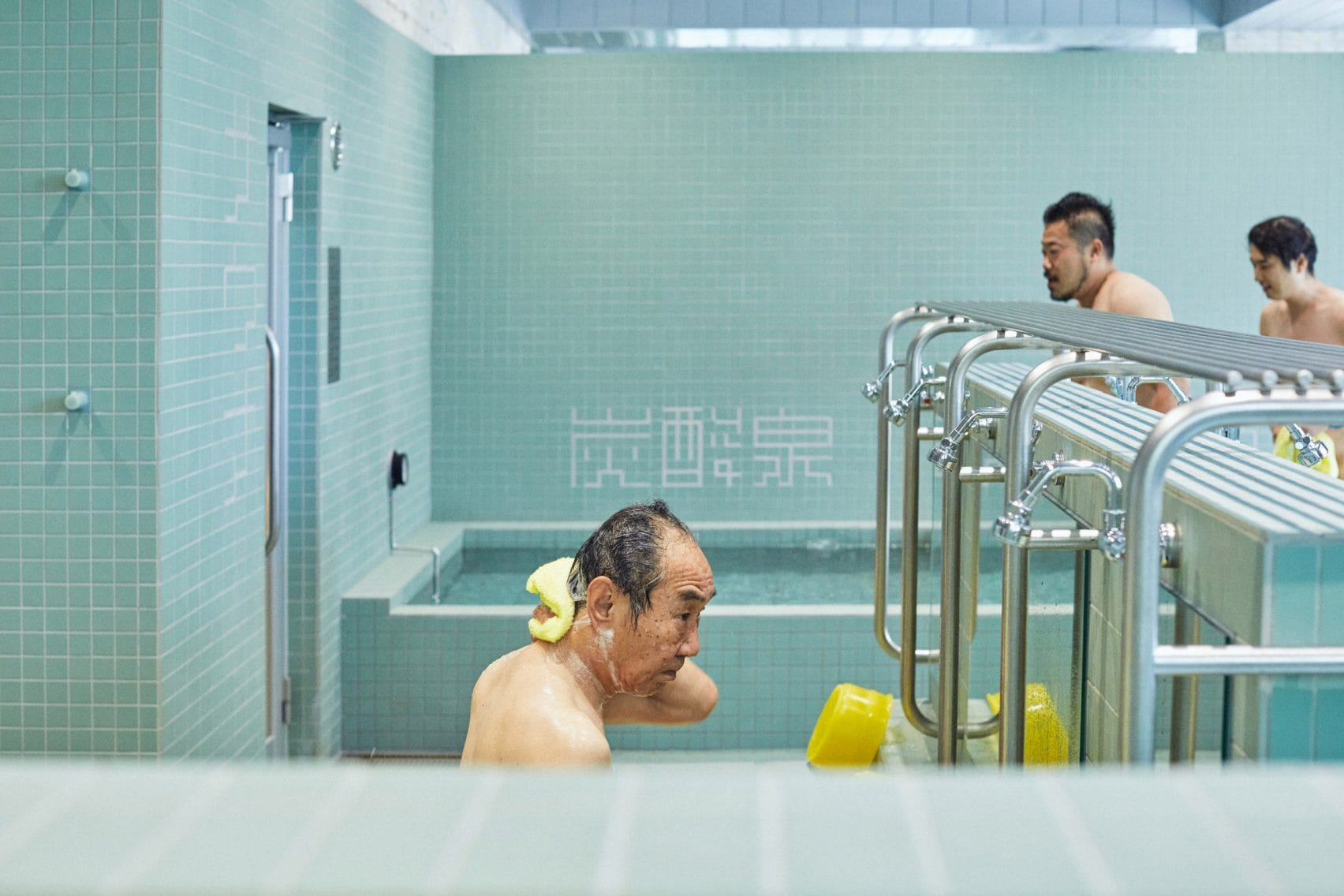
Although a little out of the way, Komaeyu is one of my favourite Sento in Tokyo. Remodelled in 2023 by Schemata architects, this is a thoroughly modern update of the original 1955 bathhouse building. Turquoise tiles are the main design detail, with creative usage of gaps between tiles to create signage. The sento offers a special carbonated bath as well as an airy cafe space.
| Hours | 13:00–23:00 |
|---|---|
| Closed | Tuesdays |
| Entry Fee | ¥550 |
| Website | komaeyu.com |
Hasanuma Onsen, Ōta
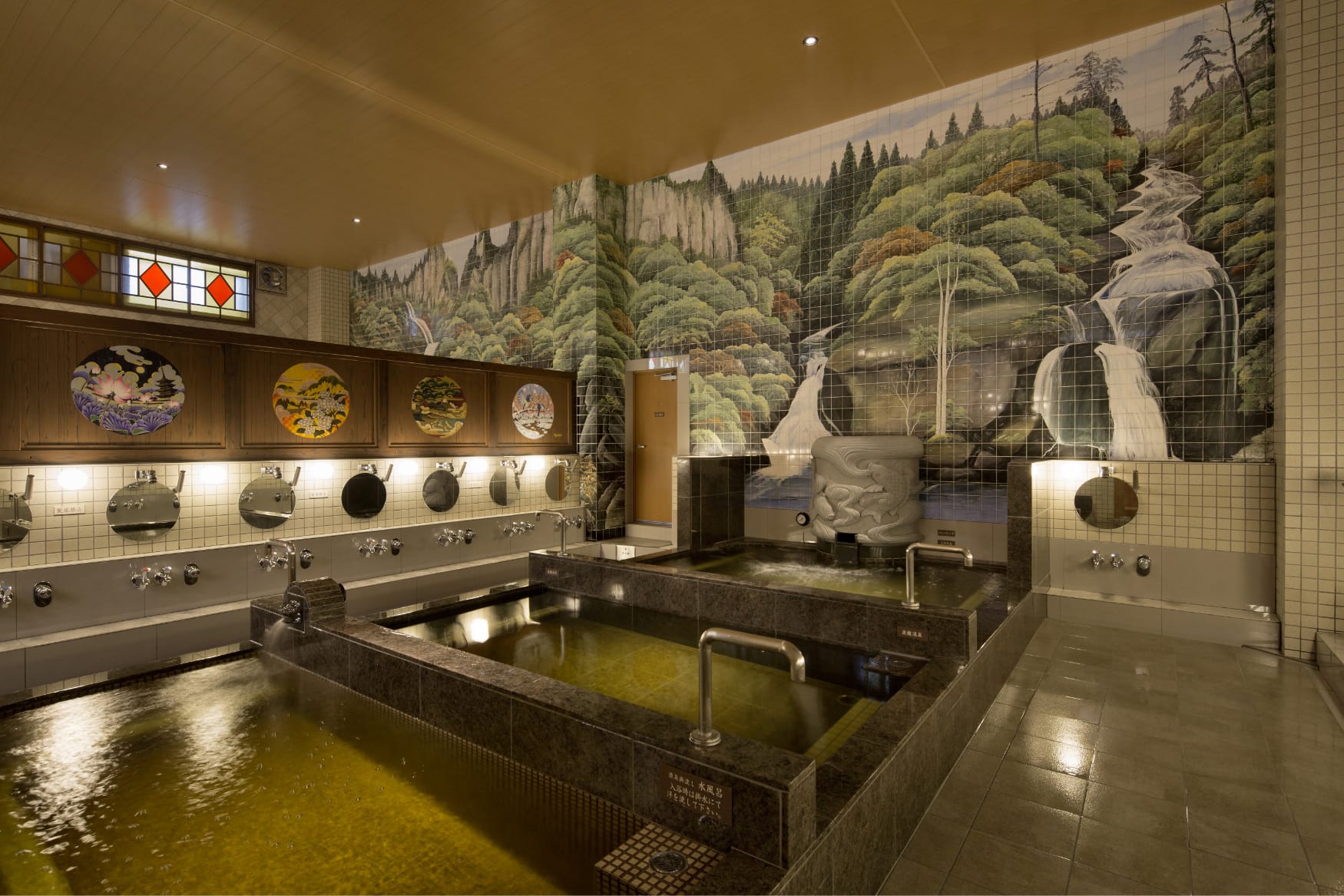
Located in Ōta-ku, Hasanuma Onsen’s interior is inspired by a combination of Matsuyama’s famous Dōgo onsen as well as 1920s architecture. The waters are sourced from a natural hot spring and have a faint yellow tint, with carbonated and cold-water baths also available.
| Hours | 15:00–24:00 |
|---|---|
| Closed | Tuesdays |
| Entry Fee | ¥550 |
| Website | hasunuma-onsen.com |
Edo-Yu, Ryugoku
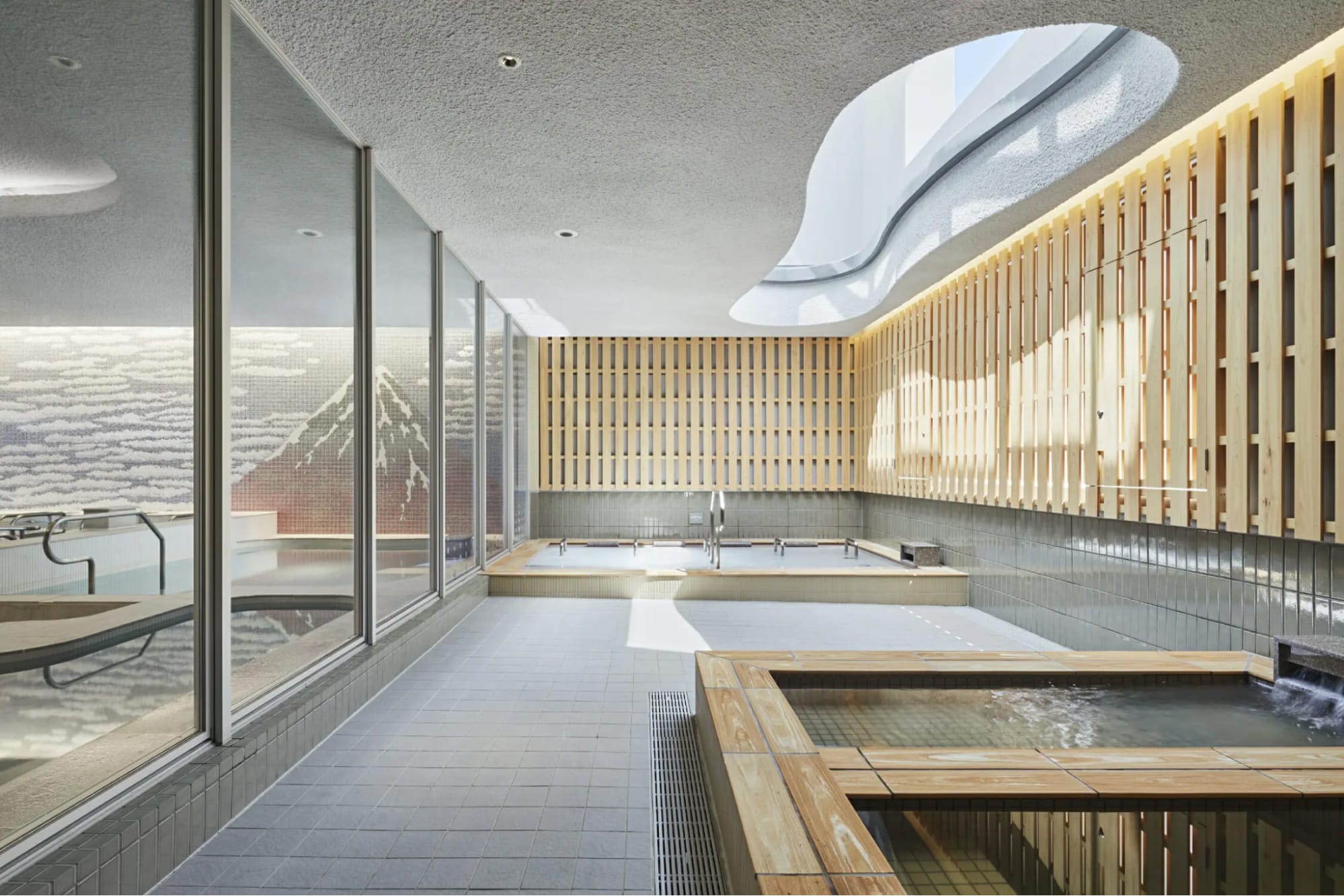
Edo-yu is a so-called Supersento– a multifloor spa complex with six baths, three saunas, massage rooms, three bedrock baths, a restaurant, a cafe, and four relaxation spaces. Located near the Edo-Tokyo museum and Hokusai museum, the building was designed by Kubo Tsushima architects to resemble the traditional Noren curtains that decorate the bathhouse entrance.
| Hours | 10:00–8:30 (next day) |
|---|---|
| Closed | Open year-round |
| Entry Fee |
¥2,970 (Unlimited) ¥2,500 (3 hours) ¥1,500 (60 minutes) |
| Website | edoyu.com/ryougoku |
| Notes | * Children under elementary school age are not permitted to enter. |
Shimizu-yu, Musashi-koyama
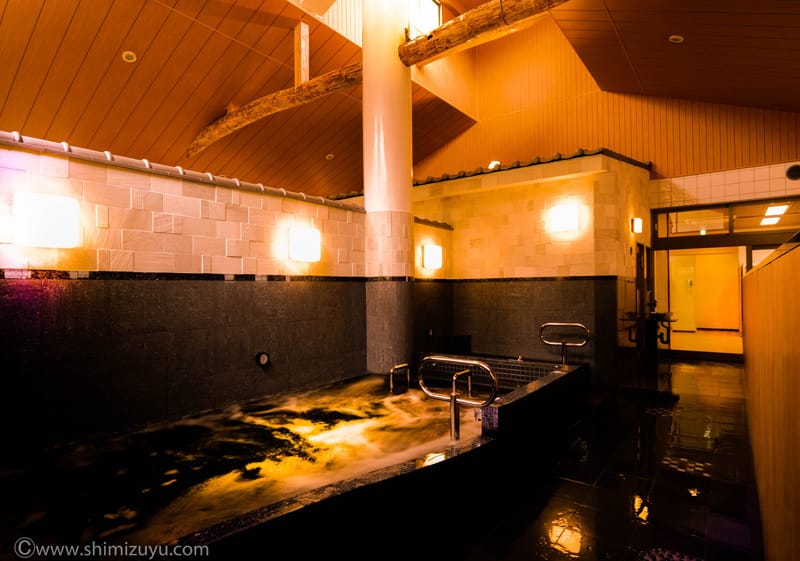
Celebrated for its black and gold waters, Shimizu-yu sources its waters from hot springs as deep as 1500 metres beneath the ground. Its outdoor ‘gold bath’ is rich in iodine, while the black waters are rich in Humic acid and Sodium Bicarbonate. Treasured by locals for generations, the waters’ high concentration of natural minerals are on par with famous onsen towns such as Arima and Kusatsu.
| Hours |
Mon–Sat: 12:00–24:00 Sun: 08:00–24:00 |
|---|---|
| Closed | Mondays |
| Entry Fee | ¥550 |
| Website | shimizuyu.com |
Every bathhouse is different from one another. These are local institutions with decades (and sometimes centuries) of history, with each expressing some aspect of local character. Remember to remain respectful of these local spots, but feel as welcome to relax as anybody else: that’s what they’re for.
The ancient Greek philosopher Heraclitus once said that you never swim in the same river twice. The same is true– figuratively and literally– of bathwater: Many bathhouses rotate special seasonal baths with herbs, salts, and minerals to impart healing or cosmetic qualities, so it’s worth returning to the same places again and again. I hope you will enjoy exploring Tokyo’s excellent selection of Onsen and Sento as much as I have.