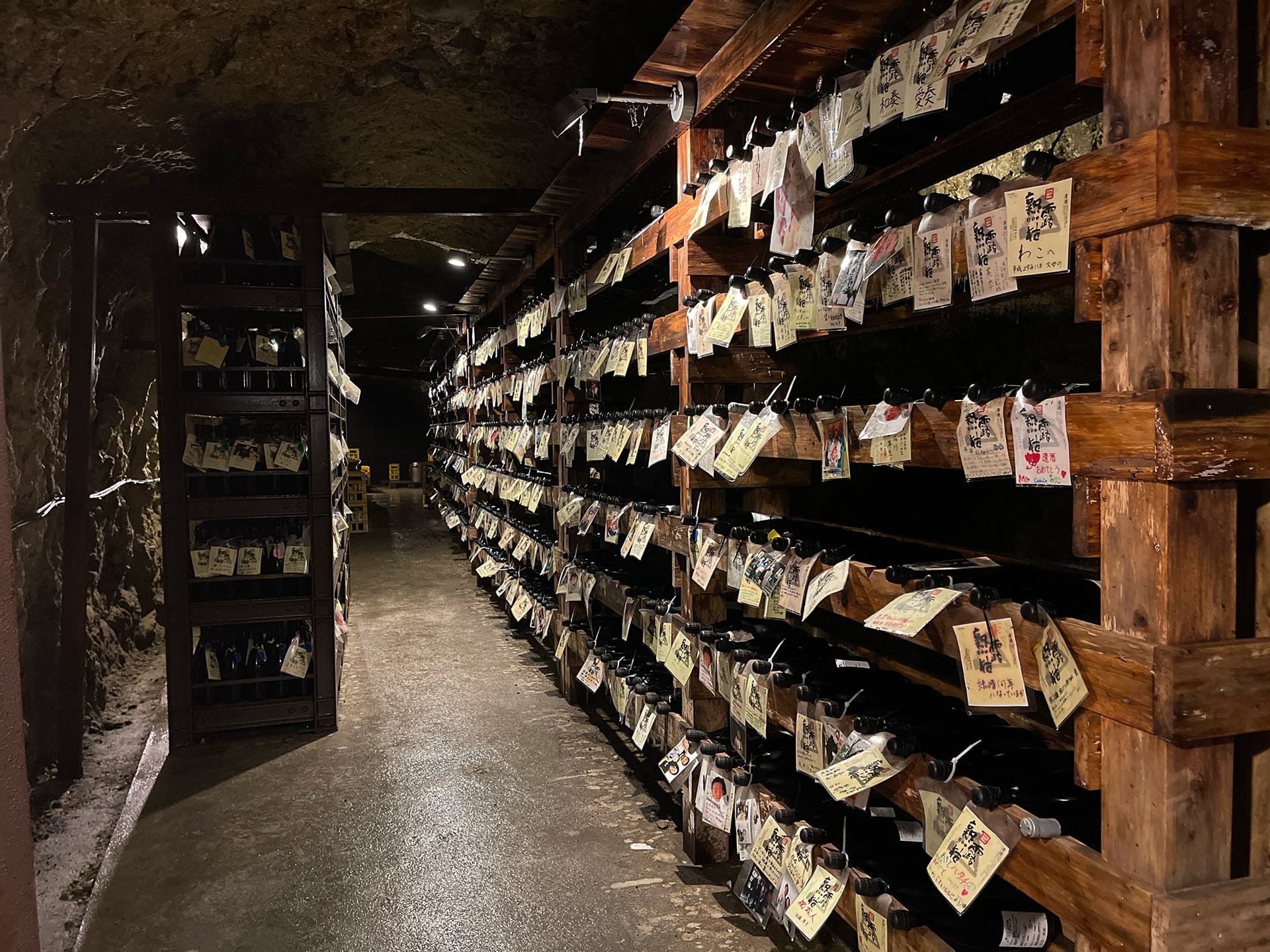
The temperature drops quickly inside the cave in Nasukarasuyama, Tochigi Pref. It’s always a cool 10 degrees Celsius (50 degrees Fahrenheit) inside, and descending into the dark space means you feel it right away. The tunnels within are wide, built during World War II with the intention of building tanks and other weaponry for the conflict. Locals helped dig it out by hand. The day they finished, Japan surrendered.
What to do with this sudden labyrinth? Eventually, it became a place to store sake.
Today, brewery Shimazaki Shuzo uses this manmade cave to store around 100,000 bottles of sake. The natural temperature of the cave is ideal for storing the Japanese drink, and allows the company a space to experiment with aged sake in an environment remaining stable all year. Walking around the cave feels surreal, peering around rocky corners to the sight of boxes of bottles deep within.
Shimazaki brewery’s cave warehouse is just part of the sake landscape in Tochigi, a prefecture located a quick Shinkansen ride away (or two-hour-and-a-half jaunt via other trains) from Tokyo. The region has developed a strong sake industry largely thanks to the high quality of water flowing from the nearby Nikko mountain range. Around 30 breweries operate in Tochigi today, creating rich alcohol utilizing the natural gifts around them.
In September, the National Tax Agency sponsored a tour of two of Tochigi’s sake breweries, inviting scrmbl the chance to learn about the prefecture’s offerings. While the biggest city in the area (and starting point of the tour) is Utsunomiya, most of the companies producing the drink are found in quieter corners, usually around an hour drive away from the area’s capital.
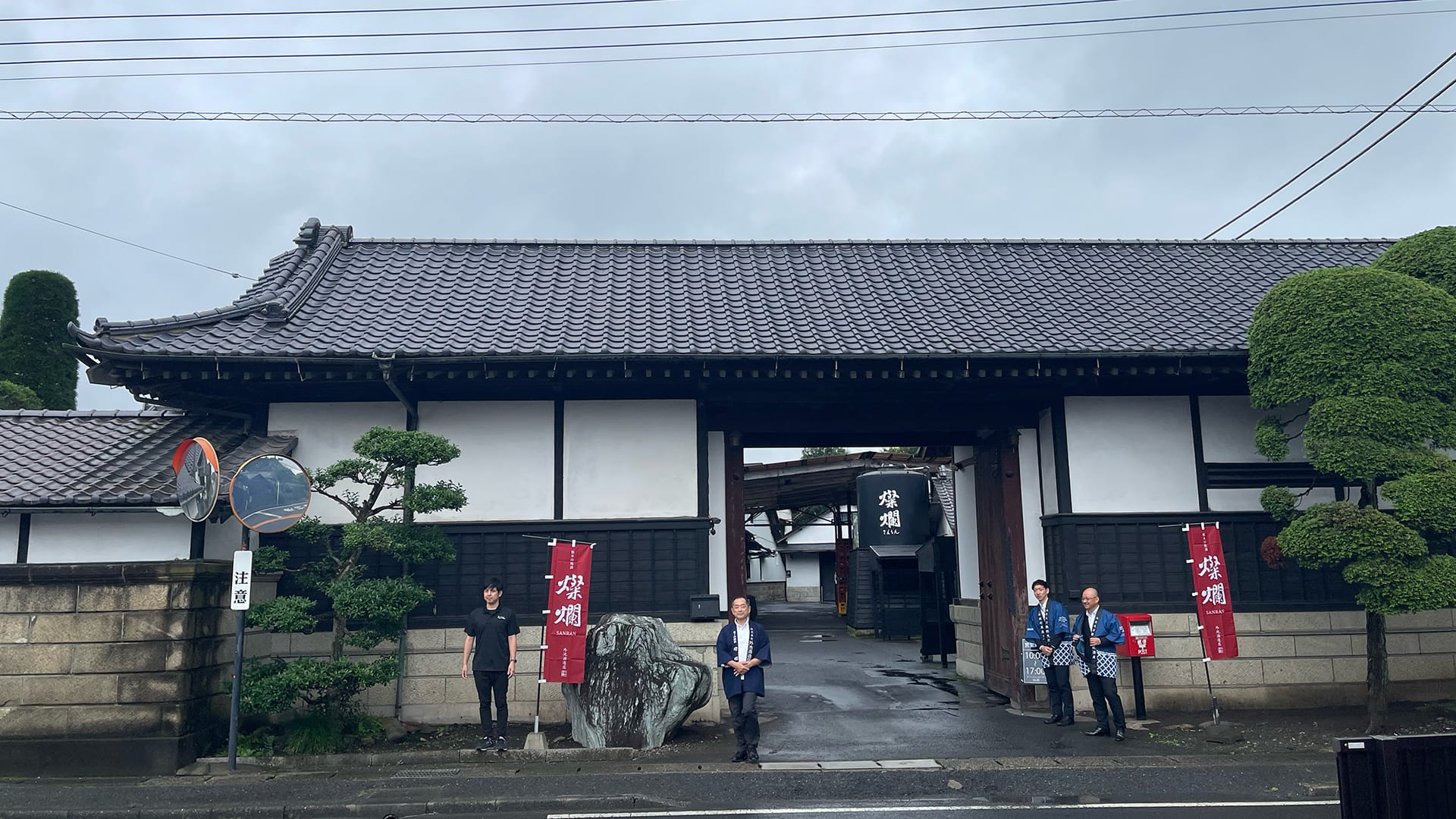
That’s how long it takes to get to the quaint Mashiko, a town best known for its Mashiko ware pottery. Craftsmanship extends to sake too at Tonoike Brewery, founded by a family that has been brewing the drink since 1829. Their sake has won many awards in recent years, both in Japan and abroad, in part because of their continued artisanal approach to creation.
Visitors can sign up for a tour of Tonoike’s sake museum, a space located steps away from the brewery proper that goes over both the family’s rich history of alcohol production and teaches guests about the process of actually making the drink. For those with only a very basic level of how any of this works, it’s a good crash course in sake production.
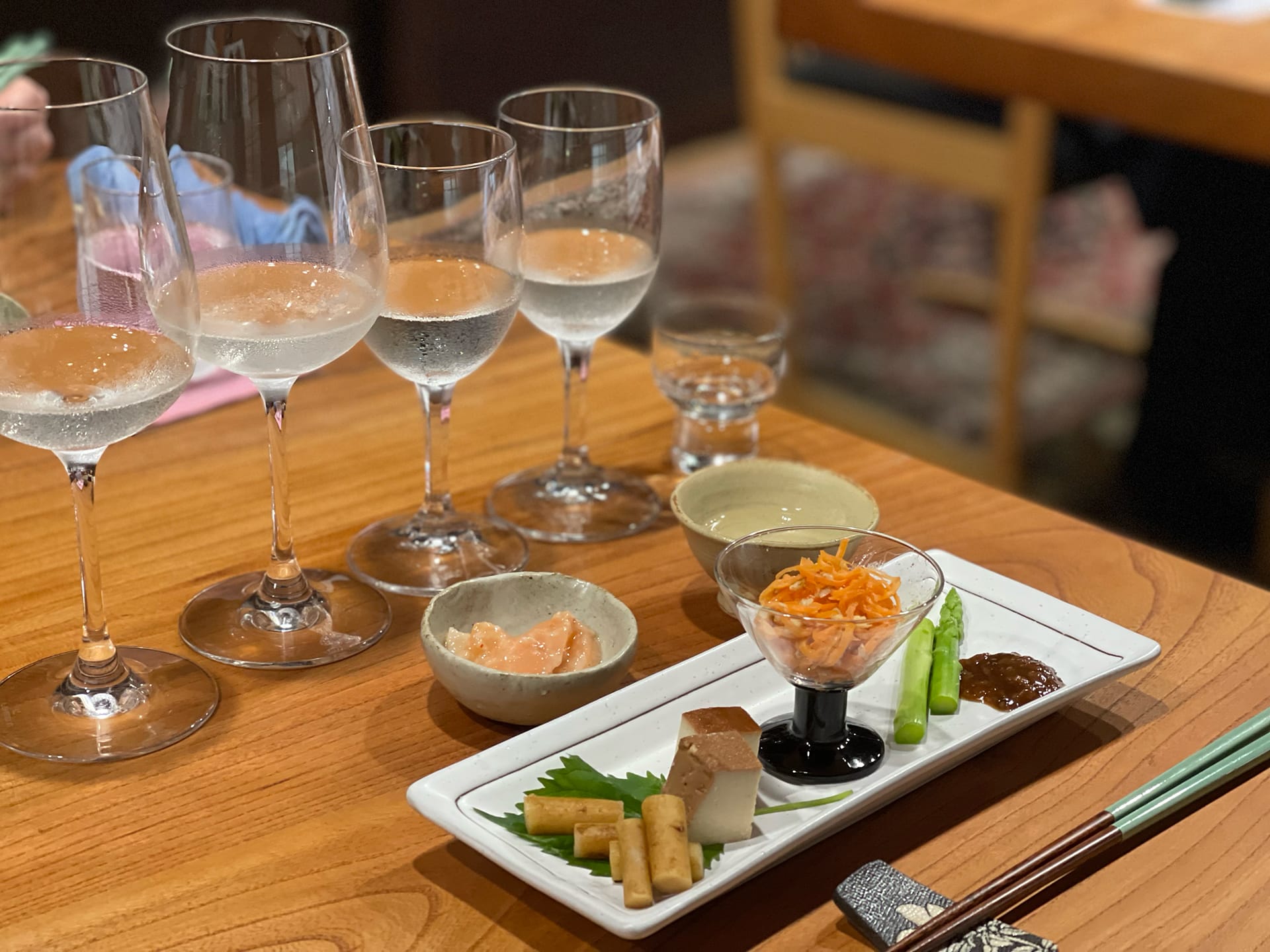
It also makes the actual tasting that happens afterward all the better. Tonoike lets visitors try a variety of its award-winning drinks in a traditional-style Japanese room featuring ornate pottery and tables. It’s an upscale space to try the drink alongside an assortment of Japanese snacks that pair well with their libations. And, if you want something sweet to go along with it, they offer sake soft-serve too.
Tonoike provides a great gateway into the process and history of sake in the region, alongside high-quality products. Shimazaki Shuzo, meanwhile, provides a different angle on how brewers approach the beverage.
The main store sits on a regular street in Nasukarasuyama, a small city best known for its annual Yamaage Festival, a miniature kabuki bonanza involving portable stages. Shimazaki’s main outpost sells all of the brewer’s products, while also providing info about its history.
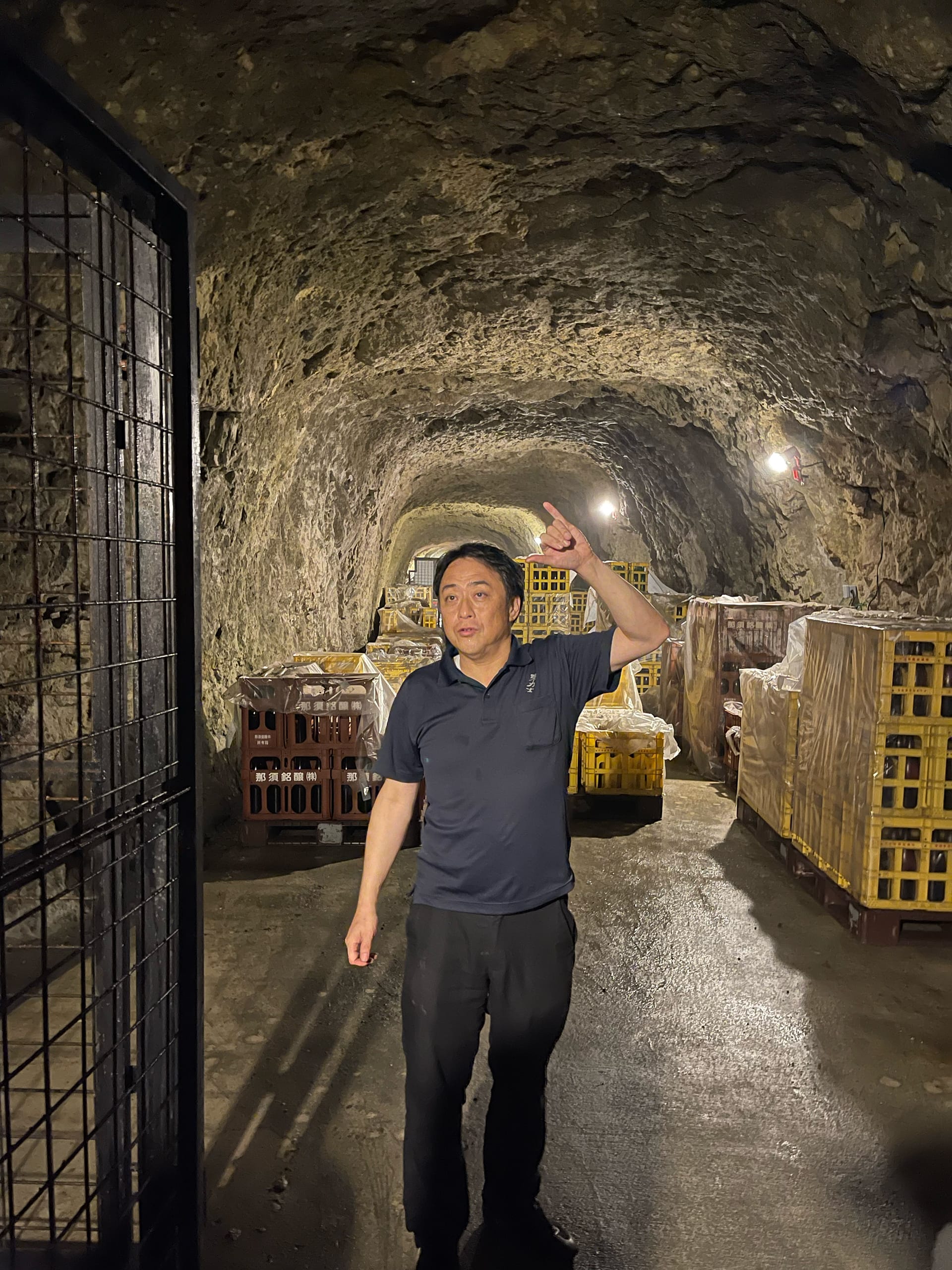
Yet it’s the cave that’s about a ten minute drive away that’s the biggest draw of Shimazaki Shuzo. Groups can book tours of it nearly all year long (schedule depending) to see one of the most unique sake warehouses in the world. This damp space allows them to explore sake aging, a still-emerging field of brewing that this company is at the forefront of in Japan.
Among the rows of bottles are ones that have been in there for decades, some approaching half a century. Visitors can order their own bottle to keep at the warehouse, from five to 20 years, perhaps for a special life milestone or just the thrill of aging sake inside a cave. Guests can also create their own bottle of sake while in the cave, including the chance to draw a custom label they can apply to a bottle of the brewery’s output.
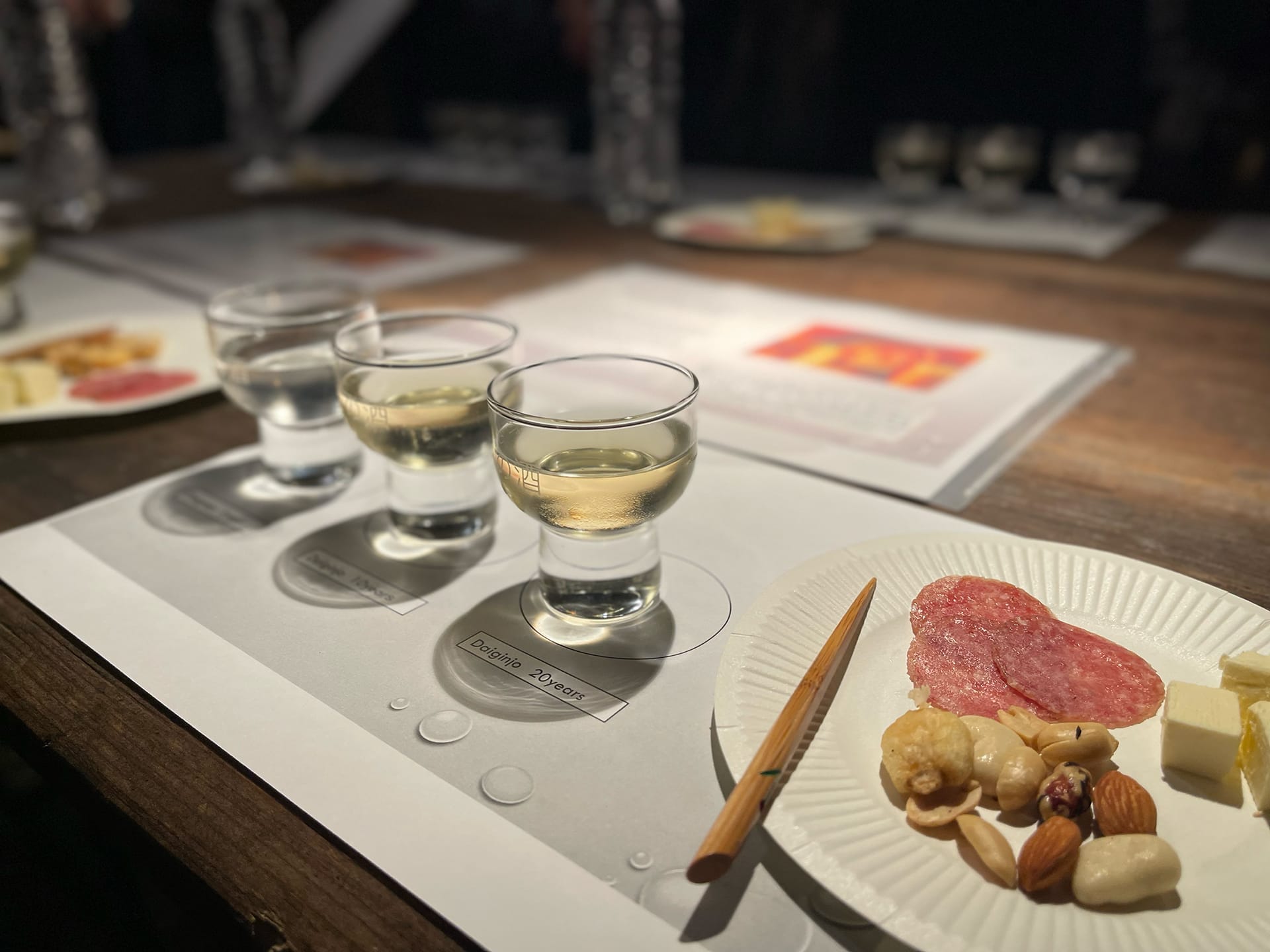
For those without the patience to wait two decades, they can also descend into the cave’s tasting room where they can enjoy a five, ten, and 20-year-old sake stored in the mountain. It’s a chance to see how the taste of the drink changes over the years — you are not prepared for the sharpness of something that has been stored in a cave for two decades — and something that can only be experienced in Tochigi.