After 13 years, can Puella Magi Madoka Magica: Walpurgisnacht Rising truly satisfy every fan? Is it even possible for all those fans from the show’s boom in the early 2010s to wait for over a decade, after countless delays, and truly be satisfied? What even is a Madoka Magica movie after all these years? Gen Urobochi and Yukihiro Miyamoto, the writer and directors who have steered the show since the beginning, have at least attempted to do so. And in my view, they found a very compelling answer.
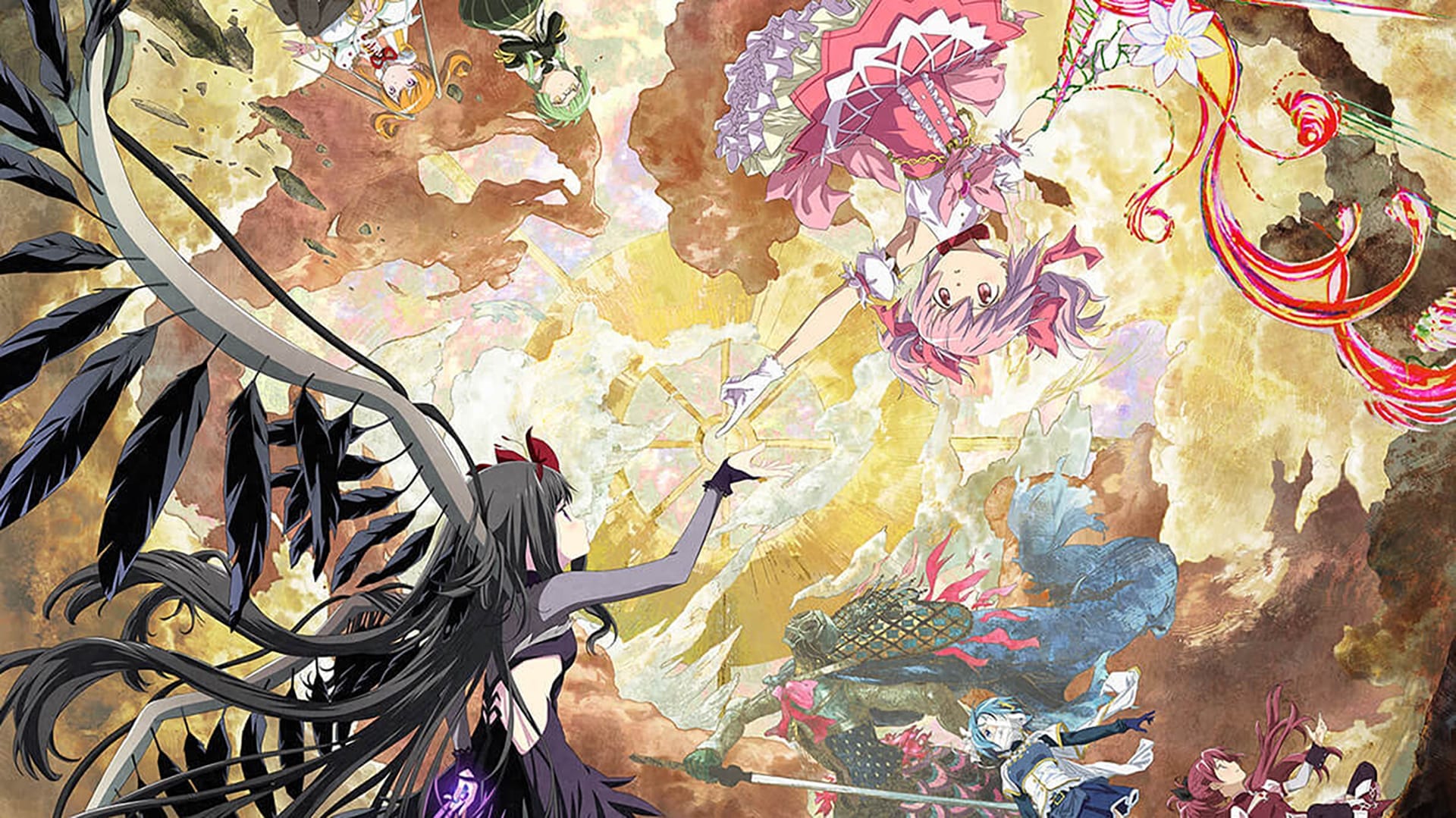
By the time we reach this latest movie, this world has been written and rewritten, its fates ever-more intertwining, by the two characters that stand at its core: Akemi Homura, and Kaname Madoka. After learning the truth of magical girls and their purpose, of how to gain such power required a wish that would eventually see you turn into the witches you were fated to destroy, all for a purpose you will never get to see, these young girls who were convinced to take on this responsibility through the concept of salvation felt betrayed. Madoka used her final wish to rewrite the world, ending all witches and transforming the universe in a way that stripped her of physical form but would, in theory, end this suffering.
Only it didn’t. What was once magical girls fighting witches became the Law of the Cycle, different creatures that must be fought. Homura, the girl who Madoka felt saved her and gave her purpose and friendship, felt betrayed. She had used her wish to go back in time countless times to save her friend until she could do no more, wherein Madoka used her wish to save the universe, an ability only allowed by her power being amplified by the intertwined fate Homura created through her time travel. She created the circumstances for her decision, and her friendship that became love left them separated.
It led to her taking matters into her own hands and rewriting her own universe into one where she could continue to live, even if it wasn’t in line with her sacrificial wish. Madoka, who only saw worth in herself when fighting to the point she gave up her existence, and Homura, who only saw worth in the idea she could be valued by others, instilling her self-worth into others to the point of love and obsession. It’s that uneasy universe, where Homura can control all, where there is no Law of the Cycles or Witches, and where all the girls can fight Wraiths in the form of nightmares with relative peace beyond these fights, where Walpurgisnacht Rising sets its tale.
In as much as this franchise has been Madoka’s story, it has been Homura’s also. She is someone who cares so deeply, but can’t allow herself to avoid enforcing a state where everything is as she dictates. In this new world, she controls who is a magical girl and prevents them ever possessing the negativity to become a witch, and even takes on most of the fighting of the Wraiths so that there is as little danger for Miki Sayaka, Sakura Kyoko, and Mami Tomoe to take on. Under no circumstances is Madoka allowed to enter this world of magical girls. She is to be protected, as she always determined was best.
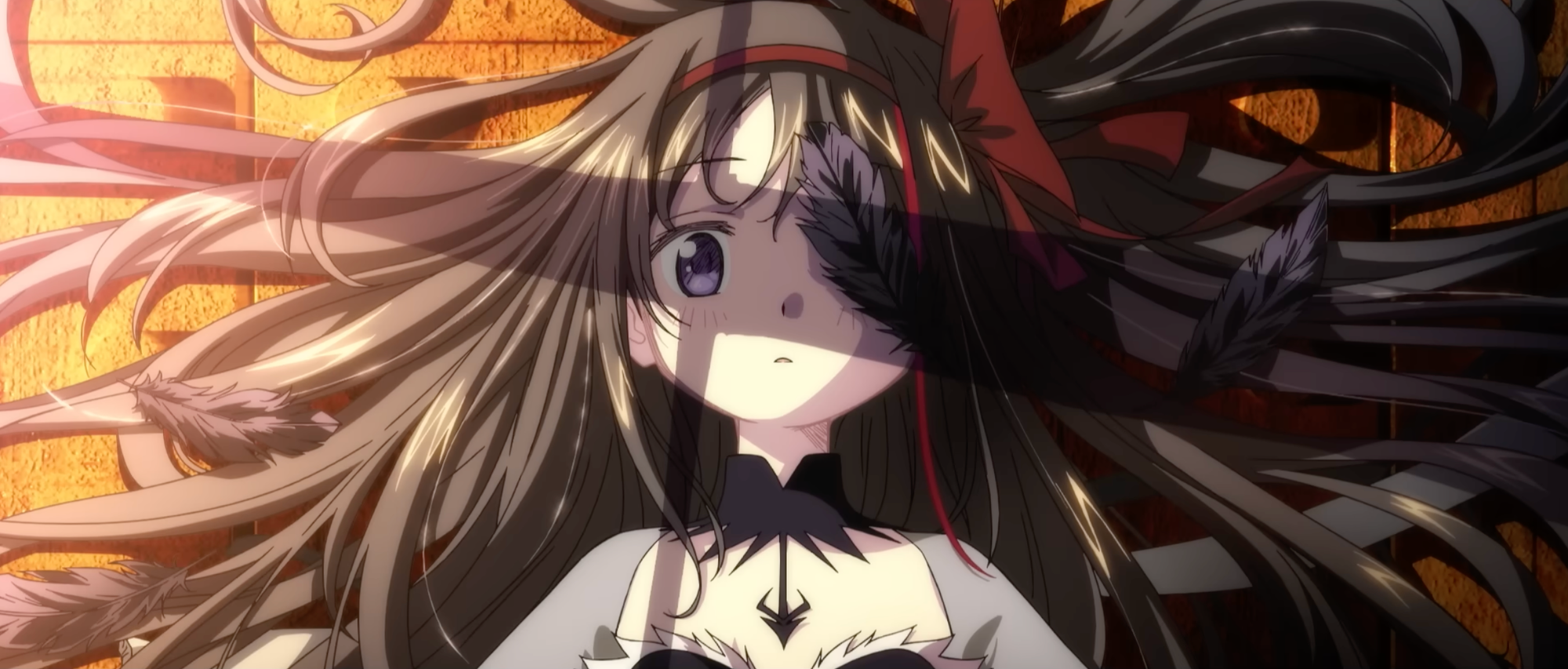
That’s when three girls appear who Homura has no knowledge for. Shi Choka and Selma Terez are both magical girls for whom Homura did not help to bring to the world, while a girl with an appearance resembling Homura named Was is also present. Suddenly, there’s something in this world that her all-seeing self can’t control, and no longer protect against, either.
Amidst all this is the question of salvation, for which Walpurgisnacht Rising centers its entire essence. Both Madoka and Homura have become woven together in a tragic game in their shared desire to save the other, but neither truly understand what it means to save another. Each are held back by their own insecurities to take on these roles far beyond the scope of what any human must take on, which has been what has allowed Kyubey, the creature puppeteering the magical girl regime on the broadest whole, to take advantage of this to harvest their energy.
What does it mean to save someone? What makes this movie so fascinating is that it forces these characters, and thus the audience, to question if any move they have taken has actually truly saved people in the way they had hoped. Whether, even if their actions were not truly just or enacted with kindness or honesty, if the result is safety and security can that be forgiven? Sayaka, having become a witch in the original series and seen so much of this world and become bandaged and scarred by its worst attributes, must question whether there is something to be said for the tranquility she finds now as a form of peace.
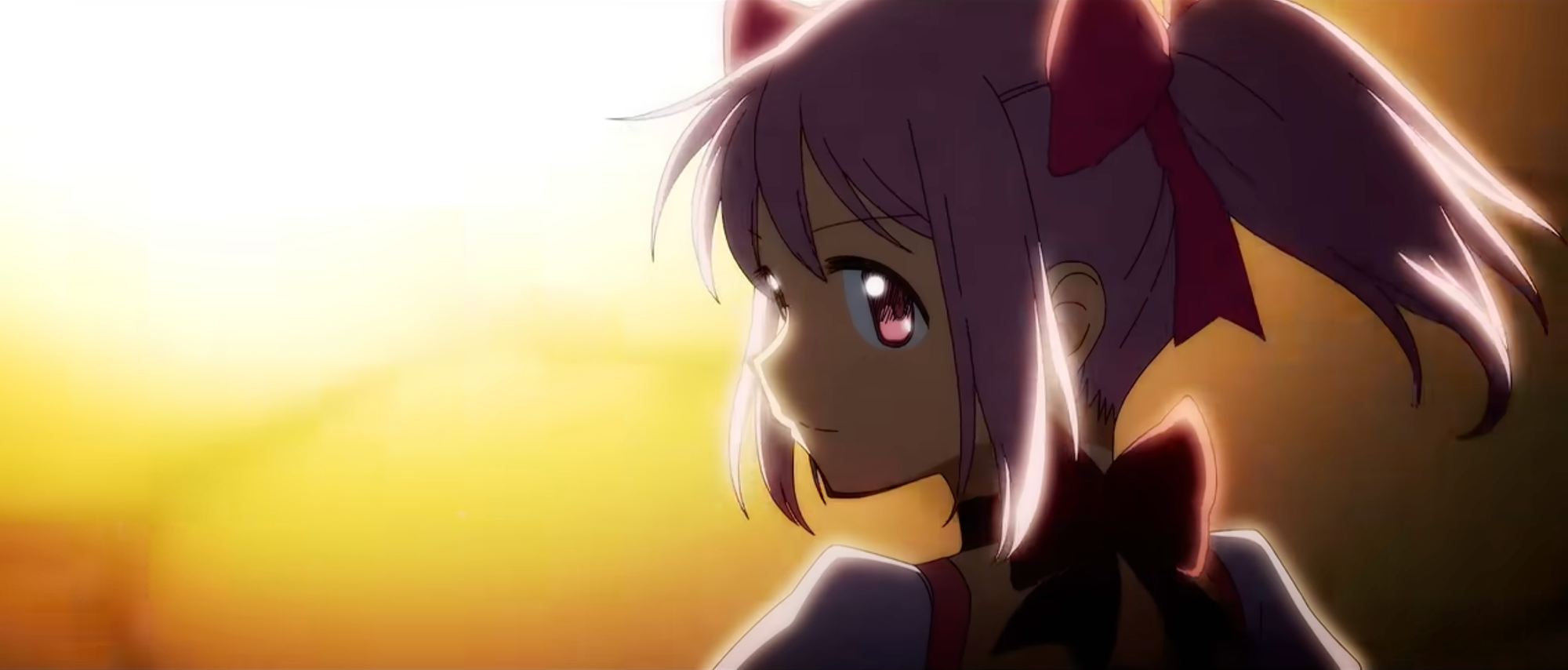
Kyoko, having learned to open up to others once again and is now openly friends or more with the other magical girls, is left to wonder if she, herself, has been saved. Most of all, Homura must confront her own arrogance on what it means to have taken on this role as arbiter of the world. Is what she is offering truly salvation, if it comes from a place where people can’t take their own path?
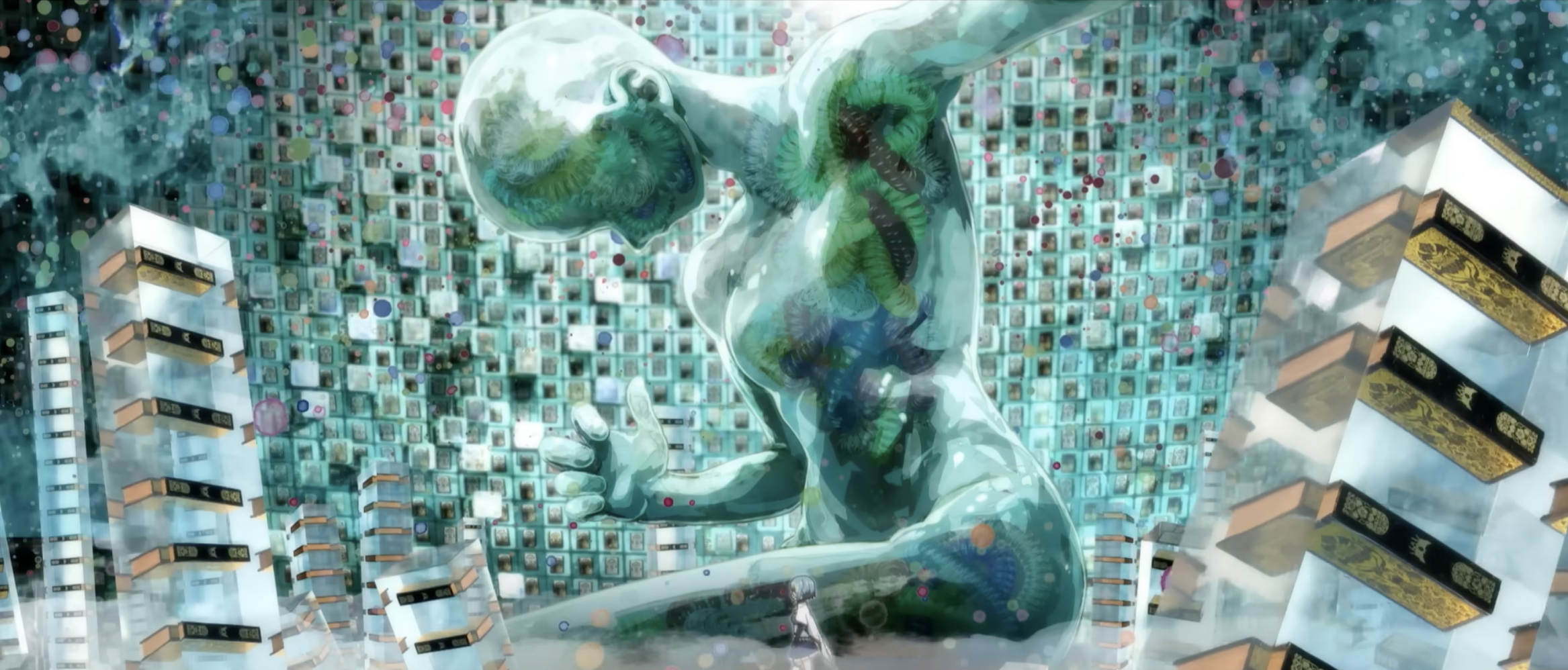
As you would expect from the franchise, this story of salvation is told with stunning audiovisual precision, from its multimedia animation that blends stop-motion, handcrafts and filtered live-action footage to create worlds of unease and magic. The choral music feels particularly noted as the film drapes itself in religious allegory and imagery as it questions this idea of salvation in every nook and cranny of its narrative, which as it all climaxes in a final act battle of grandeur and inner soul-searching, really elevates the intensity of each battle.
It’s also the sort of story that’s difficult to feel truly satisfied with when directed towards your insecurities. A story of sacrifice, as the original gives, and a story of love, are easy to inject yourself into, whether you agree with the actions taking place or not. A story that questions if it’s ok to let go, to accept the help of others, and embrace what it means to be saved by another without feeling you must repay a debt, is a much harder story to internalize and accept. It’s easy to appreciate the animation, as strong as ever, the fact that secondary characters have been given more time than ever, or that the film genuinely takes this franchise in a new direction. When these stories have always thrived on how they resonate with the insecurities of its audience, a story that asks you to accept and be saved is naturally a harder sell.
Perhaps that’s why, despite loving this film precisely for those reasons, I am hesitant to say this is the best movie in the Madoka series to date. Perhaps I am unwilling to place myself in that space. Even with that hesitancy, however, this is by far and away the best animated film of the year so far, thriving in its willingness to take a beloved story somewhere new regardless of the consequences. A story with ambiguity to its conclusion (and perhaps one more entry required to fully conclude this tale), but one that asks if its okay to let go of obsession and embrace salvation. Walpurgisnacht Rising will be spoken about for years to come, as its original films once were also, and is more than worth the wait.