It’s more accurate to say that, above celebrating Christmas, Japan celebrates the winter. The Christmas cakes are pretty, you can get your Christmas fried chicken from KFC or the many stores that have begun offering it on the back of their work, Santa is the giftgiver to kids regardless of how associated they are to the religiosity of the occasion. But for all the music and festivities, Christmas is less the time of giving and getting and more the period of lovers, the holiday becoming a lover’s affair as the winter cold gives couples every excuse to huddle in close. Especially if they venture out for the season’s biggest draw: the winter illuminations.
These illuminations, too, can be viewed more as a way to get people to gather in the darker nights than a necessarily Christmas-fueled festivity. It was in the period from late in the 19th century shortly after the invention of the lightbulb into the early in the 20th century that such largscale light displays first appeared, less for the desire to celebrate a spiritual holiday relatively few in Japan followed and more for the spectacle. Not dissimilar to how the nights of summer festivals are illuminated by lanterns, these were a way to bring light to the street and maybe a few interested shoppers to a storefront or exhibition they could explore along the way. They came from inherently commercial expectations.
While the further impact on this initial lighting of stores in places like Ginza translating to a nationwide lovers affair is more open to speculation, though it’s possible to extrapolate at least a hypothesis of how this came to be. With attractions like these drawing people in, either alone or with those they care about, the wonder of being able to see these impressive displays is something you naturally want to share. If not with a person you’re already with or your own family, then perhaps with someone you are hoping to share more time with.
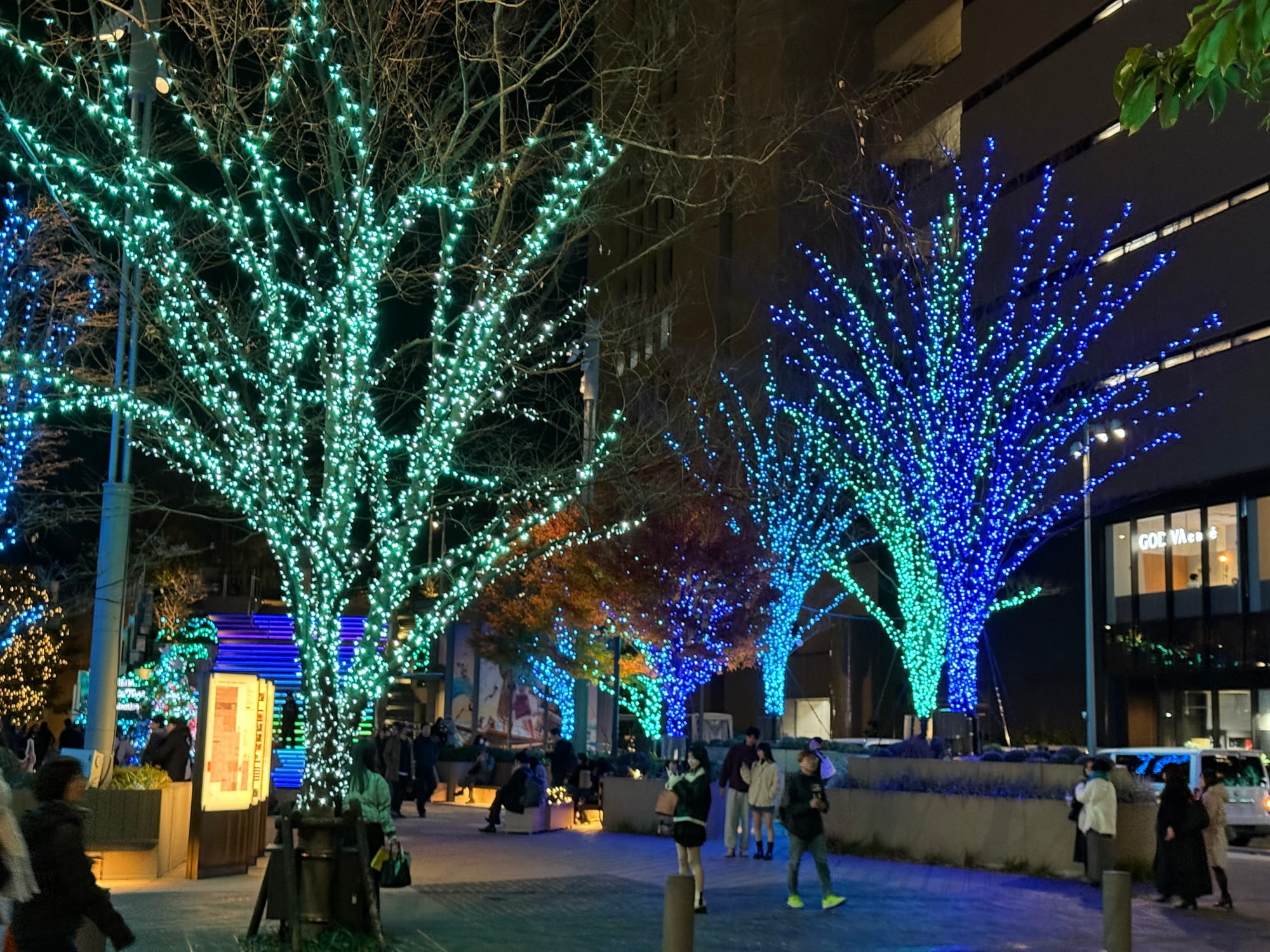
The only difference to these more humble origins - one of the first large-scale displays was from private business, a retailer in Ginza, denoting the Christmas spirit in visuals if not religiosity - and the modern day comes in their scale and abundence. A few thousand lights would seem tame compared to the biggest spectacles that draw the crowds in Tokyo landmarks like Marunouchi and Omotesando or in major cities across Japan like Kobe, but there was nothing quite like it. There always has been an awe-inducing appeal, even noted in news reports going back to the 1930s.
And the prominence of commercial establishments setting up these events is no coincidence. Once people are there to see the lights, they’re bound to explore, and thus spend money at anything nearby. Shopping districts became beacons, but it also showed that the lights could be an attraction in and of themselves. Create something appealing and people will come, and you could create an event of the mere presence of the lights. That’s the current state of illuminations in Japan.
Nowadays, social media only makes them more attractive. They’re stunning to witness, but that makes them just as enticing on a social media feed, which has ensured their popularity over 100 years later shows no signs of slowing down. A wrapped-up winter photo with the Christmas lights can practically be assigned a right of passage for some, especially if you can include a photo with your partner in front of the multicolored glow. With this in mind, it’s perhaps no surprise that, even if these lights feature Christmas imagery, they rarely get taken down once Christmas is over, living on past Valentine’s day and until the sakura begin to blossom in the Spring for an even more impressive visual spectacle.
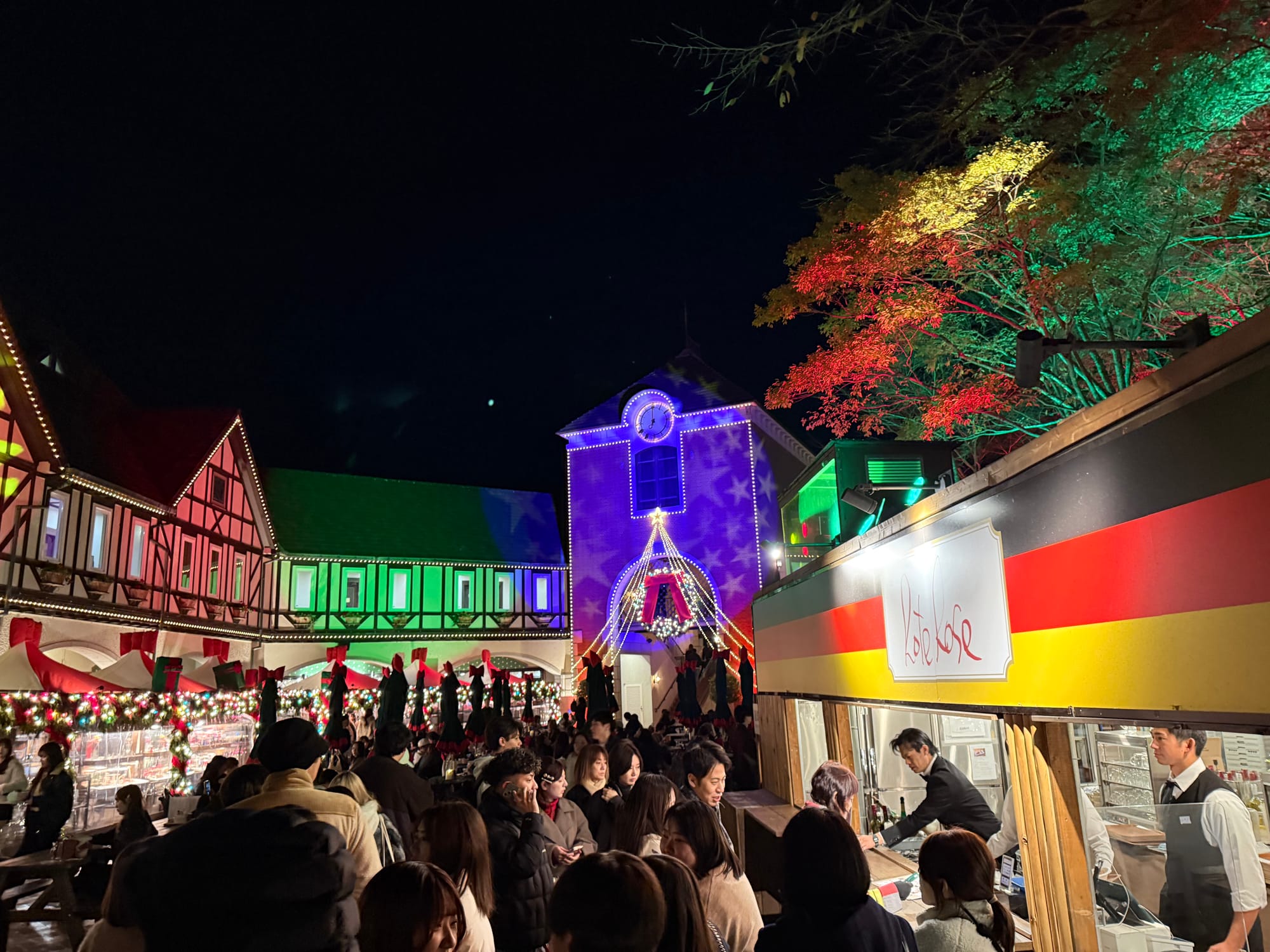
Who can blame them when the sheer scale of such lights and associated festivities arguably surpass the nations who you would think would put in more effort? As a Brit, I can safely say my hometown or even the capitol of London has nothing on even the smaller winter illuminations I’ve spotted on my daily excursions in Japan.
While the displays mentioned above as well as those seen in regional landmarks like Ashikaga Flower Park and Nagasaki’s Huis Ten Bosch hold a strong reputation, many of the biggest illuminations naturally find their home in the nation’s capitol, Tokyo. If you end up in Tokyo over Christmas, either this year or in the future, here are just a few Winter Illuminations worth checking out.
Tokyo’s free spots: Roppongi, Omotesando, Marunouchi
For those unwilling to spend extra money to get into the illuminated Christmas spirit, many cities within Tokyo in partnership with local businesses and governments run their own large-scale Illuminations that encourage people to visit the area during these dark Winter months. The Marunouchi Winter Illuminations transform the main street between the Hibiya-Ginza area and Tokyo Station into a mix of light-infused art installations and Christmas lights, with plenty of food and winter-fueled stalls also being set up. This year, a few select dioramas are created in partnership with Disney, a collaboration that allows select businesses in the area to create collaboration clothing and home accessories using Disney’s iconic characters (though most of these won’t come cheap as you’d expect from the area!).
Elsewhere, the main street intersecting Omotesando has seen its trees lit up with dazzling lights that keep the streets light in these dark nights in the already-upmarket area, while in Roppongi the popular Keyakizaka Street just a stone’s throw from Roppongi Hills shopping center is once again being decked out in lights. From just the right location, these lights perfectly frame the nearby Tokyo Tower, allowing for some rather eye-catching photos, while for anyone on a date, the Christmas Market inside Roppongi Hills offers seasonal food and drink.
Yomiuriland Jewellumination
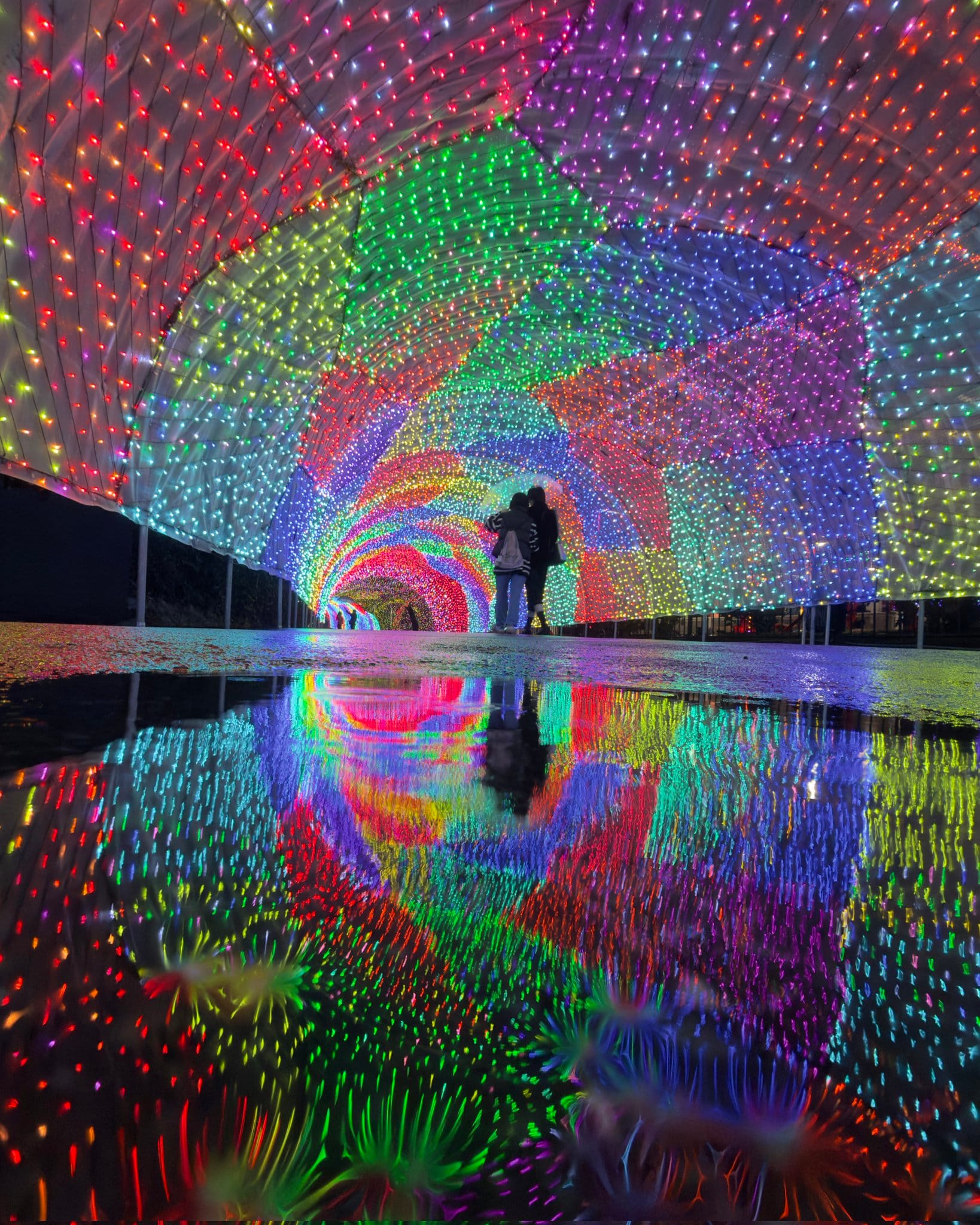
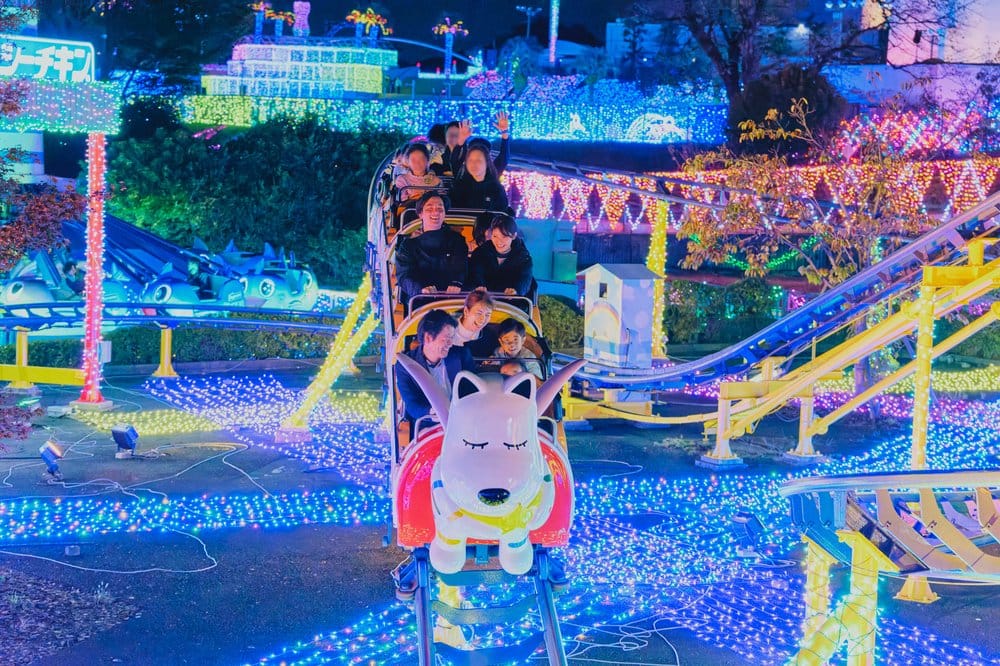
When local attractions would otherwise be closed for the season due to the shorter days and lack of light, illuminations offer both a new perspective and the ability to attract a new audience. Yomiuriland is the largest Winter Illumination in Japan, boasting over 4 million lights across themed locations that’s visible from space. During this yearly spectacular, the park is arguably more visible at night than it is during the day, with even its large-scale rollercoaster lit up by thousands of lights attached to the track and the ride vehicles. The rollercoaster runs through the night offering a unique seasonal experience, with other rides seeing similar transformations.
Yet even if you don’t wish to experience a thrill ride in the dark, there are a number of themed walking routes and slower locations, alongside the inevitable collaborations (this year with Cloud Nine, the talent agency behind artists like Ado) that make this an intriguing illumination for both dates and a day out with friends or fellow fans. The cable car towards the park from the nearby train station allows for a wonderful birds-eye view of the entire setup when arriving or leaving the park, too. This also runs later than almost any other illumination, with the 2025-26 season being offered until early April.
TOKYO MEGA ILLUMINATION @ Oi Racecourse
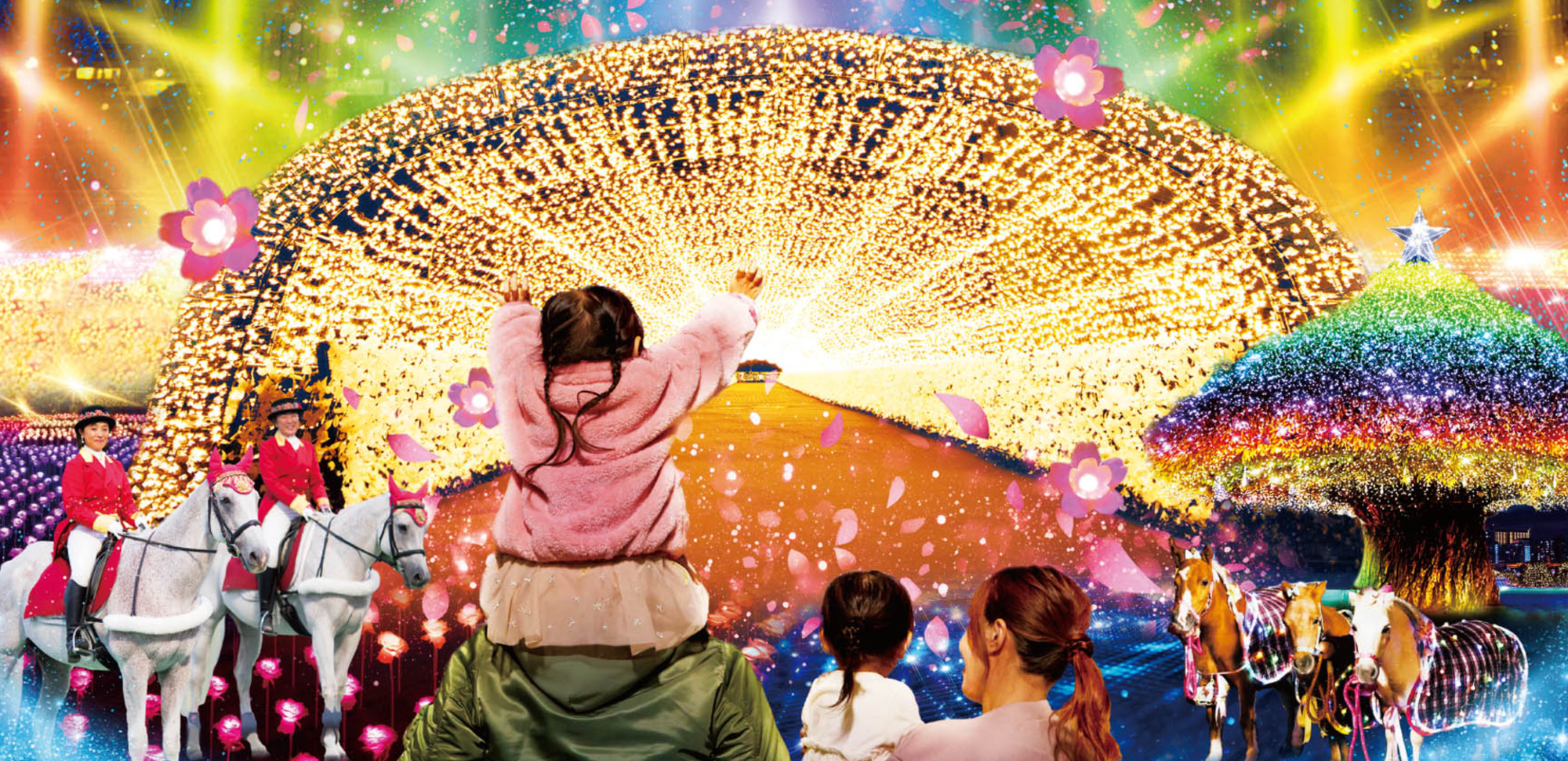
With the racing season over, usually Oi Racecourse would enjoy a period of hibernation through the Winter. Instead, the central area between the racing track, alongside the surrounding buildings, receive their own illuminations that blend regional art with racing iconography. Additionally, being a racecourse, the opportunity is also offered to pet and treat real horses.
Sagamiko ILLUMILLION
What helps the Sagamiko Illuminations stand out compared to those seen elsewhere comes from its unique topography. Sagamiko Mori Mori is based on a hill, offering a few basic attractions and rides alongside a camping site on the outskirts of Tokyo. To make it up to the top, there’s a short lift, alongside a slide that serves as one of the attractions to make it all the way back down. Both of these are transformed into a multicolored field of light, the star attraction of a space that also includes musical light shows and even a Tamagochi-themed space befitting the resurgance in popularity for the electronic pet in this era of Y2K nostalgia.