For millions of travelers and Tokyoites alike, a day away from the world’s largest metropolis can be more necessity than luxury. For most, escape means a day trip to spots like Hakone, Kamakura, Kawagoe, Nikko, or Mt.Takao. It’s no wonder– these are sites of immense natural beauty, historicity, and charm. But as droves of people swarm to these popular destinations, the mystery and excitement of discovering somewhere new is often drowned out by the crowds.
This is where Saitama’s Chichibu valley excels: undiscovered by most tourists, the area offers beautiful nature, retro charm, unique sights and incredible experiences – and sits just 77 minutes from Ikebukuro by special express.
This itinerary will take you through the mountains of Saitama on Seibu railways’ Space-age Laview liner, hiking through flower fields and diving into Chichibu’s retro high-streets, sampling local cuisine, encountering regional history, walking alongside prehistoric rock formations, and riding through the countryside on the steam train SL Paleo Express.
10:30 am — Boarding the Limited Express Laview at Seibu Ikebukuro station
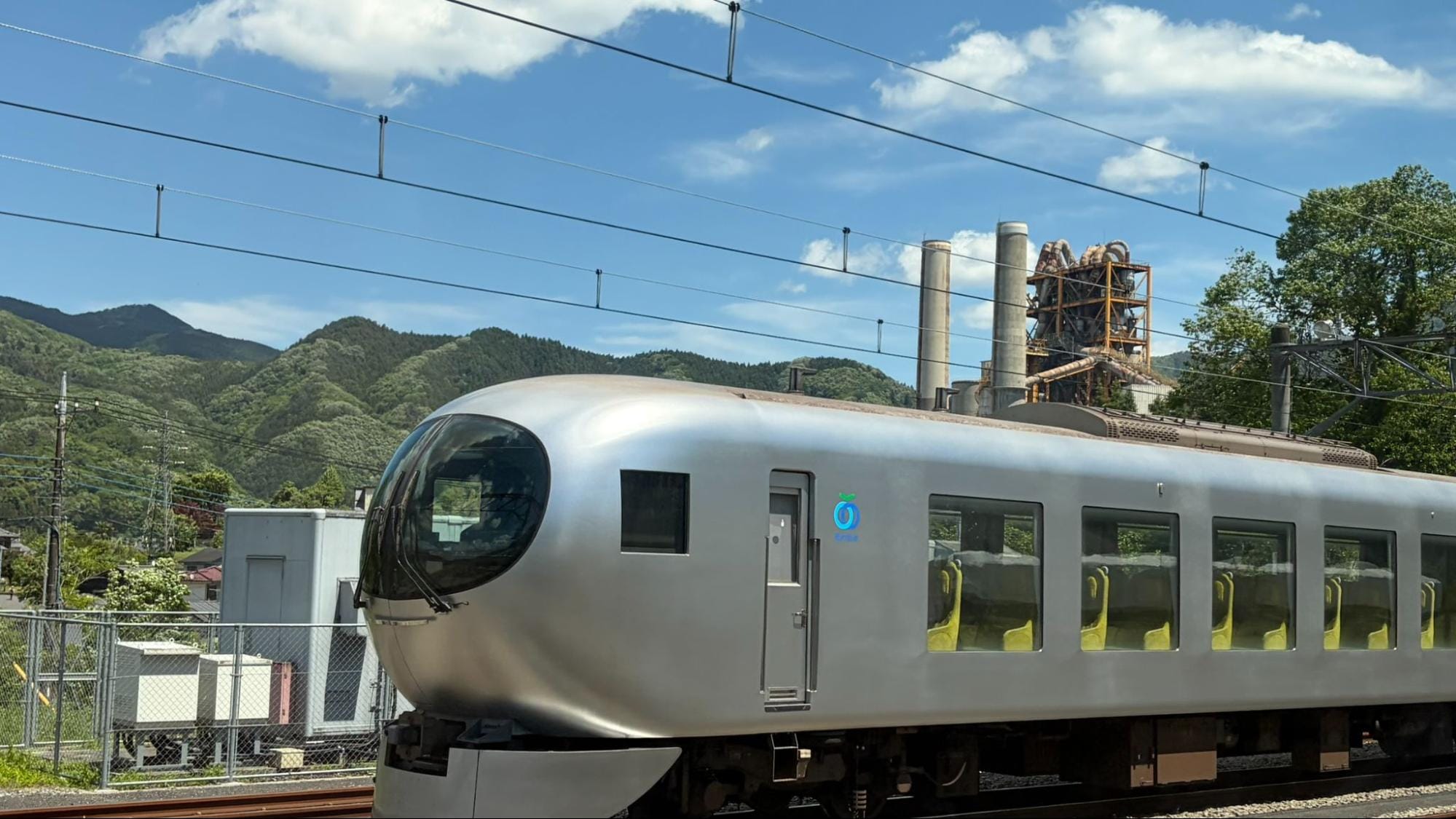
The Seibu limited express Laview was designed by architect Kazo Sejima, Co-Founder of design studio SANAA. The firm is one of Japan’s foremost architectural studios, famed for projects such as the Kanazawa 21st Century Museum of Art, the Christian Dior building in Omotesando, and the New Museum in New York City.
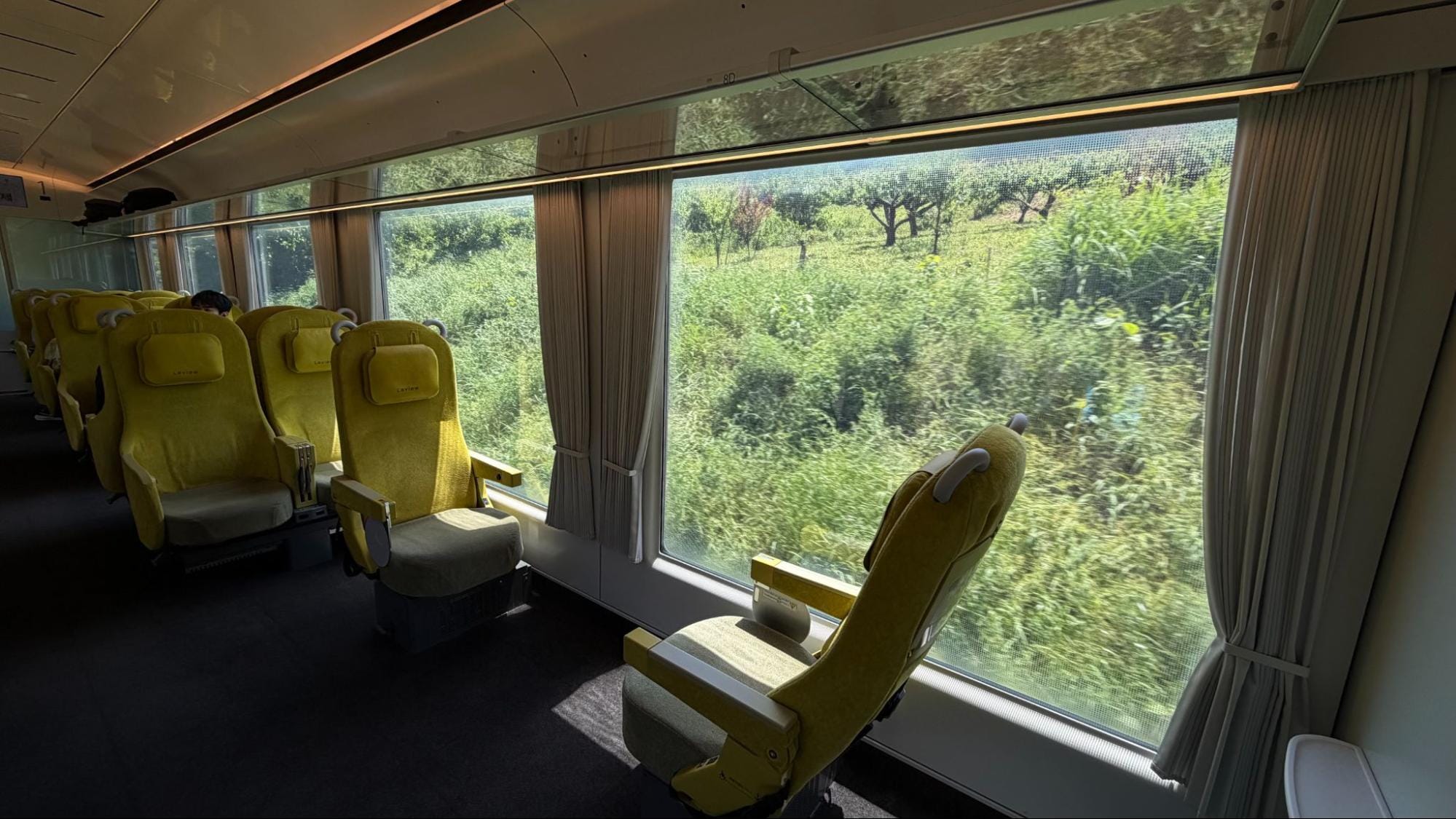
The spacious interior and massive square windows allow for an unobstructed view of the rolling scenery outside the carriage. The train switches directions at Hannō, and seats can be rotated to face whichever direction you prefer.
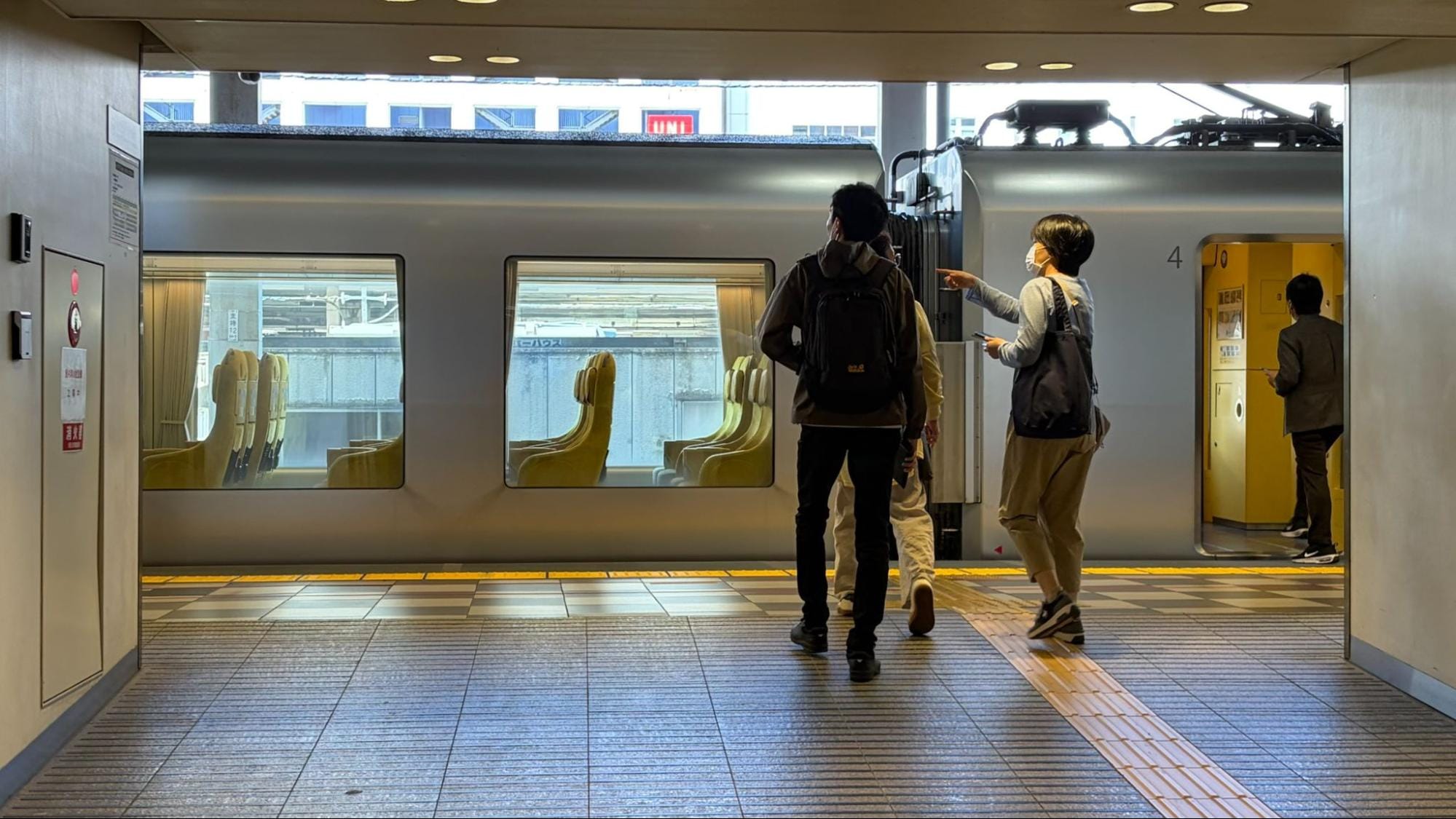
The platform at Ikebukuro. Tickets can be purchased before boarding, and rarely sell out. The station also contains a tourism booth offering maps of the Chichibu and Nagatoro regions in a variety of languages.
Introduced in 2019, the Seibu Railways limited express Laview is one of Japan’s most unique trains. Looking like something in between a spaceship and torpedo, its silver carriages were designed to reflect its surroundings from the outside while maximizing the view of the natural landscape from the inside.
Designed by architecture firm SANAA, the train’s interior was modeled on the concept of a “living room on wheels,” its pleated curtains, soft carpeting and square windows evoking the classic image of the domestic while maintaining a sense of futuristic elegance, comfort and speed.
A ticket for the express costs 900 yen, while the travel charge to Chichibu is ¥800. You can purchase online, or at the machine near the gate. Along the way, the Laview speeds above the northern suburbs of Tokyo as the concrete gives way to rolling fields, quiet towns, hillsides and orchards.
11:47 am – Arrival in Chichibu and Hitsujiyama Park
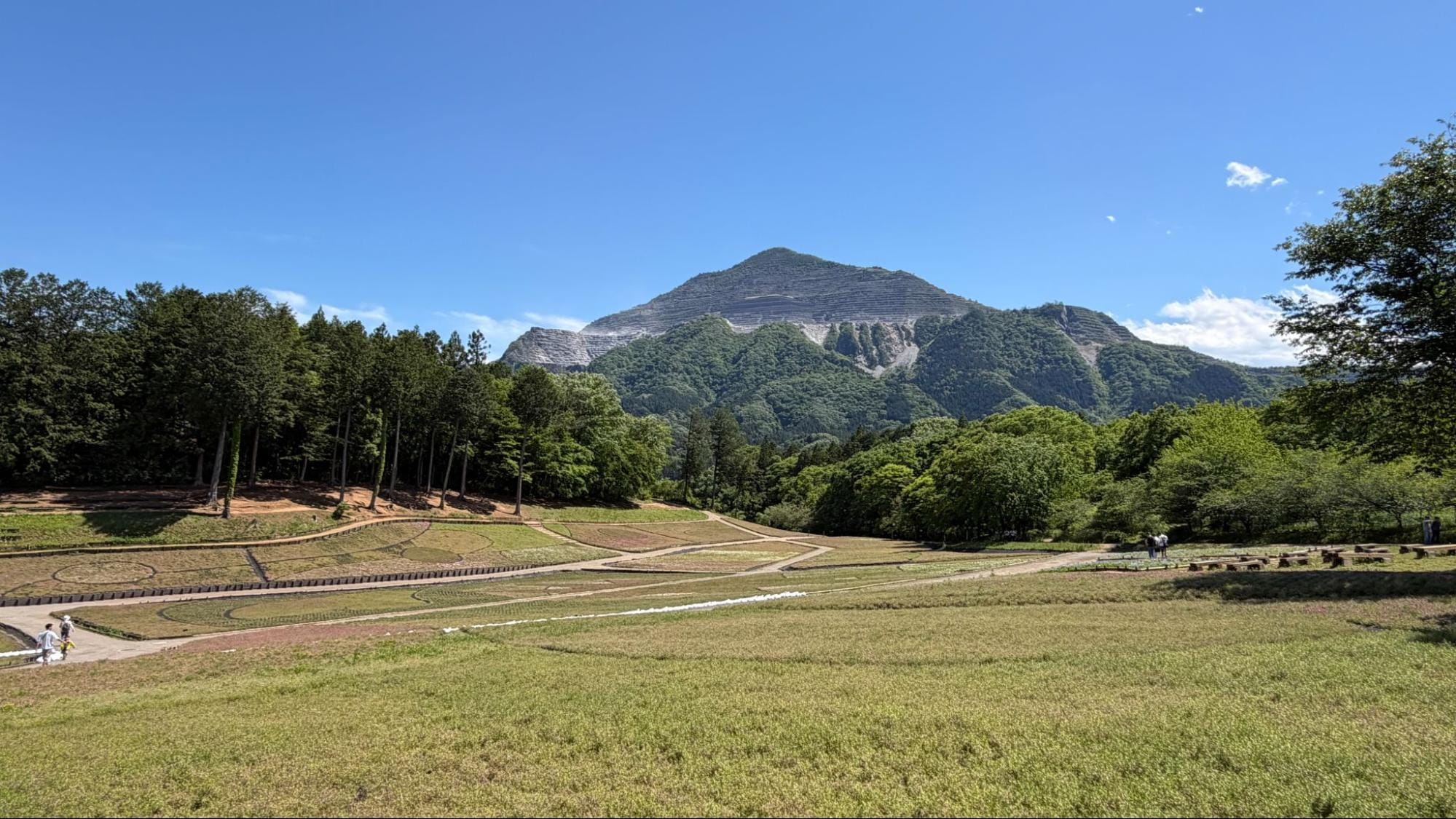
The plateau at Hitsujiyama park frames Mt. Bukō above rolling fields, green in summer but blossoming bright pink in springtime. The mountain’s edges have been chiseled flat over centuries of limestone mining, with rock dust blowing from surfaces where the stone has been scraped away. If the air in the park tastes a little dusty, that’s why.
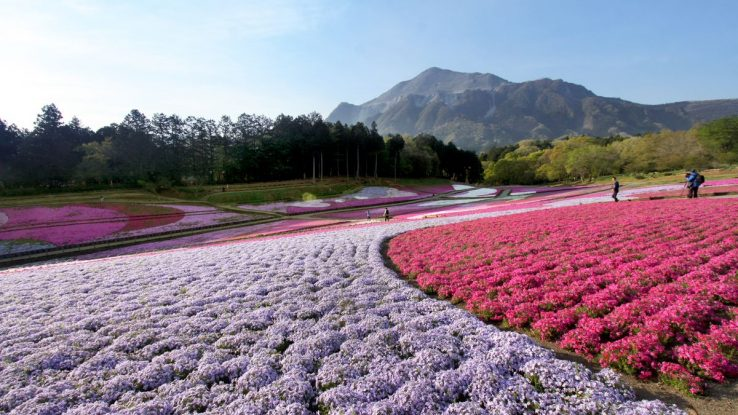
In springtime, the green is overtaken by curving layers of bright pink and purple. Roughly 400,000 mountain phlox plants cover 17,600 square meters of the valley. The best time to view the park in full bloom is mid-April, but make sure to check online for up-to-date information on the blossoms.
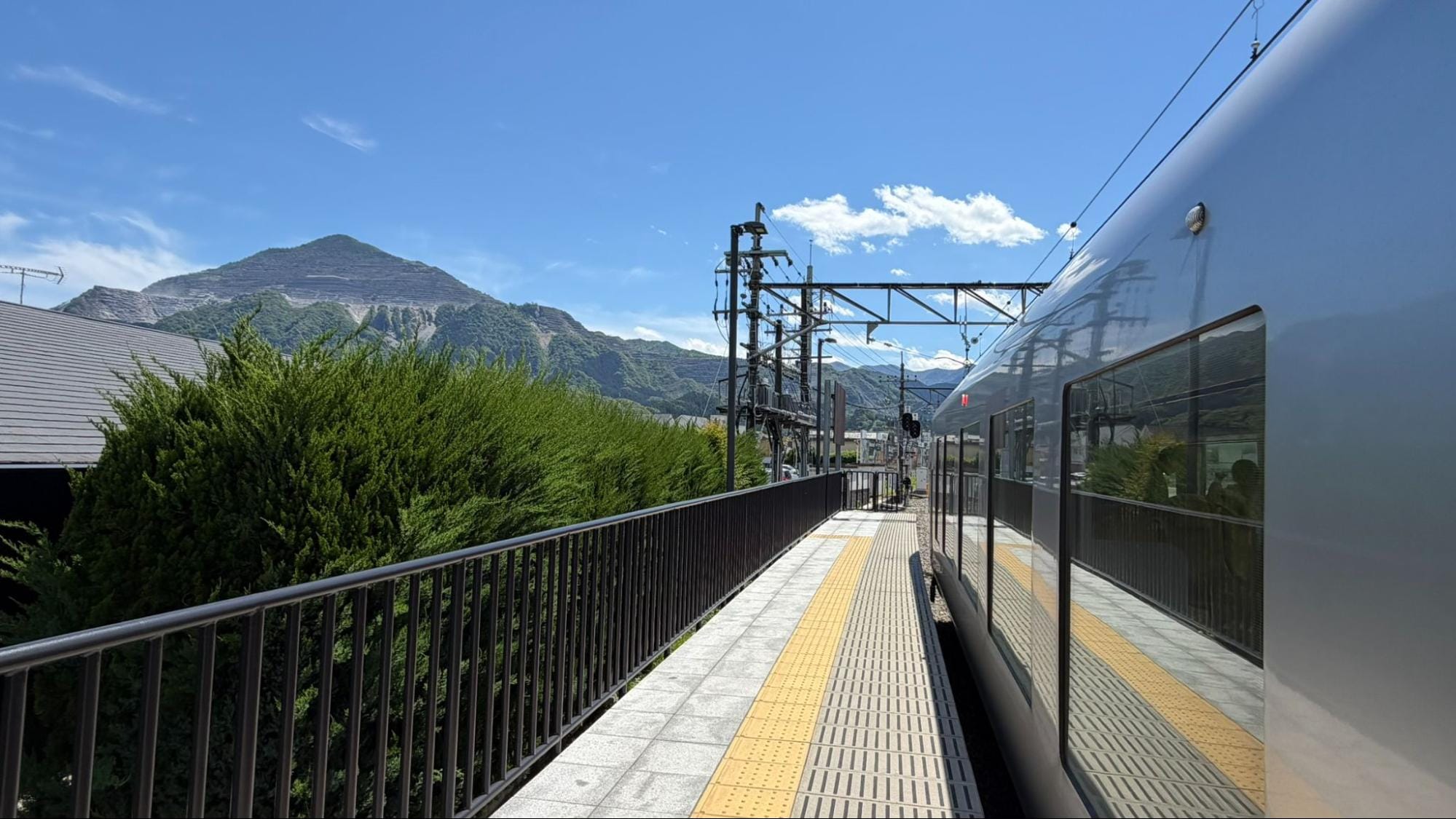
Mt. Bukō is visible from the arriving platform of the Seibu line. The railway actually passes directly beneath the flower field, and its tracks are visible from the footpath ascending the ridge.
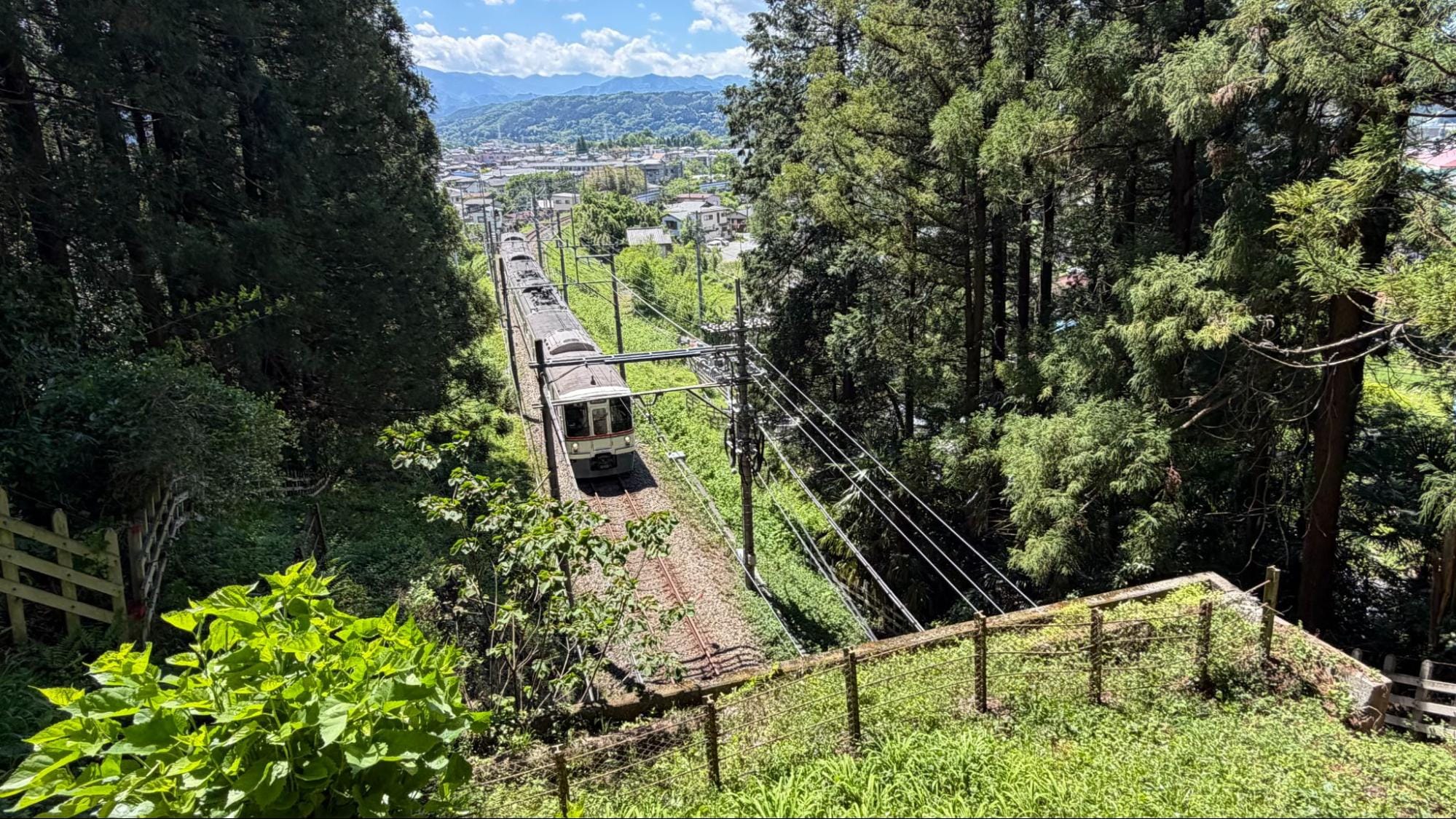
The ascent is steep, but has plenty of benches, hand rails, and merciful pine-tree shade. Halfway up, you can look down upon the tracks of the Seibu-Chichibu line as train cars enter the mountain tunnel beneath your feet. At a moderate pace, the slope should take about 10 minutes to climb.
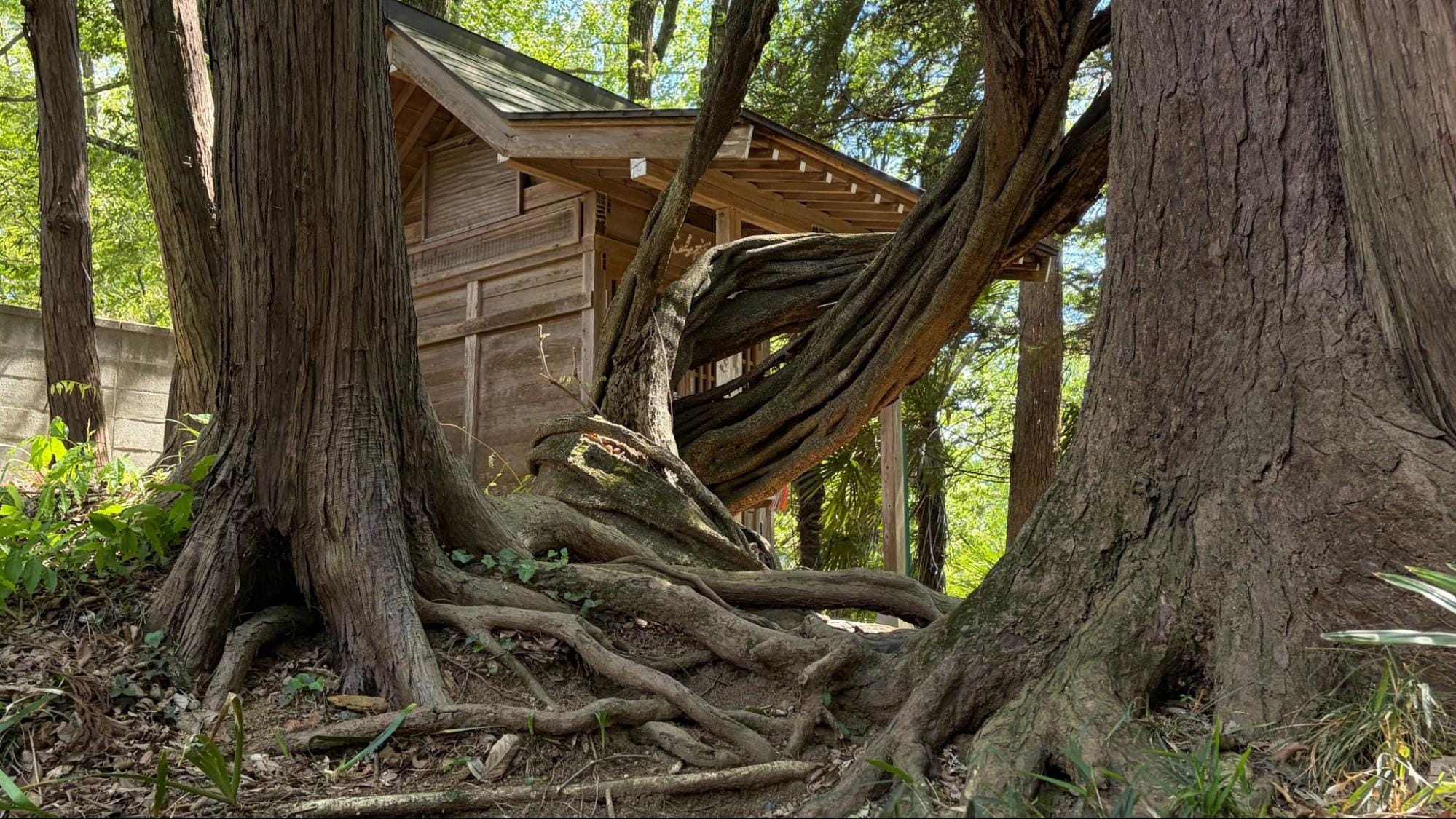
At the end of the path stands a tiny shrine with a beautifully twisted tree-trunk. The park is to the right of the clearing.
The train arrives at Seibu Chichibu station at 11:47 am. Take a moment to absorb your surroundings– the station sits halfway between Chichibu’s retro downtown district and the mountainous ridges to the East.
The Chichibu region is famous for its silk and sake production, while the mountains and valleys of the area are known as the “birthplace of Japanese geology” due to their extraordinary geological features. We will explore these ancient rock formations during our excursion to Nagatoro in the afternoon.
Follow the pink signs marked 芝桜の丘 (Shibazakura Hill) towards the base of Hitsujuyama park (羊山公園). What follows is a steep climb through a pine tree forest, emerging into a sunny clearing with a tiny shrine to the right. It’s a thigh-aching ascent, so make sure to rest as needed.
It’s worth the effort: a short walk from the clearing is Shibazakura (Pink Moss) Hill, a rolling valley covered in beautiful pink Mountain Phlox flowers at the height of spring. Looming above the field is the terraced silhouette of Mt. Bukō, which has been quarried for its bountiful Limestone since the Edō period. Outside of peak blossom season, the slopes maintain a verdant alpine green.
1:00 pm - Buying tickets at Ohanabatake station
Descend back into the town and head north to Ohanabatake station. Located between Seibu-Chichibu station and Banba street, it’s a convenient spot to purchase a ticket for the afternoon’s steam train outing. Ask the station staff for a ticket to Nagatoro on the SL Paleo Express, departing at 14:33. The ticket costs ¥1,100 for adults, and around half as much for children.
1:10 pm - Exploring Banba High street
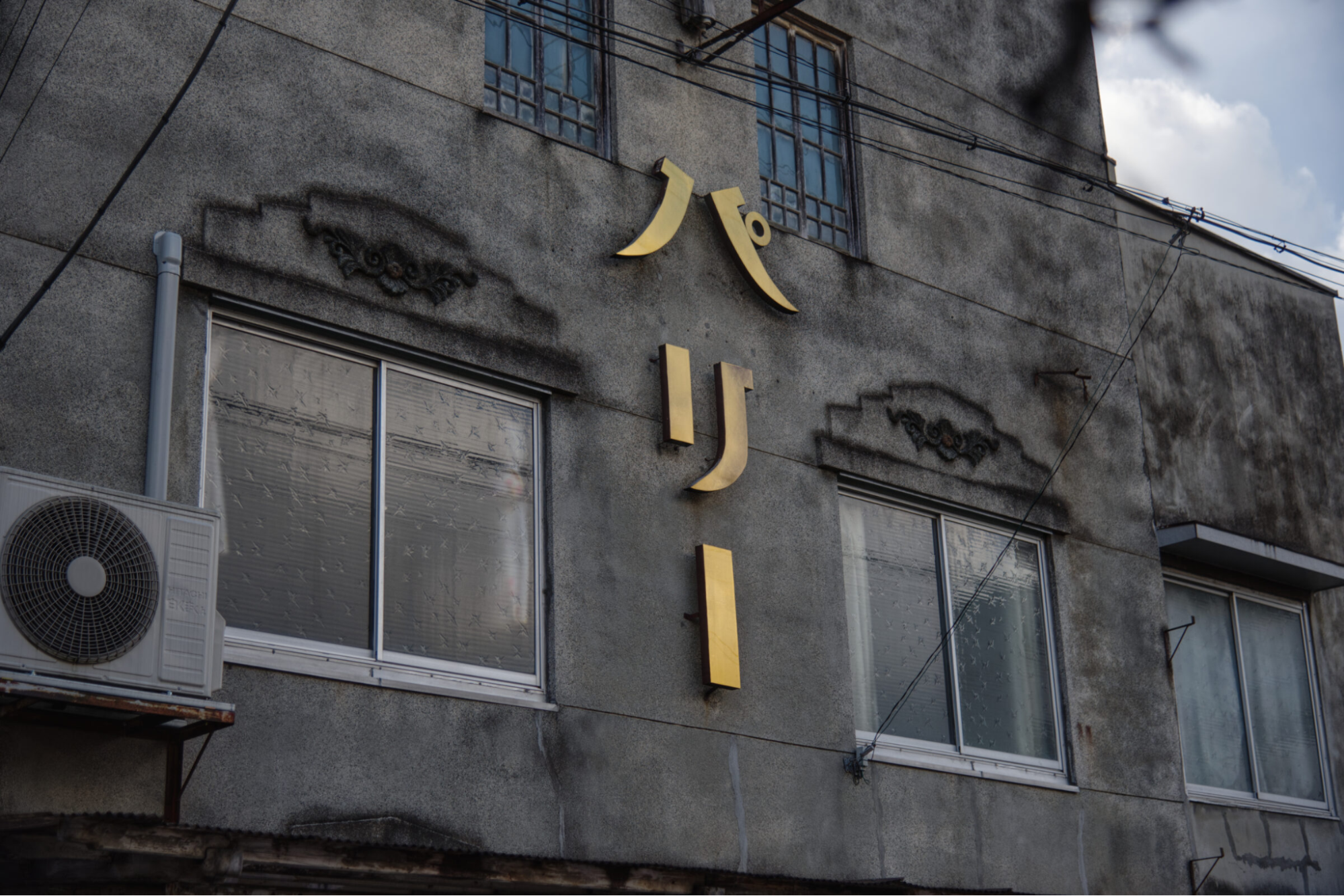
The golden sign of the Pari Shokudō, a cafe and restaurant with 100 years of history and a well-preserved interior.
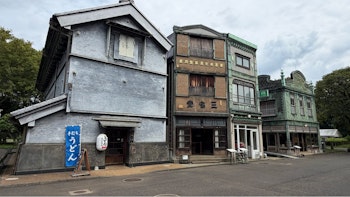
Banba High Street lies at the center of Chichibu city, and is remarkable for the 1900’s era buildings that infuse the town with its retro flair. Notable among the lineup is Pari Shokudō (パリー食堂), a 100 year old eatery dedicated to preserving its historic atmosphere. Directly opposite is Nipponia Koike, a tobacco shop turned hotel featuring an elegant exterior and tiny cafe.
1:30 pm - Lunch at Cafe Carnet
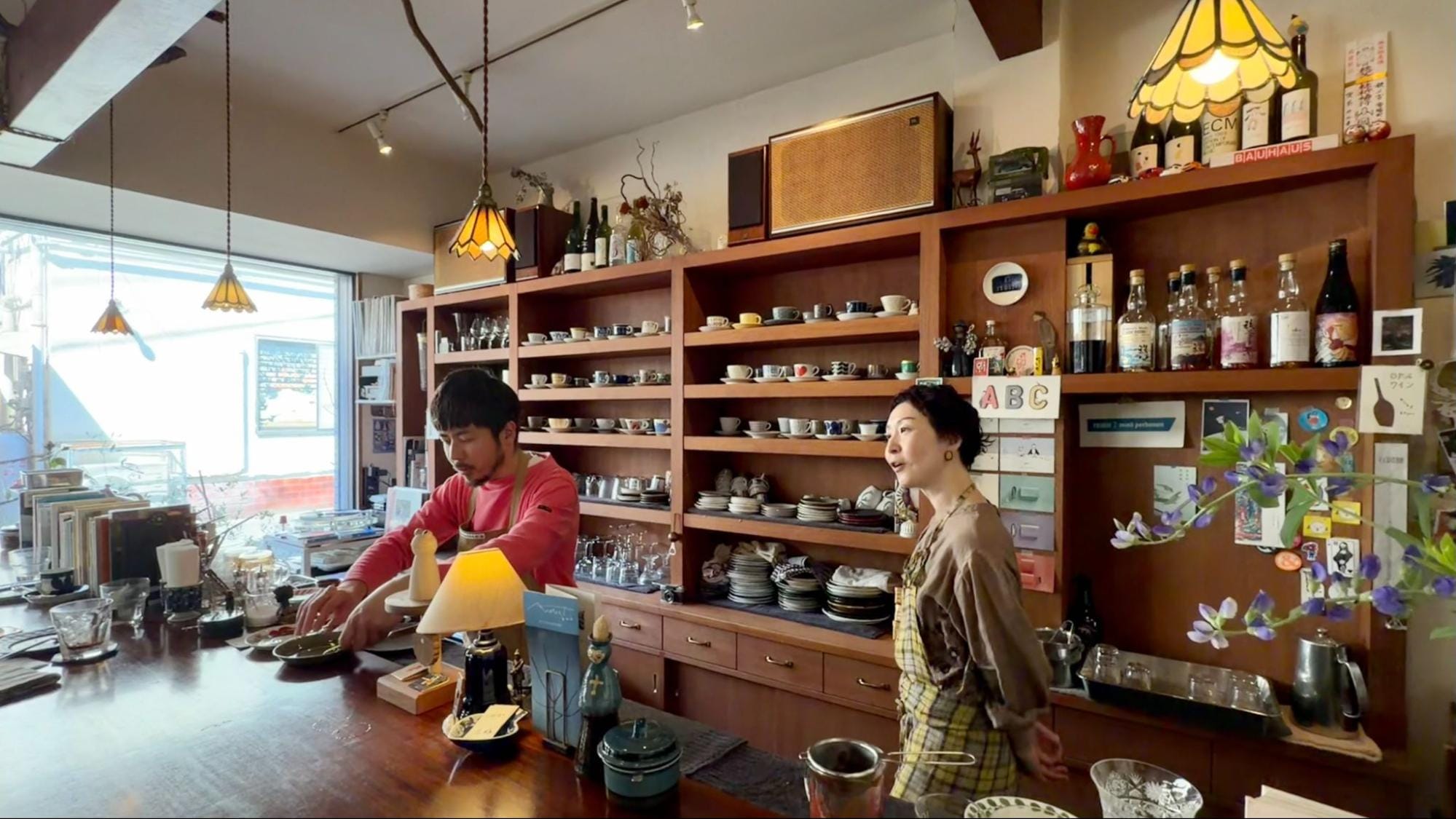
The cafe is run by a husband and wife duo, with an elegant collection of European furniture befitting the town’s vintage atmosphere. From my seat, the hot air from the electric grill ripples the view of a Jazz record on the player by the window.
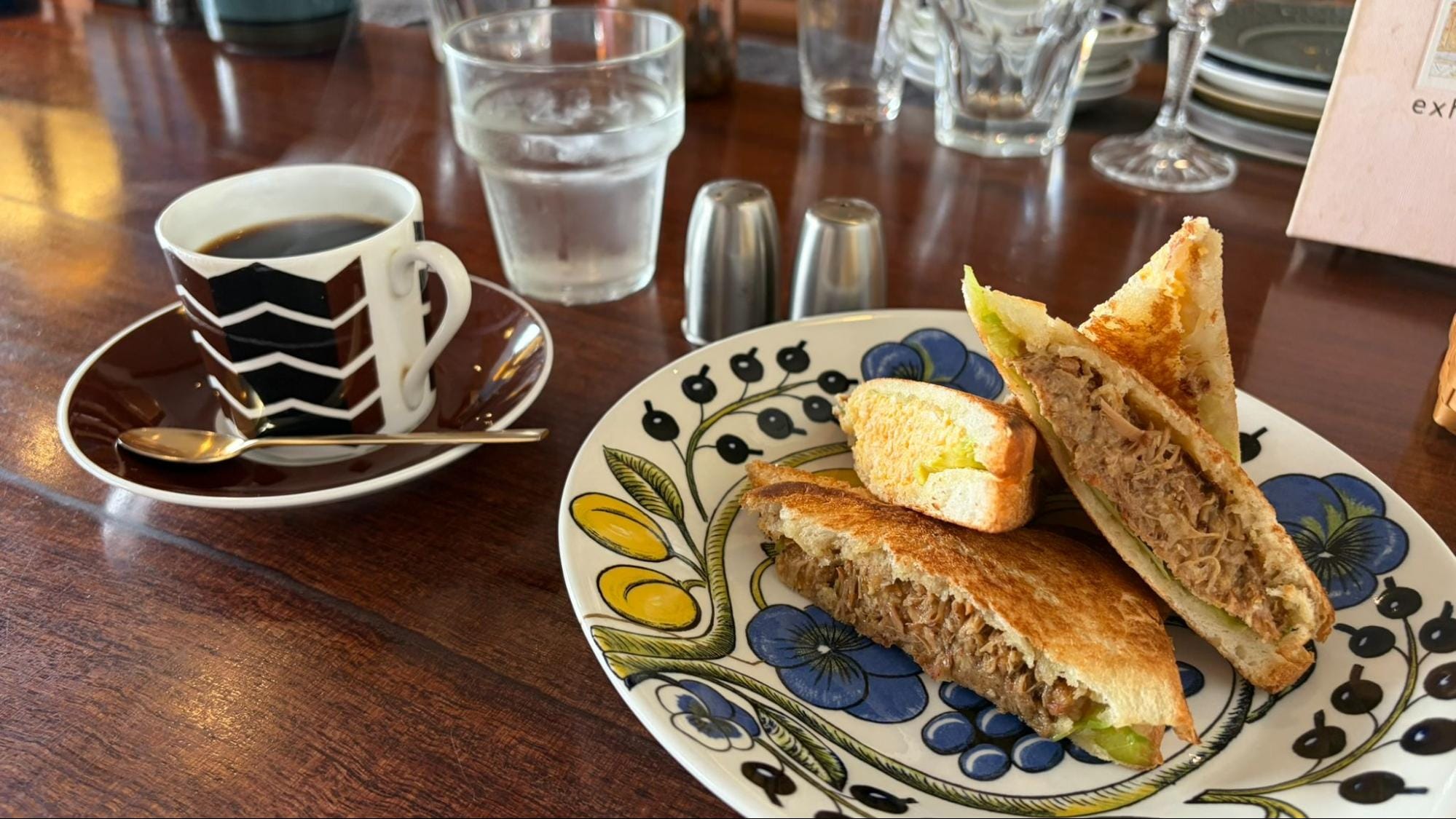
Their pork rillette and Egg Salad sandwiches are among the best I’ve ever had, and are served on beautiful Scandinavian tableware.
There are plenty of lunch options along the high street, including traditional Japanese spots as well as western-style restaurants. My favorite is Cafe Carnet, a stylish cafe run by a friendly husband-and-wife duo. The interior is bright and airy, featuring an impressive selection of antique European furniture as well as carefully selected books and artworks. The cafe’s coffee selection is focussed on aged coffee beans, with drinks and food served on beautiful Scandinavian tableware.
The food menu offers homemade curry as well as pork rillette and egg salad sandwiches – my pick for lunch. The exterior of the sandwiches are grilled until warm and golden brown, while the interior is insulated by a layer of lettuce, creating a beautiful contrast in temperature and consistency. Perhaps one of the best sandwiches I’ve had in Japan.
2:10 pm - Boarding the SL Paleo Express at Ohanabatake station
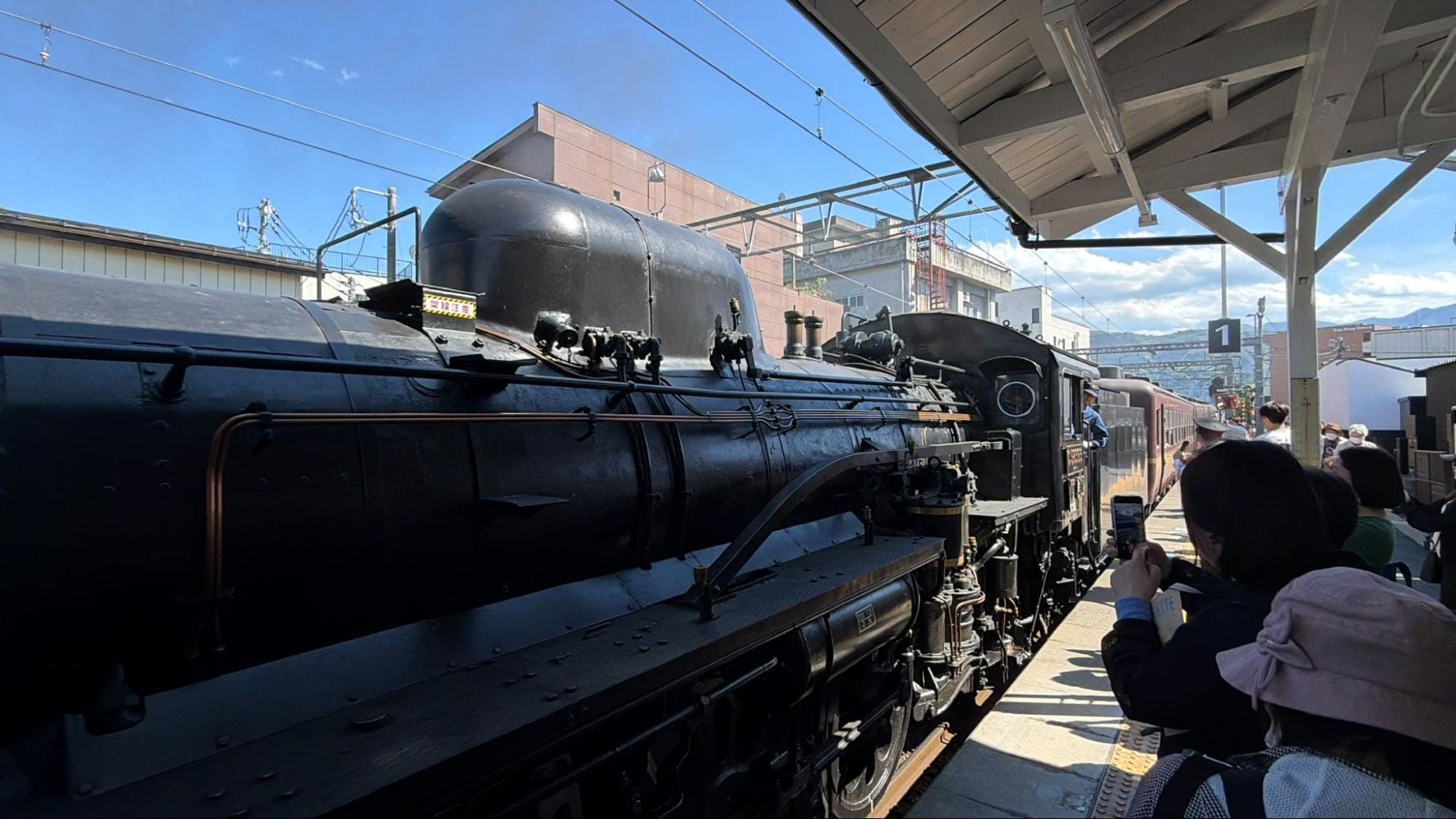
The SL Paleo Express arrives at Ohanabatake in a cloud of dark steam. The locomotive was manufactured in 1944, and was used primarily for shunting and cargo transport before decommission in 1973. It was put on display at an elementary school in Saitama for 15 years before revival for the 1988 Saitama Expo, and has operated between Kumagaya and Mitsumineguchi ever since.
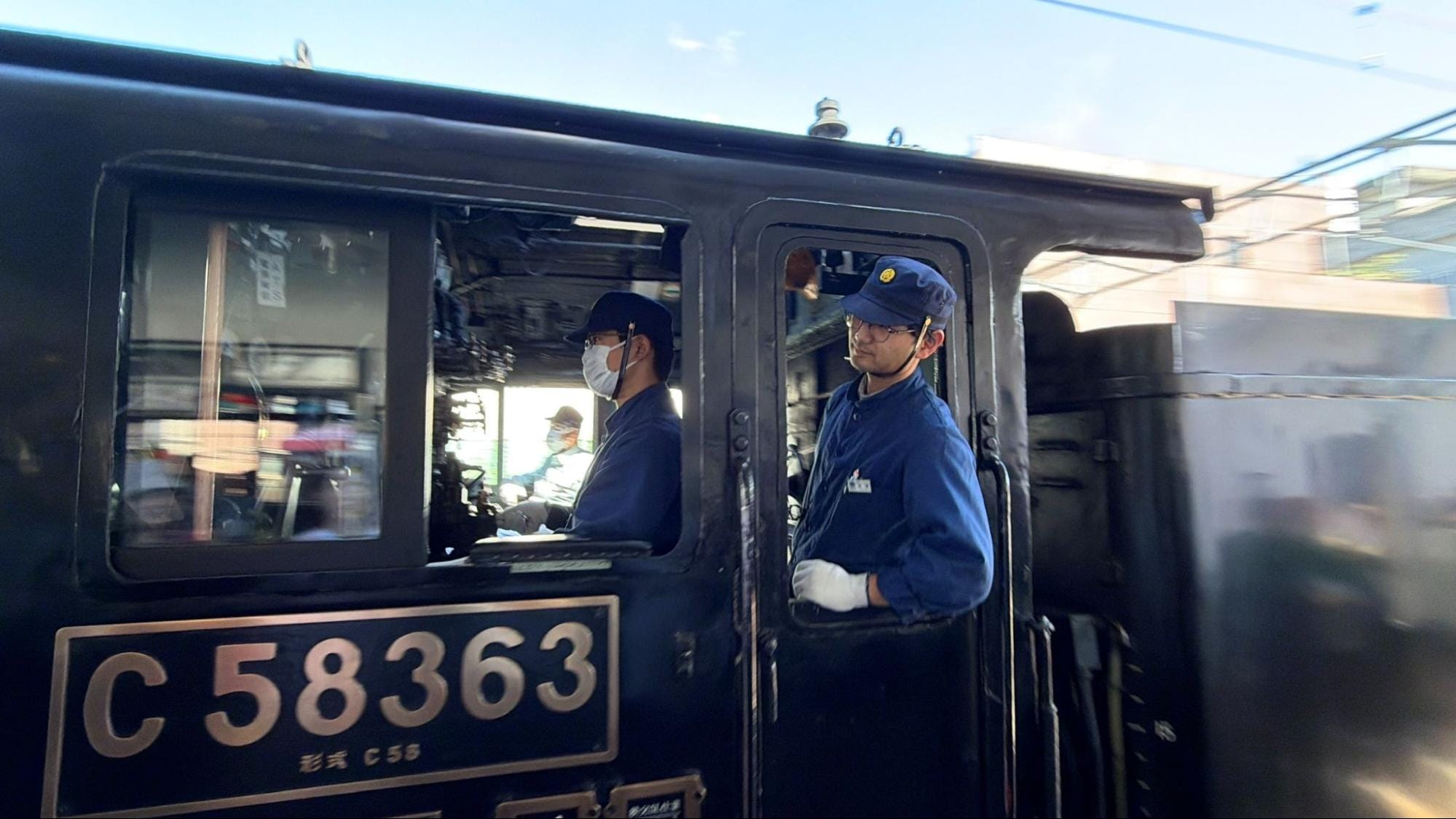
A Railway Engineer leans from the driver’s cab window as the locomotive pulls into Ohanabatake station.
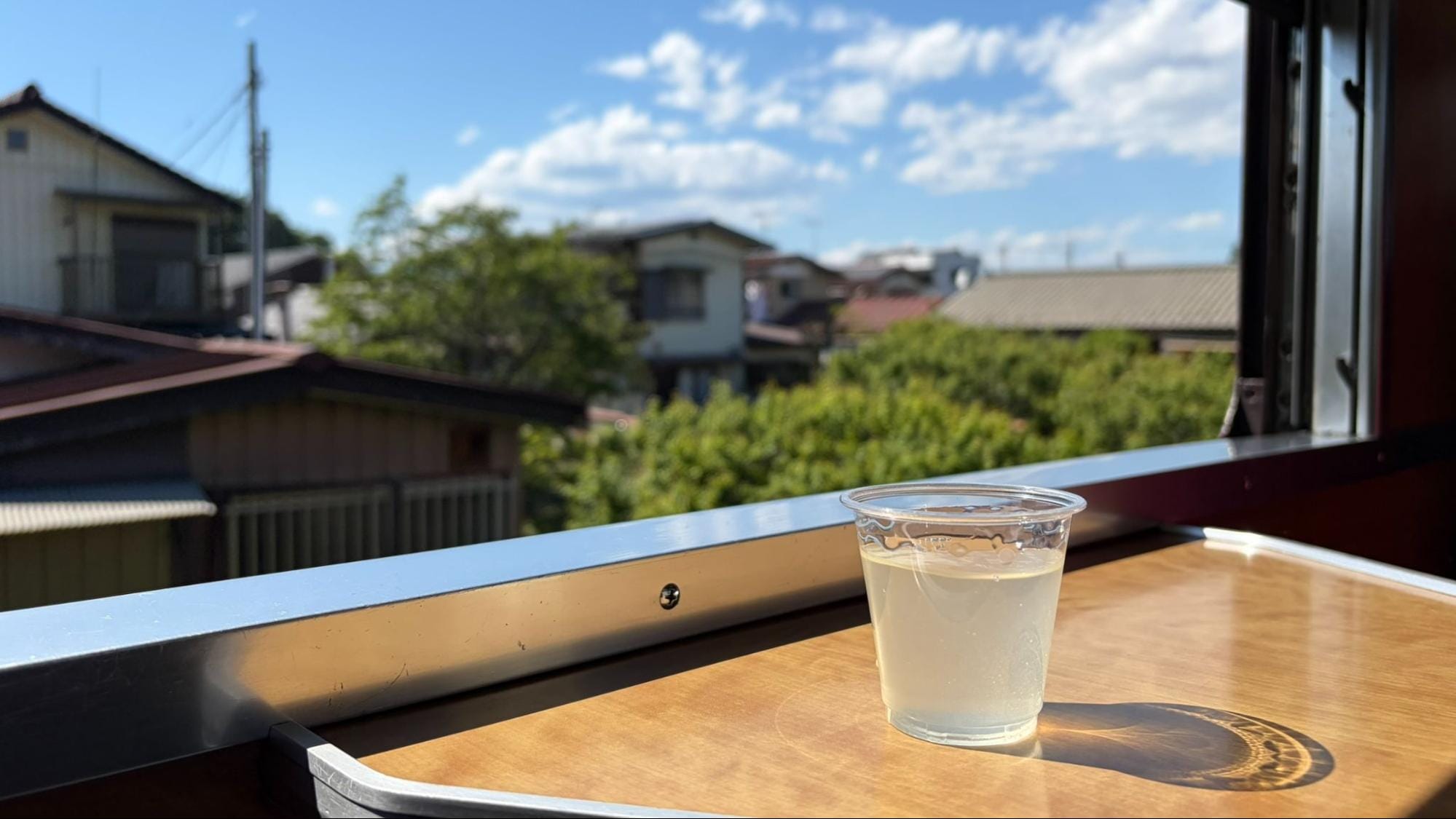
Ice cream, snacks, merchandise, and even cups of local sake are available from both the onboard sales booth and roaming snack carts. I was able to purchase a 90ml cup of local nigori sake for ¥400.
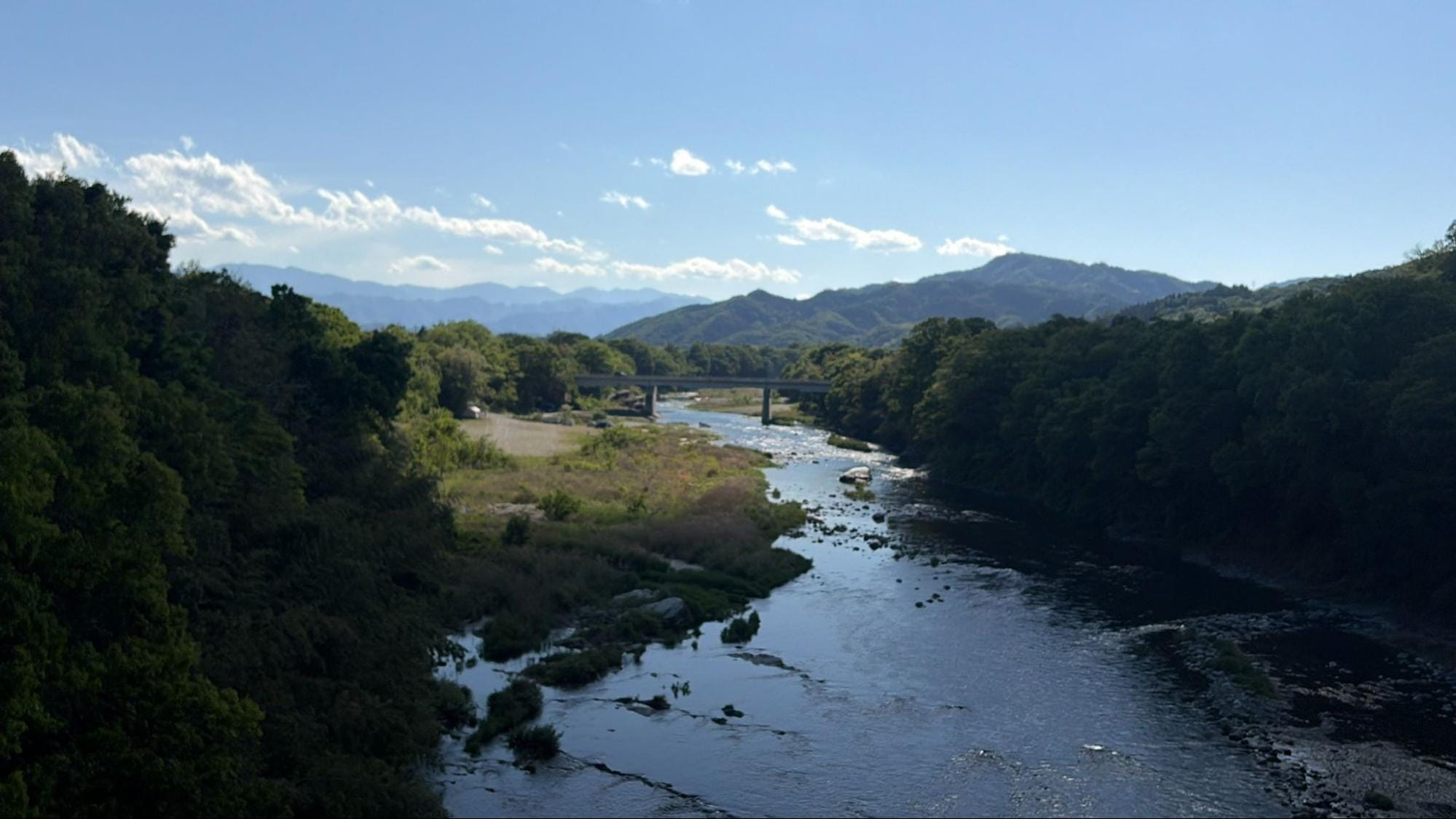
The locomotive weaves its way through mountainside villages and countryside fields on its procession through the ancient Chichibu valley, passing historic concrete factories and making several crossings over wide rivers.
The SL Paleo express is Tokyo’s nearest operational steam train, running every weekend between Mitsumineguchi and Kumagawa. The locomotive spent its first 30 years hauling cargo in Japan’s northern Tohoku region before being decommissioned and put on display in a Saitama elementary school. It was revived for the 1988 Saitama Expo and has remained in service ever since. The locomotive races through the Chichibu Valley’s stunning scenery, passing idyllic fields, clear-flowing rivers, quaint villages and historic factories. Exclusive merchandise, refreshments and local Sake are available on-board.
3:15 pm - Exploring Nagatoro
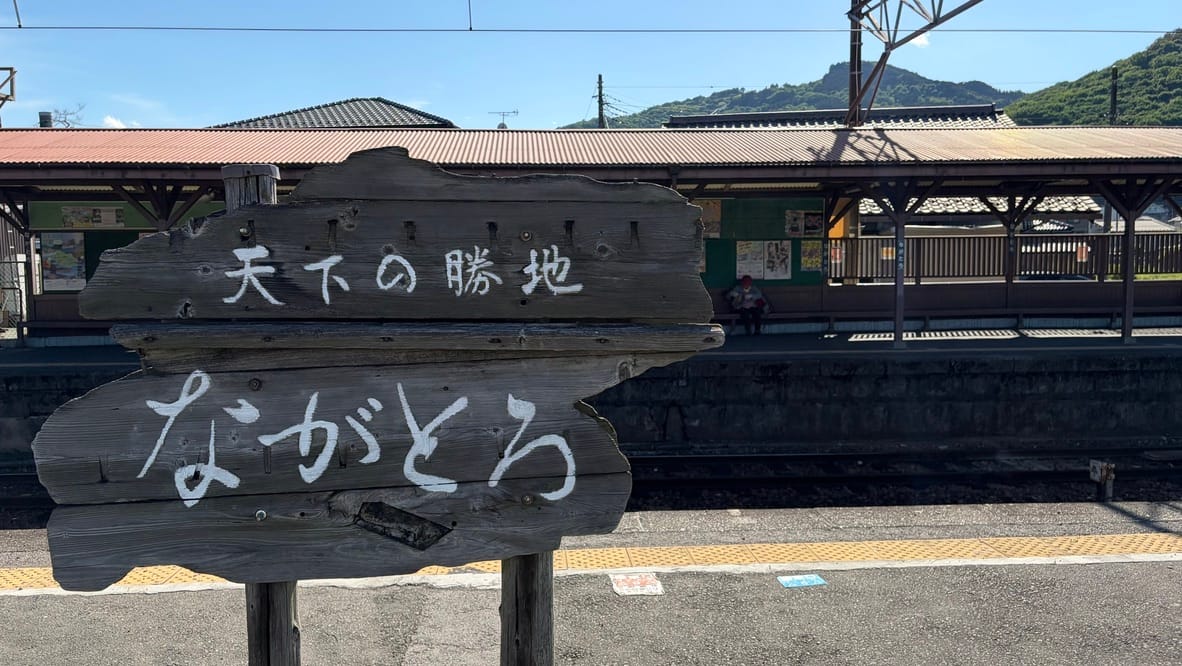
The sign at Nagatoro station– Just one of many preserved from the station’s past. Visible in the back is the peak of Mt. Hodo, which overlooks the town.
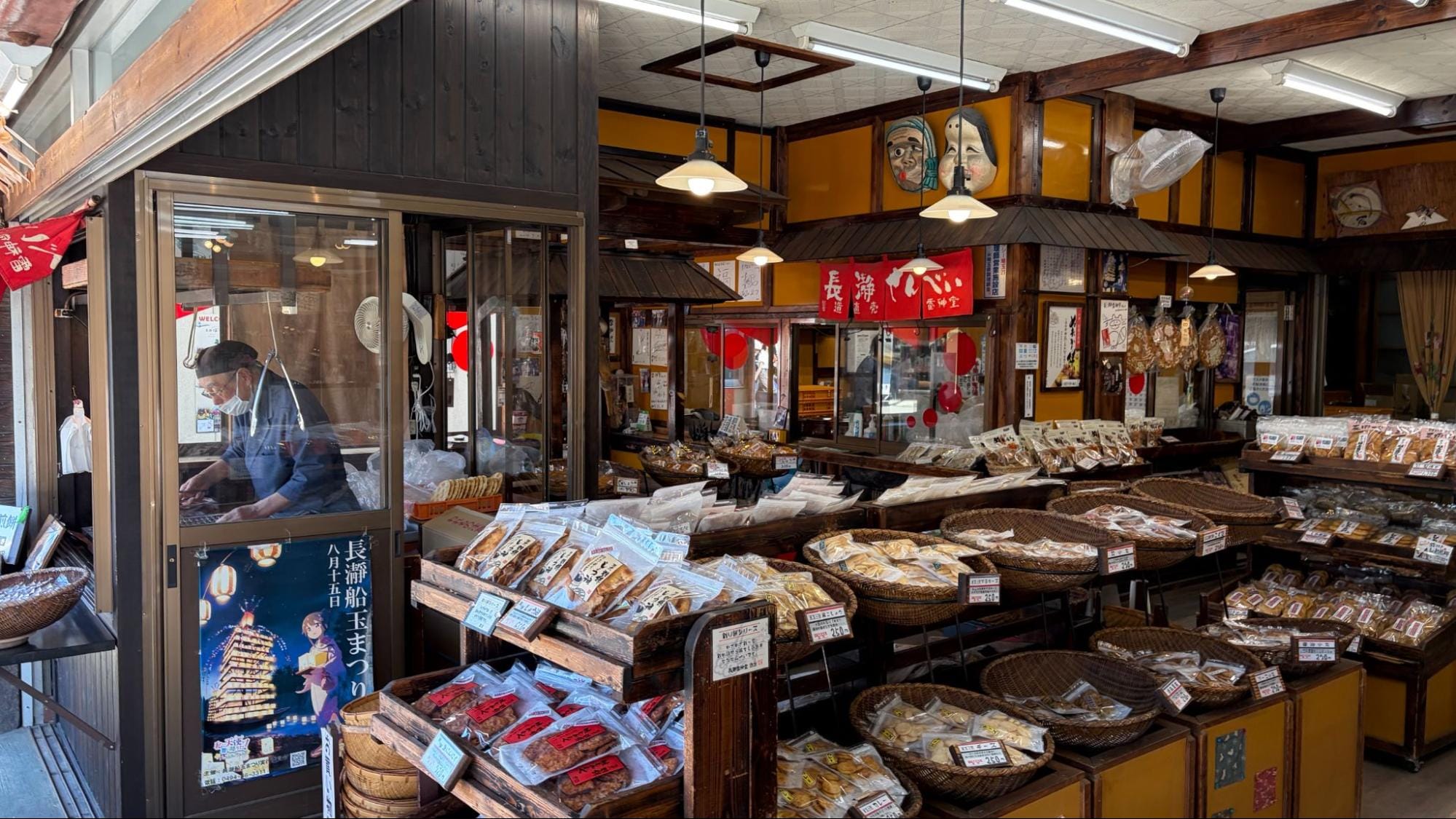
The town is home to Iwatadami High Street, a must-visit for foodies. Pictured is Marubutsu, a producer of traditional senbei (rice crackers). Be sure to line up for the chance to enjoy one straight from the grill.
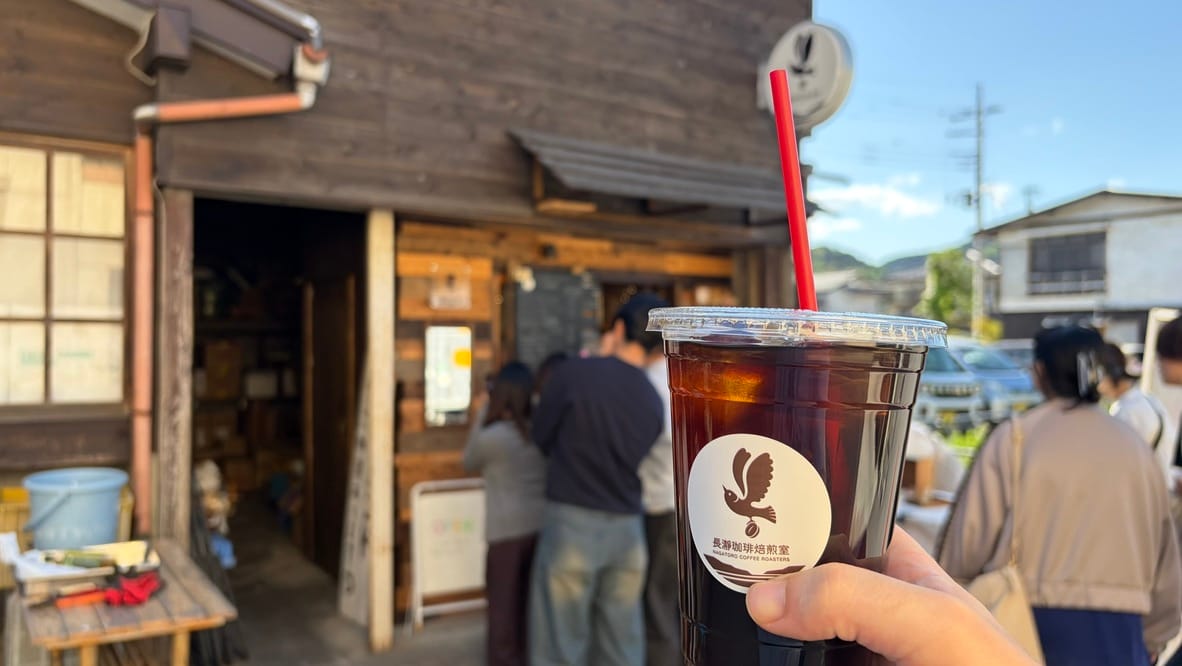
The high street is also home to Nagatoro coffee roasters, who make a delicious cold brew coffee as well as offering a variety of original coffee beans and blends. A strong recommendation.
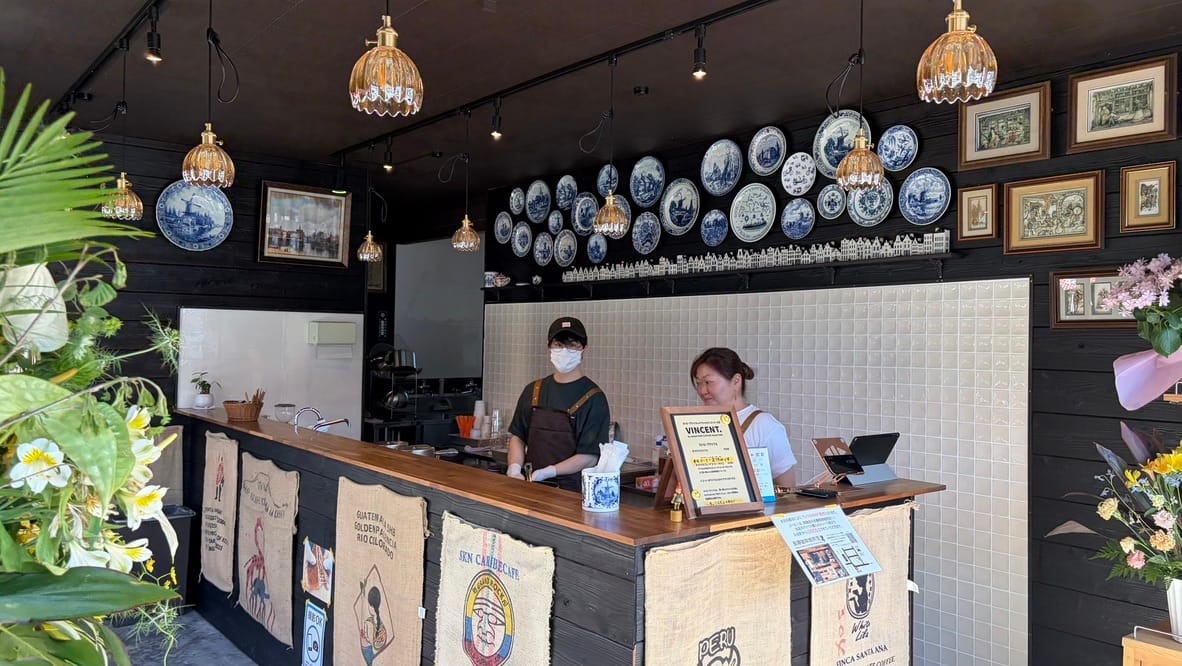
An authentic Dutch stroopwaffel cafe may be the last thing you’d expect in the middle of rural Saitama, but the quality at Vincent speaks for itself. A subsidiary of Nagatoro Coffee Roasters, the storefront serves homemade caramel waffles with specialty coffee in a space decorated with antique delft tableware.
The train arrives in Nagatoro at 3:15 after crossing the 100-year old Arakawa bridge, the longest on the Chichibu railway’s main line. Nagatoro city is known as the birthplace of Geology in Japan, and is home to breathtaking natural sights, popular hiking spots, historic temples, and Edo-period silkworm houses. The town is also home to Iwatadami High street, a must-see spot for food lovers featuring local coffee roasters, regional produce, and street vendors.
The town is also home to the Hodosan ropeway, a cable car connecting to the peak of Mt. Hodo. The mountain is famous for its beautiful flowers and panoramic views, as well as its animal park. Further along the river sits the Saitama Museum of Natural History, which serves as a base for education and research about the area’s geology. If you’re interested in visiting, head straight there after arriving in Nagatoro – the museum’s last entry is at 4:00pm, with closing time 30 minutes later.
A walk along the Iwadatami Rocks and Nagatoro River, The birthplace of Japanese Geology
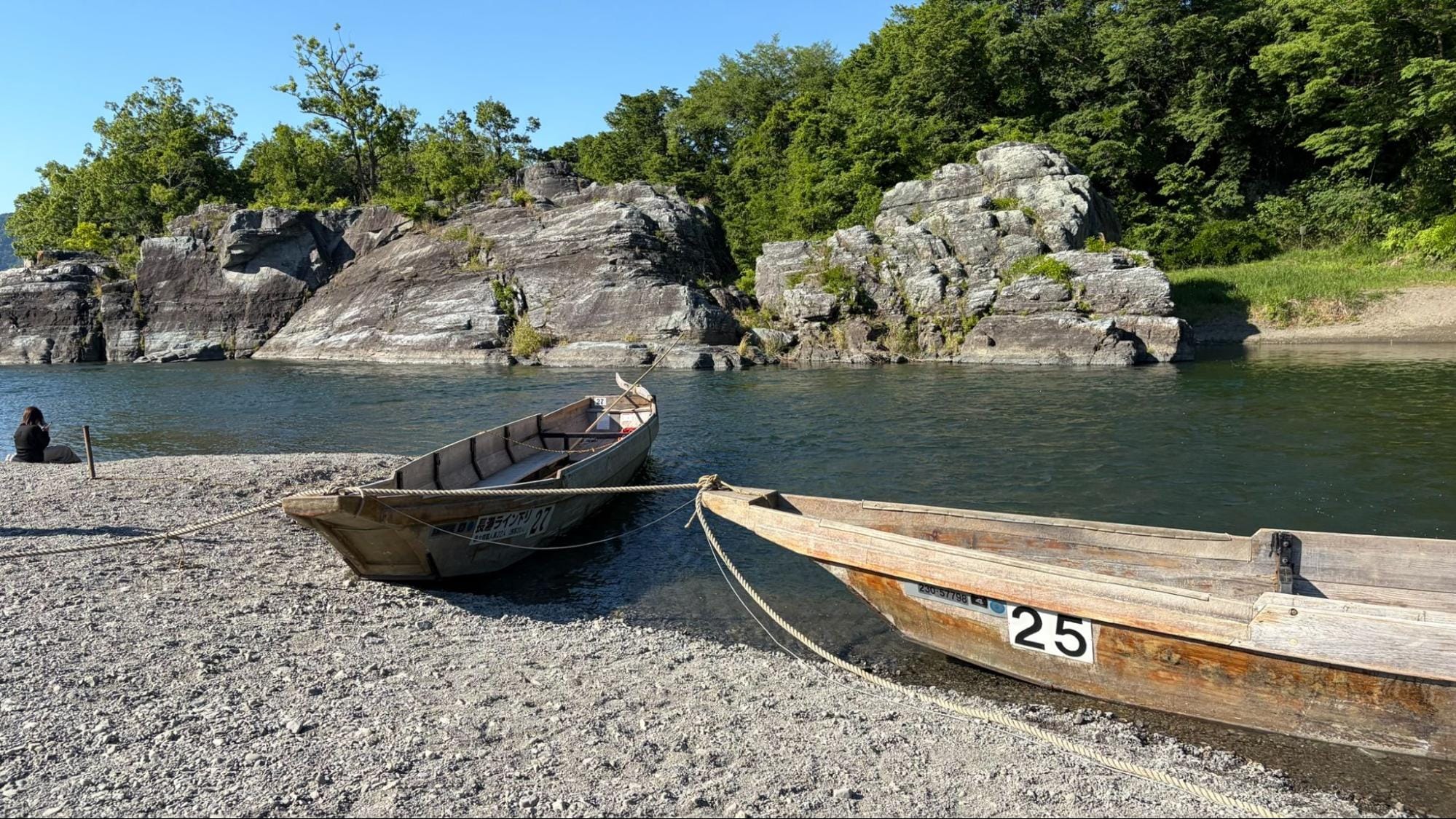
The long wooden boats await their passengers on the gravelly shore of the Nagatoro river. Visitors can enjoy a relaxing cruise of the valley’s landscape, or ride the rapids on an inflatable raft.
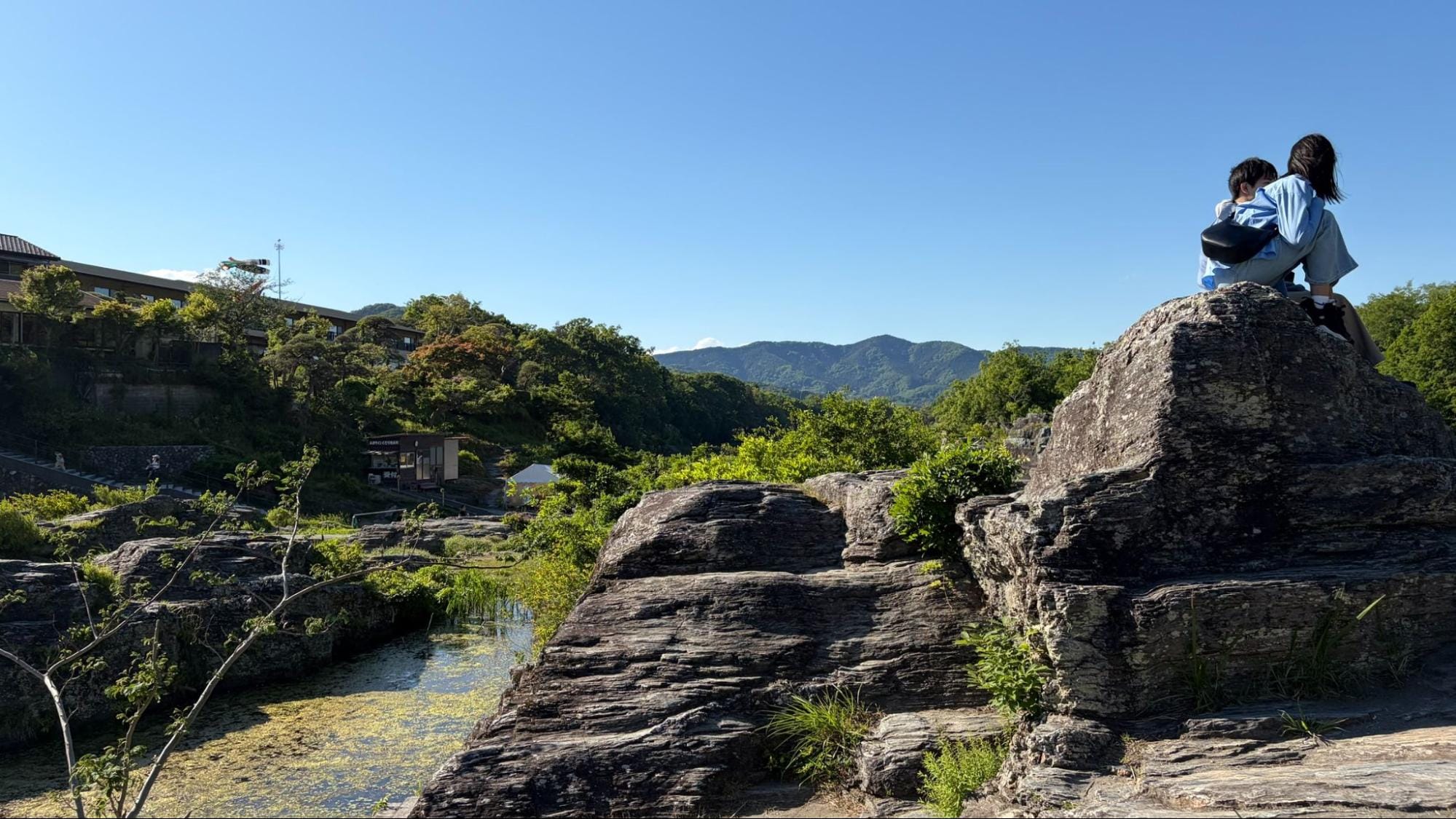
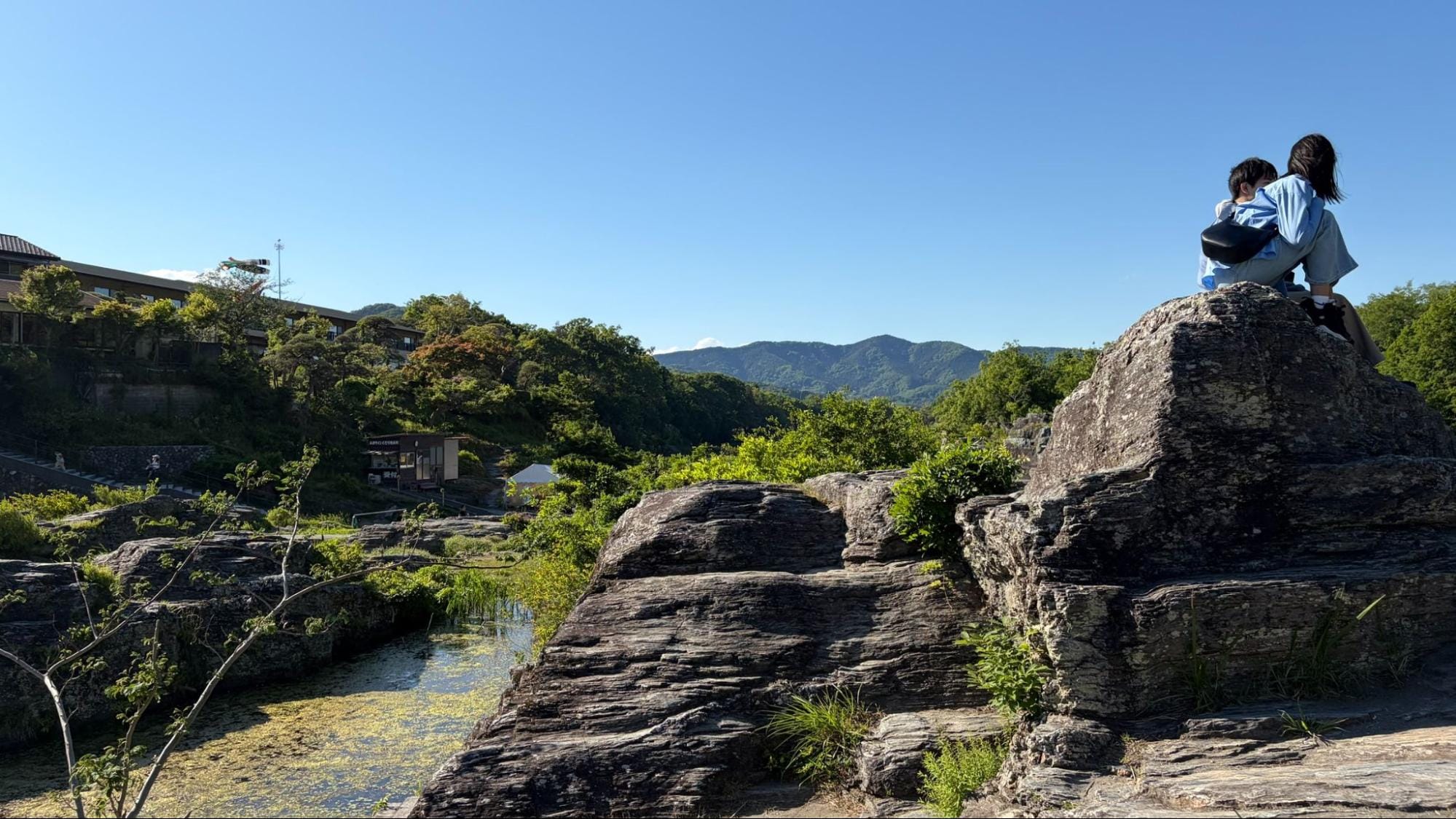
The unique formations of the Nagatoro River are the result of incredibly ancient and complex geologic processes, layer over layer of rock to create flat terraces of striated crystalline schist.
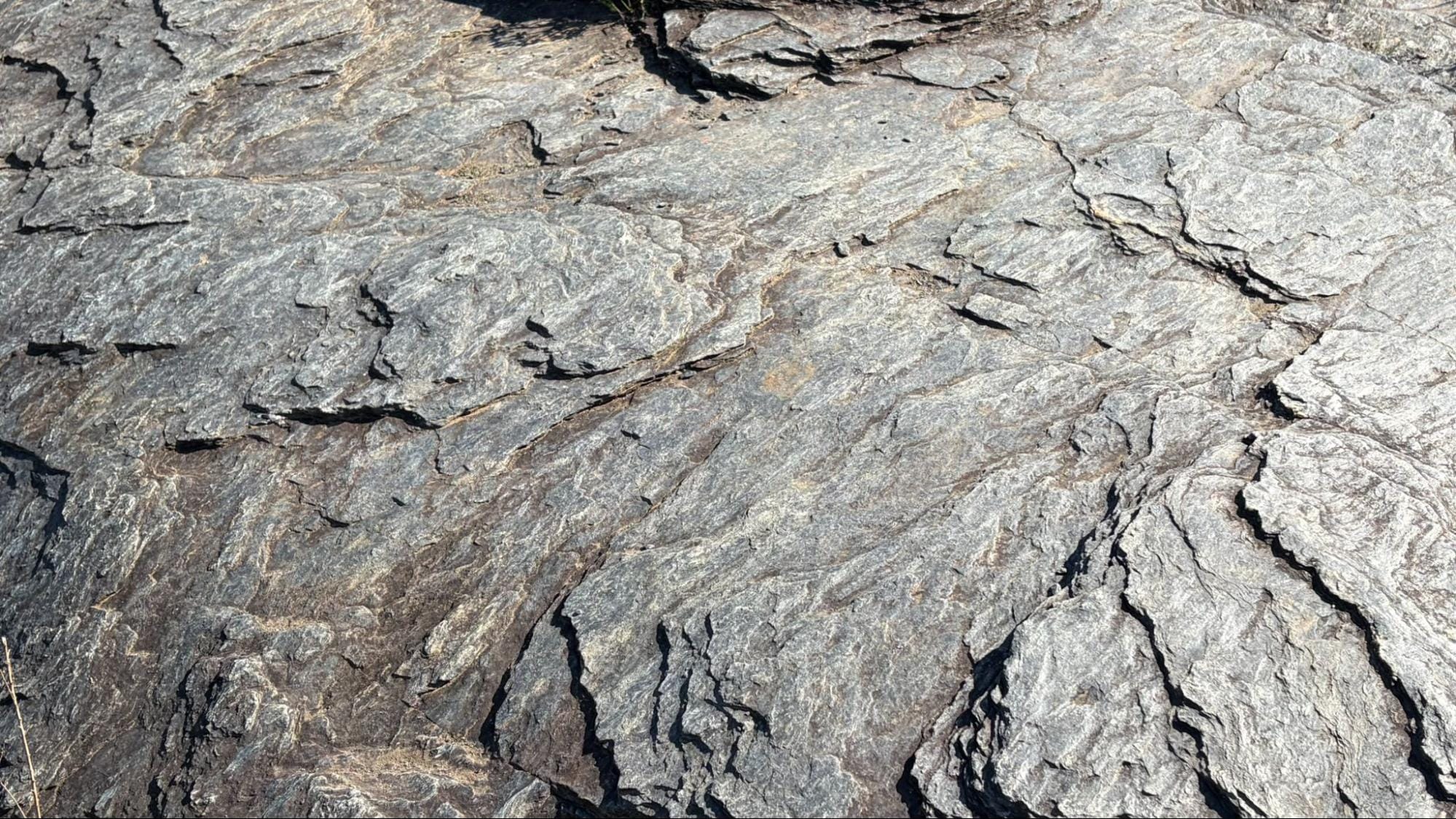
The exposed crystalline schist bedrock at Iwatadami. The rock’s texture comes from intense subterranean pressure forcing layers of igneous rock into crystalline horizontal sheets.
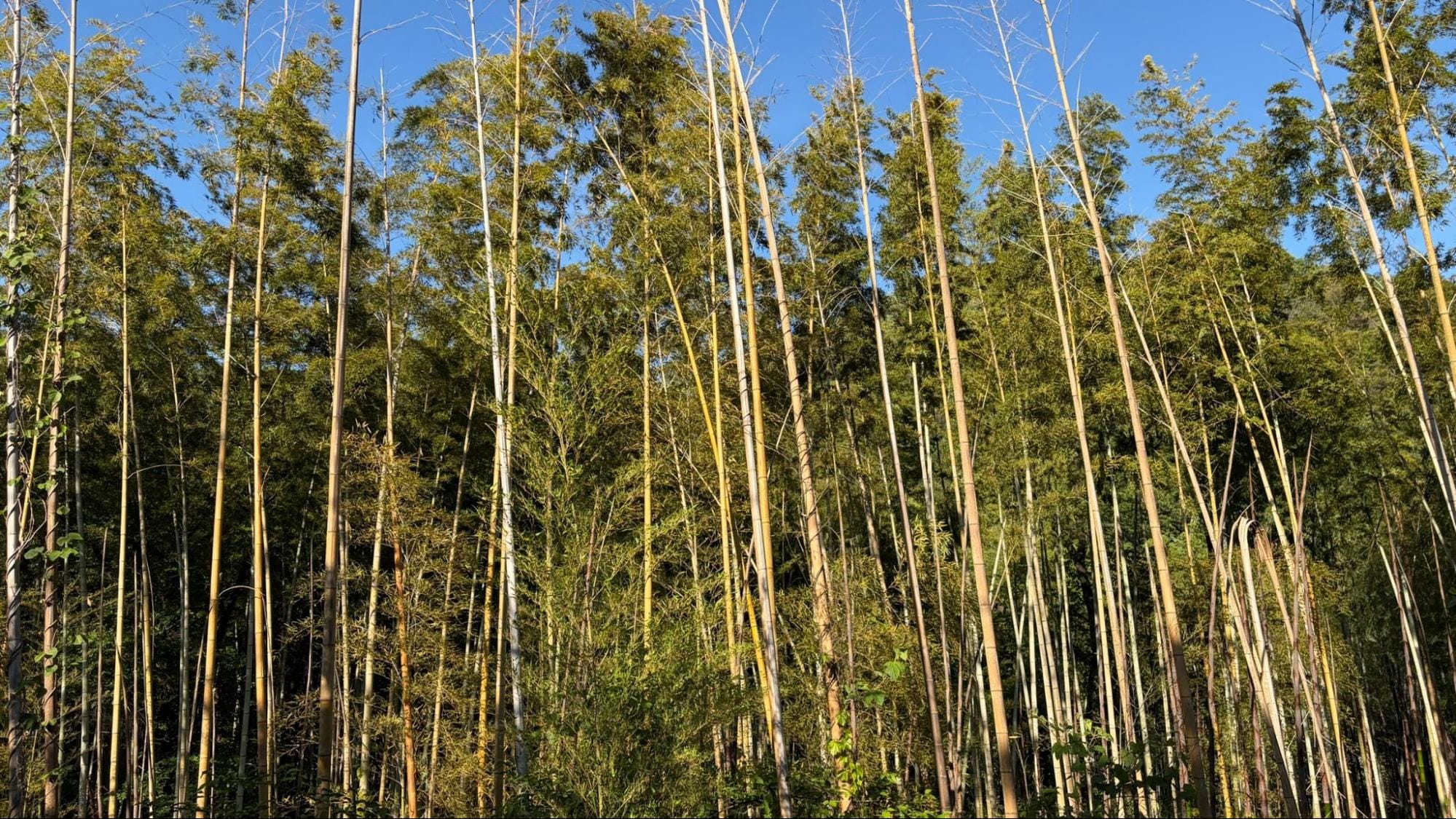
Further along the river’s shore stands a bamboo stalk grove rattling wooden in the wind.
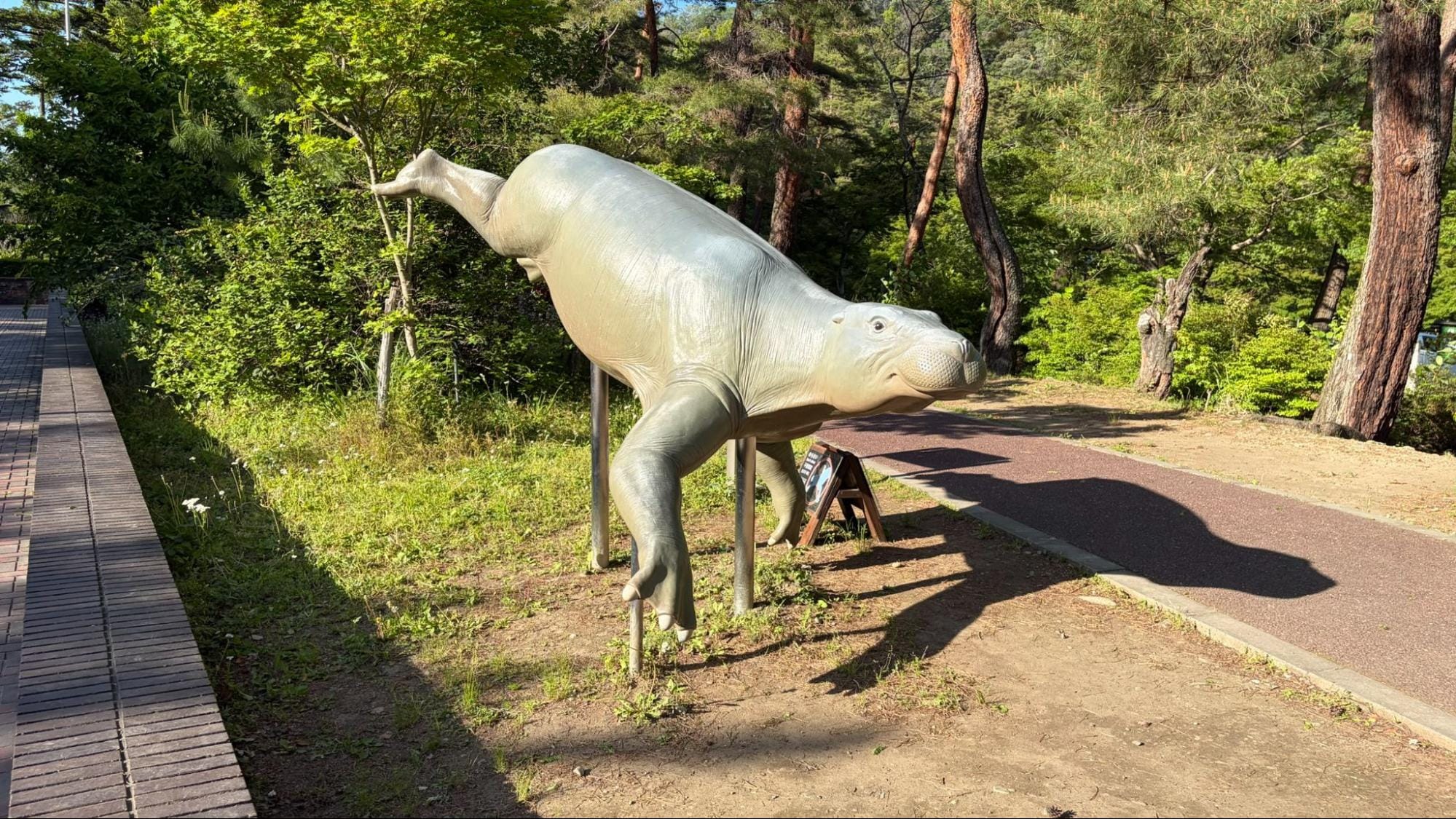
The statue of Miocene-era marine mammal Paleoparadoxia outside the Saitama Museum of Natural History. The first paleoparadoxia fossil discovered in the region was excavated in 1975, and was the second-ever full-body fossil excavated since the species’ initial discovery in 1923. Out of the 50 paleoparadoxia fossils unearthed across Japan, 10 have been discovered in the Chichibu region.
The end of Iwatadami High street opens onto a view of the Iwatadani river, the site of important discoveries in early Japanese geology. The mountain ranges of the Chichibu region consist of rock formed during submarine volcanic eruptions during the Paleozoic era. These massive bodies of rock were then carried beneath the island’s landmass before being pushed out of the earth by formations underneath, preserving a record of the ancient seafloor. The area around the Iwatadami river is especially notable for its extraordinary cross-section of geologic history and its uniquely striated rock formations, as well as its bountiful fossil deposits.
For the reasons above, the area would become an immediate site of fascination for professor Heinrich Edmund Naumann, the first professor of Geology at the University of Tokyo. The professor made expeditions to the region in 1878, and it would become a popular site for scientific examination, earning its moniker as the birthplace of Japanese Geology.
The area would also go on to be visited by a young Kenji Miyazawa, writer of important literary works such as the children’s book Night on the Galactic Railroad and the poem Ame ni mo Makezu. Miyazawa penned a pair of Tanka (short-form poems) about his visit to the area which are memorialized in stone on the river’s bank.
Notable sites along the river include the twisting Recumbent Fold formations along the terrace, the Chichibu Red Cliffs, and their twin waterfalls. The river is also famous for its river rafting cruises, which take passengers on a tour of the landscape in traditional wooden boats. More adventurous visitors may also enjoy white water rafting across Nagatoro's foamy rapids.
Local food experiences in Chichibu
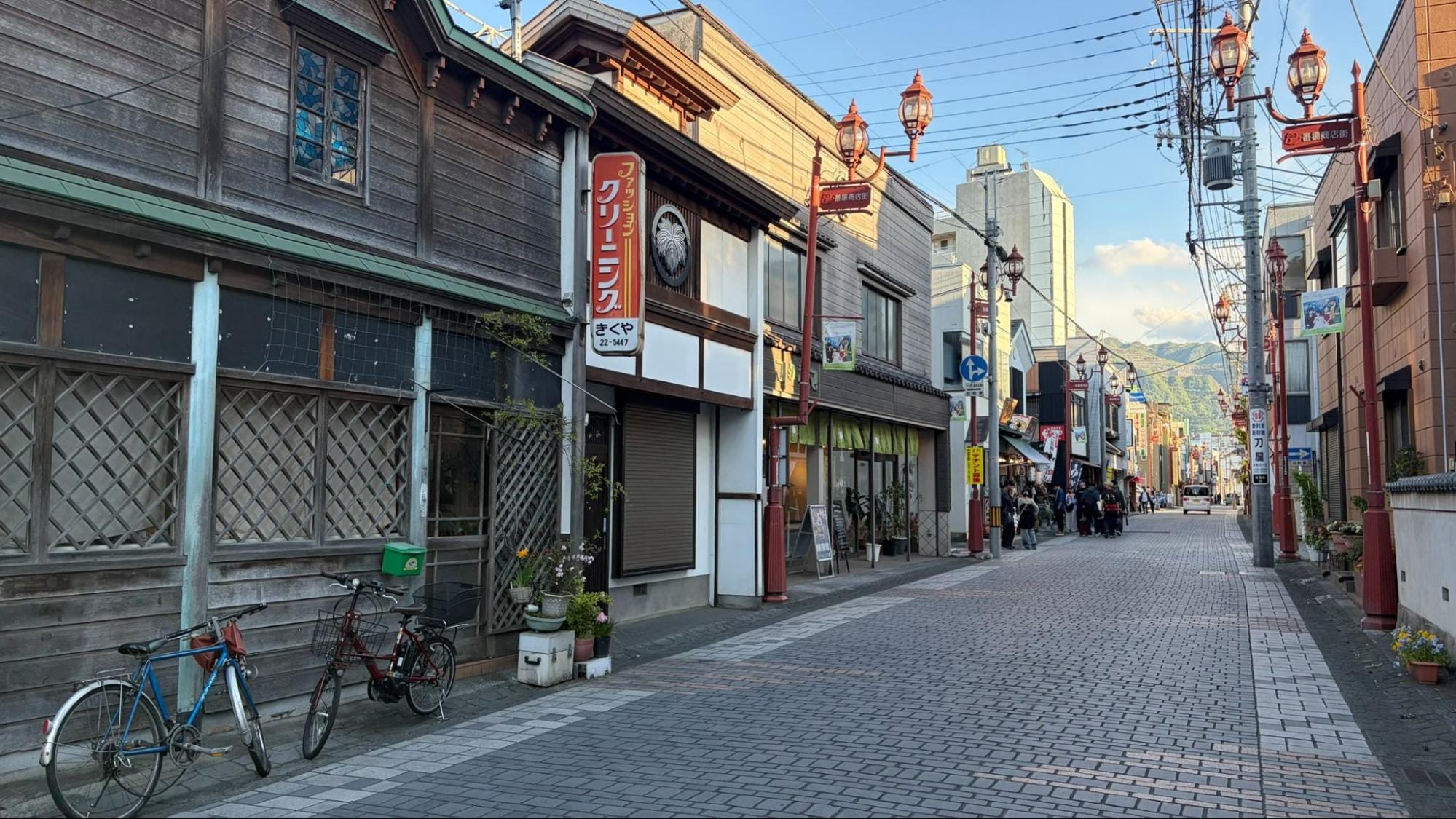
Banba street’s retro townscape shines golden in the afternoon light.
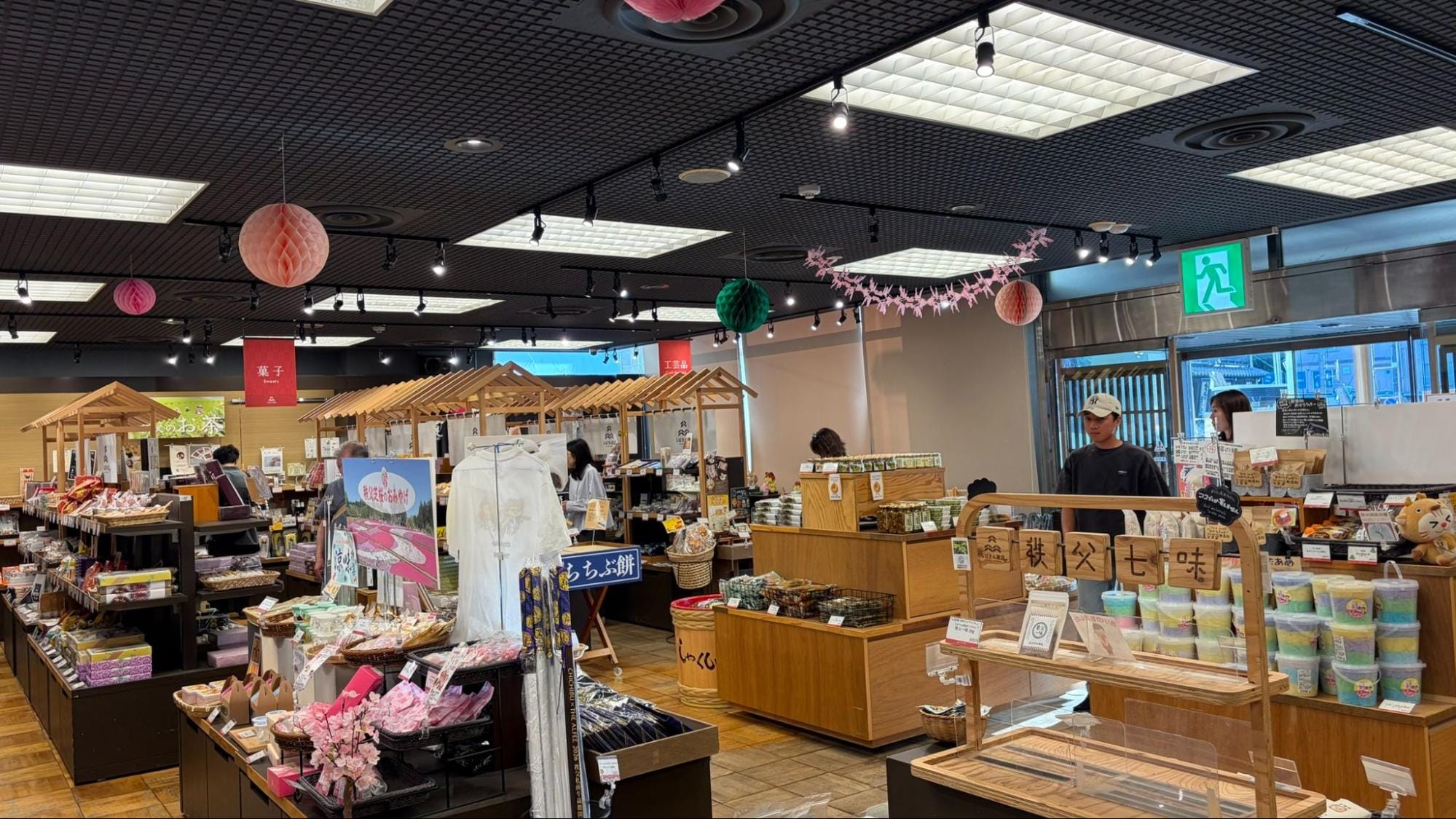
The main hall at Jibasan, a store dedicated to the produce and crafts of the Chichibu region. Miso is the area’s most famous product, with Miso Potato an especially well-known dish. Aside from traditional foodstuffs, local crafts such as Tenegui towels and Glassware are are prefect souvenirs of the region.
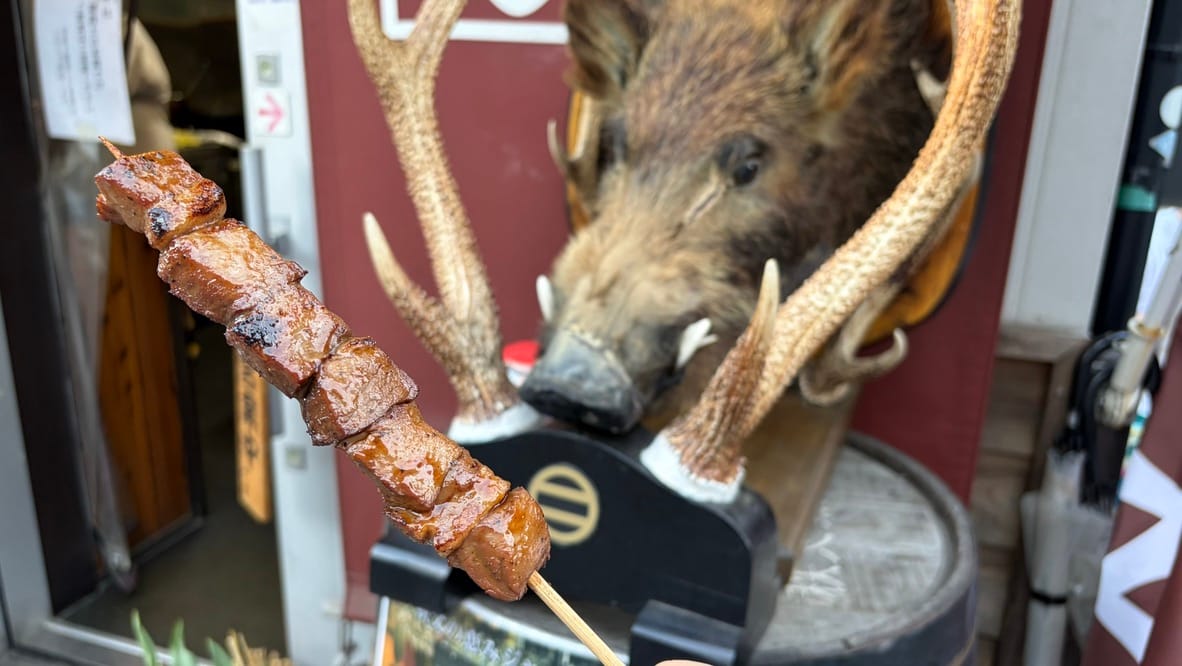
A boar meat skewer from Jinjinba on Banba street. The chef cooks the skewers on a grill beneath the shopfront’s window, fanning the flame and launching specks of red-hot ash into the air. This was my first time tasting wild boar – the flavor was decidedly earthy and evocative of a life spent sniffing soil. The Tare sauce was dark and sweet; an effective counterpoint to the meat’s wilderness flavor.
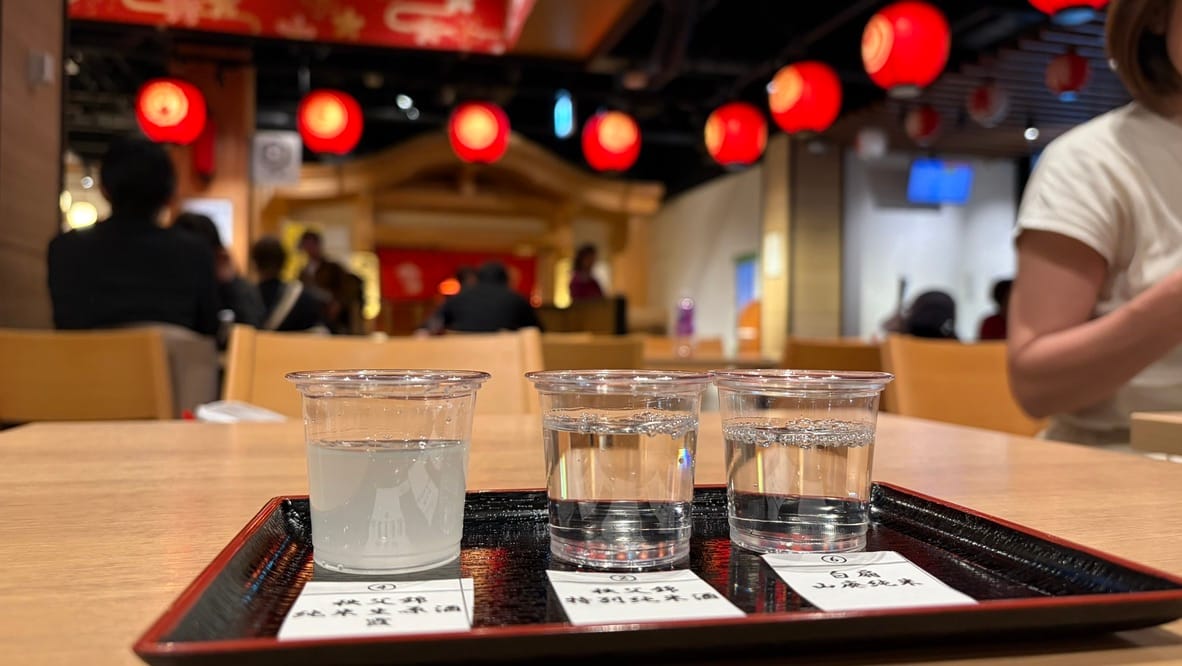
A flight of 3 varieties of sake from Chichibu Nishiki are available from 1,000 yen. My favorite was the Kasumi Nigorizake, which contains unfiltered particulates from the rice grains typically removed during the brewing process, resulting in a more complex flavor.
After taking in the sights of Nagatoro, regular southbound train services on the Chichibu line return us to our starting point for further exploration of the region’s local foods.
Alight at Chichibu station for Jibasan, a store offering local produce such as Miso Potato chips, Chichibu Sake, Miso paste, and local-grown Tea. Walking back into town, Banba street offers a variety of dinner options. My pick is Jinjinba, which specialize in meat skewers and stews made from the wild Boar and Deer indigenous to the region. Back at the Seibu-Chichibu station, you can find a large food hall featuring a further selection of restaurants making locally-sourced dishes and regional cuisine. The store also offers flights of sake produced by Chichibu Nishiki, a local brewery founded in 1749.
When you’re ready to leave, you can purchase a return ticket for the Laview at the station.
***
As inbound tourism to Japan continues to increase, it’s easy to despair that every excursion will be met with an inevitable crowd of other visitors. But just beyond the beaten track lie plenty of opportunities to discover somewhere new.
Chichibu is one such place– and a special one for me. Before moving to Japan, I was already enamored with the work of SANAA, as well as with trains in general. Riding the Laview was one of the most exciting opportunities that would come with the move, while its destination was essentially secondary in priority. I believe I only began to research Chichibu after boarding the train. It was the last day before beginning language school, and I think I felt the need to put some distance between myself and my new city as a last reminder that the world was larger than the place I’d spend so much time committed to a single task. I had no way of knowing how incredible the region I’d discover would be.
It is my hope that you will find it as special as I do– it’s a place that deserves to be experienced.