You’d be forgiven for thinking that everything is a bit topsy-turvy right now. Truth seems to matter less than manufactured narratives, integrity is the first sacrifice to the altar of self-gratification, and empathy has become the sign of weakness over power. In such a world, how on Earth are we supposed to bring up our children to become good adults?
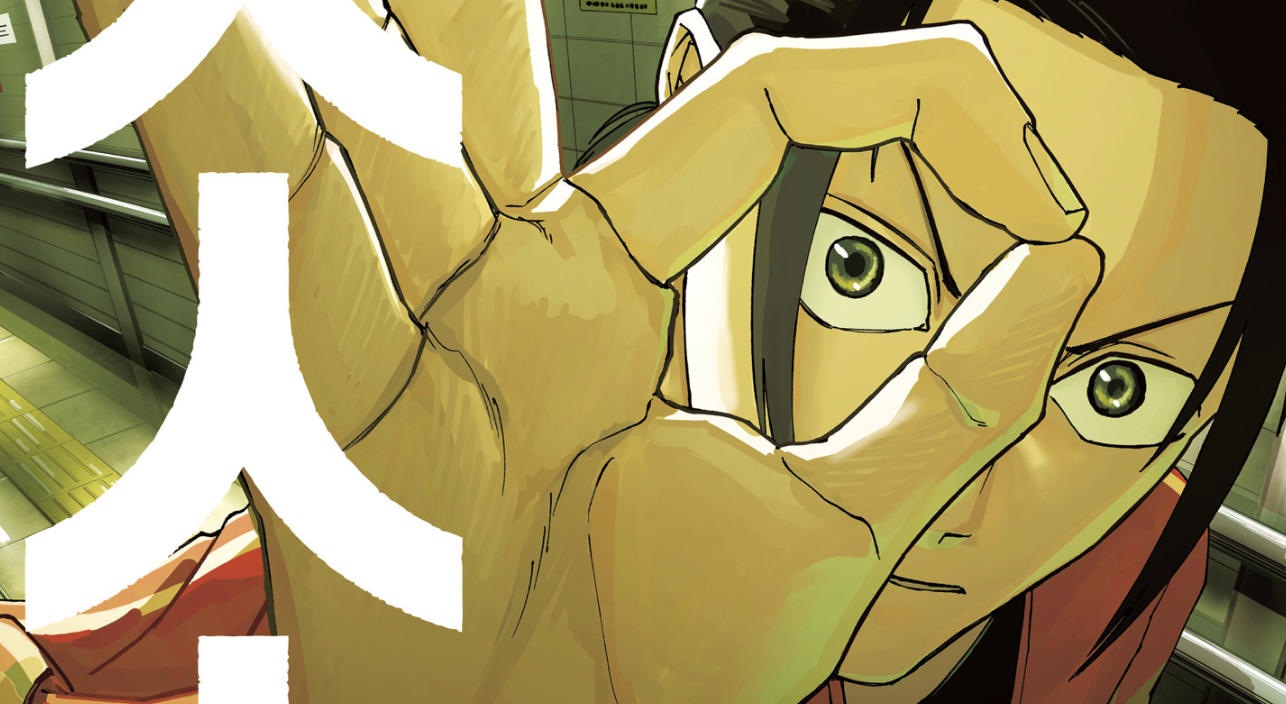
Such is the kind of moral conundrum that War of the Adults proceeds from. Kappy’s latest series in collaboration with rookie artist Masaaki Tsuzuki couldn’t be further removed from the sports action of Eren the Southpaw, but the departure is a welcome one. Alongside the fact that it took home fourth place in the web category of the Next Manga Awards earlier this year, it’s one of the most entertaining things I’ve read all year and might just be the best thriller manga since Death Note in 2003.
In terms of setup, Yutarou Urashima is an ex-delinquent trying to become a proper adult. Given his tendency for violence and quick action over calm words, the process isn’t exactly easy, but it's an essential one following the death of his father. So intense is his desire to get on the straight and narrow that he starts writing a document for himself called the “Articles of Adulthood," made up of different rules and maxims like “Don’t get into fights” and “Don’t do bad things, even when no one is watching.”
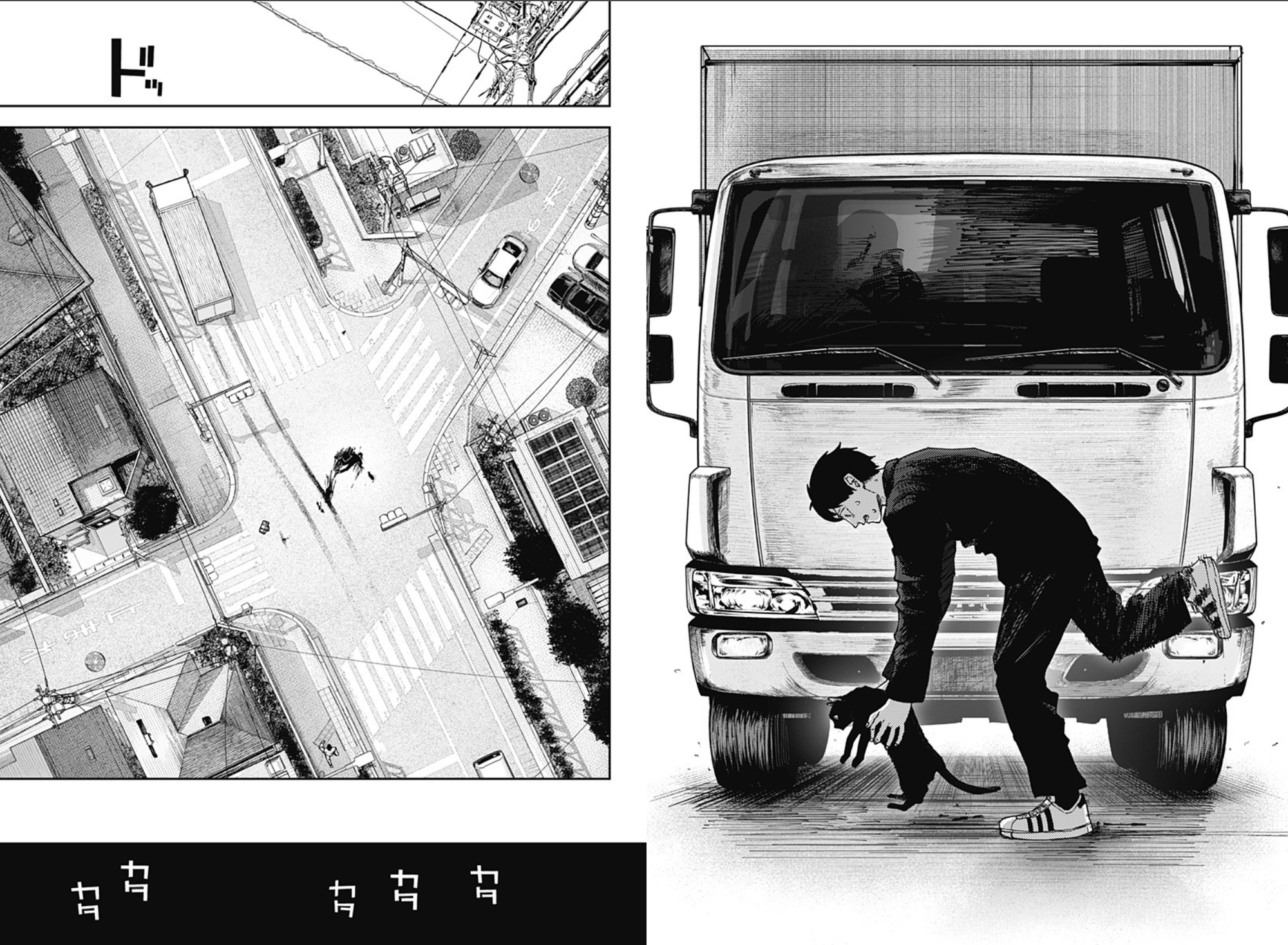
These ideals then nearly get him killed. His body moves before his head finishes thinking when he sees a cat about to get hit by a truck, resulting in one rescued feline and one boy in a coma. Fast forward fifteen years later and Urashima eventually wakes up to a society entirely changed, governed by a mysterious social surveillance system known only as Garden that just so happens to be based on his own writings.
Exposition like this comes thick and fast at the beginning of War of the Adults, but all of it is necessary to set up the rules of this alternative future and the world that the characters inhabit. Kappy’s story is one that plays out like a video game, building the narrative out from concrete systems and the way that they interact with each other. At the same time, he understands that mystery is the driving force behind any good plot, so parts of the way that Garden works are left deliberately opaque and unexplained.
Discovering this bizarre world is an exciting experience in and of itself. Ever since the advent of Garden, adults and children are no longer divided by an arbitrary age of consent. Instead, whether or not you are a grown-up comes down to your Adult Rank: something decided by the approval of your peers transmitted through the system itself. Your life is also essentially on a live stream 24/7 as anyone can use your name to observe you through the abundance of cameras installed in both public places and private abodes.
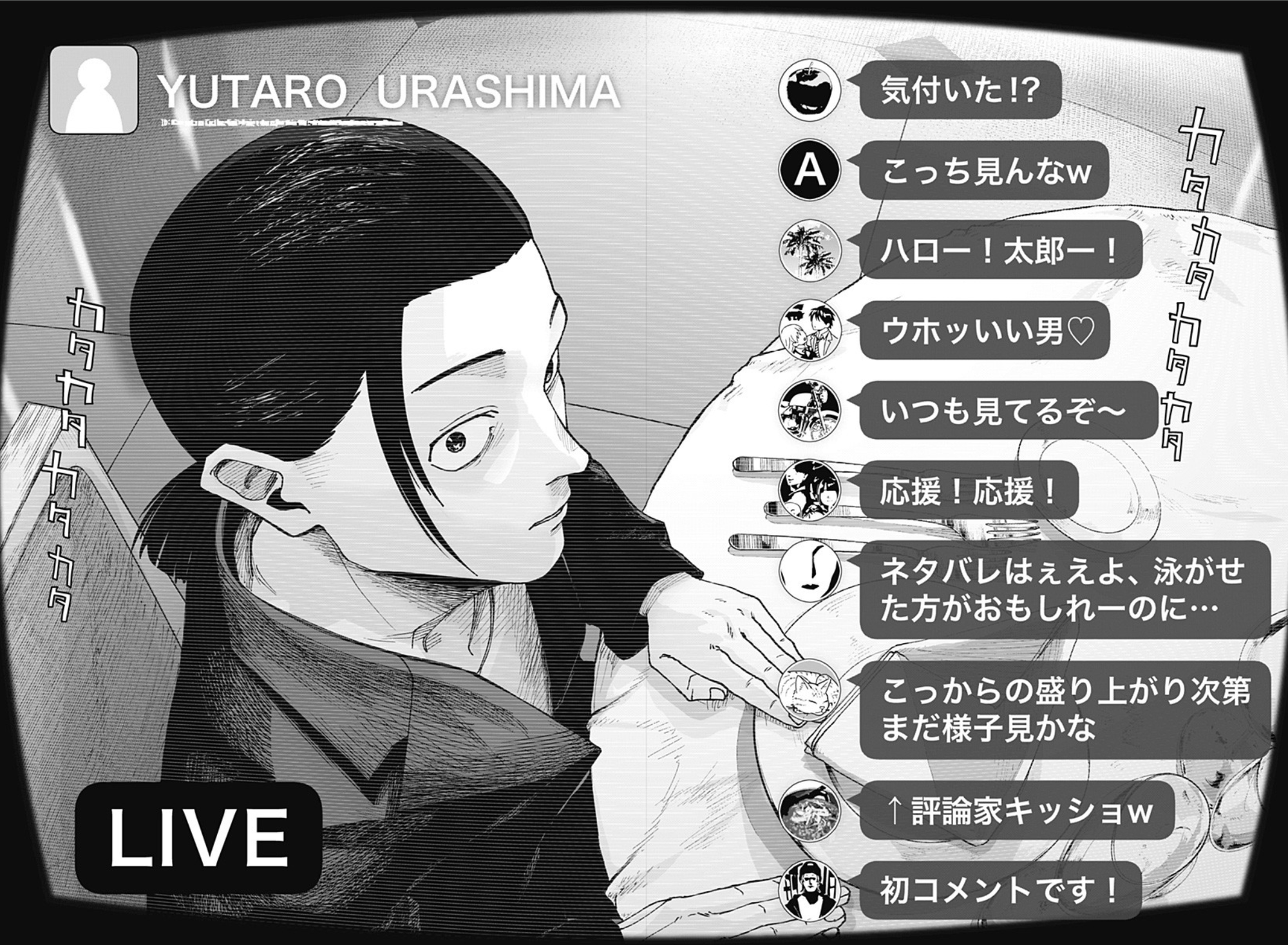
The moral conundrums flow thick and fast from this setting. By sacrificing personal freedom for mass surveillance, every member of society becomes accountable for every little action that may have once before gone unnoticed or unreported. On the other hand, the all-powerful nature of Garden makes it ripe for exploitation, much like any other system that takes agency away from individuals and places it in the hands of an algorithm. Whether or not those risks are worth the rewards ultimately comes down to your own individual point of view.
For War of the Adults, the pendulum very much swings towards the latter side. As Urashima attempts to make his way in the new world, he consistently comes across bad actors who take advantage of the system for their own personal gain. This begins with a creepy influencer who uses his giant follower base on Garden to pressure young girls into dates and eventually extends all the way towards the man behind the system in the first place: Diet member Isamu Kuroda, who just so happened to read Urashima’s Articles after calling an ambulance at the scene of the accident.
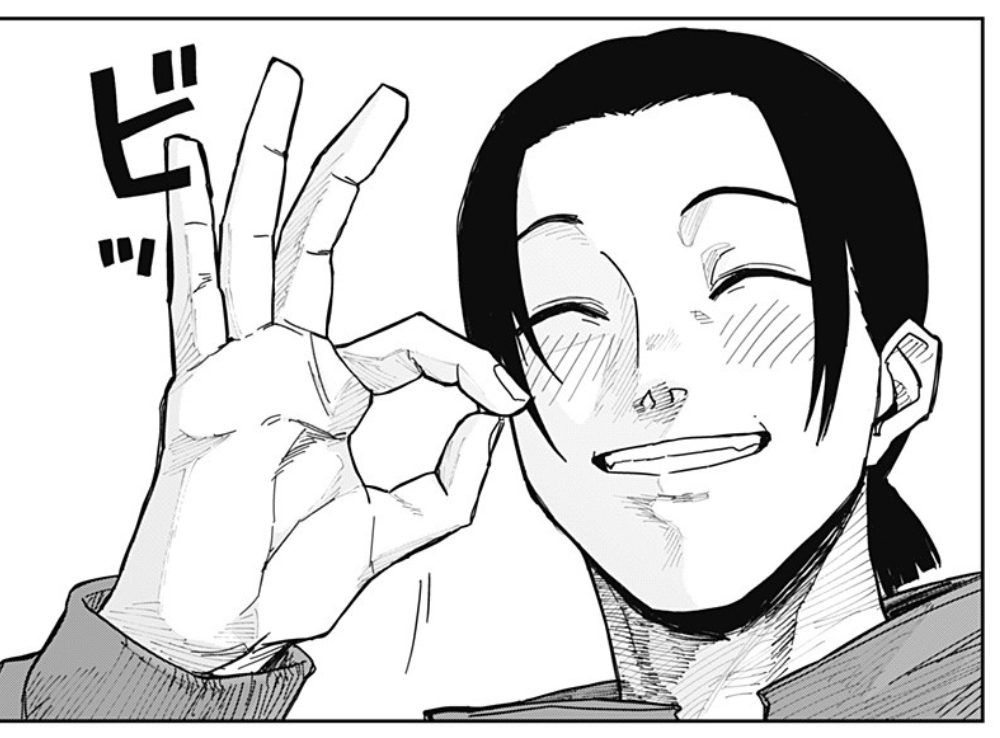
Ultimately, a certain amount of melodrama is needed here to make sure that the story stays light and digestible as digital entertainment. Even though the moral implications of the setting still remain, it still functions as more of a campy thriller than anything else. The main character also helps with this, given that he functions as a comic foil to the characters around him both because of his outlandish personality as well as his general ignorance about the systems behind Garden.
This is one of the reasons why Death Note cannot function as a straightforward comparison, but anyone who enjoyed the tense writing and focus on concrete rules will find a kindred spirit here. It also goes without saying that the Jump brand has never quite managed to replicate the specific success of Tsugumi Ohba and Takeshi Obata’s seminal series, despite works like Super Smartphone giving it a good go. Kurumizawa's Folly also finds itself in the same genre, albeit with more of focus on characters and a historical setting.
Moreover, just six volumes in, War of the Adults has already employed one of my favorite tropes: the enemy-turned-friend. To make matters even more entertaining, this former enemy is also a self-described “part-time superhero” with the ability to ban people from Garden, reducing them to the lowest possible Adult Rank and stripping them of all societal privileges. Sometimes, all you need is this simple kind of character profile to recommend a manga without any caveats.
Do yourself a favor and read this series in English now for free on Manga Plus.