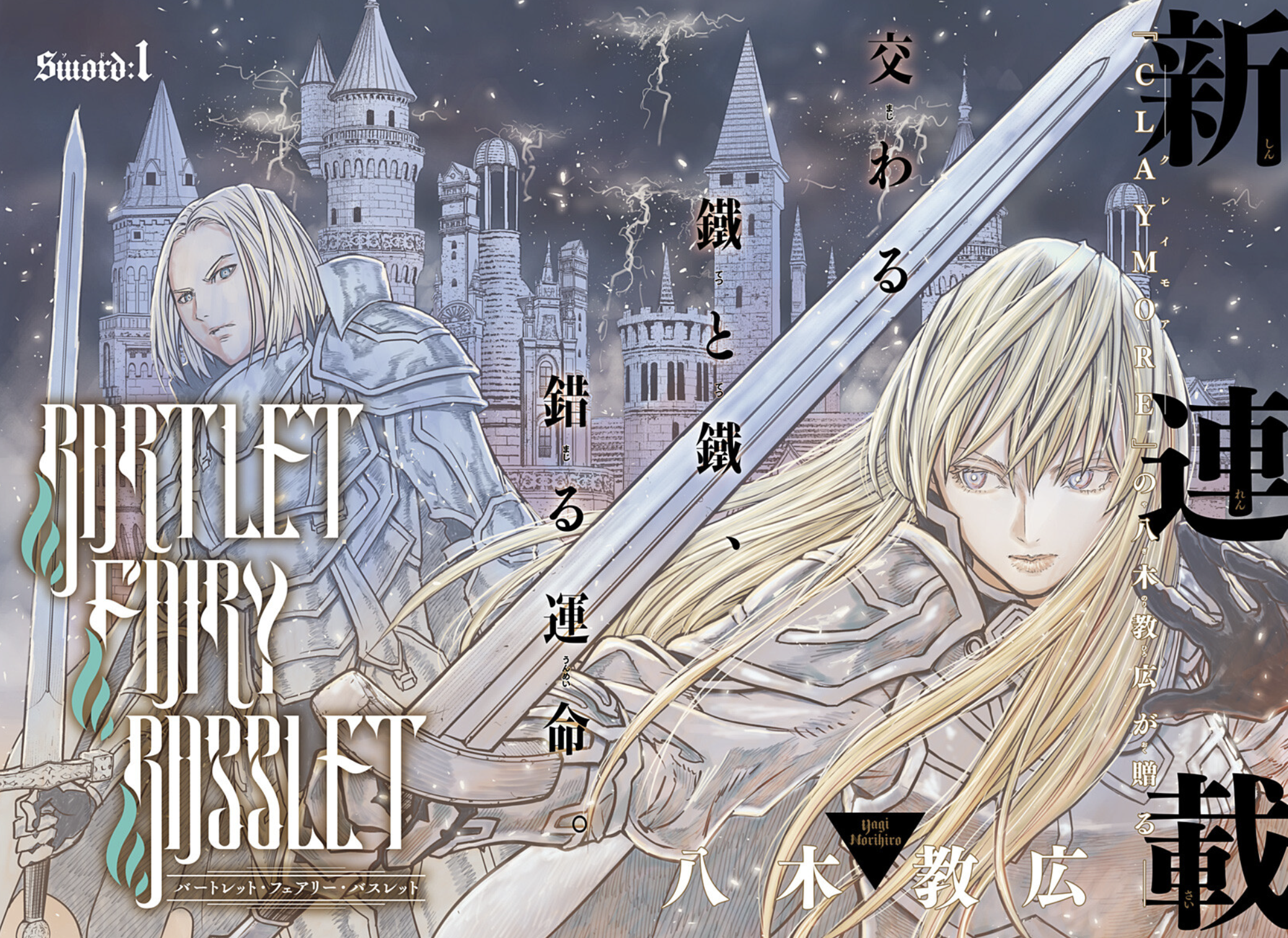
Norihiro Yagi hasn’t exactly kept a low profile since the end of Claymore in 2014. Just three years later, he launched Ariadne in the Blue Sky and produced nearly the same amount of material for Shogakukan in Weekly Shonen Sunday, so why all the fuss about his new series? Well, what makes Bartlet Fairy Basslet interesting is that it constitutes a return to publisher Shueisha… in the exact opposite way to Ryuhei Tamura.
Yagi’s latest work joins the likes of Centuria and Spy x Family in the star-studded line-up for Jump Plus on Monday. Given the author’s pedigree, this is not exactly surprising, but certain parts of the story do feel intentionally engineered for the modern age. Humor, in particular, plays a huge role here in a tonal departure that may leave anyone expecting another Claymore somewhat disappointed.
Brunhild is an elite knight who has managed to dispatch her sworn enemy in the climax to ten years of brutal war between two medieval kingdoms. She isn’t able to exact revenge without sustaining several grievous injuries, however, including the loss of her right eye. It’s these injuries that make the journey home very arduous and the knight eventually passes away peacefully, surrounded by her comrades in the pouring rain.
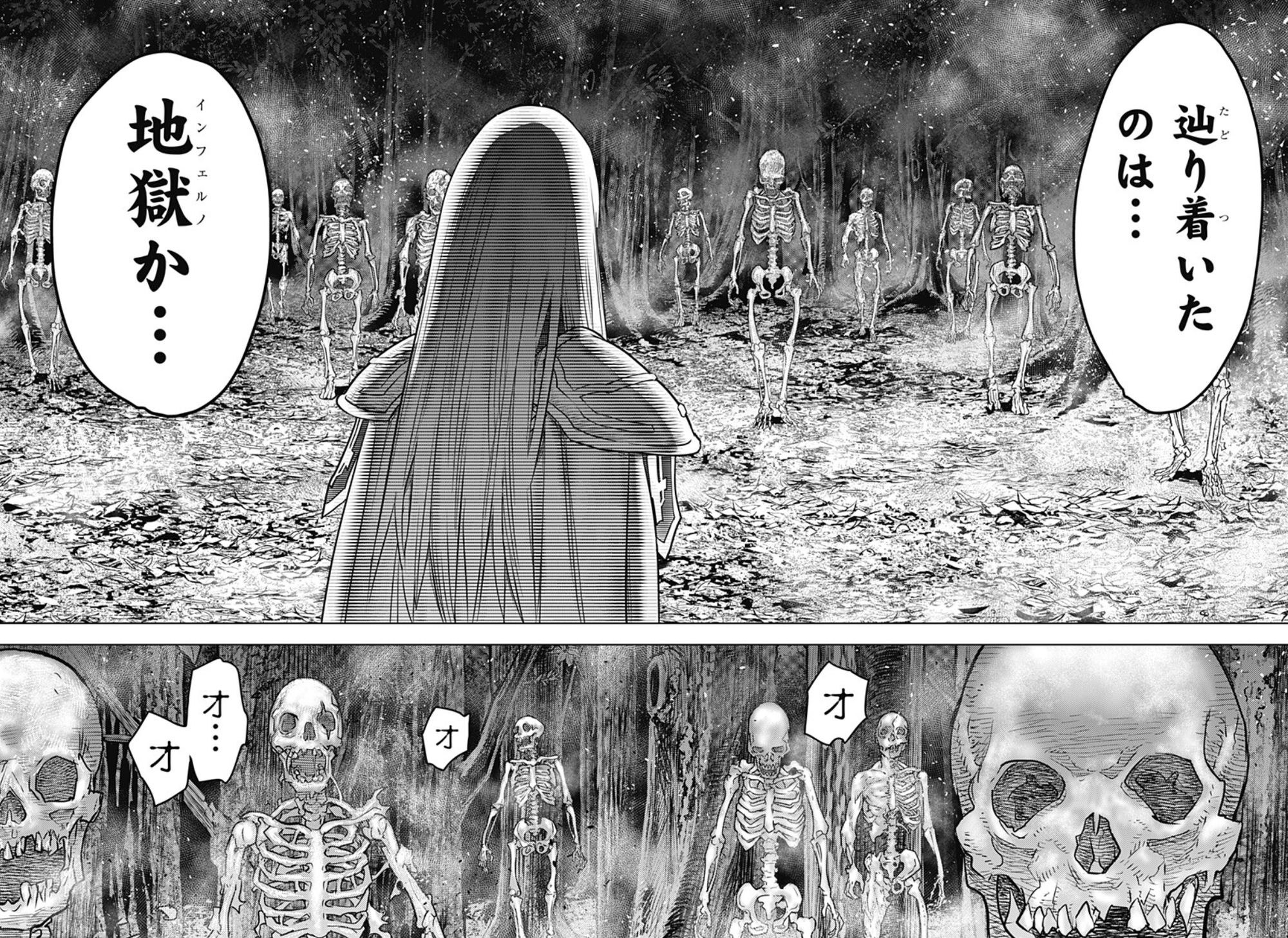
Except this is not the end. Following the intervention of a mysterious fish-like spirit, Brunhild wakes up in a mysterious world that appears at first glance to be the afterlife. Her first assumption is that it must be Hell after coming face to face with a group of spooky scary skeletons, but she ends up saving two children from a giant monster who insist that it is nothing of the sort. After all, the only real difference between this world and Brunhild’s is that you can use a form of spirit magic.
To cut a long story short, Brunhild has somehow slept for a thousand years and woken up in the far future. Said revelation is fairly obvious from the moment that the children enter the picture and start explaining various aspects of the setting, but Yagi saves it for the final page like a true pro for maximum dramatic effect. Capping off with the image of the homeland that Brunhild was never able to return to in ruins certainly makes for an effective ending.
Even so, whether this reveal is supposed to be taken seriously or not is somewhat unclear. Throughout the first chapter, Yagi purposefully positions Brunhild as the archetypical fish out of water that expresses vocal surprise and righteous indignation at every detail of this new world, including the aforementioned magic. What makes this particularly hilarious is the fact that the protagonist speaks in a rather archaic manner, beautifully contrasted with the children’s plain and straightforward speech.
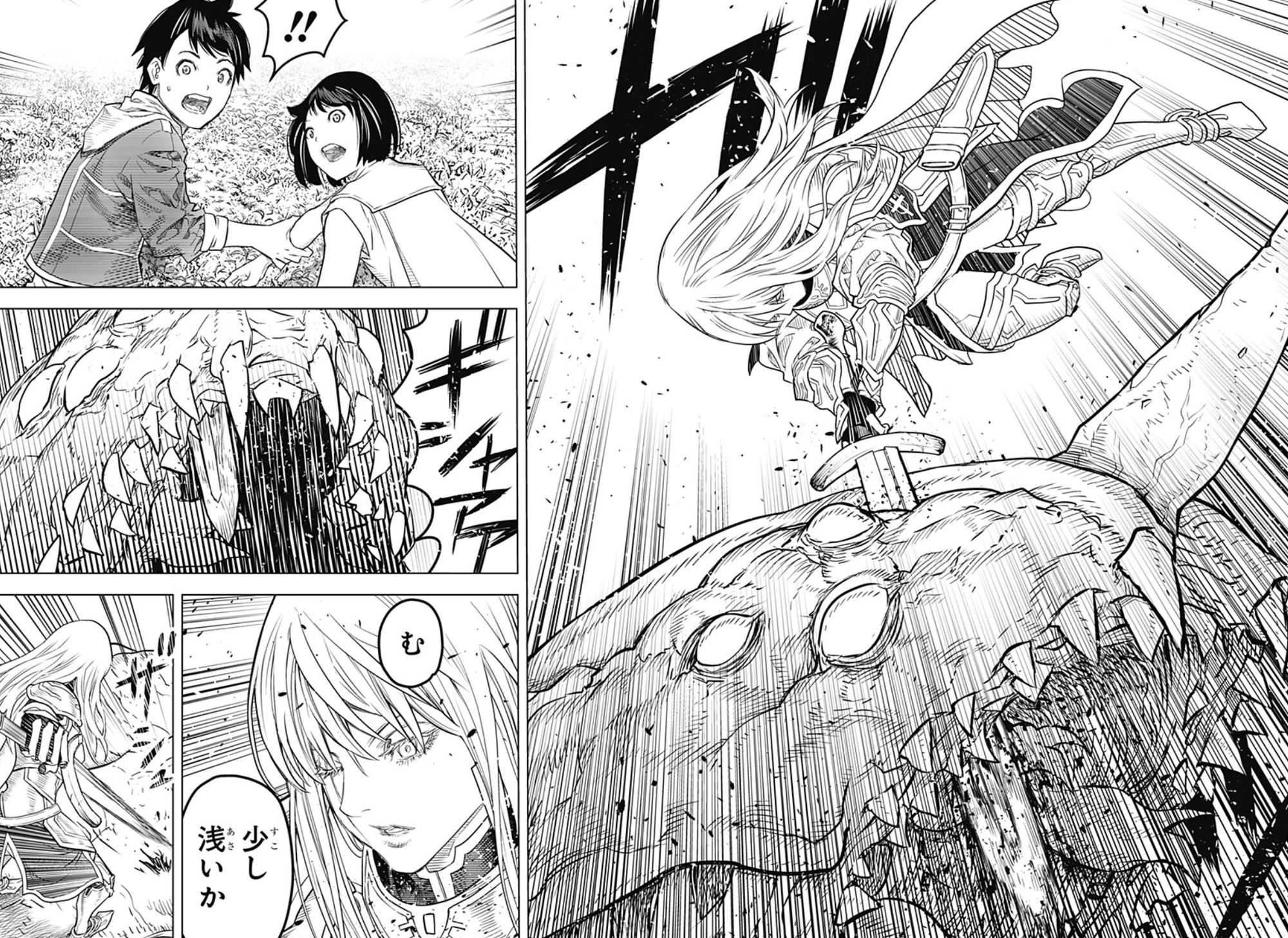
Certainly, Bartlet Fairy Basslet is not messing around when it comes to action. Leave it to the man that honed his pen drawing Claymore for over a decade to bring the prospect of exciting sword battles back to the Jump brand once again, even if Yuki Tabata did some solid work on Black Clover. Kota Kawae, in particular, would do well to take home some lessons for Nue’s Exorcist on how to keep the action grounded and understandable while flying through the air and whaling on giant monsters.
On the whole, Yagi’s latest series is definitely one to check out if you’re a fan of all things swords and sorcery. That being said, temper your expectations if you’re a Claymore devotee. Even I’m not sure what genres to use for this one.
| Title | Bartlet Fairy Basslet |
|---|---|
| Author | Norihiro Yagi |
| Publisher | Shueisha |
| Serialized in | Jump Plus |
| Genre | Action for sure, but maybe comedy too? |
| Demographic | Shonen |
| Who it's for | Fans of swords and sorcery |
| Who it's not for | Claymore diehards |
| Continue reading? | Yes |
Chapter One Club is a weekly column that aims to spotlight the latest in new series and one-shots from across a wide variety of different demographics and publications.