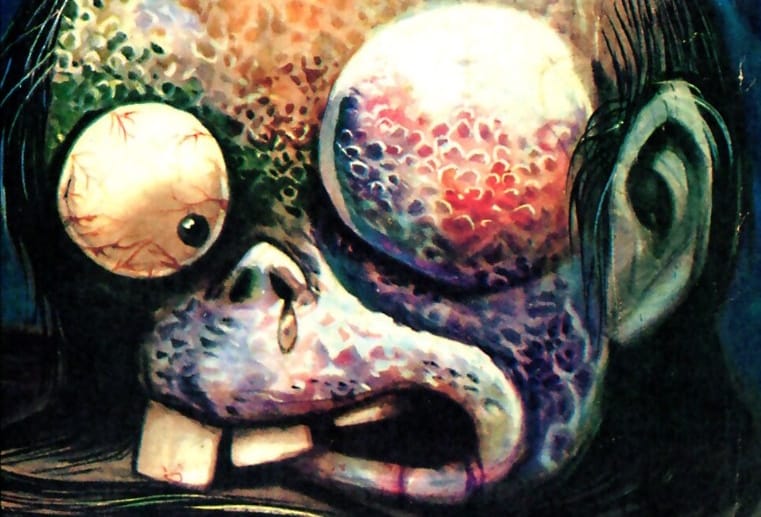
In the world of horror manga, few series hold a candle to the influence of GeGeGe no Kitaro by Shigeru Mizuki. While works such as The Drifting Classroom by Kazuo Umezu would go on to directly inspire the horror artists of today, Mizuki’s seminal creation almost single-handedly revitalized the world of yokai in the popular imagination and brought kaiki or grotesque aesthetics into the mainstream. Just trying to imagine a medium without it is an almost impossible task.
Even so, the story of how GeGeGe no Kitaro came about is much more complicated than may first seem. Not only was the initial title completely different, Mizuki’s series was actually an adaptation of an earlier work. The Kitaro character existed long before Mizuki ever heard of him and would even continue in two forms under a different author for many years due to a strange quirk of copyright.
As Mitsunari Ooizumi noted in his 2016 book, there are no less than three figures who could be called the creators of Kitaro: Masami Itou, Shigeru Mizuki, and Kankou Takeuchi. Who were they? What role do they play in the development of the series? Is it right that only one of them is remembered today?
The Paper Pioneer
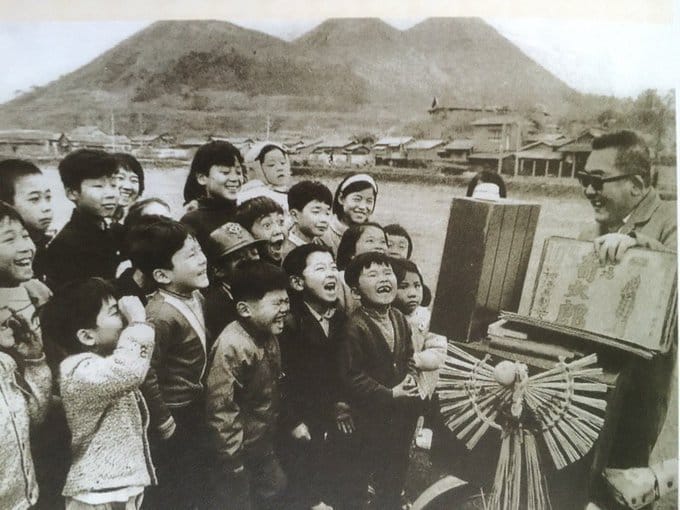
Born in 1911, Masami Itou was the first to bring Kitaro to life in kamishibai or paper theater form. This early form of mass entertainment saw a street performer use illustrated boards and narration to tell a story in front of a captivated crowd that was usually violent or grotesque in nature. While extremely popular at the time, it eventually declined throughout the 1950s with the advent of television and the fledgling manga industry.
Having moved to Tokyo from Kobe with dreams of becoming an author, Itou ended up writing scripts for kamishibai after an introduction by an old friend. The first Kitaro story was produced in 1933 under the title Hakaba Kitaro (Graveyard Kitaro) in collaboration with artist Tajimi Kei. It proved popular enough to spawn several sequels and is usually remembered alongside Ougon Bat (The Golden Bat) by Takeo Nagamatsu and Suzuki Ichiro as one of the most iconic works of the era.
The original version of Graveyard Kitaro has unfortunately been lost to the passage of time, but Itou described it to fellow kamishibai creator Kouji Kata as an adaptation of an old legend that existed in the Kansai area at the time. After dying at the hands of a jealous mother-in-law, a pregnant woman was buried in a graveyard. Her child would eventually be born underground, eat the corpse, and emerge to seek revenge. That child was called Kitaro, of course, albeit with a different spelling from today.
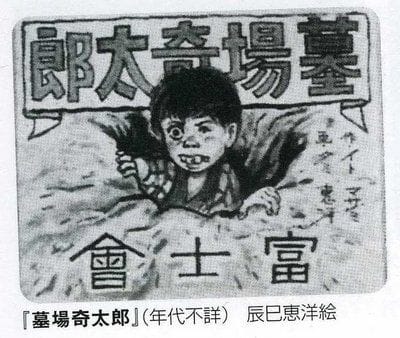
Somewhat candidly, Itou admitted that his only aim in adapting this story was making it as scary as possible. It seems like Graveyard Kitaro did little to counter the common criticism at the time that kamishibai was both lowbrow and potentially harmful for children, but not much else can be said without the original for reference. The legacy of this work has largely been passed down through oral histories.
The Late Adopter
Given that Shigeru Mizuki was born in 1922 and spent most of his childhood in Osaka, there was something of a generational and geographical divide between him and Masami Itou. He had never even heard of Graveyard Kitaro until the basic premise was explained to him much later on, so it wasn’t as if he grew up with the story. Nevertheless, it would go on to define much of his legacy in an unusual twist of fate.
After returning from the war without an arm in 1946, Mizuki struggled to find gainful employment in a ruined nation that would cater for his new disability. He ended up doing all sorts of odd jobs, from fishmonger to landlord, before learning about the opportunities within kamishibai through one of his tenants at the time. The prospect of becoming a creative was simply too attractive to resist and the middle-aged veteran ended up becoming an artist for Hanshin Gagekisha, a company headed by Katsumaru Suzuki.
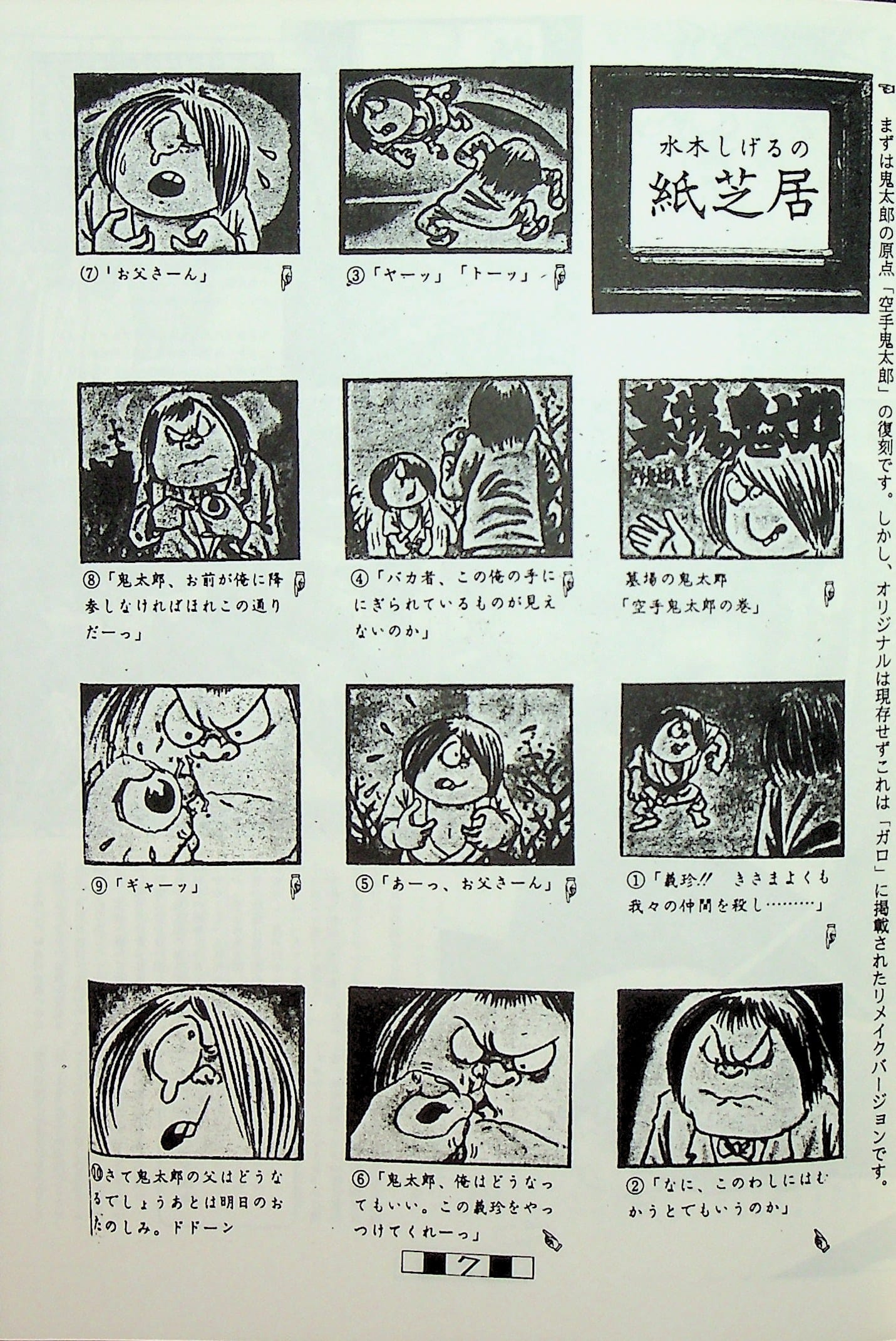
Well aware that Graveyard Kitaro was one of the most popular kamishibai works before the war, both Suzuki and Kouji Kata encouraged Mizuki to try and reinvent Itou’s story for the modern age. This eventually happened in 1954 with Hakaba no Kitaro (Kitaro of the Graveyard), using the particle ‘no’ and kanji in the title instead of katakana for the sake of differentiation. As expected, the adaptation proved popular and went on to spawn three sequels.
Once again, the illustrated boards for Kitaro of the Graveyard were lost, but Mizuki described it as a more light-hearted approach to the original story. He wanted to make it “more fun than scary,” basing the character of Kitaro on his three year old nephew at the time. This is interesting because the later manga version of Kitaro would lean much more in the direction of horror, embracing the folk origins of Itou’s interpretation.
As the kamishibai business slowed down throughout the end of the 1950s, Mizuki made the decision to leave Osaka behind and move to Tokyo in 1957 in search of opportunities. Much like Osamu Tezuka, he ended up drawing manga volumes for kashihon or rental libraries with publisher Togetsu Shobo. His debut came in the form of the 1958 science fiction work Rocketman, but it wasn’t long before Kitaro made an appearance once again.
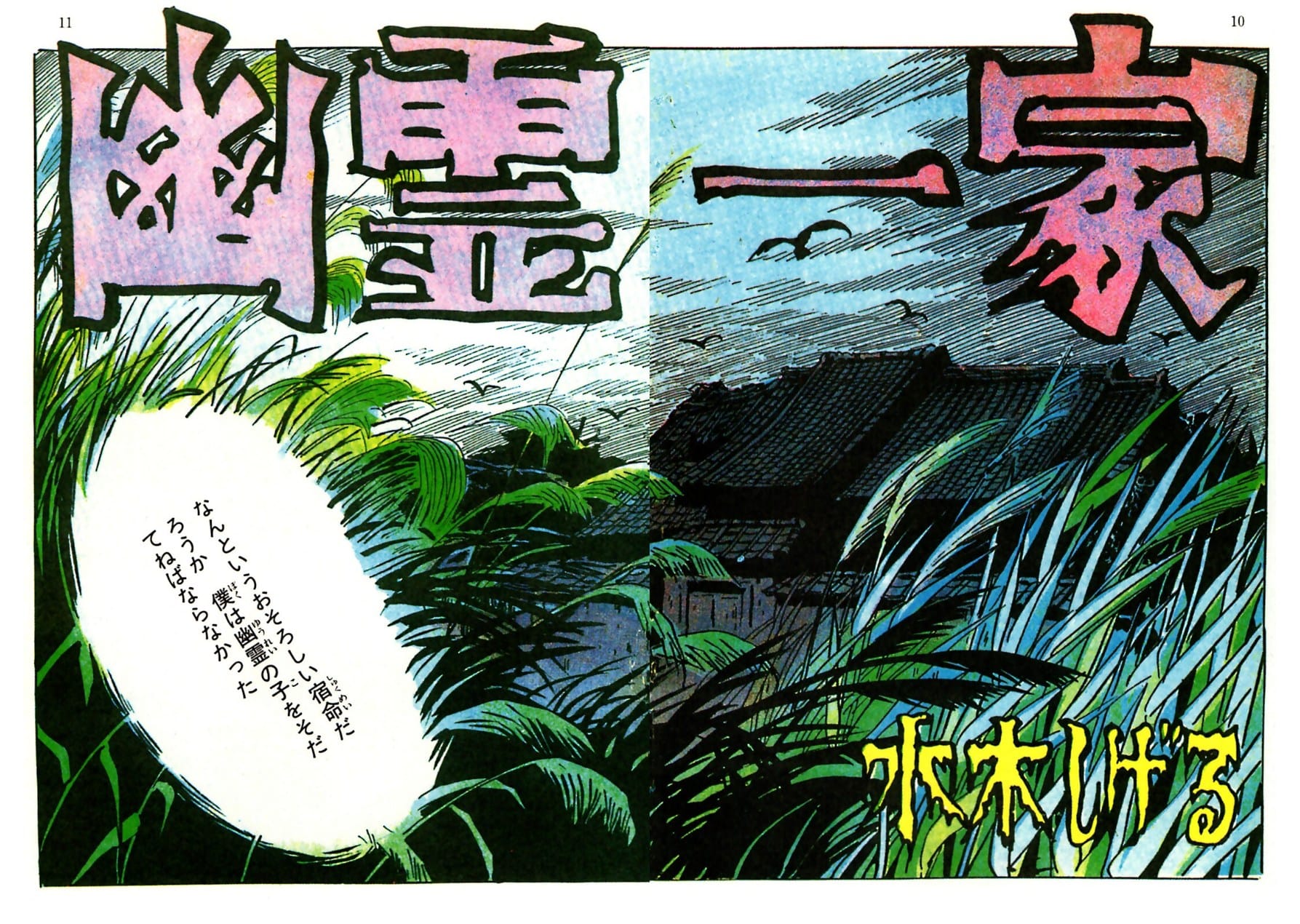
For the Youkiden anthology in 1960, Mizuki published a story called Yuurei Ikka (Ghost Family) that retold the origin of Kitaro in a brand new way. That anthology ended up getting cancelled after just two editions, but Ghost Family proved popular enough for fans to passionately lobby for a continuation. One thing led to another and a new publication called Hakaba Kitaro (in kanji) appeared, continuing for three issues before Mizuki got sick of missed payments and took the series to Sanyousha under the title Kitaro Yowa (Kitaro’s Tales of the Night).
The Forgotten Artist
Here is where the most mysterious figure in the story behind GeGeGe no Kitaro enters the fray. Even after changing publishers, Togetsu Shobo argued that Hakaba Kitaro actually constituted the name of the anthology and not Mizuki’s own series. This meant that the publisher technically still owned the copyright and enlisted Kankou Takeuchi to continue the story, eventually going to put out over sixteen volumes.
Figuring out the exact dates of this publication is tricky, however, along with determining any biographical information about Takeuchi himself. Mitsunari Ooizumi was only able to find out that he was born in 1907, grew up in Hyogo, and eventually served as the chief assistant to gekiga legend Taro Bonten through some historical detective work. Given that he also drew kamishibai, it is safe to assume that he ran in the same circles as Itou, but stayed active after the war alongside Mizuki.
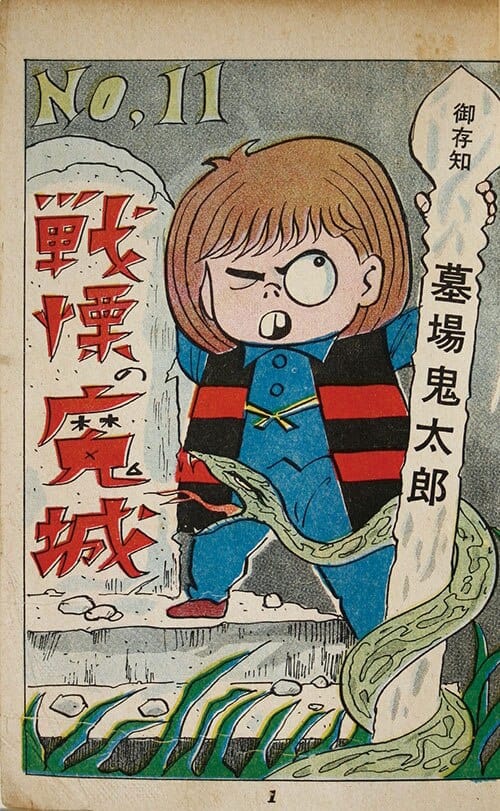
What’s interesting is the fact that Mizuki was not unaware of the imposter over at Togetsu Shobo. He was met with the aforementioned copyright excuse when confronting the publisher and eventually became sympathetic to Takeuchi’s own situation through correspondence. Although the two men never met, Mizuki got the impression from his letters that Takeuchi didn’t have many other prospects and felt like he couldn’t endanger a fellow creator just barely eking out an existence on the bread line.
Moreover, the version of Hakaba Kitaro by Takeuchi has been republished in several different formats. This makes a direct comparison to Mizuki’s interpretation possible, unlike the relationship between Mizuku’s kamishibai and later manga or Mizuki’s kamishibai and Itou’s original. What stands out primarily is its focus on action and extreme violence: Nezumi Otoko was promptly killed off once Takeuchi took over and Kitaro would fight on his own against various supernatural enemies.
Even at the time, Takeuchi’s take on Kitaro was not very well received and is commonly referred to online today as Nise Kitaro (The Fake Kitaro). Subsequent reprints have, however, moved the needle slightly as modern audiences rediscover and reevaluate one of the strangest parts of the series’ history. For his part, Ooizumi finds some value in the RPG-like obsession with different magical swords and powerful items to further Kitaro’s prowess in battle.
Who Owns Kitaro?
Masami Itou, Shigeru Mizuki, and Kankou Takeuchi. Graveyard Kitaro, Ghost Family, and Hakaba Kitaro. With so many different versions and so many different creators contributing so much to the story of a single character, the question becomes: why is Kitaro only associated with one of them today? That would seem to flatten an otherwise fascinating history, but Shohei Chujo finds no contradiction between the two approaches.
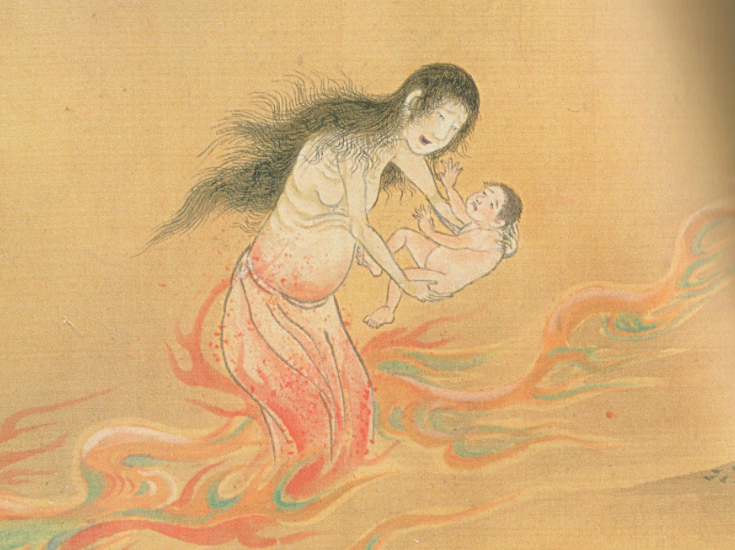
Writing in the second chapter of Wa ga Michi no Tatsujin Mizuki Shigeru, Chujo points out that Graveyard Kitaro was most likely inspired by the legend of the ubume. This type of yokai or spirit was said to be an undead woman clutching a baby and can be traced back even further to the Konjaku Monogatari collection of folk tales that was written sometime during the late Heian period. Indeed, Itou’s account of the story to Kouji Kata certainly seems to bear a strong resemblance to this description.
As a result, Mizuki’s process of adaptation fits perfectly within the tradition of Japanese folklore. The question is not really one of ownership, but how each creator retooled this tale from the past to suit modern audiences. Ghost Family and Hakaba Kitaro are certainly different enough to merit entire discussions in and of themselves, with the fallout of the war unfortunately creating a historical black hole where Graveyard Kitaro should be.
Just to finish the story, Kitaro’s Tales of the night continued for several years at Sanyousha before transferring to the legendary gekiga magazine Garo. Another version appeared irregularly in Kodansha’s Weekly Shonen Magazine from 1965 under the title Kitaro of the Graveyard once again before becoming a proper serialization in 1967. The success of Akuma-kun, another Mizuki series, meant that an anime offer soon came for Kitaro, but only if the author changed the name to something more sponsor-friendly.
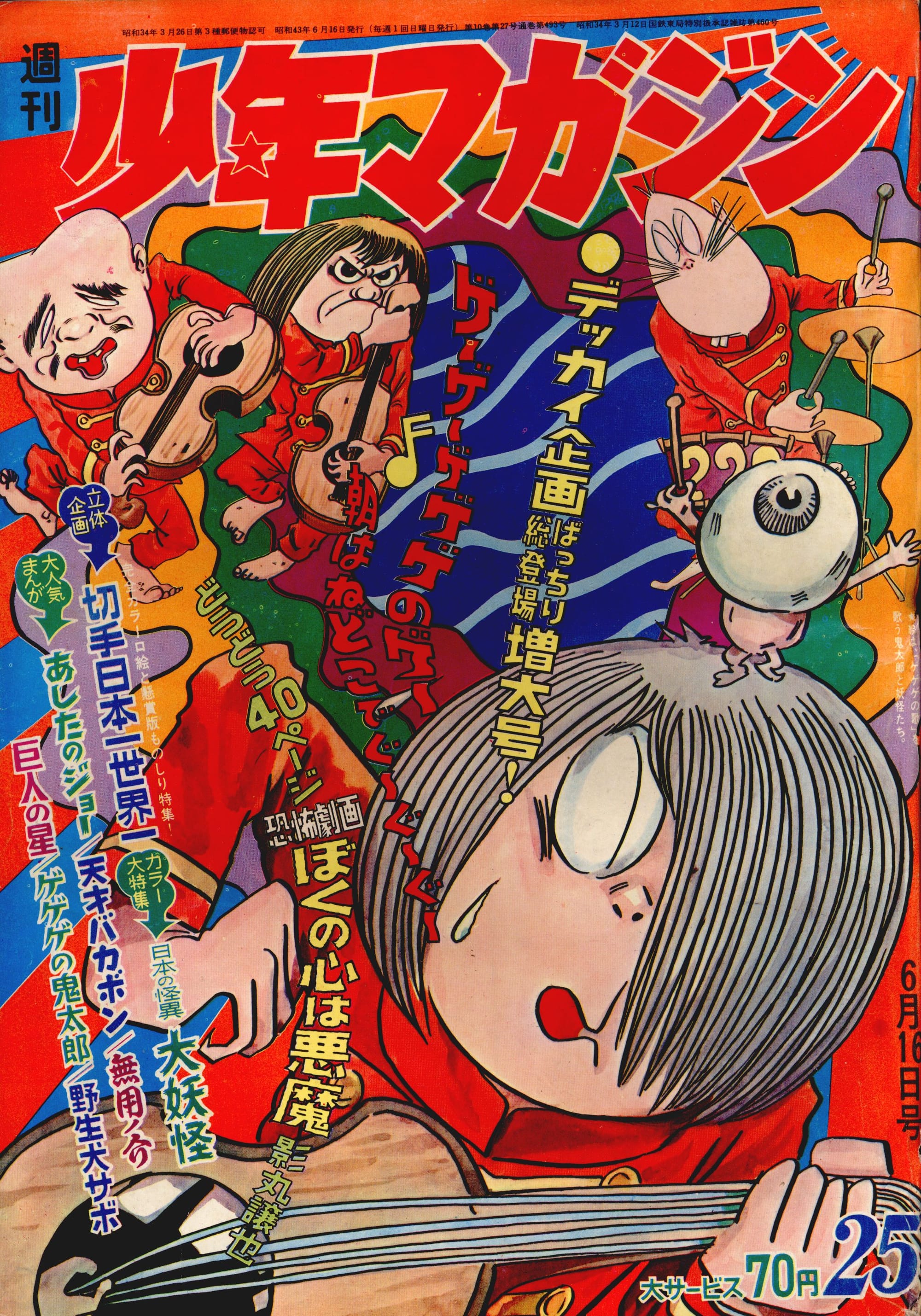
Hence why GeGeGe no Kitaro was born. That strange word finds its origin in the Japanese onomatopoeia for a creepy laugh as well as Mizuki’s nickname as a child, Gege. So much more can be said about this series, from its influence on wider pop culture to the way that anti-war sentiments fueled its emotional heart, but that is a topic for another time.
Mitsunari Ooizumi’s 2016 book was instrumental in the research for this article. Kouji Kata’s fascinating first-hand history of kamishibai, with contributions from Mizuki, can also be found here.