SHAFT are one of the most recognizable anime studios in the industry today, defined as much by the variety and depth of their work over multiple decades as they are for their penchant for the avant-garde in some of their most beloved hits of the last few decades like Puella Magi Madoka Magica and their many adaptations of the Monogatari franchise. In many ways, their most recent trajectory is the most in tune with the studio’s founding as it has ever been, especially at a key inflection point where the studio attempts to chart a future in a rapidly-shifting industry.
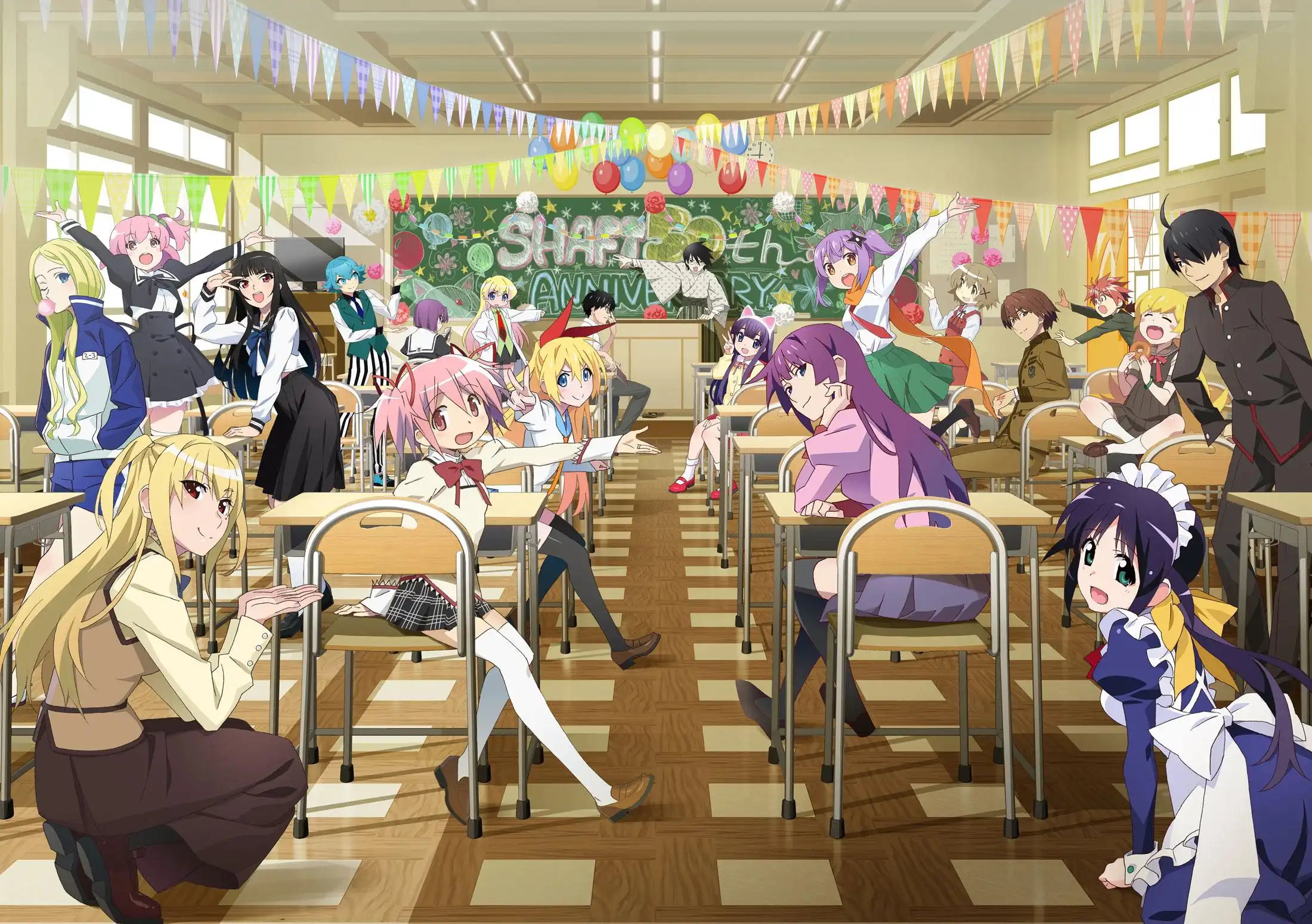
This is a time to look backwards as well as forwards. For SHAFT themselves, 2025 was their 50th anniversary, a milestone they marked this month with an exhibition in Ikebukuro that sought to look back on their history and the many varied works they’ve been involved with throughout their career. Their origins come from a time of minimal studios and the early boom of serialized TV anime that began in the 1960s, while the company’s endurance today reveals a long history of ups and downs they have endured over the years. With the latest film in the Madoka Magica franchise hitting cinemas next month and a number of new projects in the work after a period of transition for the studio, there’s plenty to look forward to as well.
A Slow Ascension
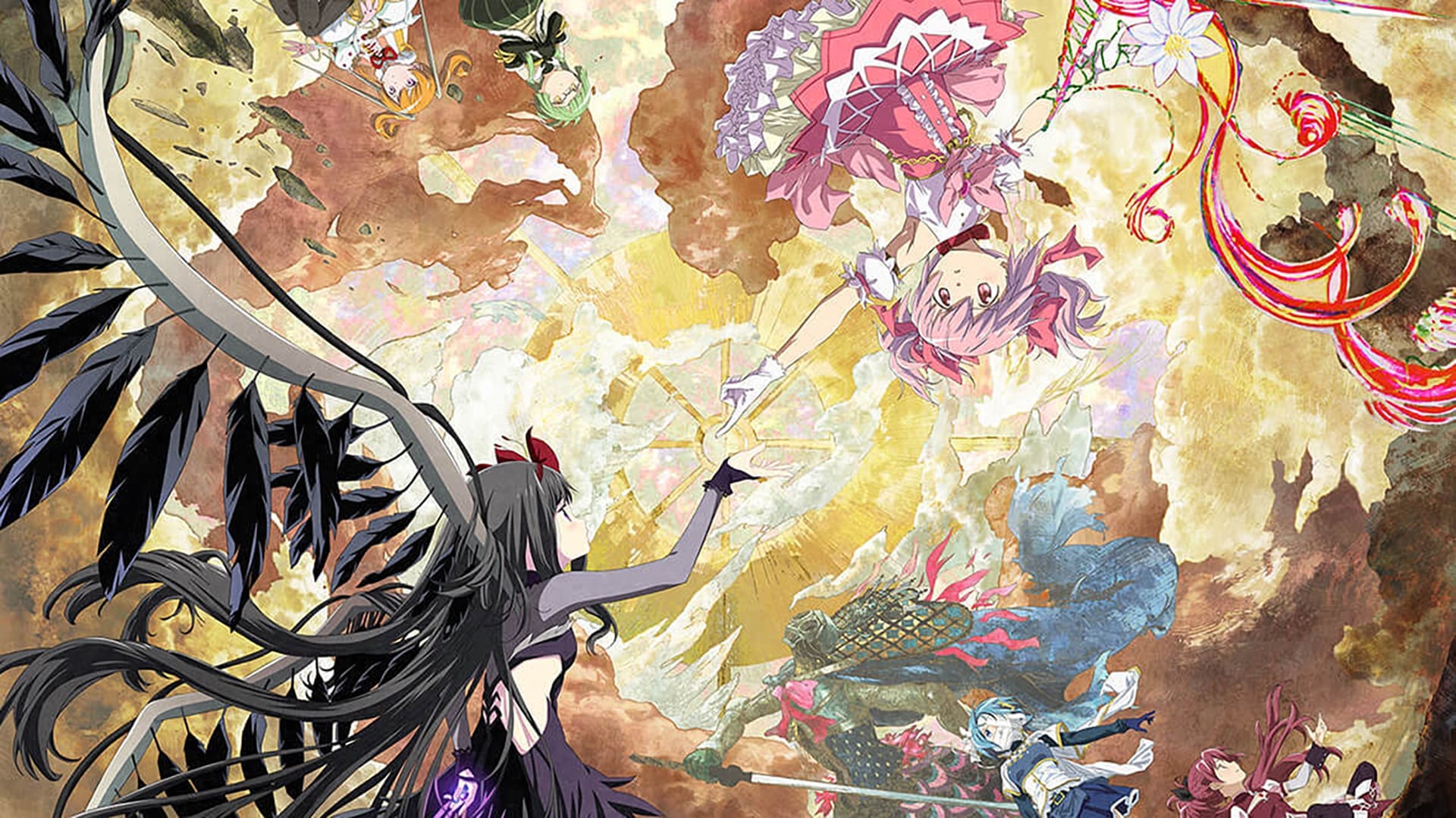
SHAFT was founded by Hiroshi Wakao, an ex employee of Mushi Productions then known as the studio helmed and responsible for adaptations of the work of Osamu Tezuka. That studio had already lost its famed founder a few years prior, but the financial losses accumulated from work on mature films like Cleopatra and Belladonna of Sadness led to the letting go and scattering of its employees after it declared bankruptcy. The closure was somewhat of a blessing for the industry, spreading its talent and leading to the foundation of more studios to work on the slowly-growing demand for TV anime, with SHAFT serving a key role within that. Initially, their work was mostly limited to being a support producer on shows led at other studios, particularly Sunrise.
This was the role the studio played for the first decade of its existence, though this did include work on high-profile successes like Urusei Yatsura: Only You. It was only in 1984 that the studio was able to lead its own production for the first time with their subcontracting work on Elves of the Forest, later releasing the OVA Yume kara, Samenai as their first wholly-original production.
The studio would go on to produce a number of other titles over the years, including co-productions with then-powerhouse studio GAINAX, but there’s also a reason that this isn’t the era most recognize the studio for. While this isn’t to say none of the work during these early years was enjoyable or that their work failed to create an impact on the industry, or even that it hadn’t earned a reputation at least amongst peers in the industry. What the studio is known for is what would follow, which began with the 2004 hiring of Akiyuki Shinbo to create a new identity for the studio. A style that people would instantly see as being SHAFT, and stand the company apart.
When looking at the director’s prior work before joining the studio like Le Portrait de Petit Cossette, many of the hallmarks that would come to define the visionary were present in their early development stages within this rather oddball Studio Darme-animated original OVA. The repeated imagery of a doll-like girl trapped in the mirror in an antique store that devolves into this gothic fantasy where eyes are watching is striking when revisited with a modern lens, and this would be the style he would develop over years in shows like Hidamari Sketch and Sayonara, Zetsubou-sensei before bursting onto the scene with the Monogatari light novel adaptations.
The release of Bakemonogatari in 2009 was a revelation, and remains visually emblematic of everything the studio has come to embody in the almost-two decades since its debut. The saturated, flat looks, avant-garde editing, inquisitive (or unnerving) head tilts that each work to tease at the supernatural underpinnings of its human tale were unlike anything seen in the medium prior, and shot the studio from a sidepiece to a leading figure. The following years speak for themselves, with more Monogatari adaptations, Arakawa Under the Bridge, Sasami-san@Ganbaranai and others, all before discussing the phenomenon of Puella Magi Madoka Magica. Even as other leading figures beyond Shinbo have left the studio, the work of people like Gekidan Inu Curry and others formed during these years can be felt in the studio’s newest works.
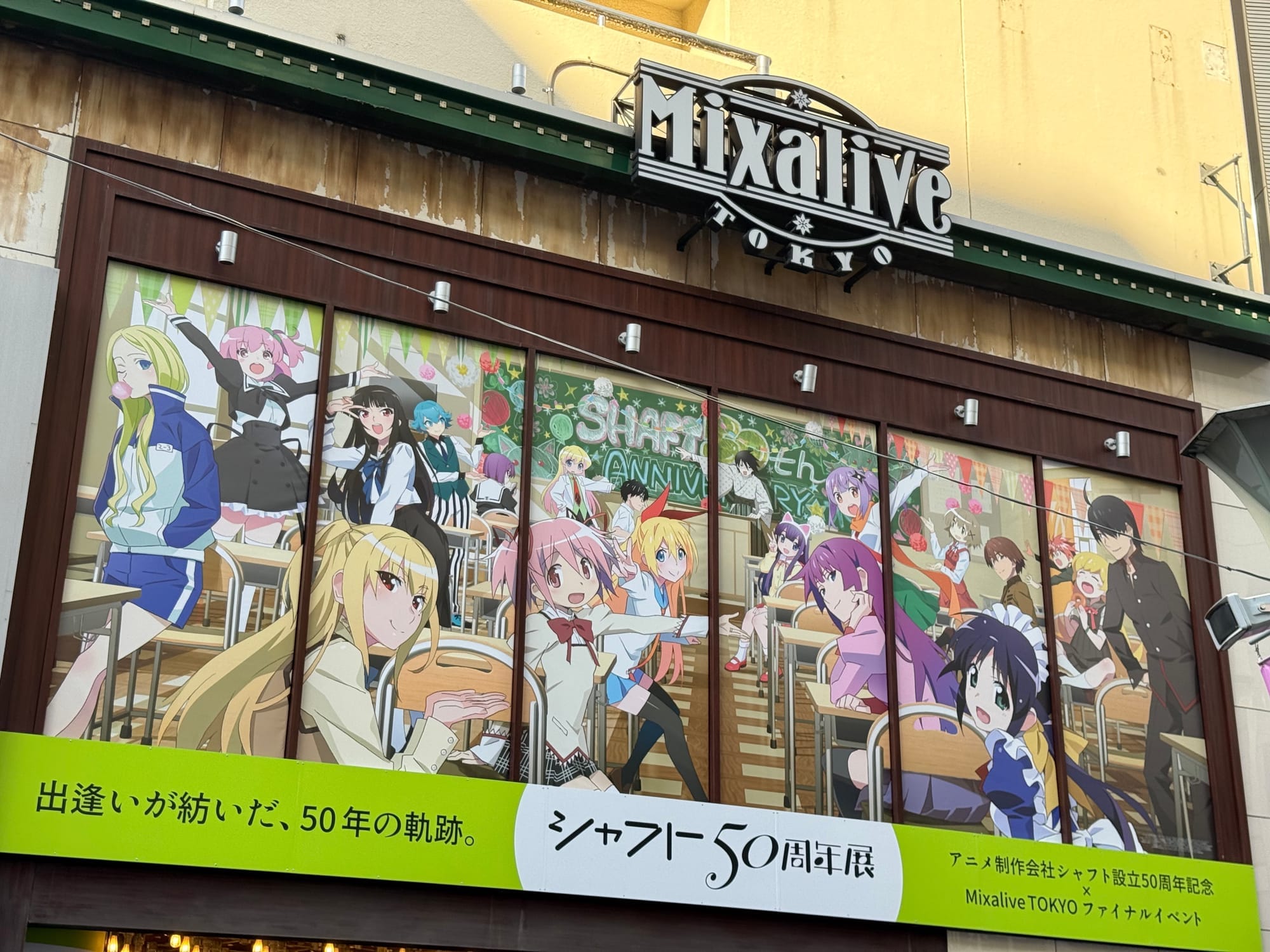
Which brings us to today when, 50 years on from its initial founding, the studio used this moment to look back on this long chapter in the most fitting manner, with a 50th anniversary exhibition in the evolving modern anime and multimedia town of Ikebukuro. The evolution of the town is one that somewhat reflects the studio as a place which has gone through a major evolution before stepping out of the shadow of Akihabara to become an iconic area influential in shaping the evolution of anime and fandom. Just as SHAFT’s 21st century journey has seen them evolve their storytelling to become a recognizable name and icon of an industry bigger than ever, while recognizing its roots, so too does the location.
The exhibition was a chance to look back, with concept art and sketches spanning across the company’s history until the present day. Inevitably, a large amount of the exhibit centered on their modern work following its transformation, almost exclusively focusing on turn-of-the-century content from 2001’s Mahoromantic all the way to the upcoming latest movie in the Madoka Magica franchise, Walpurgisnacht Rising. That doesn’t mean the older history as a support studio was ignored by the event, with a full section dedicated to this and one of a number of special movie and episode screenings including a talk event and broadcast of episodes from their 1995 series Juuni Senshi Bakuretsu Eto Ranger, but the focus was certainly more on the present and future than it was the distant past.

Still, it was a rare chance to see these objects the studio have otherwise rarely showcased to the public. In 2014, to mark the 40th anniversary of SHAFT, the Madogatari exhibition served as an event to mark the rebirth of the studio on this milestone centered on their current biggest hits while exploring beyond, but relatively few opportunities have followed where this work has been showased to the public since this time. Indeed, it was a wonder to see some of these sketches and original animations cels, as well as the explanations given to the direction the studio took during the course of the exhibit, and eye-opening.
Yet it should be noted that SHAFT 50 was a smaller showcase than Madogatari. Compared to Kanazawa’s 21st Century Museum of Contemporary Art, one of numerous locations to hold that 40th anniversary event, this was solely held in Tokyo inside the Mixalive Tokyo venue, a multipurpose arcade, theater and exhibition space in Ikebukuro both smaller and, notably, reaching the end of its existence. SHAFT 50 would be the final event to take place within its walls, its conclusion on January 18th also marking the final day of operation for the building before it, too, closed its doors for good.
Fitting, considering the state of SHAFT at this momentous juncture, at a crossroads towards the future as much as it is vicarious in the present. The studio is far from on shaky grounds, and indeed has produced a number of major hits in recent times. Its Monogatari adaptations are still going and are a success, and since COVID its involvement in works like Assault Lily Bouquet and others have been good for the studio. At a time of major industry growth, however, the output and success of their work in more recent years has been notably pared back since the latter part of the 2010s, notably a period where a number of the names who joined the studio alongside Akiyuki Shinbo have begun to move on to work with other studios or independently.
The reality is that the same identity formed in the late 2000s for SHAFT is something the studio are now in need of evolving from while retaining themselves in search of what the next step on the studio’s long journey will be. They have original ideas like Madoka Magica that the studio know they can return to, for sure, with the new movie proving the broad cultural inroads of the franchise with general audiences to the point of even earning a pop-up takeover of Tokyo Skytree to mark the release (before its recent delay). Compared to that era, however, the studio haven’t been able to create an identity that resonates in this explosive new era in the way studios like MAPPA have become global icons.
Ikebukuro, in the last 10-15 years, has changed its image drastically to become the beacon of anime it is now, a mix of local government support and investment in the region ensuring it can now host icons like the Pokemon Center, the largest Animate, while hosting cosplay events and retaining its roots on Otome Road. It changed, and is now reaping the benefits. Mixalive’s closure, once a cornerstone of the area, is closing to make way for something new. Right now, something new is what SHAFT needs.
The reality is that, as cool as it is for someone like me who has been watching anime for 15 years to see the history of works like Hidamari Sketch and Madoka Magica on display, the explosion of anime domestically and abroad mean that many fans today don’t care for these shows in the way they do something like Demon Slayer. In that time, SHAFT have returned to the problem that dominated their early years as a studio - what is a SHAFT anime?
The SHAFT 50 exhibition is proof that the studio has found its way out of this question before, first in entering production and then under the vision of the still-present Akiyuki Shinbo. With the recently-released Virgin Punk: Clockwork Girl, also present here, you can see the initial work made to find a new direction that blends its past in OVA work and talent for fluid, flashy animation with its unique attention to detail and colors to create an intriguing world that audiences can attach themselves too. That film surpassed expectations at the box office in Japan as the first part in a series, and the studio found some success with A Ninja and an Assassin Under One Roof, also.
As the exhibition ends and, with it, the building which housed it, both it and the studio are in search of what shape their future will take. Only than can we start talking about a potential SHAFT 100 exhibition sometime in the future.