scrmbl contributor Patrick St. Michel runs an email newsletter called Make Believe Mailer, an offshoot of his long-running blog Make Believe Melodies. Every week, he shares essays and round-ups of new Japanese music, from J-pop to independent releases, including albums that might have flown under listeners' radar. Here are some of the highlights from the past month, shared with readers of scrmbl.
diig — persona
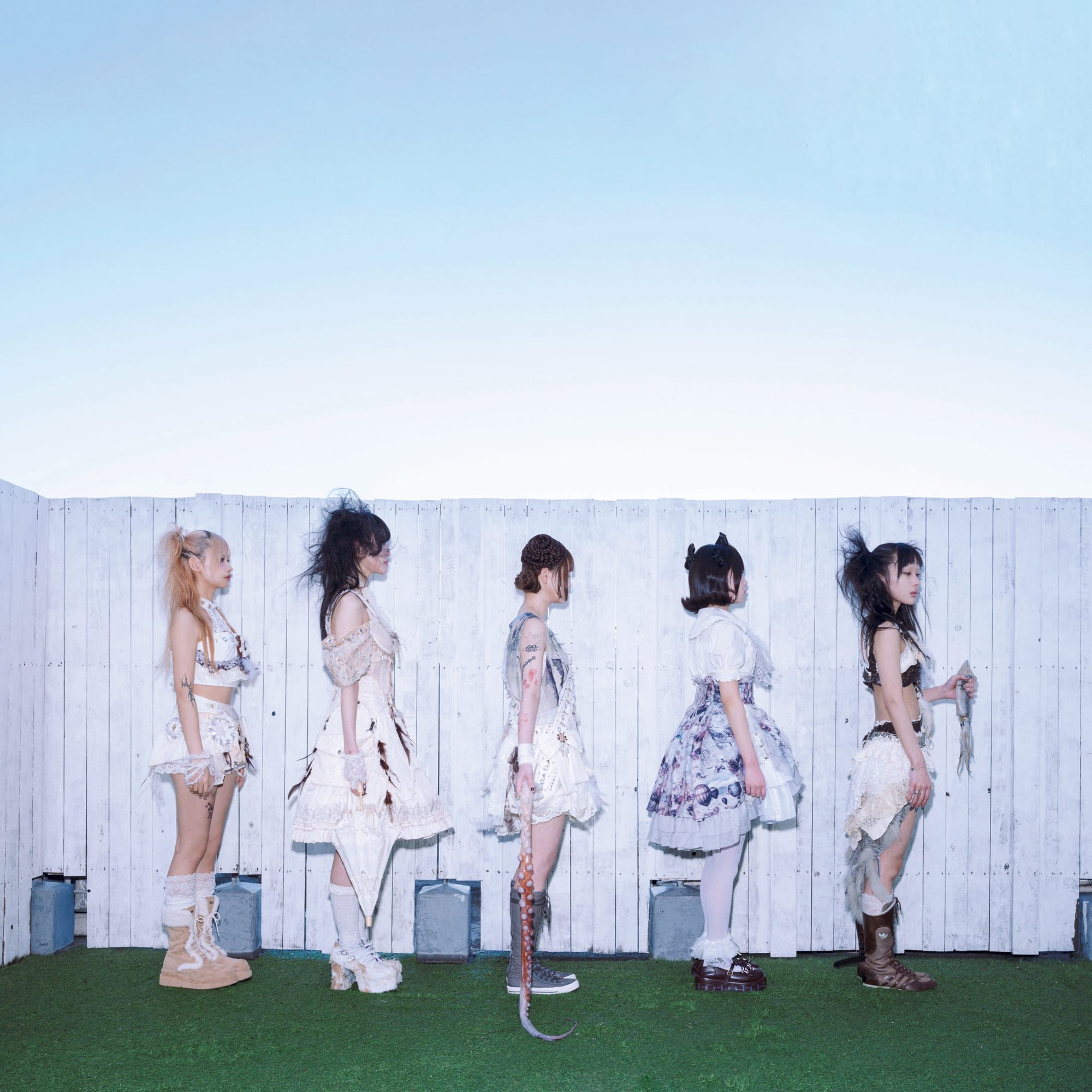
Fledgling idol group diig boasts a distinct look — check both the squid and a scary-big tentacle in the album art — but looking at their website doesn’t position them visually as anything too left-field, unless Y2K imagery still surprises you. The quintet emerges from ekoms, a company already boasting a history of actually being thoughtful about the sound of its alternative idols. They were behind Maison book girl, a post-BiS outfit featuring a defined sonic palette summed up as “everything in the school music room deployed with ease.” Hints of that group appear across diig’s debut persona, mainly via twinkly piano notes on the title cut and acoustic-leaning closer “missing,” but the album largely introduces them as embracing a more glitchy, electronic sound reflected modern internet sounds, with a cut like “neon” above blurring buzzy electronic woosh with more Akihabara-ready hooks.
Having a consistent vision is essential to a project like this, and on persona web-damaged producer Yukichi Kasaku/men handles the bulk of the songs here, starting with “neon” and extending to the sugar-rush rhymes of “do re mi” and plinky-plonk stutter of “toy.” It’s not all left to them, with two highlights (in particular the lightly disorienting dance-pop of “moratorium”) courtesy of producer and KAOMOZI presence Shijo Kikoku and throwback brain-rush from Mosaic.wav on “vanilla,” but the connective sonic thread is a more frantic interpretation of 2020s online sounds grafted onto idol, which the members make work wonders. And it delivers a true alternative from the dominant sounds of mainstream J-pop idols. Listen above.
It’s US!!!! — MIXT4PE
There’s a playful energy running throughout MIXT4PE, less a focused EP from the Tokyo collective (and recent Fuji Rock Festival Rookie-A-Go-Go entry) It’s US!!!! announcing an ethos and more of a hang sesh where they kind of stumble across one. Whether strutting along “2080BABY” or cruising on the synth stroll of “Sway” the members of this project sound like they are vocally improvising on these songs, tagging in and out while dropping ad-libs in to gas one another up. When paired with equally delirious music on “SET MYSELF ON FIRE,” you get dance-pop parts cathartic and comedic (“trophies stacked like unpaid bills”). I don’t think they set out to establish a worldview here, but they came across one just by letting loose. Listen above.
SHINTOKYO — SHINTOKYO #6
Tokyo is a city built on constant motion, whether in how people move around the metropolis or in the pace of change always underway in the capital. Quartet SHINTOKYO work best when capturing this tempo, and SHINTOKYO #6 largely moves at a tempo apt for the 23 wards. Relentless skitters move “Vanishing” forward while the vocals try to find some space amidst the hustle and bustle, while “Rally Call” takes a little bit of time before turning into a zig-zagging piano dash. Along with the more chipper jog of “Baptism,” it’s a mode fitting the outfit…and reinforced when they take a break on closer “Afterglow,” the lack of momentum within leading to a ho-hum cut built for a shabby coffee shop. Now that’s not very Tokyo. Listen above.
Spit lulu’s — Mirumono subete?
It’s the moments on Spit lulu’s first EP where the band break out of the shoegaze haze that really leave a mark. They do the fuzz-y stuff well, but that could be said about countless bands littering Tokyo livehouses alone. When that breaks away into something more immediate — often delivered by vocalist nyamumarin — the work goes up a notch, such as the swirl of “weird world” parting for a particularly impassioned singing run or the entire dash of “wagie.” Listen above.
indigo la End — Michita Murasaki
Oh, Enon Kawatani, you miserable genius you. A decade since he nearly became the face of a new generation of Japanese rock before his affair with TV personality Becky blew that up, he’s still involved with half-a-dozen projects and working in doses of self-loathing, sometimes feeling like earnest dissections of his own asshole nature and others like bait tossed to those still annoyed by his antics. Yet in whatever form they take, he wraps them up in catchy and often topsy-turvy music, reminding that his consistency throughout all of this is that he's a great songwriter.
Michita Murasaki, his ninth album with original project indigo la End, at times spotlights a more mature Kawatani. He’s still fixating on bad moments dooming a relationship on “Whirlpool” and claiming he’ll change while being totally aware he won’t on opener “Natsume.” Yet he balances the glum with an embrace of the positive now on the prior and at least acknowledges his flaws on the latter rather than just wallowing. Hell, a song like the strolling “Kagerou” finds the protagonist really striving to be a better person even if Kawatani’s delivery borders on whiny.
What’s much more clear is how stellar Kawatani is when playing around with sounds. The backbone of Michita Murasaki remains rock, specifically the fest-ready chug indigo le End first got attention for. Whereas they once used to be stuck on that style however, the group now welcomes Kawatani’s eclectic ear to their own productions. Which is why you get rap on “Kagerou,” heavier guitar tones and throatier vocals on “Shiranai Umi,” and best of all sing-speak funk touching on the creative process (Kawatani singing about BPM!) on “Zigzag, Takataka Neat” complete with a daydreamy organ line. Forget personal development — just let this dude deal with his demons in the studio. Listen above.