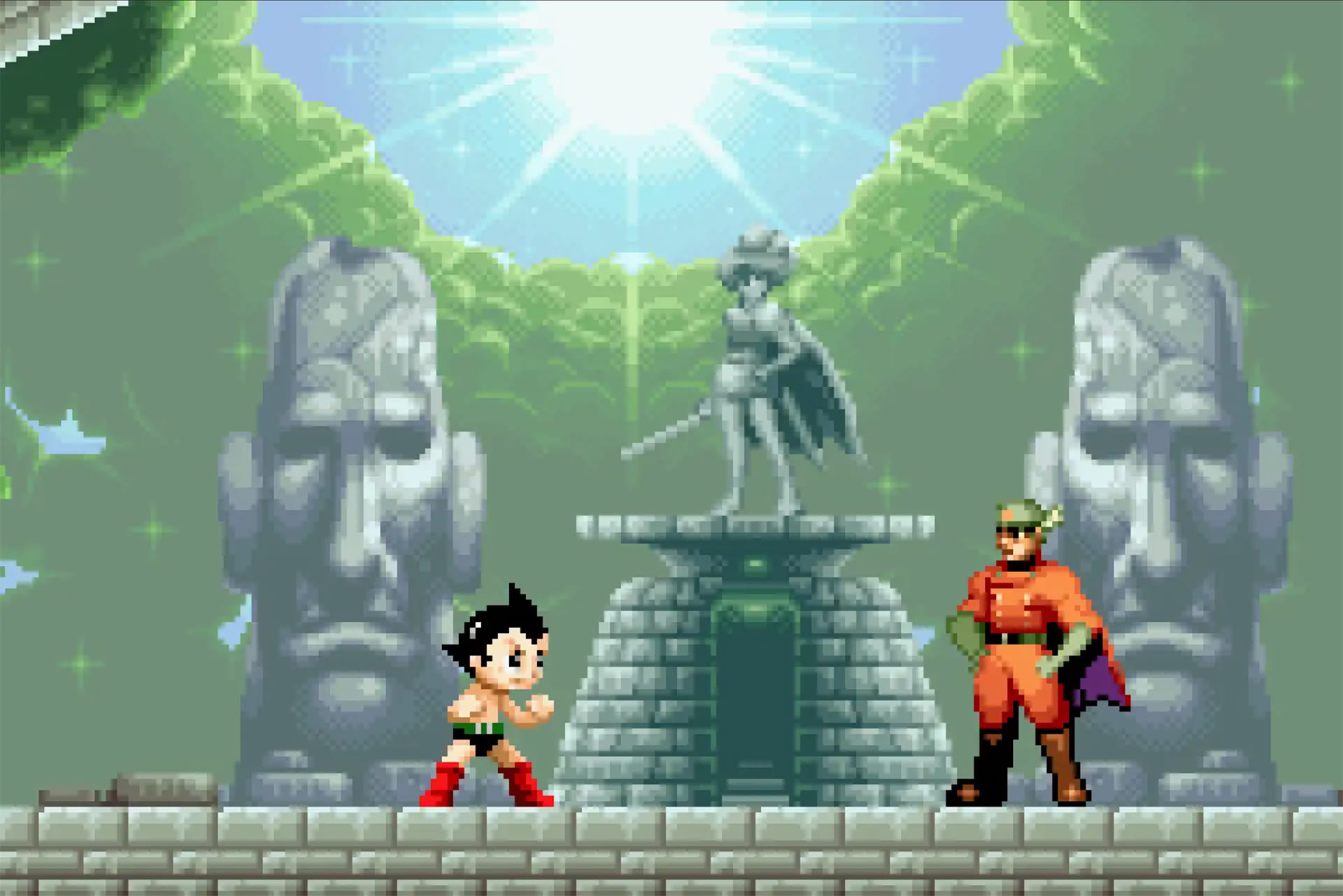
The world of licensed games always brought to game devouring individuals and diehard (insert any globally popular intellectual property) fans alike a mixed bag of playable treats and at times questionable interpretations of characters, locals, and thematics of popular series. In recent years big movie properties Batman and Spider-Man enjoyed the efforts of large budget, studio wide efforts resulting in a handful of games people genuinely like, but on the Japanese side of these sorts of games for every Dragon Ball FighterZ a dozen or more low budget shovelware equivalents populate digital storefront pages. Knowing an anime property only receives a modest budget, game developers need to be creative and squeeze blood from stone to create a simultaneously successful game and adaptation, and the Hitmaker & Treasure coproduction Astro Boy Omega Factor for the Game Boy Advance still towers as a stunning example of both.
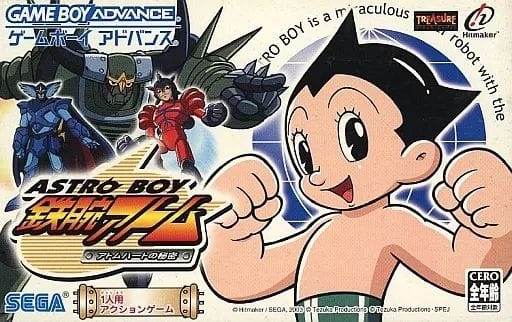
Osamu Tezuka, whose contributions to manga and anime both infinite and world changing, finds himself subject to any number of posthumous adaptations post his 1989 death; Rintaro & Katsuhiro Otomo’s mesmerizing Metropolis film, said to be have been only makeable after the author's passing, and Naoki Urasawa’s noir thriller manga Pluto, a reinterpretation of a single Astro Boy volume, stand as arguably the two most beloved. Both of these works succeed by injecting a significant authorial intent and originality from their adaptors, opposed to being faithful translations of Tezuka’s original manga. Perhaps due to their success, or just the desire for dollars, Tezuka’s estate as controlled by his Macoto hands out the license for Tezuka works like Halloween candy to animators, comic artists, and streetwear designers alike, though we see few Tezuka games despite Astro Boy Omega Factor exemplifying both his work and the art of adapting IP to video gaming.
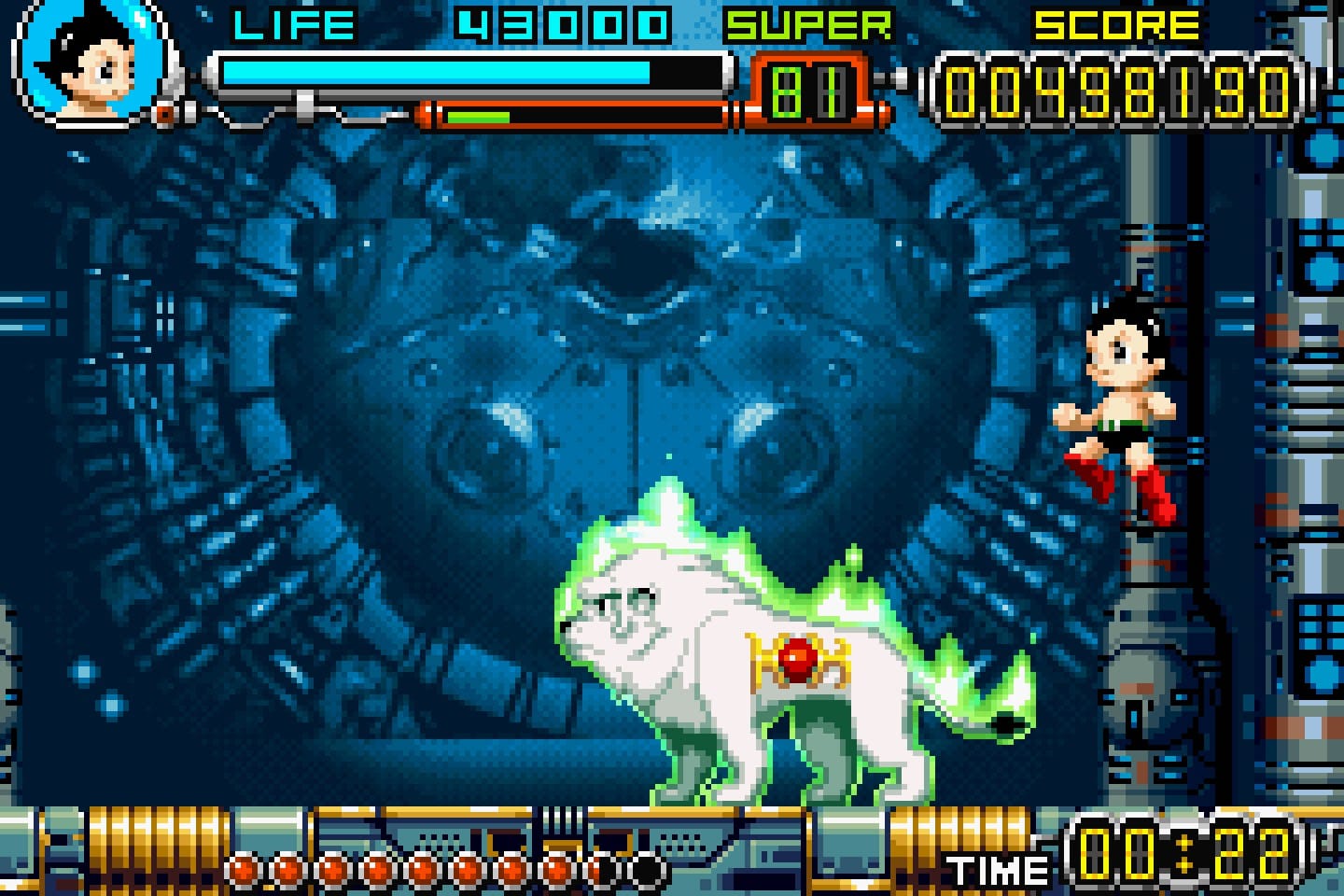
Astro Boy Omega Factor developed alongside the release of the Sony pushed 2003 Astro Boy TV animation, at the time the most expensive TV anime effort to date, but the game took significant liberties from both the 2003 Astro Boy and the original manga; Most notably, due to game director Tetsu Okano’s passion for The “God Of Manga” and ability to do wonders with animating pixel art, Omega Factor exists as a ginormous, passionate send up of Tezuka’s whole canon with 47 characters, from Princess Sapphire to Pinoko to The Phoenix, pulled from all across his bibliography making meaningful appearances. While now Avengers style crossover efforts tire us out with their dime-a-dozen cheap reliances on simple IP recognition, Osamu Tezuka himself famously loved reusing characters across his dozens of series with his novel “star system,” treating his creations as actors who could play different roles in myriad manga making their vast inclusion in Astro Boy Omega Factor true to his spirit.
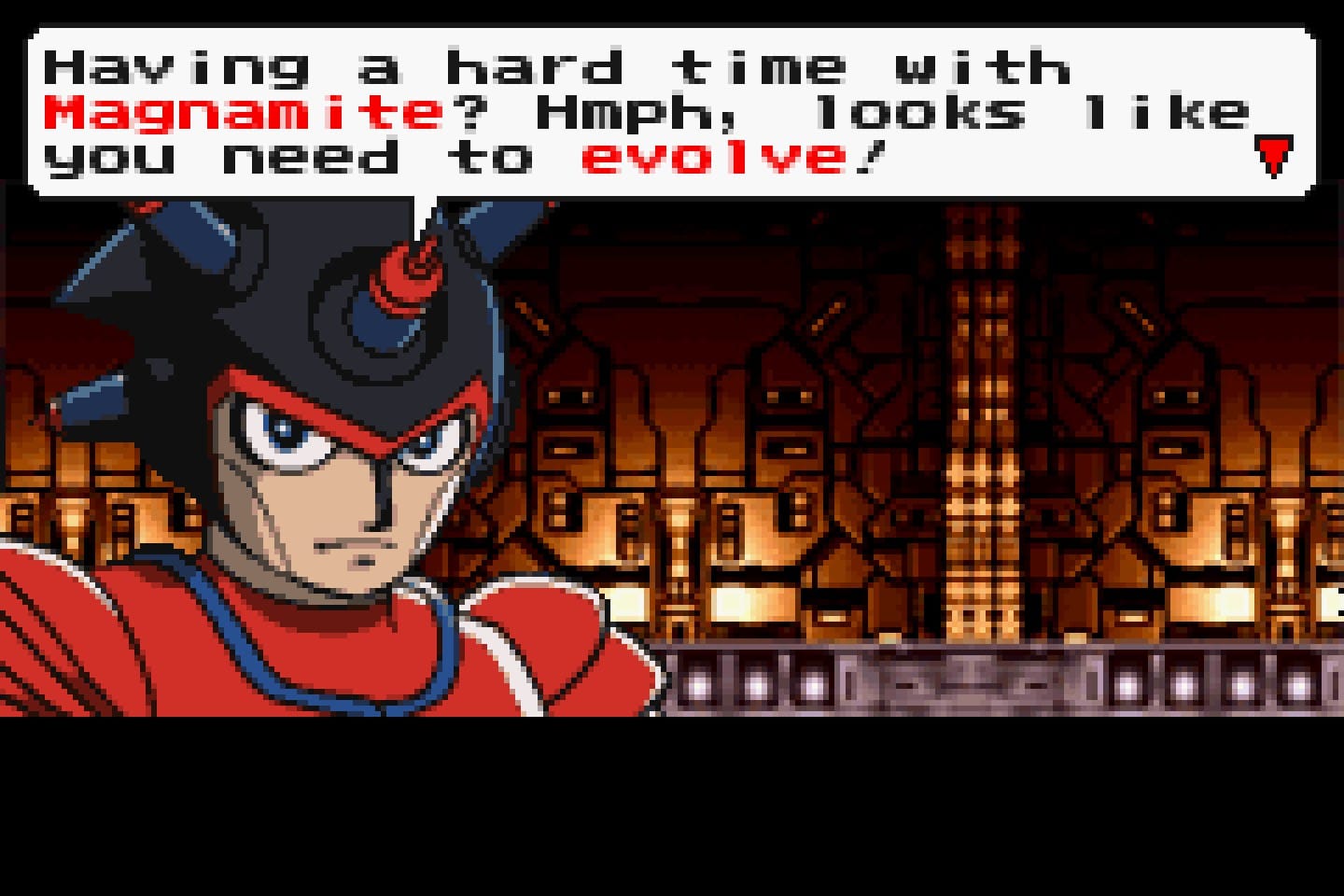
While the studio Hitmaker speared production on Astro Boy Omega Factor in the first place, with Tetsu Okano’s sensibilities infusing the project with much reverence and soliloquizing of Osamu Tezuka, the treasure expertise makes the game distinct from being a glorified Tezuka cameo delivery vehicle into a true blue hidden GBA gem whose mechanically tight gameplay alone compels the player. A singular Japanese game studio in the 1990s known for candy colored, genre blending, dreamworld romps like oddball platformer Mischief Makers, Sin & Punishment (the coolest railshooter of all time), and what’s largely considered their masterpiece, Gunstar Heroes; A game that smashed together, platforming and shoot ‘em up mechanics to great effect, and one of its leads programmers Mitsuru Yaida would go on to code the brunt of Astro Boy Omega Factor with Gunstar lineage intact.
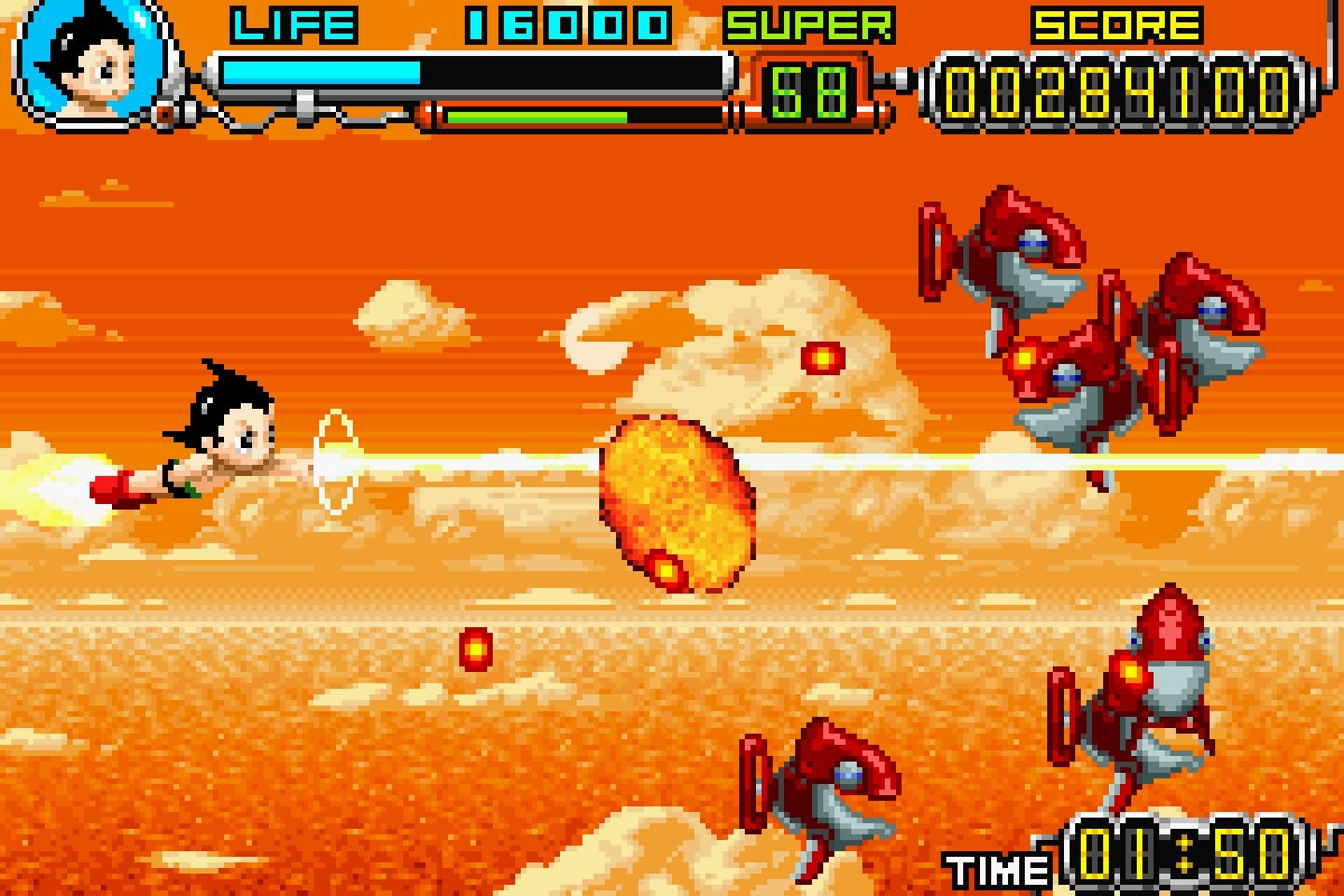
You fly and fight and dash about with Astro while investing all sorts of Tezuka inspired locals set all around the earth, trying to stop rogue robot incidents while simultaneously trying to fight against robot discrimination all while a grand conspiracy set by Duke Red plays out through the aforementioned ensemble of the 47 Tezuka creations. Combining the best of Tezuka’s signature art style with Treasure’s in house vibrant, cartoon sensibility, Astro Boy: Omega Factor even fires on impressive visual cylinders, giving the player a bigger treat for both the eyes and fingers than most on the Game Boy Advance could. Having to master Treasure’s simple yet fluid control systems, Astro Boy slinging about the stage, bumping into Unico, Rock, and so many other Tezuka icons, without which the landscape of anime and manga would be unknowably different, proves to be a unique, joyous experience.
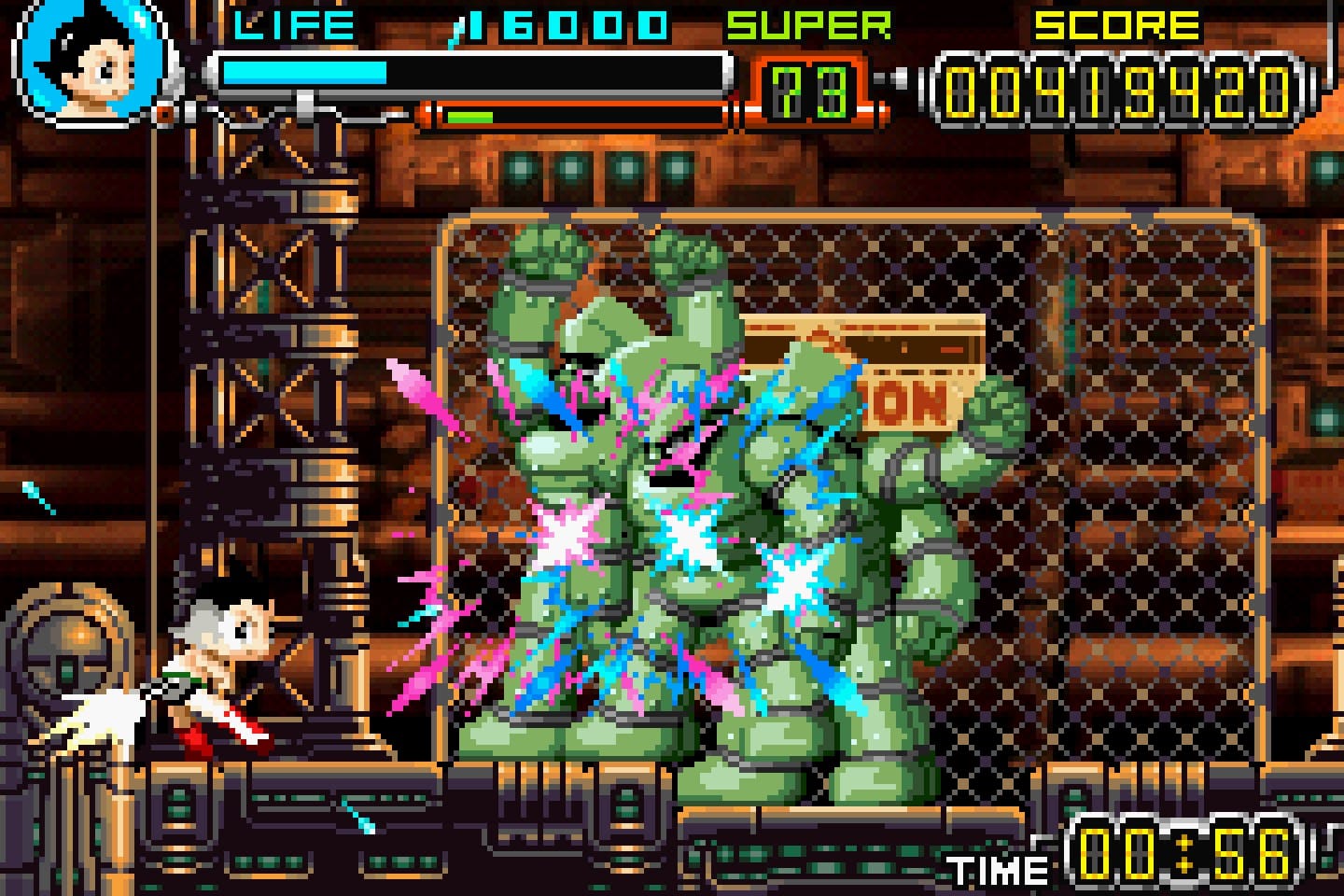
We all wish that every licensed game possessed both the profound love for its source material and innovative, addicting gameplay that could stand on its own without the coat of intellectual property paint. Astro Boy: Omega Factor exudes both, while even showcasing the mechanics and imagination cult studio Treasure uniquely cultivated across their stellar gameography. They did so with likely less than a 100th of the budget of an Insomniac Spider-Man proving money, a very useful asset if you have it alongside manpower of a several thousand person studio, isn’t the only way towards making a memorable licensed experience. A core team of only about ten people brought the most fitting and enduring tribute to the Game Boy Advance, and maybe more importantly than that, a compelling Astro Boy video game for all to enjoy.