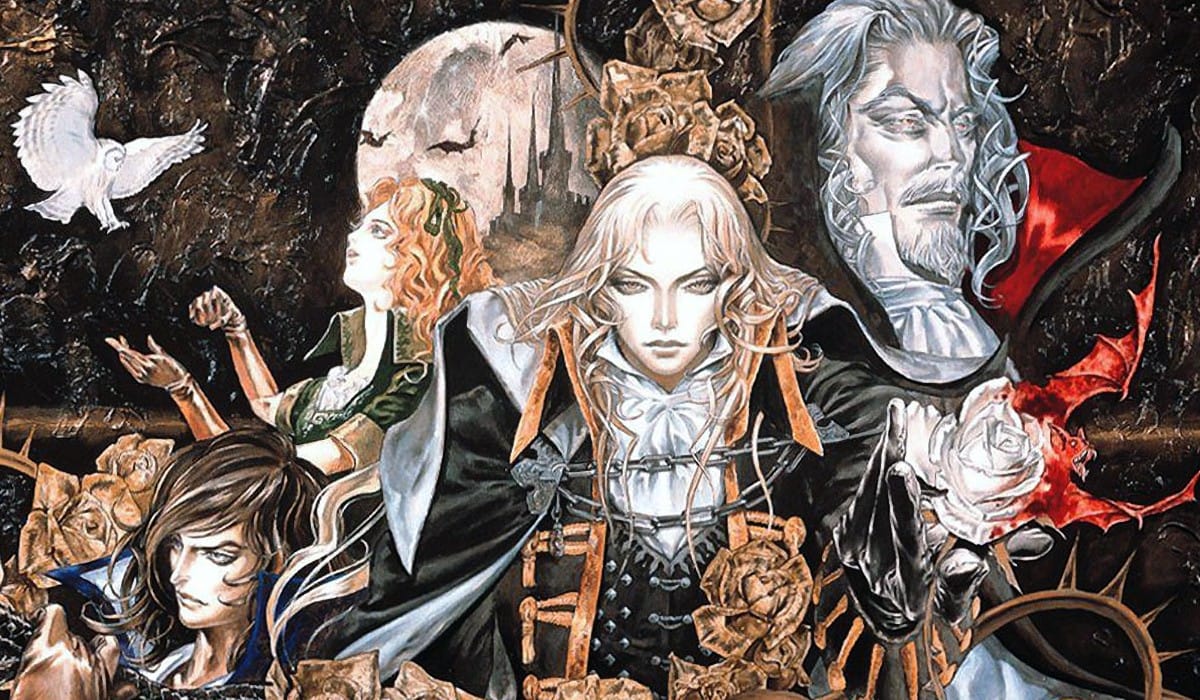
Castlevania: Symphony of the Night is by all means a classic. Alongside Super Metroid, it set a standard for exploratory platformers that developers like Team Cherry (Hollow Knight: Silksong) and The Game Kitchen (Blasphemous) are still chasing to this day. But let’s be honest: objectively, Symphony of the Night kinda sucks, right? The game abandons the tight design of its predecessor Rondo of Blood for endless and repetitive hallways packed with monsters. Its opening hours are too hard and everything later is much too easy. Some of the game’s systems, like money, are nearly useless, while others (like recruitable familiars) are so game-breakingly powerful the developers requested that players not use them in interviews.
In this era of Game Maker’s Toolkit and Joseph Anderson, when anybody might educate themselves in the principles of “good game design,” it’s that much easier to recognize Symphony of the Night’s loose ends and missed opportunities. Every game following in its footsteps (inside and outside the Castlevania series) has learned from its failures. Yet to this day, Symphony of the Night possesses a certain X-factor those other games lack.
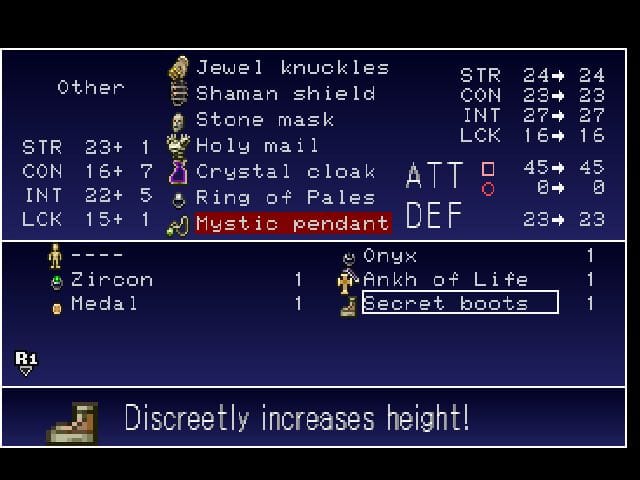
There is a special hidden item in the Underground Caverns section of Symphony of the Night called the Secret Boots. Its item description reads, “discreetly increases height!” The Secret Boots slightly stretch the protagonist Alucard’s sprite, so that he is just that much taller. They have no other effect. There is no puzzle that requires Alucard to be taller, no glitch that exploits his increased stature. It is simply a gag item that the developers put into the game, perhaps because they thought it would be fun.
Just like the Sunglasses, an early item that raises Alucard’s defense by one but (perhaps because they are too stylish?) lowers his intelligence by the same amount. Or the Tyrfing, a dark-type sword that lowers Alucard’s attack by 30 points if he equips it. Or peanuts, which heal you–but only if Alucard catches them after throwing them into the air. Any one of these items might have been cut. Yet part of the wonder of Symphony of the Night is that those items are out there for the player to find. Whether or not they are “balanced” against the rest, the pleasure of stumbling on a secret is enough.
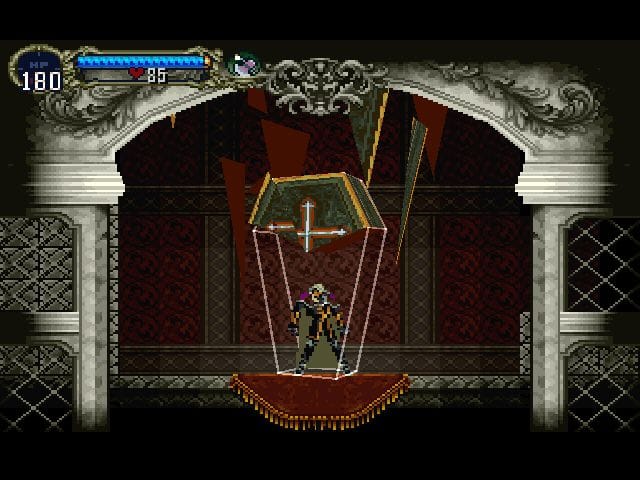
For me, this ties into the game’s great and inarguable strength, its aesthetics. Symphony of the Night rejected trends in 1997 by utilizing 2D (with a smattering of 3D) graphics rather than embracing 3D. This seemingly conservative choice revealed itself in time to be a stroke of genius. Konami’s mastery of 2D reveals itself in every elaborate monster design and unique death animation. Save points shatter into 3D triangles that reassemble as coffins. The music proceeds with pomp and circumstance. Alucard himself moves with an elegance that was rare for the time, and unusual even now.
Not to mention the many one-off details that have become the stuff of legend. The confession booth. The ferryboat in the Underground Caverns. The boss Orlox who sits at his dining table and waits for Alucard to strike the first blow. The opening battle with Dracula that recreates the finale of Rondo of Blood, and at its finish transforms into a photograph that burns away. The upside-down castle in the clouds that reveals an entire hidden second half of the game.
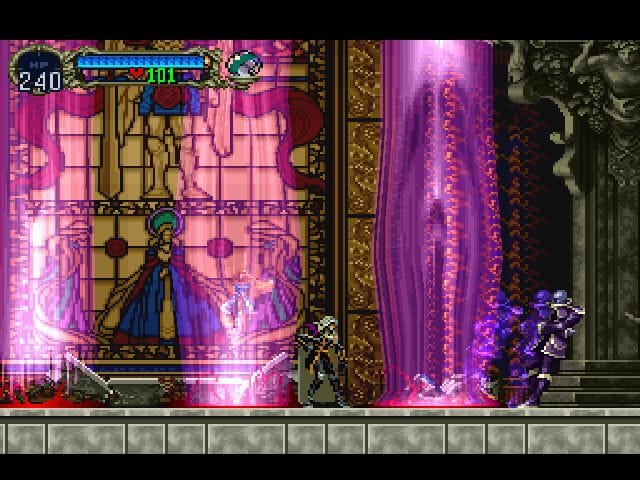
Earlier Castlevania games had you control the Belmonts, hyper-muscular warriors that must commit to every action. Playing Rondo of Blood again and again until you reach the end can feel like weight training. Symphony of the Night by comparison is like taking those weights off. You play as a brooding half-vampire with access to a vast armory, magical powers, and even special hidden moves you can stumble on by accident. It is a game of decadence. Every choice made by the developers reinforces that attitude.
The later entries, following in Symphony’s footsteps, improved on its failings. Aria of Sorrow for instance has much tighter design, thanks to its Soul System that unites Symphony’s various subweapons, special abilities and trick weapons under one banner. But its music suffers under the GBA soundchip compared to Symphony’s luxurious soundtrack. Dawn of Sorrow’s instrumentation fares better, yet its character portraits pale to those in Symphony. Even Castlevania steward Koji Igarashi’s spiritual successor, Bloodstained: Ritual of the Night, can’t help but look cheap compared to what he and his coworkers at Konami accomplished with Symphony years ago.
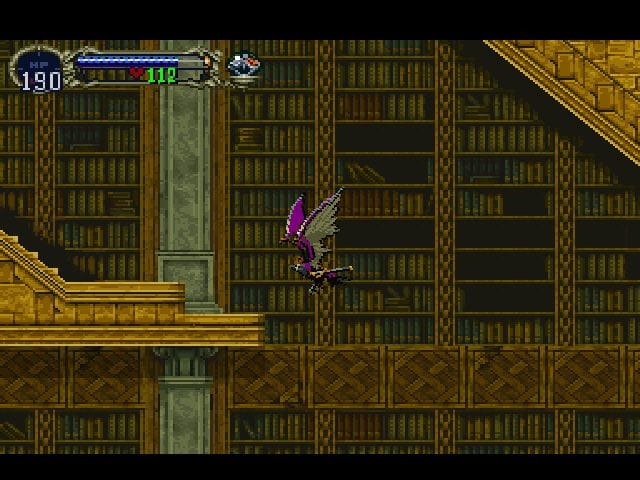
With that in mind, I don’t think that Symphony of the Night’s design “mistakes” matter that much. Alucard is fun to control. The monsters he fights along the way are beautiful to look at. There are so many fascinating hidden items and secrets that no matter how many you find, you’ll feel as if you broke the game in some way. It’s satisfying to level up, and it’s even more satisfying to see the game’s completion percentage tick up above 100% once you discover the upside-down castle.
There are folks out there who might say that this is a shallow way of looking at games. That design, rather than aesthetics, is what matters most. Shouldn’t we want “shorter games with worse graphics made by people who are paid more to work less and I'm not kidding?” Well, I can take or leave the modern games industry’s obsession with photorealism. But aesthetics do matter. Why do you think so many people are into Dark Souls or Elden Ring? It’s not just the tough battles, but the boss designs, mysterious item descriptions, and art direction that capture people’s imaginations.
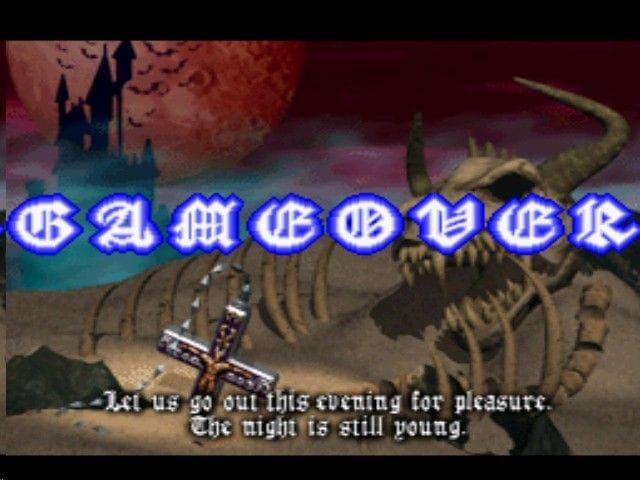
Symphony of the Night has stuck around for so long because of the intentional choices made by its team: not just how it played, but how it looked, and the way it made you feel. What folks these days call “vibes.” That’s why objective analysis falls short. It’s a game about the grace notes. A close reading of Symphony’s excesses, its failures, would be incomplete without noting how those contribute to the greater whole.
It doesn’t matter that the Secret Boots barely do anything. That’s what they’re for.