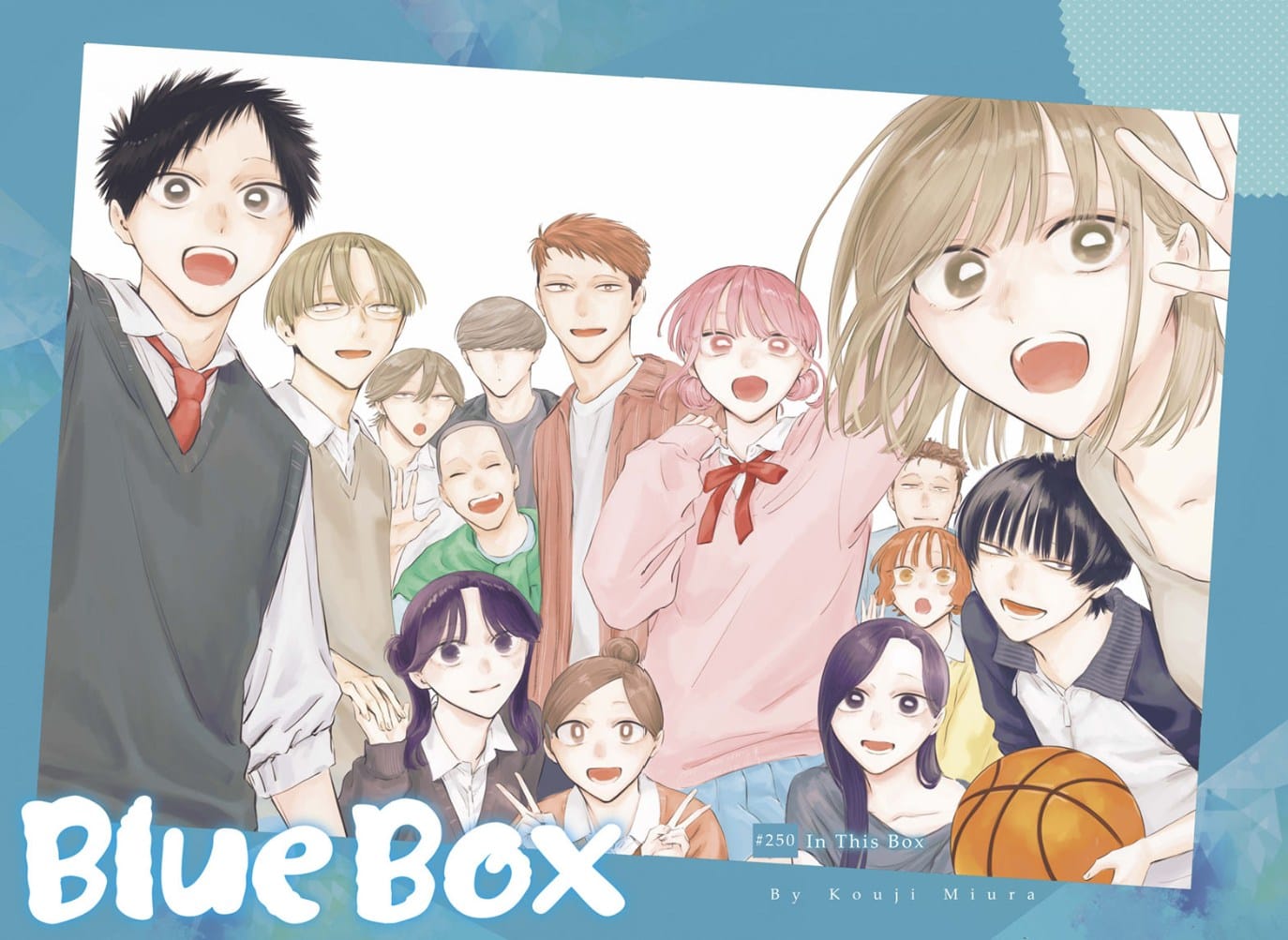
Blue Box isn’t a sports manga. That might sound ridiculous given that the two main characters meet through badminton and basketball, but Kouji Miura’s series is just as much about love, missed opportunities and the fleeting nature of youth as it is anything else. In the end, it proved that a different kind of sports manga was possible: one that can succeed in the modern era where so many others have failed.
This article contains spoilers for the entirety of Blue Box up until chapter 250.
Perhaps one of the main things about Blue Box that will be remembered for many years to come is the fact that it had the courage to see through Taiki and Chinatsu’s relationship to the very end. Unlike most romance manga, it refused to play the “will they, won’t they” card forever and instead saw the main characters start dating less than halfway through the story. Of course, the penultimate chapter also saw the ultimate consummation in a rare spectacle for Weekly Shonen Jump.
What’s more, the story explored the very real problems that come with relationships separated by age and school year. Once Chinatsu graduated high school and entered college, the question became whether or not her relationship with Taiki could withstand the transition from childhood to adulthood. There was even an insinuation at one point that Chinatsu might leave her high school sweetheart behind in favor of her neighbor Iozaki, but that didn’t happen.
Aside from Taiki and Chinatsu, plenty of other characters served to explore plenty of other perspectives on the universal theme of love. For example, Ayame and Kyou showed what happens when two people have feelings for each other, but fail to realise at the same time. Hina’s arc, struggling with her feelings for and rejection by Taiki in favor of Chinatsu, also raises the question of whether you really can just stay as friends after a confession.
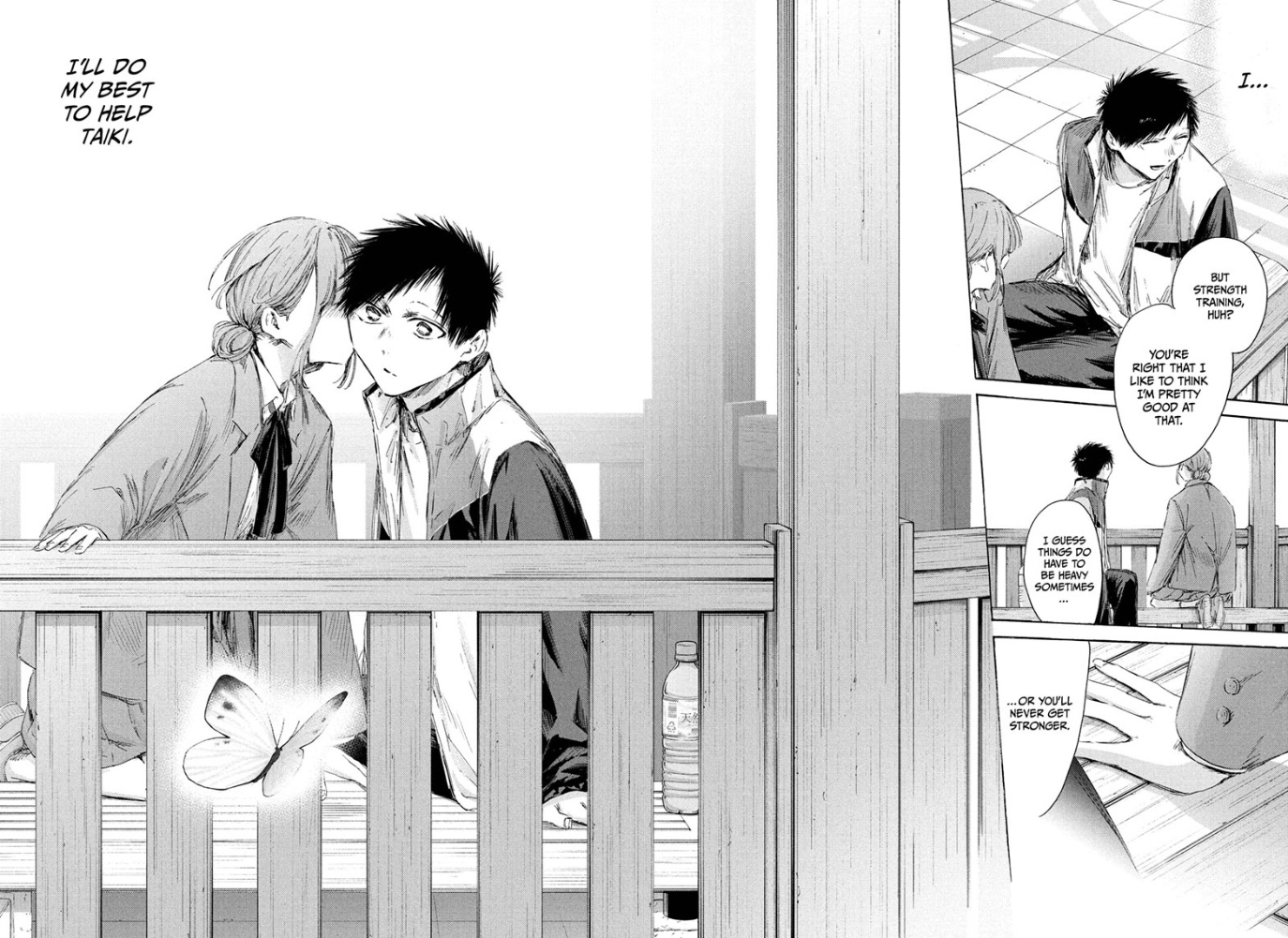
None of this is to suggest, however, that sports had nothing to do with the point of the series. Just on paper, large sections of the story were dedicated to tense back-and-forth matches of basketball and badminton that resemble something out of Slam Dunk more so than Kimi ni Todoke or Nisekoi. Even so, instead of focusing on just sports for sports sake, these sequences were always meant to drive home different themes in the context of each character’s arc.
For Taiki, his eventual success at the badminton prefectural qualifiers proves that sporting success comes down to the people around you just as much as it does individual effort. This dichotomy is actually spoken out loud when Iozaki admits on the sidelines of the match that “To me, the hope he saw was obscured by the clouds.” While he had allowed cynicism to blur his vision, Taiki kept on the straight and narrow, guided by the optimism and support of his friends.
Chinatsu’s arc, on the other hand, tells a very different story. Despite the support of a fantastic team, the young athlete ends up bowing out of the prefectural qualifiers early due to a leg injury, eventually costing her team the chance at going to nationals. There’s a part of her that feels like it was all for nothing: what was the point of all that practice, all of that time spent locked away in the gym if she couldn’t win?
One of the cruel realities of life that all children eventually come to learn at some point or another is that not everyone is destined for greatness. Rather, the majority of humans throughout the whole of history have led and will lead completely normal lives, recorded and remembered by no one. While this might give rise to a nihilistic perspective, Blue Box makes the point that meaning is found in the journey, not the destination.
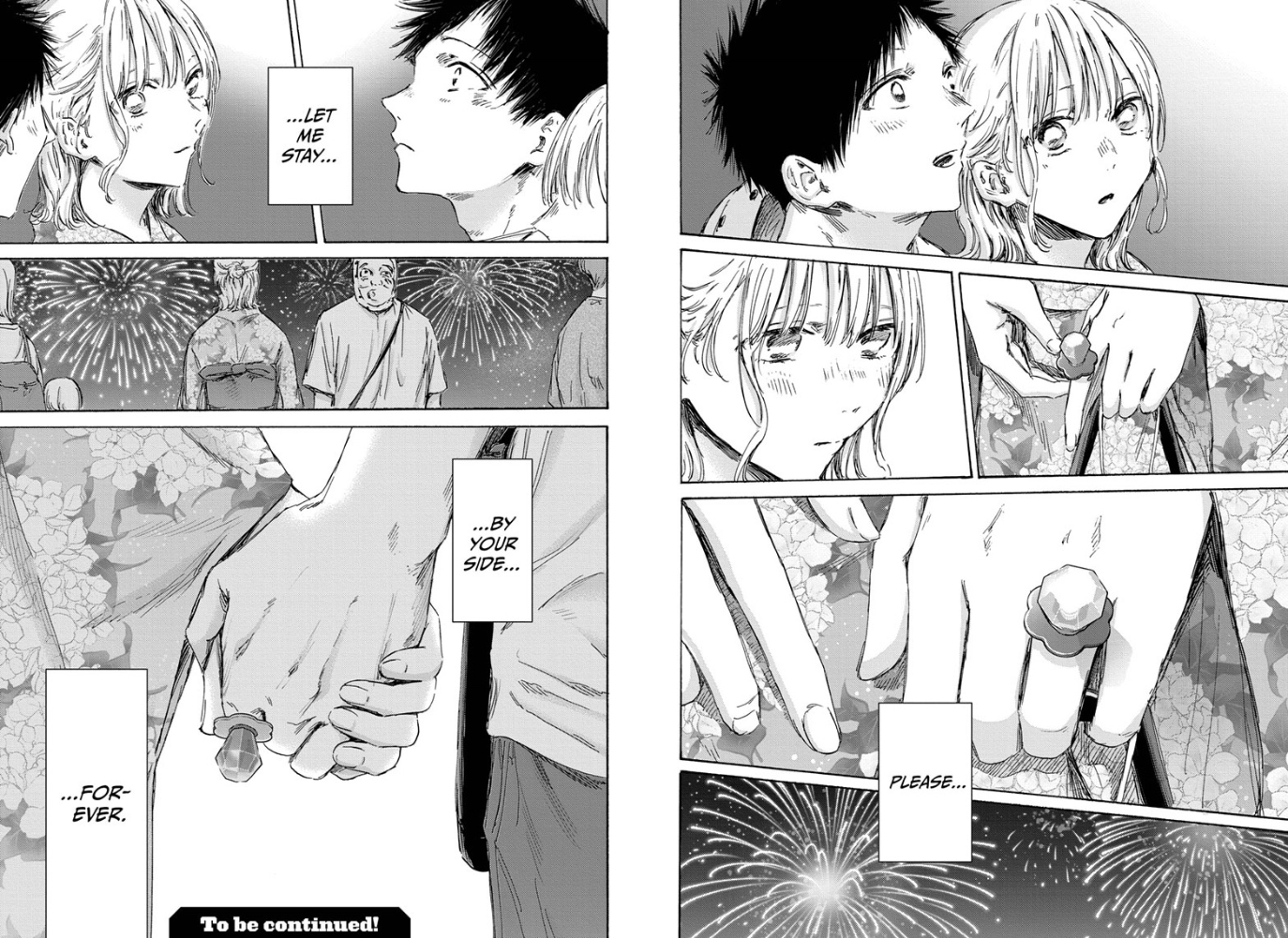
A couple of chapters after losing in the qualifiers, Chinatsu and Taiki go to a summer festival where they watch fireworks together. This also just happens to be the moment where their relationship is finally revealed to the rest of the student body, but the thematic crescendo comes through the image of the fireworks: fleeting, yet bright and beautiful. When Chinatsu makes the wish to “Stay by your side, forever,” a clear parallel is drawn between the transient nature of her sporting career, the fireworks, and the constant of Taiki by her side.
Moreover, the last words of the series are ones of gratitude as Chinatsu and Taiki literally thank the liminal space of the gym for providing them with their youth. As the figurative ‘blue box’ of the title, the gym was ultimately nothing but a temporary place in the passage from one stage of life to the next. Despite being the central location both within the narrative and the framing of the story, it was the experiences, hardships and connections that were gained within it that proved most important.
There’s more to say about the series, but a line must be drawn here to say that Blue Box proved surprisingly consistent and overt with its theming. Most other sports series in Weekly Shonen Jump do touch on themes such as youth, friendship and perseverance, but the focus is usually on the action more than anything else. At times, Kouji Miura felt like she was writing more of a shojo manga than a shonen one thanks to its focus on abstract emotions.
Perhaps this is the reason why Blue Box thrived for so long, lasting for 250 chapters and 26 collected volumes as of the time of writing. By way of contrast, Nine Dragons' Ball Parade and Neru: Way of the Martial Artist launched in the very same year, but failed to get past 18 weeks in the magazine. There’s been a quagmire in the realm of sports manga for years, and perhaps more stories like this are the solution.