The Last Blossom, upon its release in Japanese theaters last month, saw director Baku Kinoshita reunite with his ODDTAXI screenwriting partner Kazuya Konomoto for their first original feature-length anime. Having found international success with the conversation-sparking omnibus series set in the nightlife of Tokyo with an eclectic range of animal characters, the movie was a shift in storytelling approach and focus for the pair, telling a story of a dying yakuza across a tight 90-minute runtime.
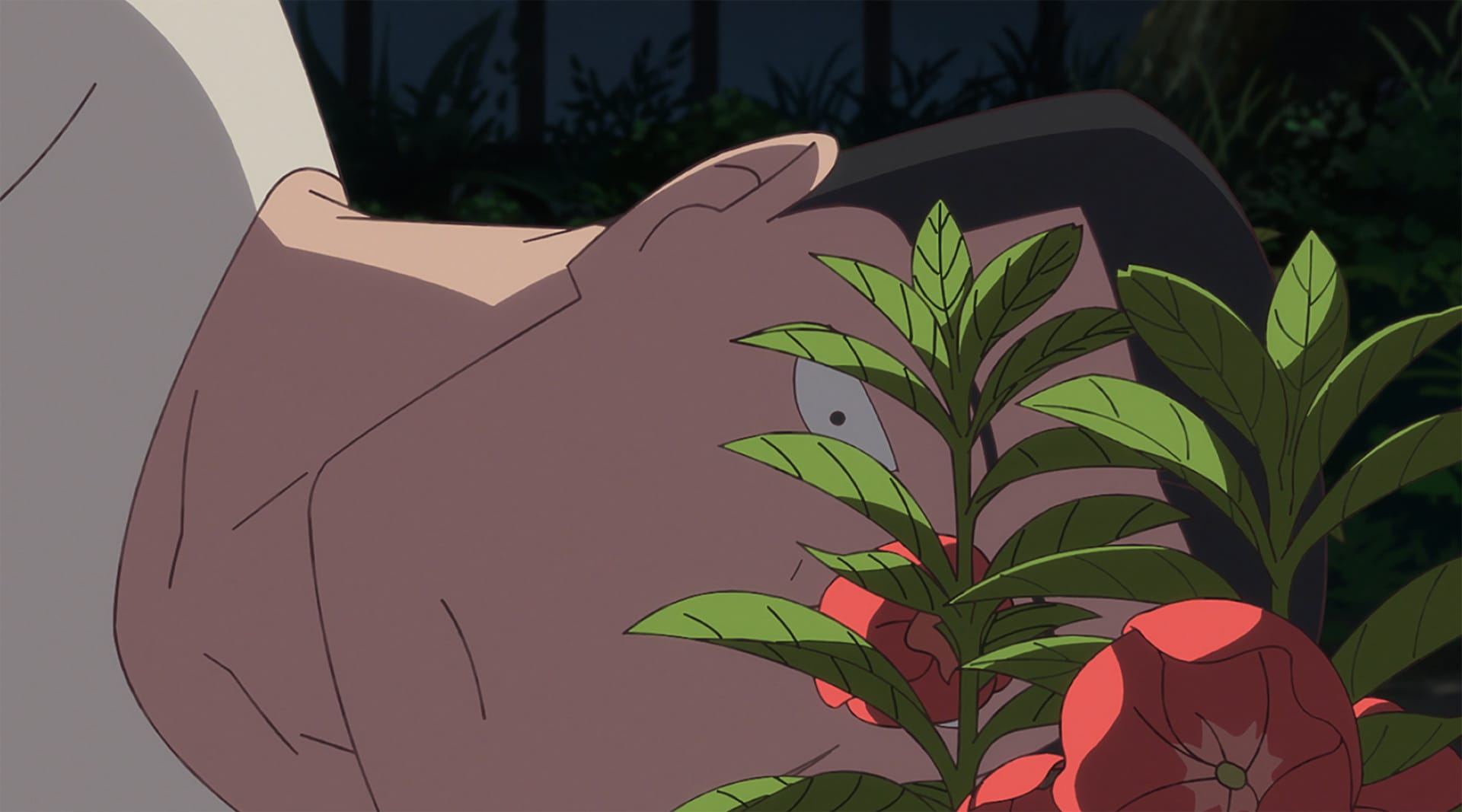
This was a story about death, and the memories that come as you face the end. Akutsu is an elderly former yakuza lying on the floor of his solitary jail cell with a singular flower for company. It talks, and in conversation with the plant the man recites the story of a family he had, the life he led in the prime years of the Japanese bubble economy, and the regrets he faced in his final moments. All the while, the flower, intimately familiar having grown in the garden of his former home, quips, talks, listens, and laughs.
Speaking to director Kinoshita at Tokyo International Film Festival, the intent with The Last Blossom compared to his previous work was not to abandon the themes and topics he explored in that series, but to narrow them down and focus on a single story and emotional arc in greater depth. “[Compared to this film, ODDTAXI] has an ensemble cast of about 20 characters, and soon becomes quite complicated,” he explained.
“I wanted to narrow down on a number of characters that are appearing and make it a more simple structure. For the TV series we had 13 episodes which comes to around four and a half hours. When you have so much time to use and there's a lot of things to focus on, everything gets dispersed and diluted. With just 90 minutes, I was forced to more closely understand how I used all the cuts and moments and take great care in how beautiful each one looked or was told.”
Not only is the cast of The Last Blossom far more constricted - aside from Akatsu, we meet a few close friends in the yakuza, as well as the woman he takes in and her child that he comes to love - the cast is entirely human and far more normal compared to the oddball, unique nighttime animals familiar to fans of his previous work. The only exception is the talking flower, a housenka or garden balsam, that chastises him as much as it seems to show genuine interest and care for Akatsu as he recalls the reasons he came to jail and the family he once found.
In an otherwise-grounded film, why a talking flower? Why not just have him talk to himself, or remove the framing device altogether? According to Kinoshita, the idea came once the decision was made to work with Konomoto once again on this film, recalling a notable episode the pair particularly loved from the series as inspiring this decision. “Once I knew he was on board, I remember thinking back to our work on episode four of ODDTAXI which features a narrative told primarily from one character’s perspective and how good Konomoto is at writing those types of scenes. Initially we wanted to go in that same direction, but then we thought about adding a more stylish and expressive character to serve that role.
“We went with the flower because ODDTAXI had animals, and a story like this with just humans could be quite boring!”
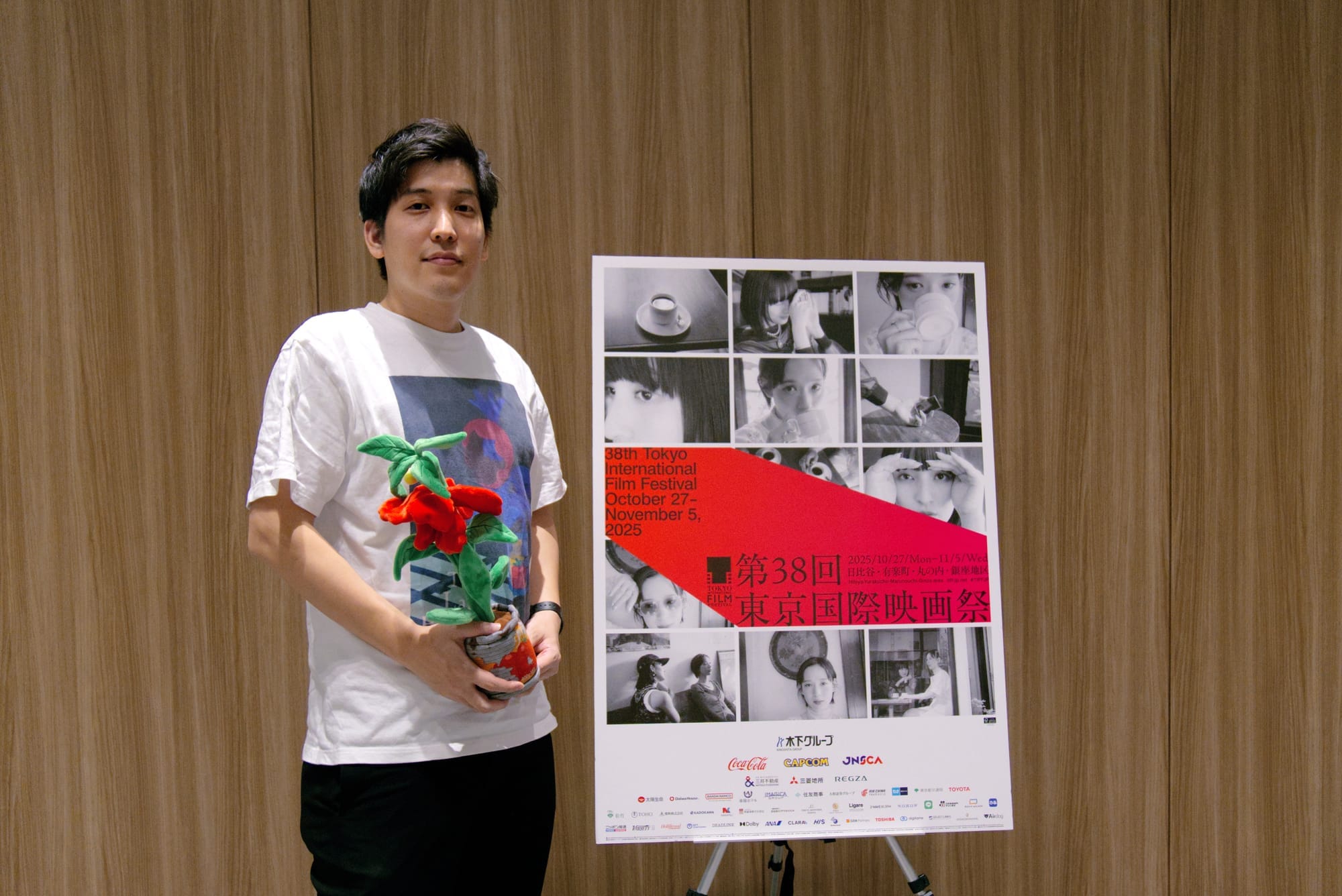
The pair have a natural working and non-working relationship which made the idea of working together for another anime an easy decision to make. “Even after wrapping production, both Konomoto and I share a great relationship and would go out for drinks. We have a good chemistry when working together, and he’s a writer whose screenplays are full of mystery and are of such a great quality with a high level of humor. As a director, I’m really attracted to working on his screenplays, and I want to be involved in any work he does.”
As for the titular flower, this talking blossom moves with a vigor only emphasized when contrasted to the dying, unmoving body of an older Akatsu recalling these memories. “We were actually inspired there by Disney’s Fantasia,” he explained. “We wanted to create a visible gap between Akutsu, the protagonist who is about to die, with the flower who was constantly moving around and was very flexible. The flowers in Fantasia actually look just like their moving with legs and leaves as arms, but we didn’t want this Balsam Flower to transform in such a way. It’s hard to make it talk without eyes or a mouth, so instead, when the flowers talking, we expressed all their emotions through their body language.”
The result is a very energetic flower that feels alive and speaks with vigor despite lacking both a body or a mouth, believably existing in this universe just like any human. Which is important when, beyond this solitary cell where he exists, this is a very grounded portrayal of Japan at its economic apex. With the country at the peak of its financial strength following its post-war boom period that made the yen one of the strongest currencies in the world and where things felt like they’d never stop looking this good, Akatsu is able to create his home as a more upstanding member of the criminal underworld.
If anything, the home life he builds is a peaceful oasis amidst a booming country. Of course, both for Akatsu and for the country broadly, there was to be an end of the good days, and the joy they once experienced would explode and come to a sudden, crashing end eventually. The setting, choice of flower, and the themes of the story for the extent someone would go to protect the people they care for, even as it brings the life they once had to an end, were all influenced by this particular choice of setting.
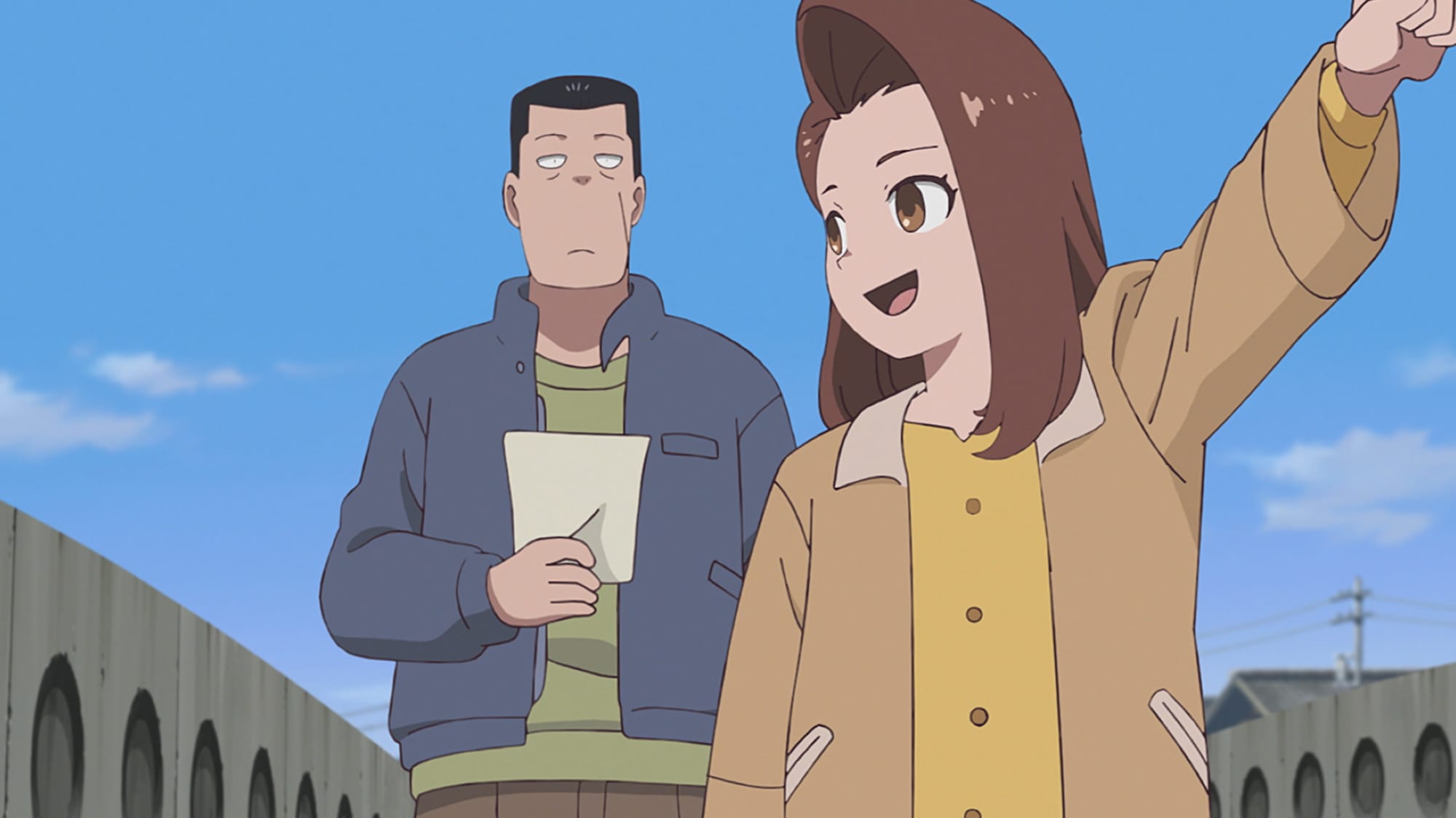
“When we started planning what the film would look like we chose the 1980s as a setting. After that was when we chose to have a flower talking to an old man. Then we said, okay, this flower should be a Balsam Flower, because when we researched we saw that when you touched the seeds it had a tendency to explode out of the flower. Then we had the opening scenes with the fireworks, the motifs of breaking out and exploding to a sudden, grand end, and then we settled for certain on the bubble area. We worked backwards like that when working on the story and setting.”
As a younger director who came of age not in the bubble era but in its afterglow, he researched the period heavily to ensure the film’s accuracy to the era. As Kinoshita explained, “Obviously I did some research online, but I also spoke to older people on the team who lived through the bubble era. Through them I found out about discos and the different types of discos and the songs that played at these places. I fit this into the characters also. I wanted to create characters who are able to live this life, but as things changed, were unable to adapt to the times. We had Tsutsumi, a very stereotypical yakuza, and Akatsu. But then we also had Konishi, a yakuza who foresaw what would happen and adapted, what we would call an intelligent yakuza. We had characters that adapted and couldn’t from the specific experiences of the era.”
Research of the era brought the team to “Stand By Me,” the famous song by Ben E. King that bookends the film and serves as a theme for Akatsu’s new family and the bond they form despite their unlikely situation. The song made itself into even the earliest iterations of the script thanks to its resonance with the story’s ideas, regardless of the potential challenges it could have when it came to production. Luckily the team were able to clear the song for the film, though this was something director Kinoshita or Konomoto ever concerned themselves with. As they admitted, they left this to the film’s producers at Pony Canyon and luckily found a way to make it work.
Whether it’s music or place, the movie ties itself very specifically to the 1980’s boom economy that Japan experienced during this era, and resonates precisely because of how its story mirrors the story of a nation on a personal level, Akatsu the one to suffer through the cracks of a changing world. The 1980s were a moment where anyone could build a future of prosperity and a home on the back of economic prosperity, and its end led to the clashing of people and ideas over the past and future of a nation.
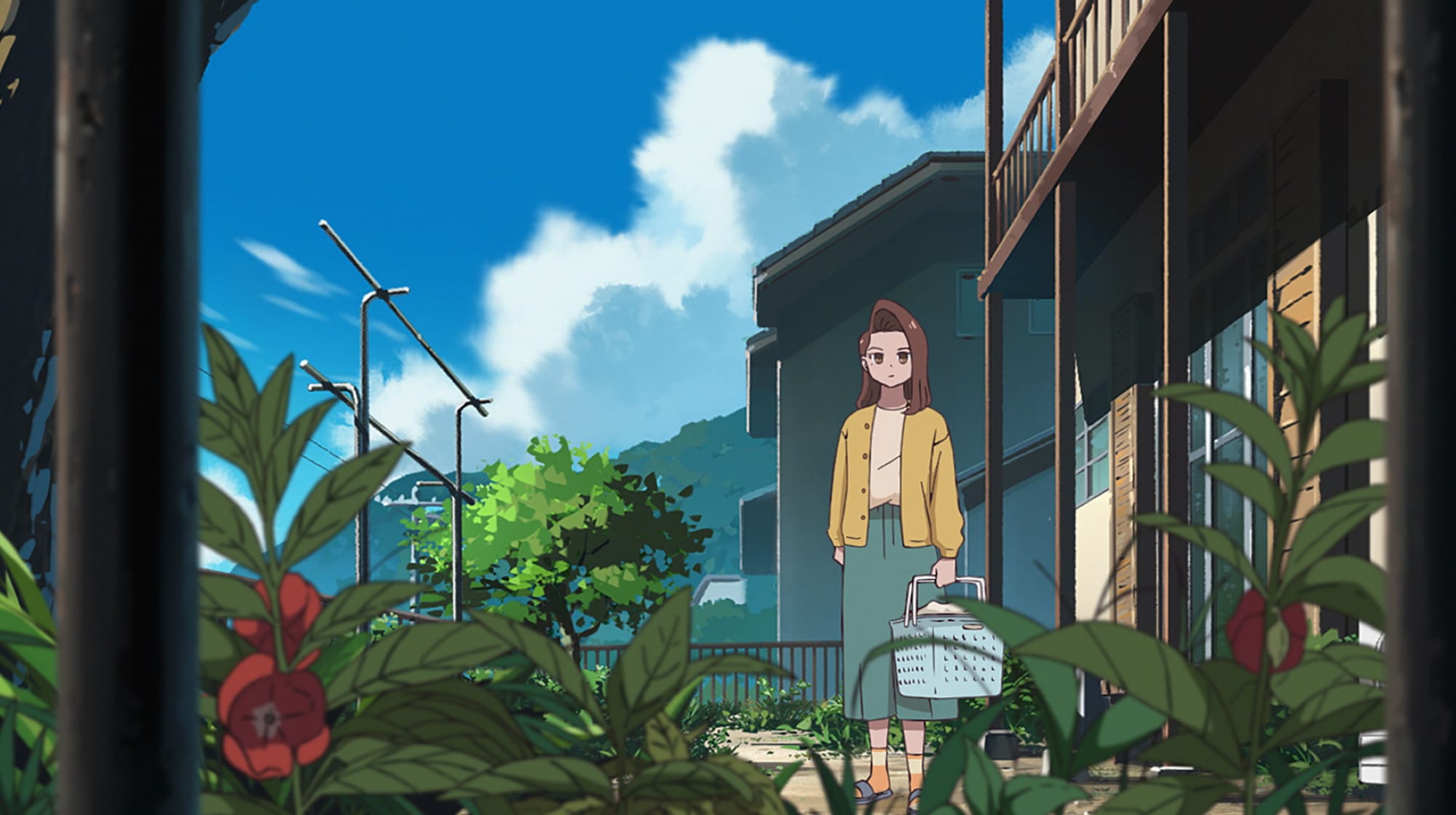
Yet despite these specifically-Japanese ideas at the core of The Last Blossom’s writing and production, as the film gears for international release, Kinoshita is confident that the film can find an appeal even to those less familiar to this history. Even if the specifics are not identical to what Japan went through, many other nations have gone through similar journeys of prosperity and decline and change that audiences elsewhere could imprint onto their viewing experience.
“I think the film’s message through this period we are portraying will still hit home [with an international audience],” he explained. “Every country goes through development stages where things are good and things go bad, so I think that kind of idea is there for anyone. Plus, towards the end, as we see the newer architecture and how much Japan has changed since those days, people will be able to sympathize with how things change and what’s going on.”
The Last Blossom is a beautiful film, using the medium of animation and a talking flower to tell an ultimately-human story beyond the confines of live-action storytelling. The fact that Kinoshita has been able to direct and lead production of two deep, complex and ultimately human stories through the lens of the surreal (whether plant or animal) should be commended. Within these 90 minutes, the medium of animation is the metaphorical message for a story of love and connection and the extent one will go to protect and serve that bond, even when these people are separated by time and an ever- changing world. Those memories, that love, they never go away, even as the memory fades like a firework or a blossom seed.
There’s something beautiful about remembering that.