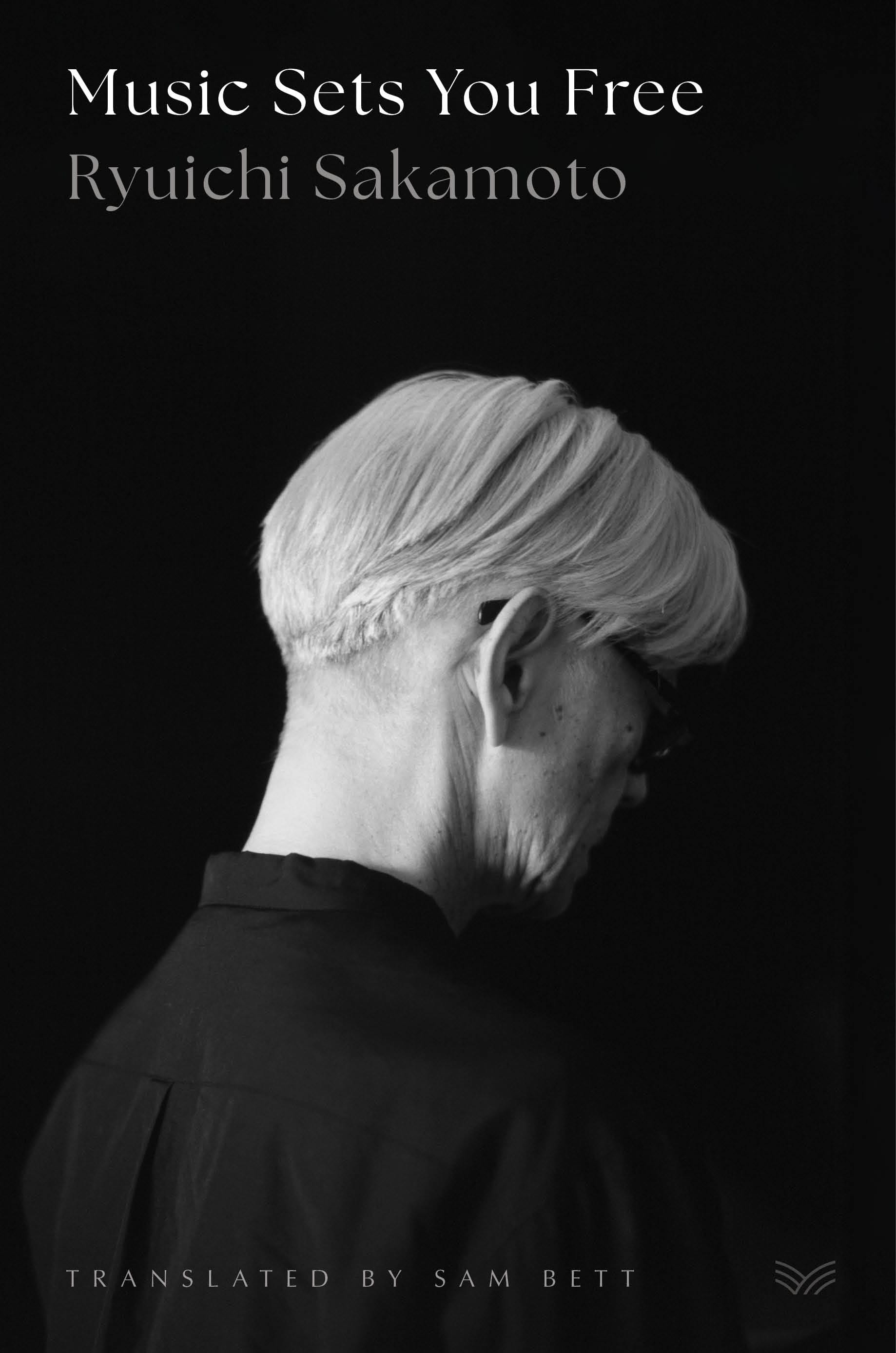
Legendary composer Ryuichi Sakamoto ends his memoir Music Sets You Free, at last available in English translation, with a personal motto: Ars Longa, Vita Brevis (“Art is long, life is short,” in Latin). But a perhaps better summation of the way he lived is found in the title of the second volume: How Many More Times Will I Watch The Full Moon Rise? The phrase comes from The Sheltering Sky, the Paul Bowles novel that was made into a Bernardo Bertolucci-directed movie that Sakamoto scored. In the full passage, Bowles discusses the fact that seemingly common events, such as a full moon rising, are only experienced so many times in a person’s life.
As we can glean from his memoir, Sakamoto lived by this principle of scarcity. He absolutely internalized Bowles’ words and attacked life with voracity, traveling widely and making music that defied expectations and bushed boundaries. Yet the two volumes that make up the book, originally published 14 years apart in Japanese, can sometimes feel as if they were written by two separate people. Sakamoto himself provides an elegant metaphor for this division: kanreki, the traditional sixtieth birthday milestone celebrated in Japan and elsewhere in Asia.
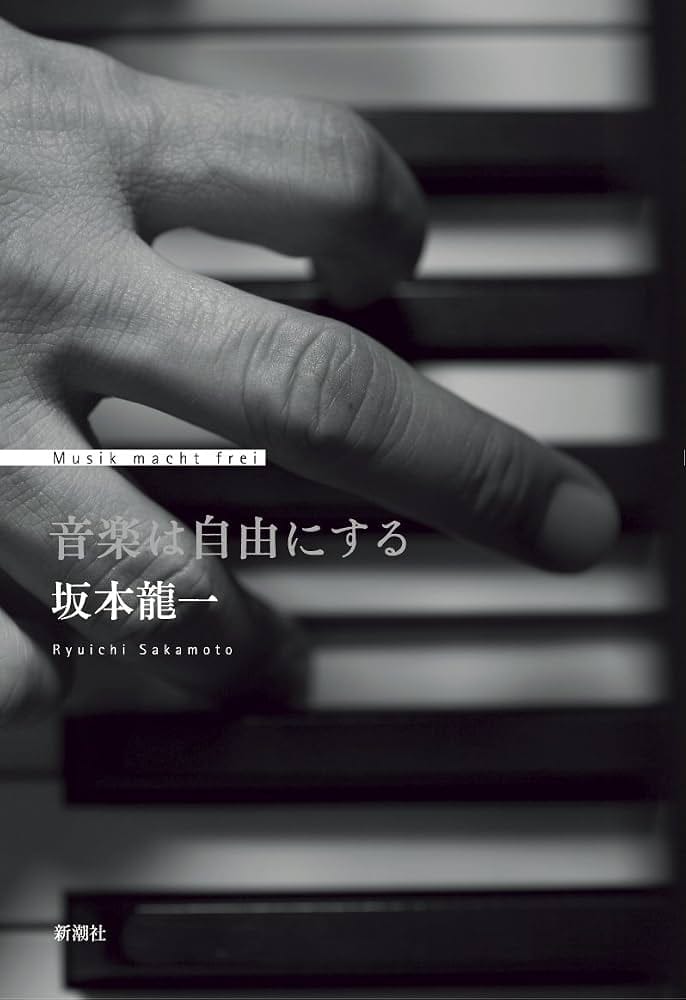
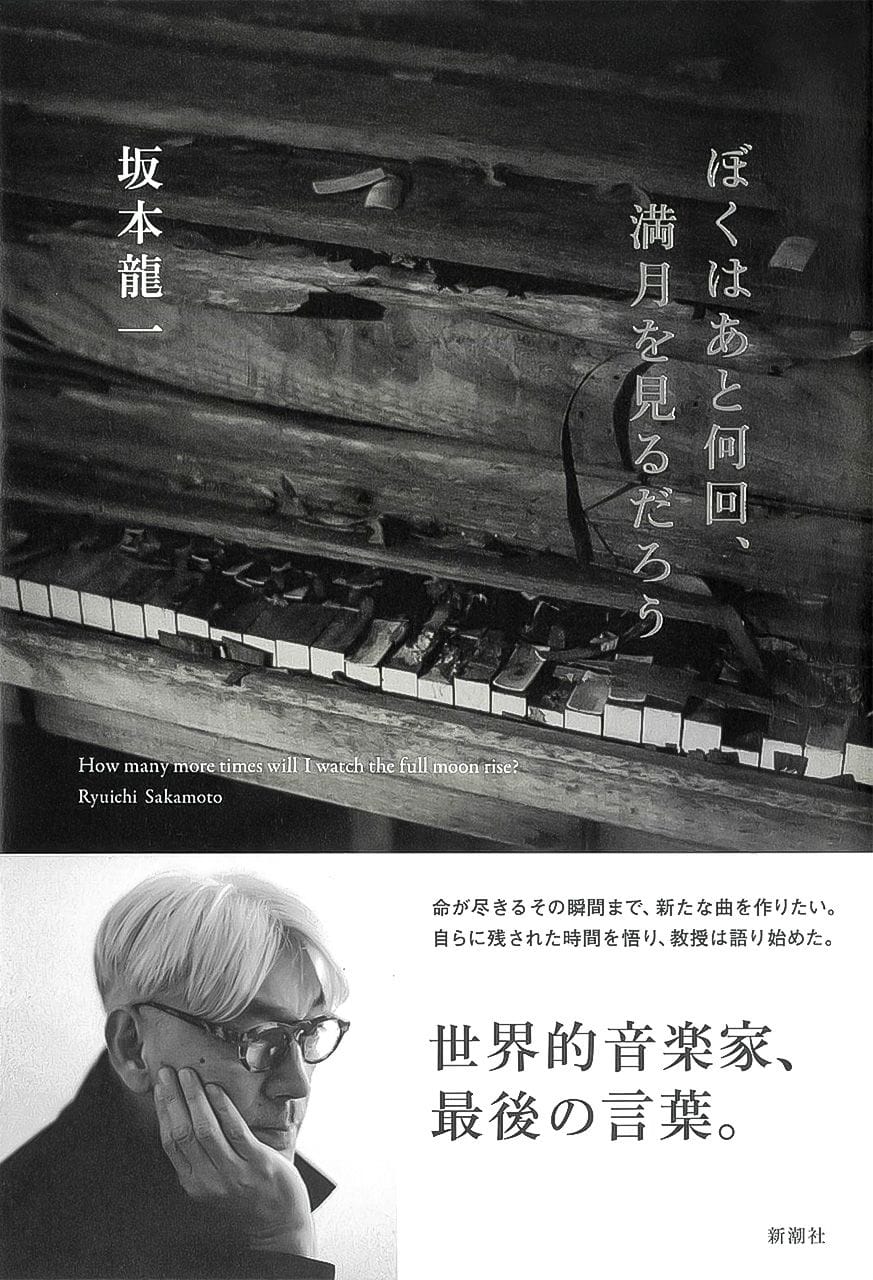
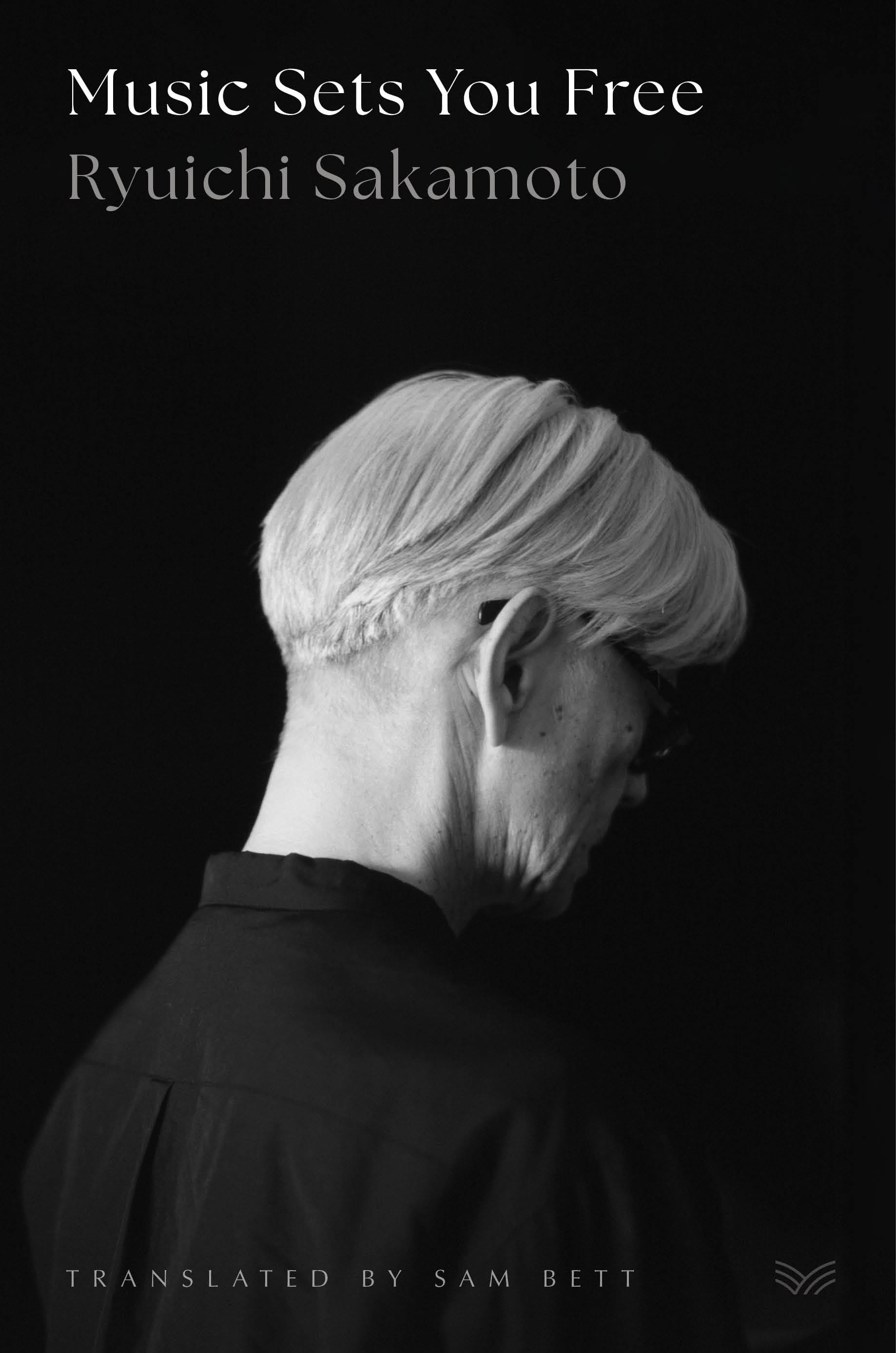
Ryuichi Sakamoto's Japanese memoirs compiled in Music Sets You Free
By the time of his kanreki, Sakamoto had already released one volume in 2009 that covered the vast swathe of his life. He recounts a comfortable, middle class childhood learning piano and composition at the urging of his mother. He details his student days in the tempestuous atmosphere of late 1960s Tokyo, aiding a student takeover of Shinjuku High School amid widespread university protests. He candidly discusses his time with Yellow Magic Orchestra, his struggles with the sudden and unexpected stardom that came with the band, and friction with his bandmates Haruomi Hosono and Yukihiro Takahashi, characterizing himself as the unhappy, artsy third wheel among two old buddies immersed in American pop music. Further chapters bring his career as a film composer into view, spinning yarns about working with Nagisa Oshima on Merry Christmas, Mr. Lawrence and adventuring in post-Mao China with Bernardo Bertolucci while making The Last Emperor. Later he details his move to New York, his experience of the September 11th terrorist attacks, and his increasing worries over the state of the world amidst wars and climate change.
After this whirlwind of adventure and fame, the second volume is drastically more contemplative and philosophical. Sakamoto, in his own words, is “living alongside cancer,” thinking seriously about mortality and what he will leave behind. As well as discussing his cancer treatment, the first chapter contains passages on the afterlife, the nature of time, and humanity’s changing relationship with death as lifespans increase. There are allusions to Rilke’s poetry, the Egyptian Book of the Dead, Hegelian dialectical thinking, and Newtonian absolute time. His projects in these last years are more pensive and serious. He records the async album, influenced by the meditative films of Andrei Tarkovsky and the minimalist artwork of Lee Ufan and the mono-ha movement. He salvages a piano from the wreckage of the Great East Japan Earthquake, using its uniquely deformed sounds in his music. And he joins the anti-nuclear movement in Japan after the Fukushima disaster. A moving afterword by editor Masafumi Suzuki details the final weeks and days of his life and contains Sakamoto’s final diary entries.
Certainly, Music Sets You Free is an engrossing and detailed account of a great artist’s life, told in his own words. Yet by the time I had finished reading, I felt as if some deep insight into Sakamoto’s life and work was missing. The composer discusses very little about certain topics, his relationships and children for instance. And the book often devolves into a list of accomplishments and marginal projects, especially in the second volume. Reading about hangouts with other famous artists and expensive dining habits becomes tiresome, an exercise in namedropping.
The book also leaves what I can only describe as a strange, unpleasant bitterness when considering certain aspects of Sakamoto’s story. In a sense, the composer was able to lead such a full and richly detailed life because he was a beneficiary of both his class position – his family was politically connected and his childhood introduction to music later allowed him to sail into the prestigious Tokyo University of the Arts – as well as the postwar economic miracle that turned Japan into the second largest economy in the world. He was given every opportunity to succeed, and he did, both economically and artistically. He became both a celebrity and a public intellectual. From the vantage point of 2026, when so many young people are forced to stymie or compromise their creative ambitions due to economic factors, envy is not a baseless reaction. The final entreaties from Suzuki at the end of the book to “live as Sakamoto lived” can ring a bit hollow – sure, I’d love to live like him, if only I had such wealth and talent.
Still, by looking at the details found within Music Sets You Free, we can perhaps, at least, find some insight into what makes the man’s music so extraordinary. I am reminded of an aphorism from Douglas Adams, of The Hitchhiker’s Guide to the Galaxy fame: Beethoven’s music tells us what it’s like to be Beethoven, Mozart’s tells us what it’s like to be human, and Bach’s tells us what it’s like to be the universe. So, what does Ryuichi Sakamoto’s music tell us?
This is a difficult question, because the possible answers are manifold. Sakamoto was a film composer for most of his career, thus he was beholden to the needs of the films he wrote for. Though in this respect, he was uniquely talented at manifesting the essence of these films in his music. We feel the vastness of Chinese history in his grand, mournful theme for The Last Emperor, the anxiety of aimless travelers lost in both a literal and spiritual desert in “The Sheltering Sky,” and the inner turmoil of a soldier longing for his enemy in “Merry Christmas, Mr. Lawrence.” But these are all fairly disparate concepts, not necessarily indicative of a greater vision.
Just as well, the stylistic diversity of Sakamoto’s output, from orchestral music to synthpop to glitchy electronica, can frustrate those in search of some grand, overarching philosophy to his work. Yet we can get a sense of some overarching ideas, such as a desire to bridge musical cultures and traditions. Sakamoto writes about the fact that many of YMO’s tracks were named after Jean-Luc Godard films and describes his Oscar-winning score from The Last Emperor as “Western music, lavishly embellished with Chinese elements.” He writes about his adolescent affinity for the impressionists of France – Debussy in particular, himself famously influenced by Indonesian gamelan music. “I thought I was the reincarnation of Debussy,” he writes, “It made me question where I lived and why I could speak Japanese.”
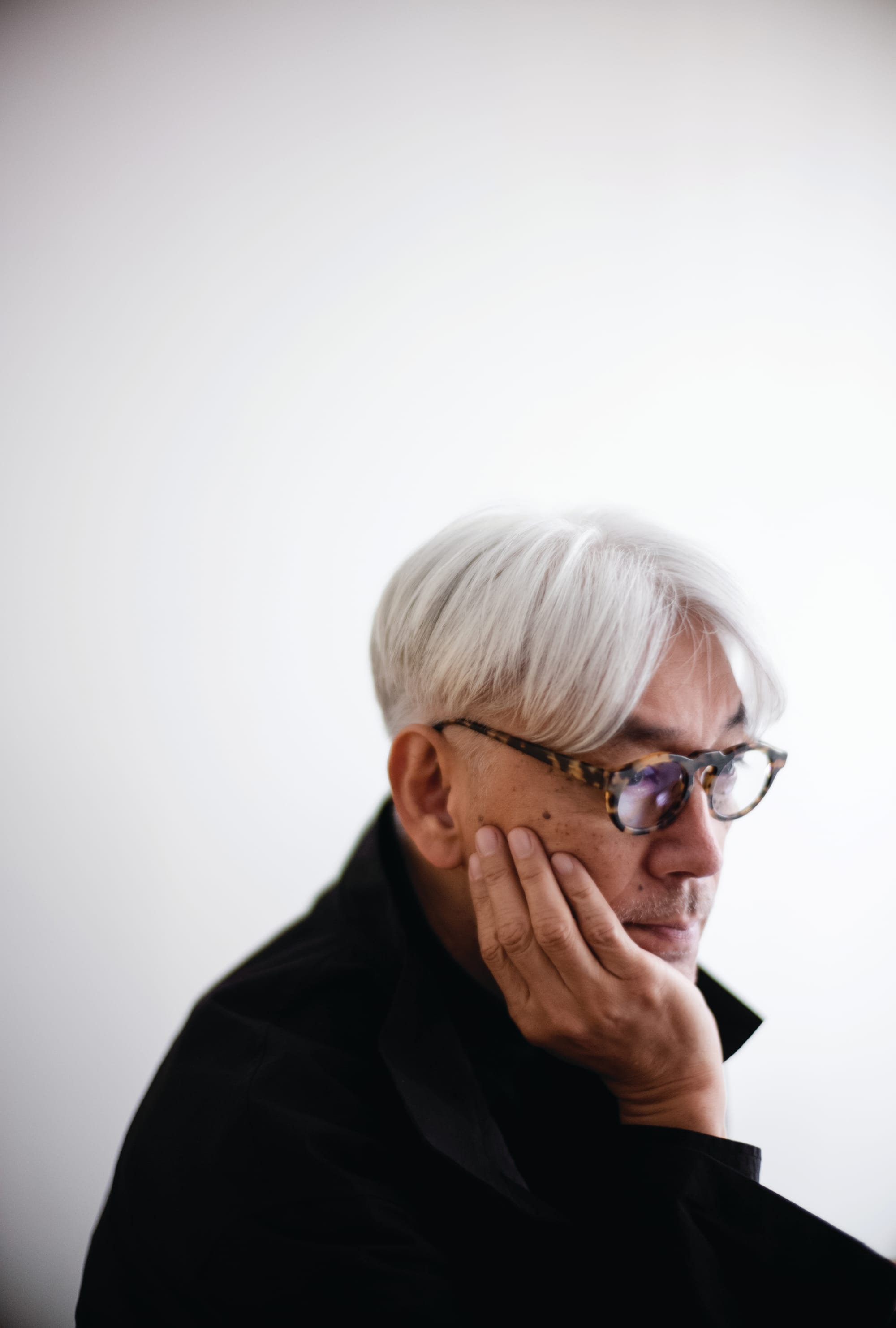
So this perhaps is one answer: Sakamoto’s music tells us about the world. But he doesn’t let us end up with this simple assessment. My favorite album by the artist is Illustrated Musical Encyclopedia from 1984, which feels like a synth-coated stab at the kind of globe-spanning, polyglot pop that would dominate the decade thanks to the likes of Paul Simon’s Graceland and Peter Gabriel’s So. An unsurprising yet still revelatory admission about the record by Sakamoto is its inspiration: The collective unconscious, the same psychological idea that inspired Joseph Campbell and the Persona games. He talks about using surrealist writing techniques, “writing down whatever sprang from my unconscious mind,” and prehistoric artistic expressions like the cave paintings at Lascaux. Perhaps Sakamoto’s music tells us not about the world but about the way its disparate elements are linked together, both in the unconscious and in the global movement of ideas. Perhaps he was searching for something universal, as on the async track “fullmoon,” in which he combines recordings of people reading the Sheltering Sky quote in various languages.
So, what does Sakamoto’s music tell us? Perhaps the answer is inconclusive. But I can tell that I’ll be returning to Music Sets You Free again and again, despite its flaws, in order to find that out.