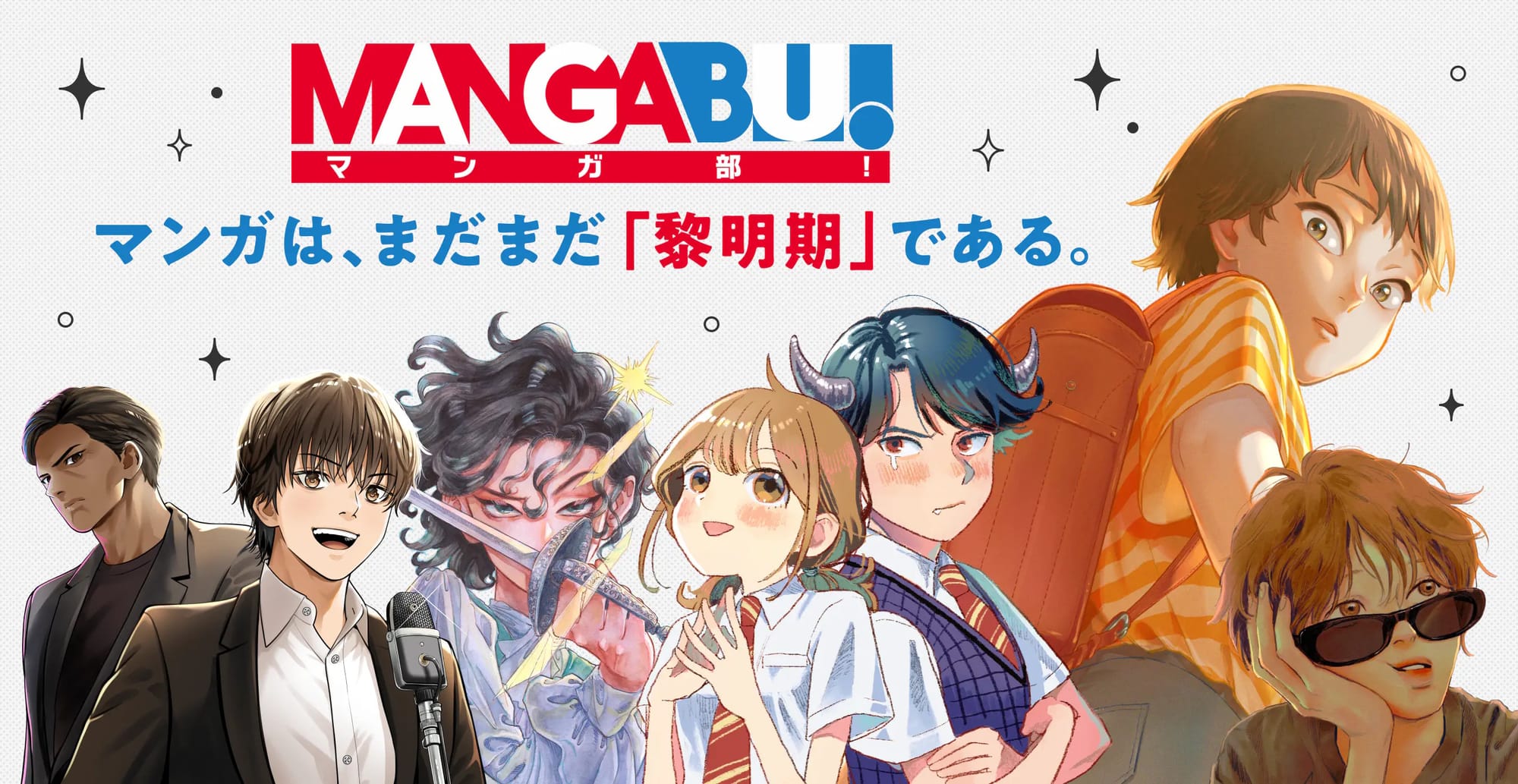
Launching a new manga label is no easy task. While digital distribution has made the industry bigger than ever, crafting something that can cut through an increasingly crowded market is not a challenge many would take on willingly. Hideki Egami and Masahiko Ibaraki are different: the former heads of Monthly IKKI and Weekly Shonen Jump have now thrown their weight behind MANGABU!, a new manga platform launched on August 17.
More specifically, Egami is acting as editor-in-chief while Ibaraki owns the company that produces the site. After leaving Shueisha, Ibaraki founded FaMH Entertainment with lifestyle entrepreneur Hiroyuki Kondo in 2025 and absorbed the production company Real Coffee Entertainment earlier this year. For his part, Egami left Shogakukan once Monthly IKKI ceased publication and spun up a number of ventures before eventually taking a position as an executive officer at FaMH upon its founding.
Speaking to the press, Ibaraki explained that the goal for MANGABU! is quite simple: to be interesting. In order to realize this somewhat nebulous aim, the site plans to carry a wide variety of features across different genres targeted at different demographics, from action and suspense to romance and science fiction. Egami echoed these sentiments by noting that while 80 years have passed since Osamu Tezka ushered in the modern era of manga with New Treasure Island, there are still many unexplored opportunities in the medium.
With this in mind, how well does MANGABU! meet its own criteria for success? Is there really something present among the fifteen debut features that can prove interesting enough to catapult the label into cultural relevance? Although standouts do exist, it’s perhaps too early to judge just yet.
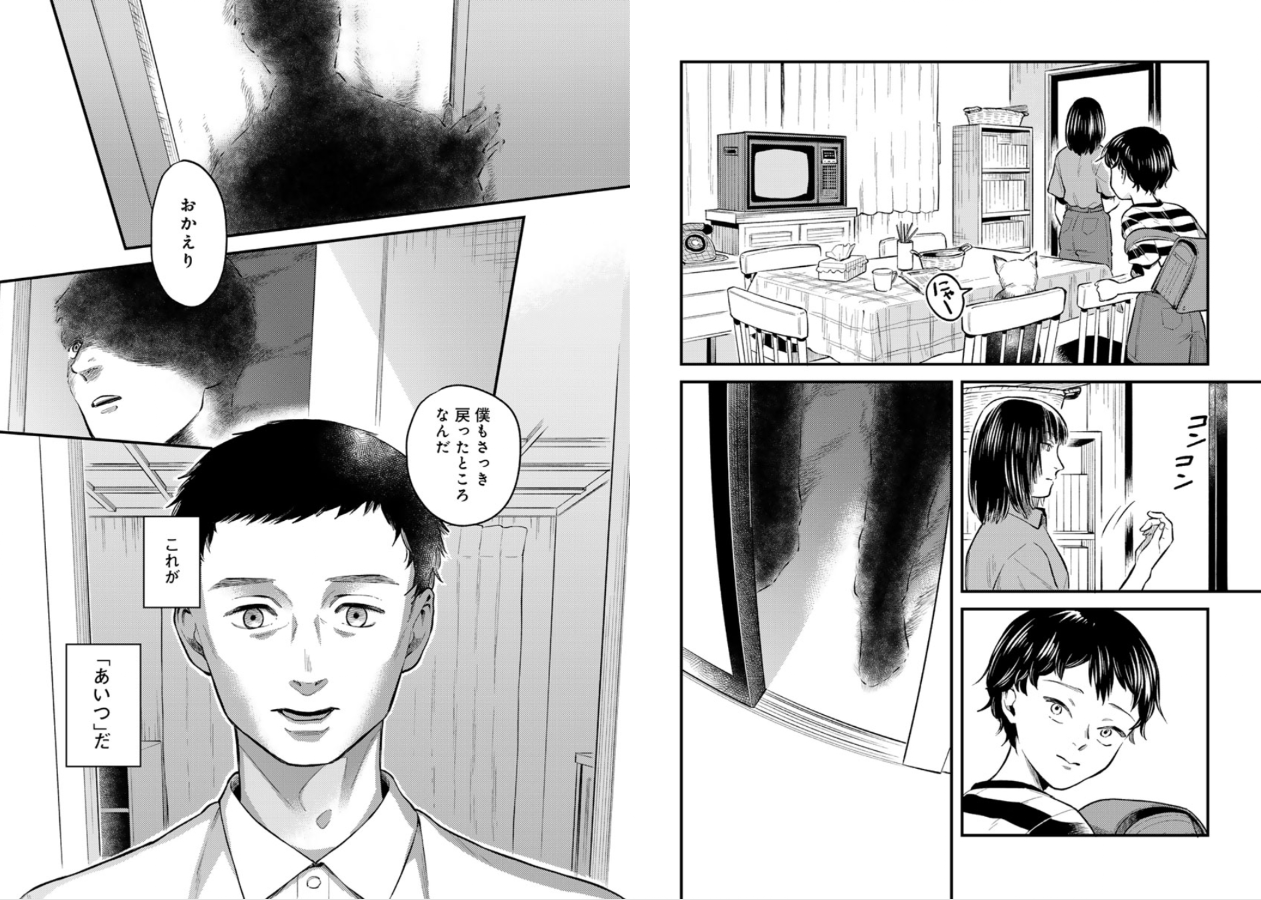
First of all, an observation: nearly one third of MANGABU!’s current features can be classified as historical fiction. That number then rises from four to five out of fifteen when you learn that The Bomber’s Daughter is technically based on a book by Aki Kajiwara set in the 1980s, but all of the other examples are set much further in the past. Perhaps that’s no surprise when you consider that Ikki also had plenty of historical series, most notably House of Five Leaves by Natsume Ono.
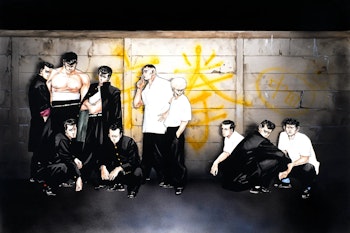
In any case, most of the authors present in the website’s initial lineup are either new artists or relatively unknown ones. The only real exception is Daisuke Higuchi, who produced 24 volumes of Whistle for Weekly Shonen Jump and is now penning the supernatural sake series Kome to Hana to, Awai to for MANGABU!. As mentioned, there are also a fair few adaptations from other mediums, including a manga version of a Chinese webtoon about a royal harem.
That being said, these adaptations do feel more like filler than anything else. Original works by unknown authors are ultimately what will give the platform the biggest draw as exclusive content you can’t read anywhere else, so they will be the main focus of the discussion here. It is worth saying that the first chapter of The Bomber’s Daughter by Umematsu was genuinely excellent, however, successfully building the mystery until the final reveal that the main character’s father is wanted for domestic terrorism.
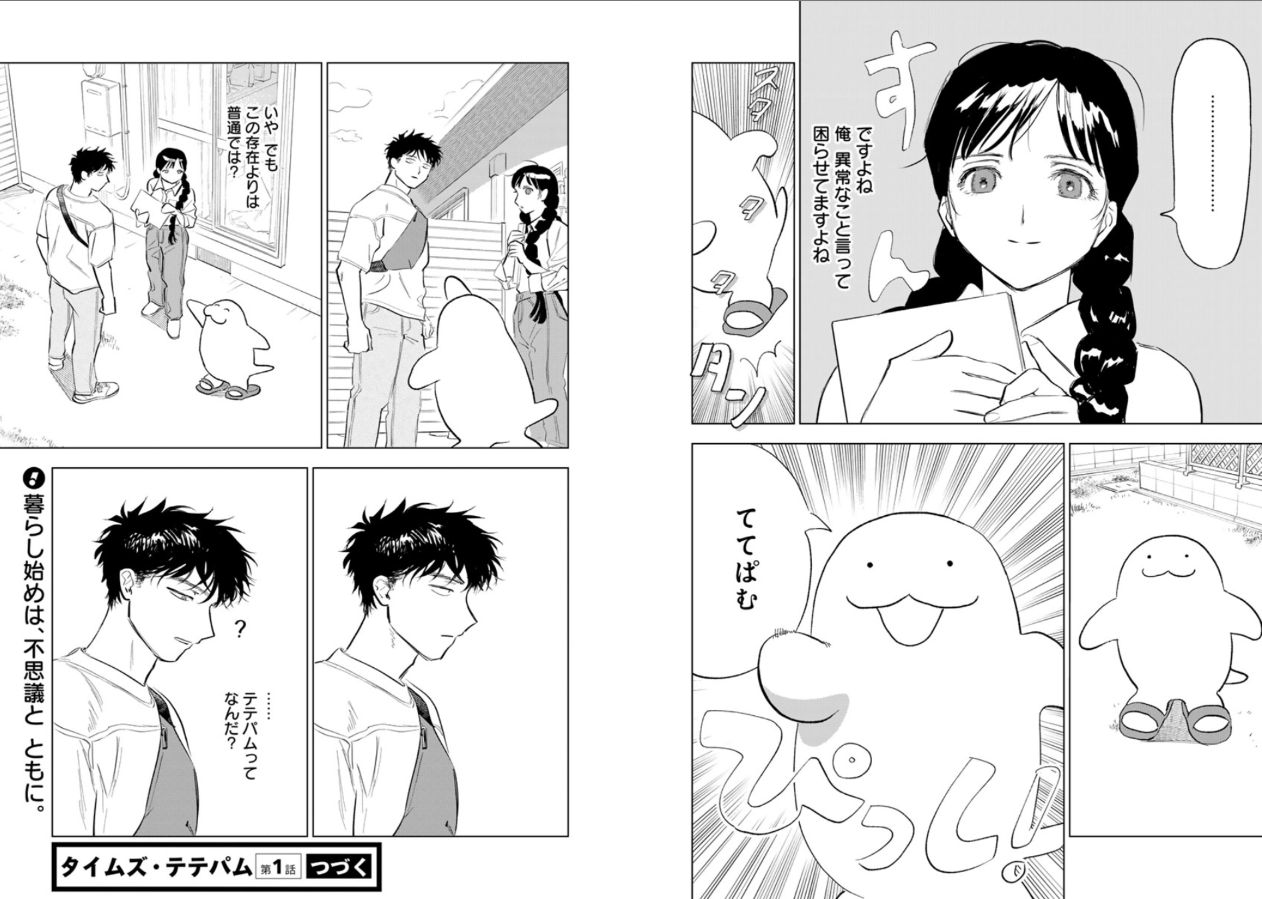
Marking quite a tonal shift, the first original work worth discussing here is Times Tetepamu by Mai Inoue. This slice of life series revolves around an apartment complex, its residents, as well as the fact that there is a mysterious creature only known as Tetepamu that everyone seems to take for granted. It’s a feel-good story with excellent character designs and plenty of Maison Ikkoku vibes, if not just because of the apartment setting but also thanks to the romantic tension between the two main characters.
Another feel-good feature for MANGABU! comes in the form of Kono Koi, Seiyakuritsu Nan Percent Desu ka? by Yonego. While not as inventive as Inoue’s contribution, this story works as light entertainment and immediately hooks you with a raunchy opening scene as two real estate coworkers are forced to act out a fake relationship for the sake of a new project. Manga like these with similar titles and similar premises are a dime a dozen, but that doesn’t mean they are any less effective.
Something a little more unique can be found in Mahoroba no Sora, Utakata no Shimai by Kunihiko Ikeda. He might actually be the most experienced artist next to Daisuke Higuchi, having been active since at least 2009, but he’s certainly not famous enough to make any headlines. The quality of the story should be, however: a science fiction mystery that follows two siblings in the Showa era before pulling out to reveal that they are being monitored on a screen in the modern day. Whaaat?
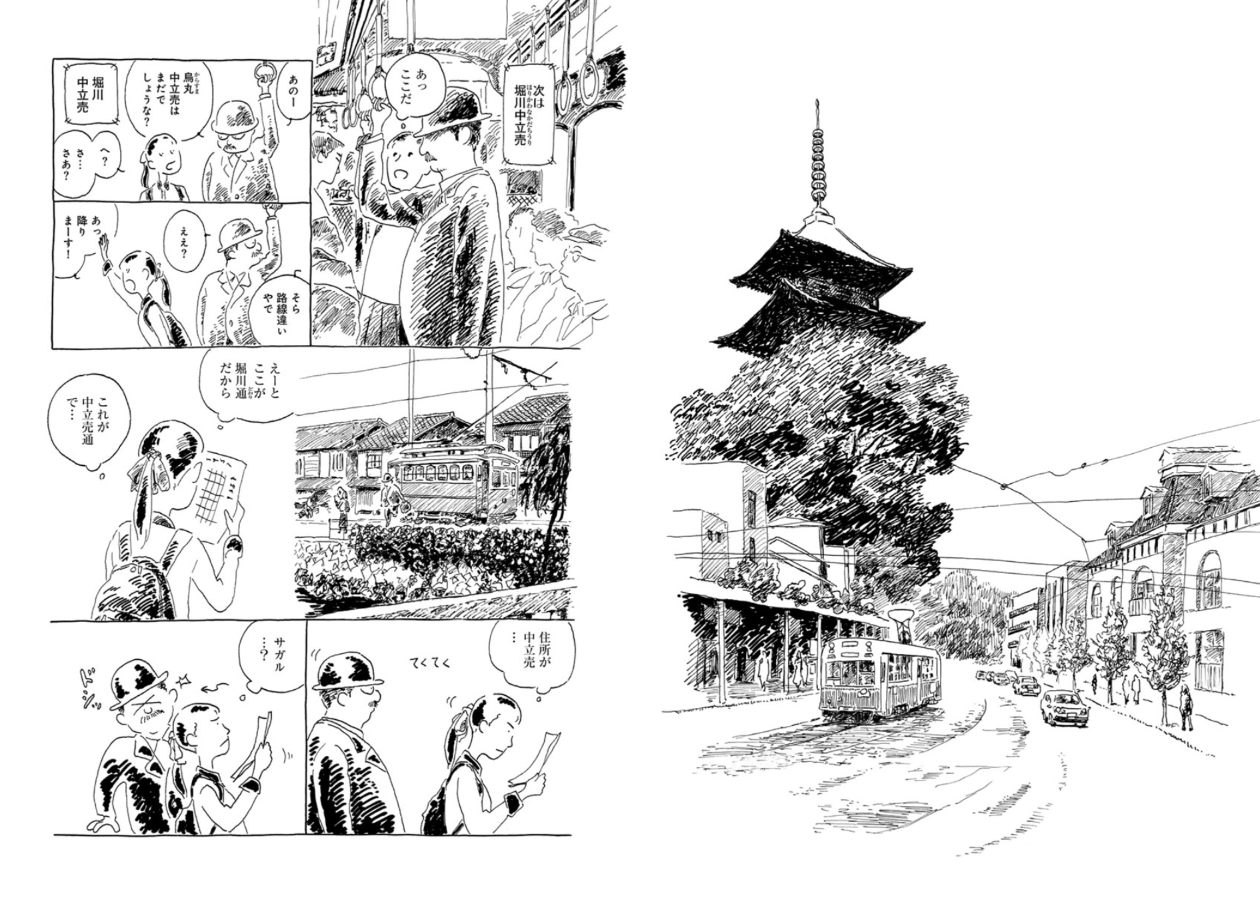
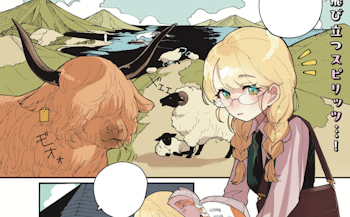
Finally, Yanagi to Hana by Tsukimi Iwahashi is perhaps the most interesting feature in the entire lineup. Set once again in the Showa era, it tells the story of a young girl in the post-war period as she connects with a friend of her deceased mother. What stands out here is the art: completely unlike manga, full of white space and almost cartoonish, staying true to historical reality while injecting plenty of emotion and comedy along the way. In fact, it’s somewhat reminiscent of Hiroyuki Ohashi.
If MANGABU! could cultivate a talent like Ohashi, then this would be enough to consider the label a success. You could also argue that it acts as a worthy continuation to the work Egami was doing at IKKI with such artists as Q Hayashida and Natsume Ono at this point, but both of these feats require time. Even if some of the initial features for the site prove compelling, this doesn’t necessarily take into account how the stories will develop nor whether or not they will find wider recognition domestically.
For now, it’s worth noting that six of the fifteen debut series have now entered into my Currently Reading list. Aside from the ones discussed so far, I have to give a shoutout to Geinin Yakuza by Bunta Kawamoto and Hironori Kawabata: a manga written by a real comedian (Kawamoto) that follows a failed star as he works for the yakuza to make a quick buck. Quite hilariously, it turns out that the main character’s ability to exploit timing is great for shady debt collection.
Maybe that’s all a new label like MANGABU! needs: just a couple of interesting stories to keep people like me coming back for more while it works to find its feet. Masterpieces can come later.