The latter half of the 1970s were a turning point in the Japanese music industry.
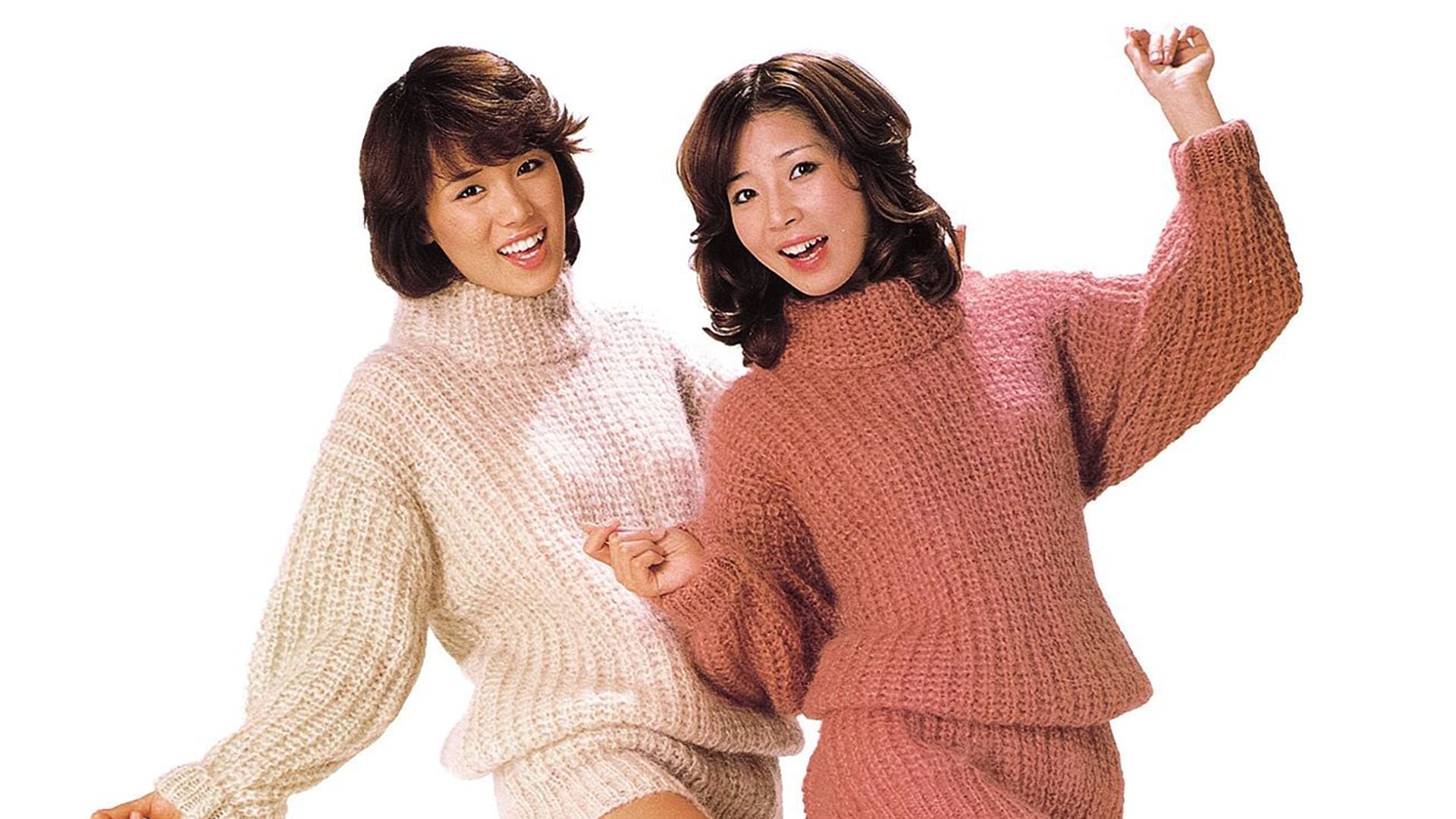
New Music, Japanese rock, and technopop were bubbling just under the mainstream waiting for their time in the spotlight, while Kayokyoku still reigned supreme. It was during this period that a young pair of friends from Shizuoka would rise to the top employing a mix of Kayokyoku and disco sounds and set sales records that wouldn’t be broken for nearly 40 years.
The story of Pink Lady is one of a duo that had a meteoric rise, an unexpected fall, and a lasting legacy decades later.
Kanpai Ojosan
It all starts in March 1976 when junior high school friends Mitsuyo Nemoto (Mie, pronounced ‘me’) and Keiko Masuda (Kei, pronounced ‘kay’) appeared on Nippon Television’s music audition show Star Tanjo! where their performance ultimately landed them a contract with T&C Music and Victor Entertainment. While they were signed as a folk-duo named Cookie, Victor Entertainment director Hisahiko Iida pushed for them to change their direction to embrace a more pop & disco direction complete with outfits meant to portray a sexy yet refreshingly cute image.
The duo was then placed in the care of songwriting duo Yu Aku and Shunichi Tokura, both literal legends in the Japanese music industry. Tokura was the one who coined the name Pink Lady, naming the duo after the alcoholic cocktail. They immediately got to work and in less than 6 months the new act was releasing their first single, the upbeat “Pepper Keibu,” about a couple getting close as dusk falls pleading with the titular character (a police officer) to leave them be.
Pink Lady was almost immediately a hit with “Pepper Keibu” selling 600,000 units and winning the 18th Japan Record Awards. The choreography for the song also got people talking with its provocative (for the time) “leg spreading” move, setting the trend for their choreography becoming popular amongst fans. Starting with their next single, “S.O.S,” the duo would have a generational run, with a streak of 9 number ones and topping the Oricon charts for 63 straight weeks, a record that wouldn’t be beaten until 2015 by rock band B’z.
During this time the duo was so popular that they were the subject of countless commercials for all sorts of products and had built what amounted to a merchandising empire. The duo was particularly popular with kids, and their faces adorned everything from backpacks and lunchboxes to shonen manga magazines and toy telephones. At one point an off-handed remark about drinking oolong tea to stay thin reportedly caused Ito En to order 5,000 tons of tea to meet demand. Their power was impossible to overstate.
S.O.S.
Pink Lady remained a powerhouse through the end of 1978 but as the saying goes, the star that shines brightest burns the fastest, and the beginning of 1979 saw the beginning of Pink Lady’s star fading. Some say that it started with their disastrous decision to skip Kohaku on new years 1979 in favor of their own competing special, which led to a great deal of criticism. Whatever the reason, their first single in 1979, the surf rock-tinged “Zipangu,” peaked at number 4 on the Oricon chart ending their streak of number ones.
Despite the fall, the duo still had success in 1979 with their singles “Pink Typhoon” (a re-work of The Village People hit “In The Navy”) and “Naminori Pirates” being their final two singles in the Oricon top 10. The latter saw a special release with The Beach Boys singing backup harmonies, something that was arranged during the duo’s next big adventure… attempting to conquer the United States.
Do Your Best
In 1978 Pink Lady performed at the Tropicana Hotel in Las Vegas (which would be released as a live record in Japan) and in the process had made an impression on producers at Elektra Records in the US. Despite the duo’s insanely busy schedule (reportedly only sleeping a few hours every night) they found time to come back to the US in 1979 to cut a record with producer Michael Lloyd (of Dirty Dancing fame amongst other things). The first single from this collaboration, “Kiss in the Dark,” would go on to be the first Japanese song since Kyu Sakamoto’s “Ue o Muite Aruko (Sukiyaki)” to break the Billboard top 40 in the United States.
The success of “Kiss in the Dark” saw Pink Lady embracing a more disco oriented sound in the remaining singles they released through 1979, which may not have been in step with changing tastes at the time as their final single of the year, “Do Your Best” peaked at number 36 on the Oricon chart.
But this wasn’t a problem because America was waiting! Or were they?
In 1980 Pink Lady was signed up by NBC for what may have been the most disastrous move in their career, a variety show developed by TV legends Sid and Marty Krofft where Mie and Kei were paired up with emerging comedian Jeff Altman. Pink Lady and Jeff premiered in April 1980 and was the instant butt of many jokes, station-mate Saturday Night Live even took a stab at them, and is regarded by many who have seen it as one of the worst TV shows ever made.
Shortly after returning to Japan, Pink Lady announced that they would be disbanding in March of 1981 with a farewell concert at Tokyo’s Korakuen Stadium. The weather on the day was cold and rainy, and it was reported that only 15,000 people (of an estimated 40,000 turnout) attended. An unfortunately gloomy send off for the group that truly dominated the latter half of the last decade.
Pink Lady Again!
Following their disbanding, Pink Lady’s management company went bankrupt and the duo parted ways to focus on their own careers as solo artists and actors. Mie would see some success with a Japanese cover of the Moving Pictures song “NEVER,” and both would release multiple albums and appear on TV dramas and film. They clearly couldn’t shake their past though as the duo would reunite repeatedly, trying something new each time.
In 1984 Mie and Kei would reunite under the record label VAP and release a new album titled Pink Lady Again “Suspense.” Unlike their previous work which was largely produced by Yu Aku and Shunichi Tokura, this new album saw the duo work with a variety of songwriters and producers aiming for a different sound. The result is a record with more mature lyrical content and a sound that fit in with the trends of the time, more synthesizer driven and laden with drum machines as opposed to the more analog sound of their previous work. Only one single from this album was released, “Fushigi LOVE,” and it remains an obscure entry in their catalog unavailable for streaming.
1989 saw Mie and Kei give things ago once again, although it didn’t end up being a very fruitful attempt this time around. The duo made their return to Kohaku Uta Gassen performing alongside Wink as a special “cross-generation collaboration.” This performance led to Pink Lady cooking up a new single, “Ninenme no Jinkusu,” which was performed at the following Kohaku, but would ultimately not be released due to a contract dispute amongst other circumstances.
A few years later in 1996 they reunited again to better results this time. A new single co-written by Mie & Kei and produced by Avex founder Max Matsuura, “PINK EYED SOUL,” would be released complete with a music video VHS. The song saw the duo taking a stab the J-Pop sounds of the time, but it didn’t move the needle on the sales chart. Despite a commercial tie up and a reunion concert in 1997 it wasn’t enough to keep Pink Lady together and they parted ways once again.
After the world crossing into the new millennium, Pink Lady returned in 2003 for a multi-year series of tours culminating in 2005. They released a song for NHK’s Minna no Uta and teamed up with Morning Musume for another cross-generation collaboration performance, and fans were just happy to have the duo back even if for a short time.
Innovation
After the years of on-again/off-again reunions Mie & Kei got back together one more time in 2010, this time declaring that they weren’t disbanding again. To commemorate this “lasting” reunion, Pink Lady leaned really hard into their back catalog releasing the self-cover album Innovation. It’s an interesting release in that the duo chose to employ the original master recordings for each song on the album and just re-record their vocals, proclaiming that they felt like it would be a shame to discard the performances of the original studio musicians for new arrangements.
Innovation was a celebration of their entire career, complete with a nationwide tour, thier first-ever recorded choreography instructional video, and tie ups with brands like Coca Cola. Unfortunately it would be another 9 years before they recorded a new song, “Meteor” for the sixth Yo-Kai Watch movie, and otherwise their activity as a duo has been fairly quiet since then. Either member will make the rare appearance on TV or at a live venue in Japan where they perform the old hits with supporting singers, but it's not the same.
Despite this, Fans both old and new just care for the catchy music and performances Mie & Kei brought to the world, and the simple fun that comes with them. Pink Lady’s work in the 1970s is about as manufactured as it comes, but their legacy doesn’t care about any of that or even the less glamorous periods of their career. Pink Lady still shines on as a beacon of Showa era pop-perfection 50 years later.
Five Essentials
“S.O.S.”
Pink Lady’s first number one single, and possibly their most enduring track aside from “UFO”. The cute upbeat sound of the song masks a message of young women needing to be mindful of the deceitful nature of men, and who better to deliver that kind of message than a pair of fresh faced teen pop stars?
“Southpaw”
Released only about 6 months after Sadaharu Oh hit his record breaking 756th career home run, this catchy track is about a left-handed female pitcher who faces off against a batter modeled after the Nippon Pro Baseball legend. The track is still used today as a cheering song for high school baseball in Japan with adaptations made for individual teams and players.
“Chameleon Army”
The first of Pink Lady’s singles to have a hint of the disco sound they would adopt in their later batch of singles. The lyrics are pretty nonsensical, implying that the person in the song has an invisible army of bodyguards to protect her from unwanted suitors. Regardless, this one is a personal favorite, and stands out amongst their old TV performances for the use of special effects to change the color of their costumes to go with the chameleon motif.
“Utakata”
Originally conceived as the English language release “Strangers When We Kiss” from the duo’s US album, this single is a stand-out as a song from the US sessions re-worked to appeal to the Japanese market. The lyrics portray a desired yet ephemeral love, and this Japanese version works better than the US release thanks to downplaying the disco elements for a more mature sound.
“Last Pretender”
The second to last single from their original run together, this one is a bit of an oddball but that’s what makes it great. Produced by Yukihiro Takahashi of YMO fame, it’s a re-arrangement of the song “Itsuwari no Hitomi” that he originally wrote for RAJIE with new lyrics from Shigesato Itoi (known in the west for creating Super Famicom RPG MOTHER 2). It’s sped up quite a bit here and the vocal delivery has an almost otherworldly quality to it, Kei’s spoken “Sorry, I have to go” at the end just adds to the alien vibe.