The first chapter of Mysterious Girlfriend X ends with the strange transfer student Mikoto Urabe telling protagonist Akira Tsubaki that he would be the one to take her virginity. Despite this bold declaration, the story does not bow out with such a raunchy conclusion: the couple barely even manage to lock lips, let alone go the whole way after ninety-two chapters and ten years of serialization. What’s more, that’s just the start of a long line of narrative inconsistencies that can make the whole thing feel somewhat disjointed.
In the afterword to volume one, series creator Riichi Ueshiba mused that there must be more young boys reading manga about young boys in relationships than those actually in relationships themselves. As a result, the mere thought of getting a girlfriend is almost as fantastical as suddenly gaining access to a giant robot: he sees the concept as an “absolute idea” that dominates the adolescent male imagination in the same way as popular media. With this in mind, he somewhat ironically considers Mysterious Girlfriend X as his first foray into the mecha genre.
Given the declining birth rate in Japan and across much of the developed world, those words ring as true today as they did in 2006. When applied to the many inconsistencies that exist in the story and narrative of Mysterious Girlfriend X, the concept of the “absolute idea” also proves useful in understanding how they actually serve to construct the strange world that Mikoto and Akira inhabit. Moreover, it recontextualizes the entire series as more of a thematic exploration of youth and memory than a simple boy meets girl romance.
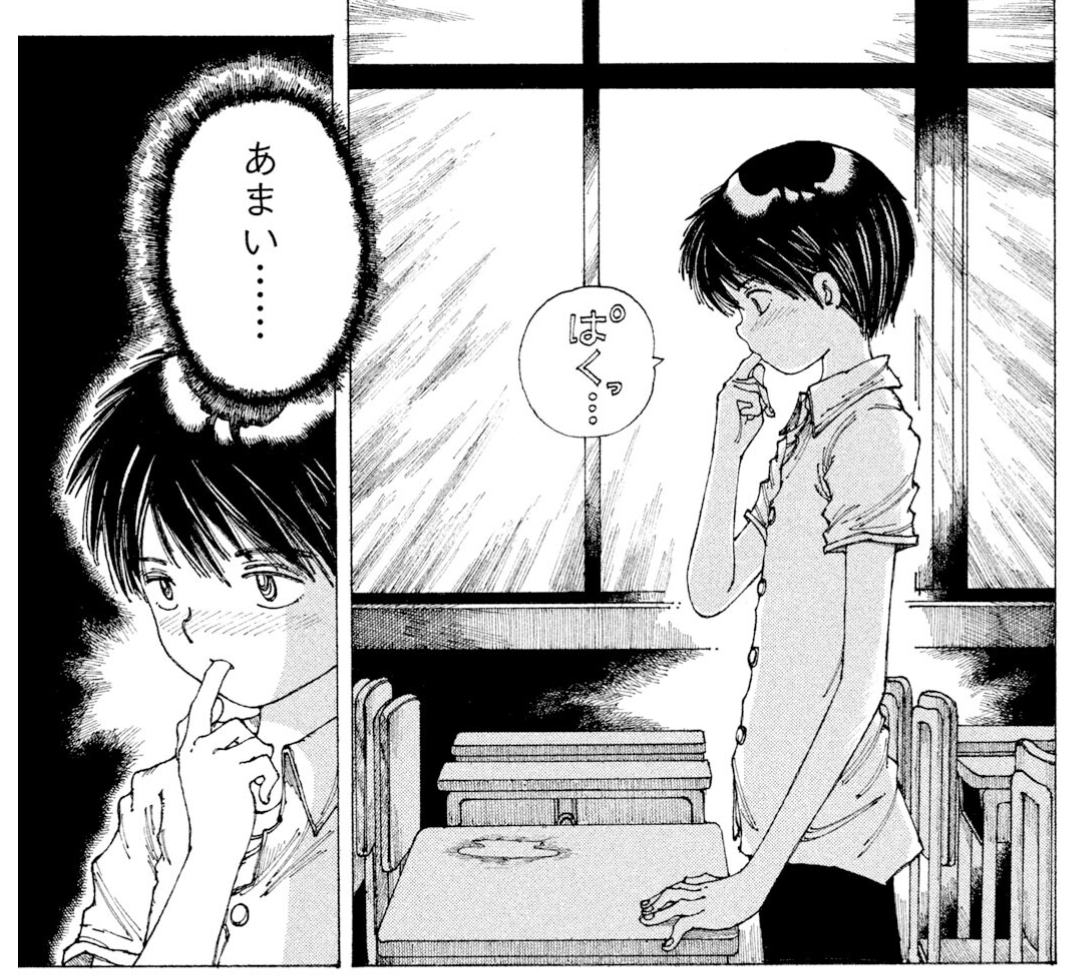
Aside from the aforementioned sexual denouement, one of the most puzzling dead ends in Mysterious Girlfriend X is the narrative device that brings the two main characters together in the first place. When Akira discovers Mikoto dozing in the classroom one evening, he takes a taste of her drool for some reason in a disgusting act that leaves him ill and weak without a regular mouth-to-mouth fix. Their relationship for the rest of the series revolves around this strange ritual, usually conducted with a finger at the top of the hill where their paths part after the school day.
The story does showcase the power of this bond in many ways, such as the fact that it must come from Mikoto herself instead of someone who just looks like her, but the actual reasons behind its physiological effects are never explained. Nevertheless, if the “absolute idea” can be understood as the unfolding of an escapist fantasy, the drool incident functions as the gateway into this story’s particular version of escapism. Just as Shinji was summoned to Tokyo-3 and forced to pilot Evangelion Unit 2, Akira crosses the threshold from reality into fantasy with this simple act.
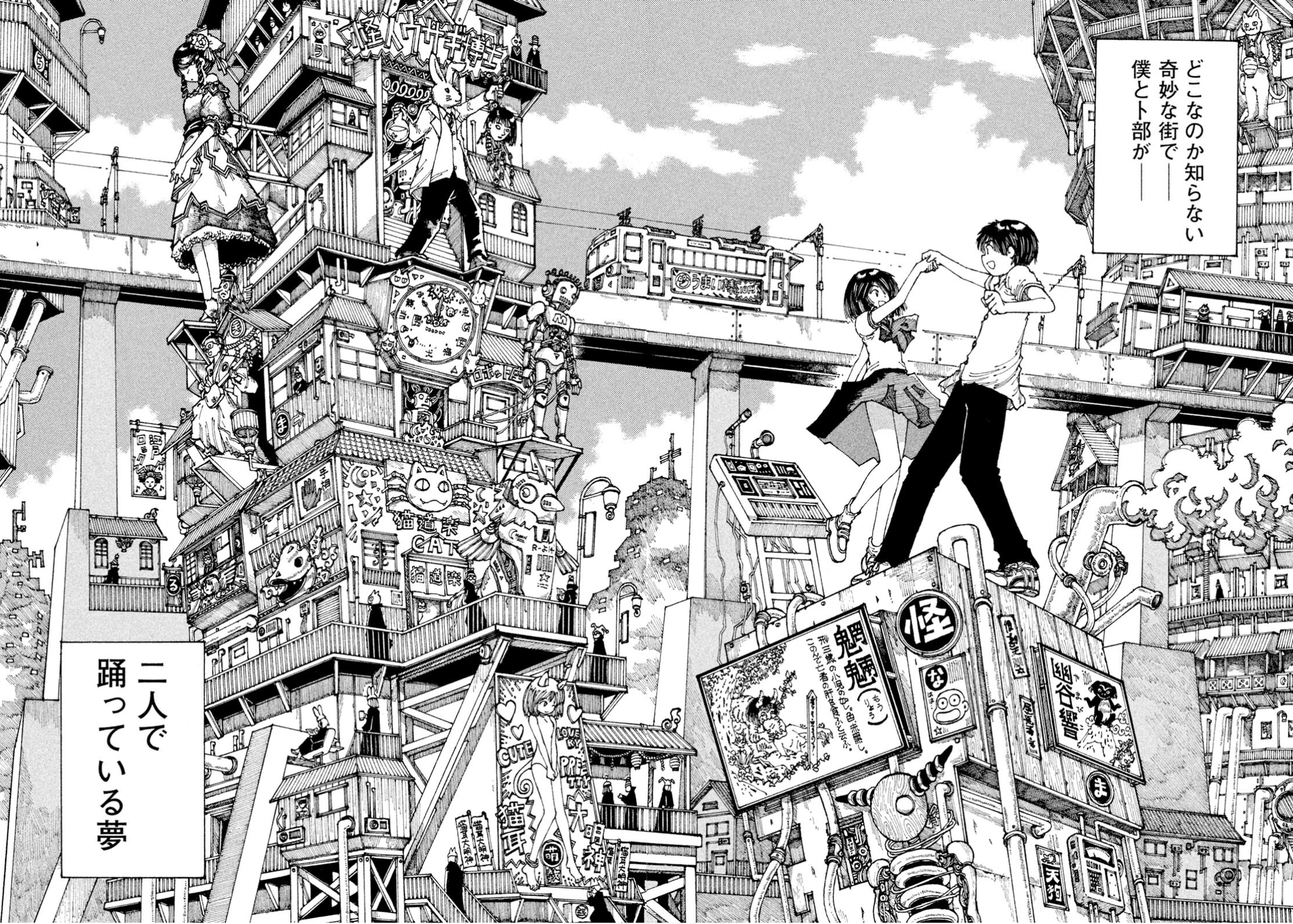
Moreover, the visions that Akira sees after ingesting the drool suggest a more dreamlike framing than initially presumed. While many chapters in the first volume feature a depiction of Mikoto in a strange, hyper-detailed mechanical world that go on to inform the main theme of the story, these scenes are suspiciously missing from subsequent books. At first glance, this might once again appear like an inconsistency, but perhaps that is the point: just because Akira never wakes up doesn’t mean that he isn’t dreaming.
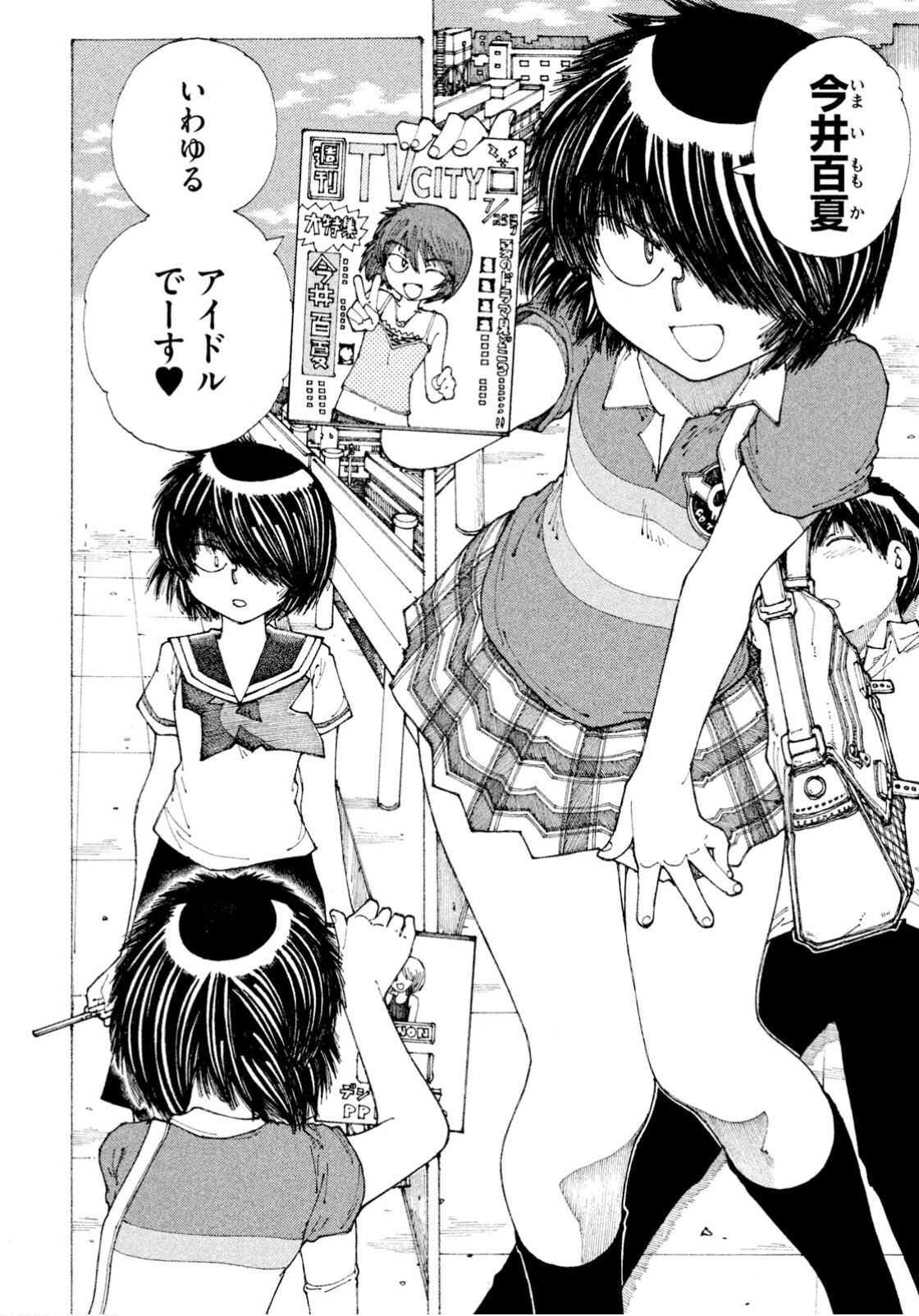
In turn, one of the most powerful examples of Mysterious Girlfriend X’s dreamlike logic comes in the character of Momoka Imai. Given that Mikoto is reluctant to provide Akira with any form of affection, preferring instead to attack him with scissors hidden in the band of her panties, he becomes obsessed with Momoka’s gravure work as an idol since she looks exactly like Mikoto. The simple fact that a famous celebrity shares the same appearance as a normal high school girl is strange enough, but the situation is made even stranger when Momoka suddenly appears in town and tries to usurp Mikoto’s place to act out her fantasy of being a normal girl.
Have you ever met someone in real life that you’re sure has appeared in a dream before? That sudden sense of déjà vu is one that best describes the function of Momoka in the story, rather than simple narrative consistency. Ueshiba’s incorporation of side characters into the narrative actually feels a lot like Tsukumizu’s approach in Shimeji Simulation, which features the protagonists of Girls’ Last Tour without so much of an explanation. The absolute idea takes precedent over any small details.
Taken holistically, Mysterious Girlfriend X could be seen as more of recollection of youthful love than a faithful depiction of it. If the absolute idea works retrospectively as well as in the moment, adults reading the series can see the relationship between Mikoto and Akira as the ultimate expression of first love, warts and all. You never forget your first love, meaning that your brain sometimes keep you up at night with all of the things you should have said if it were not for emotional immaturity.
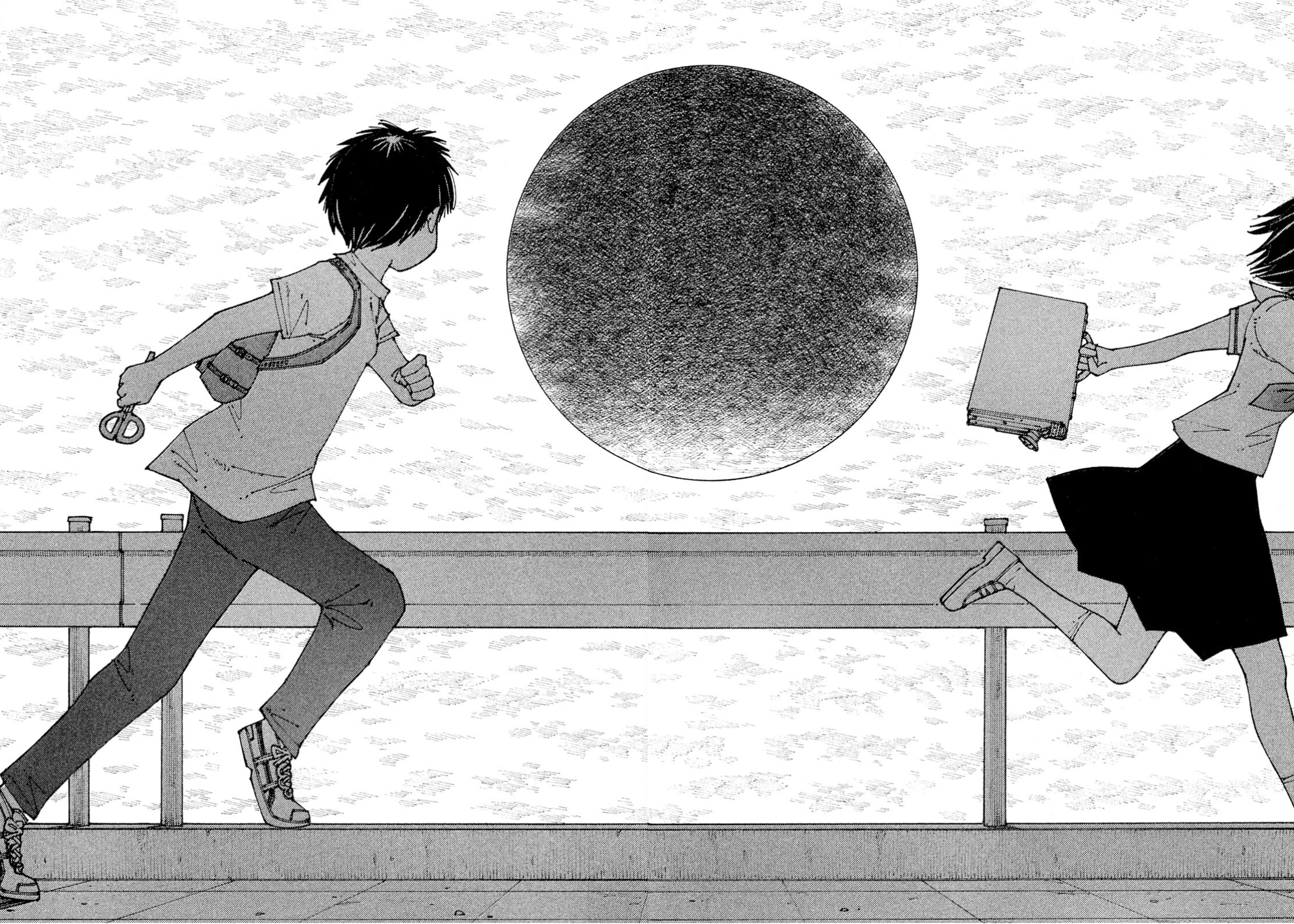
Putting aside any narrative inconsistencies, the way that Riichi Ueshiba’s series ends is something I haven’t been able to get out of my head in the year since I first finished it. When Mikoto first tells Akira that he will be the one to take her virginity, a red sun looms in the background, framing the otherwise quotidien milieu in an otherworldly light. The final chapter of the series then replicates this scene ten years later in a gorgeous double page spread, bringing the whole thing full circle.
Did anything actually happen between these two bookends? The lack of progress between Mikoto and Akira certainly suggests otherwise, but the connections that the reader forms with the characters stay long after the fat lady sings. Perhaps that is the ultimate idea: one that transcends a medium.