With the Battle of Bayou reaching a victorious conclusion, bringing a key victory in the goal of uniting China at the cost of the life of renowned general and confidant Ouki, one of the Six Great Generals, the state of Qin can enjoy a brief period of peace. That is, until a few years later, when the state of Zhao led by Ri Boku, makes their move, sending an army hundreds of thousands strong in order to finally topple the growing power. With one of their generals, Hou Ken, also being responsible for killing Ouki, the desire to avenge, not just protect their sovereignty, rises, setting up a grand conflict between these rival nations.
For all there are a lot of dynamics of war and proper nouns that inevitably enter the conversation when attempting to explain the plot of Kingdom to audiences, Kingdom: The Clash of Souls is surprisingly accessible for audiences considering this is the fifth film in a grandiose cinematic franchise bringing the manga to the big screen. Rarely, also, is there an experience that feels this monumental, despite its flaws, in the landscape of Japanese cinema.
Only on very rare occasions can a live-action movie adaptation of a popular anime or manga establish itself to become a long-running series in its own right. Then again, few anime and manga are like the behemoth that is the Kingdom franchise. A manga now over 75 volumes long with over 120 million units in circulation, this epic fictionalized retelling of the Chinese Warring States period through the eyes of a single boy named Xin aiming to become a unifying war general has attracted audiences for just how grandiose its action can become while never losing the emotional relationships that build and are tragically lost in the context of war.
The story is at such a scale that any adaptation must overcome the challenge of replicating it within a new medium. In live-action especially, to accurately recreate the Chinese historical setting and battles featuring tens of thousands of soldiers on each side is a scale even many Hollywood productions struggle to replicate, never mind wrap such grandiosity in an engaging story. The scale is something rarely seen in the realm of Japanese cinema merely because the cost and challenge of bringing it to life on a domestic budget is too great, yet over the course of four films adapting the first few arcs of the series, Kingdom has established itself as one of the most ambitious and impressive live-action adaptations ever produced.
Only by bringing in VFX teams from around the world, filming scenes in China, and recreating historical costumes, can this even begin to feel like the world it is seeking to create, and even then it relies on a strong and likable core cast to tie it together. Xin is growing in responsibility with his own, small unit of specialized soldiers that can rush into battle to aid the larger troupes. Ying Zheng’s power and influence grows as ruler of Qin, and having spent some time away from conflict, He Liao Diao, the female descendant of the mountain tribe who joined Xin, is reintegrated into the story with more strategic and active participation in understanding the oncoming threat.
As this live-action movie series is attempting the impossible task of adapting such a long-running series, its easy for characters to drift in and out of relevance or for the three-act structure of a film to fall away in service of merely creating a page-to-screen adaptation that, while accurate, feels unfitting and awkward in this new medium. For all the first film in the series, free from the burden of prior entries, soared as it established the world, the second film suffered from this exact issue. Subsequent stories have found the correct balance between retaining accuracy to the original story while trying to create a satisfactory film anyone can enjoy regardless of familiarity with the series - a fact increasingly important as more entries raises the barrier to entry.
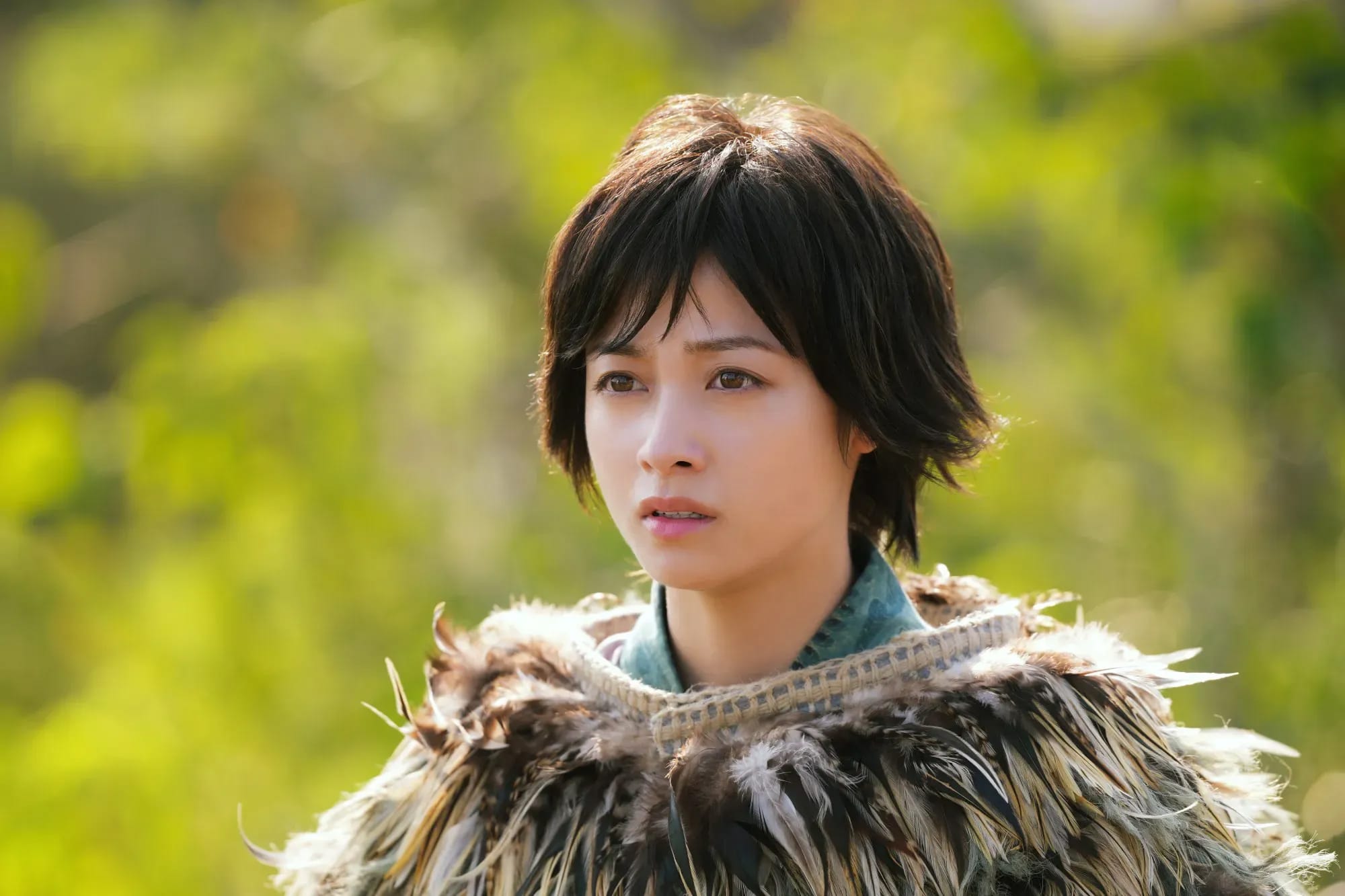
It’s what makes the opening half of the film, slower in pace compared to the grand battles of the last story as it reacquaints us with the politics and emotional core of this story, such a refreshing aspect. For those who have kept up, it’s nice to see where these characters have grown, especially in the case of He Liao Diao as her role has been largely minimized since the first film. She actively travels with Xin for much of the opening of the film as we encounter the new threat to the kingdom and understand the vastly-different type of nimble, strategic combat that sets them apart from the generals in the last Battle, providing a foil that puts both friend and foe off-guard in the film’s best performance.
However, if you were watching this fifth entry in the series as your introduction to Kingdom, this set-up (with occasional flashbacks where necessary) makes it easy to enjoy the scale of this rendering of ancient China without being bogged down in the story. As the battle does, eventually, come to the fore in the second half, this is where the true spectacle that defines Kingdom’s big-screen exploits, begins.
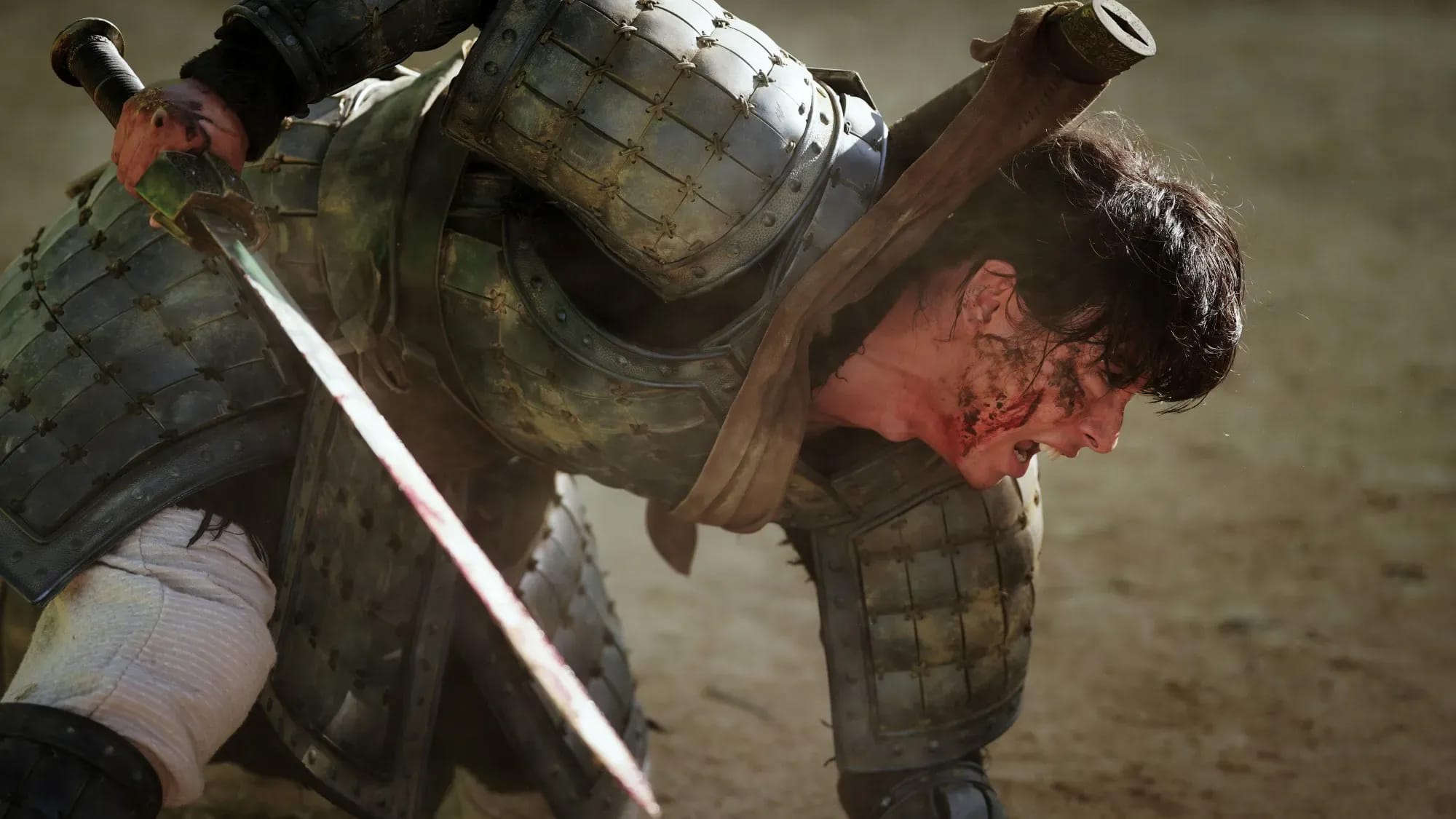
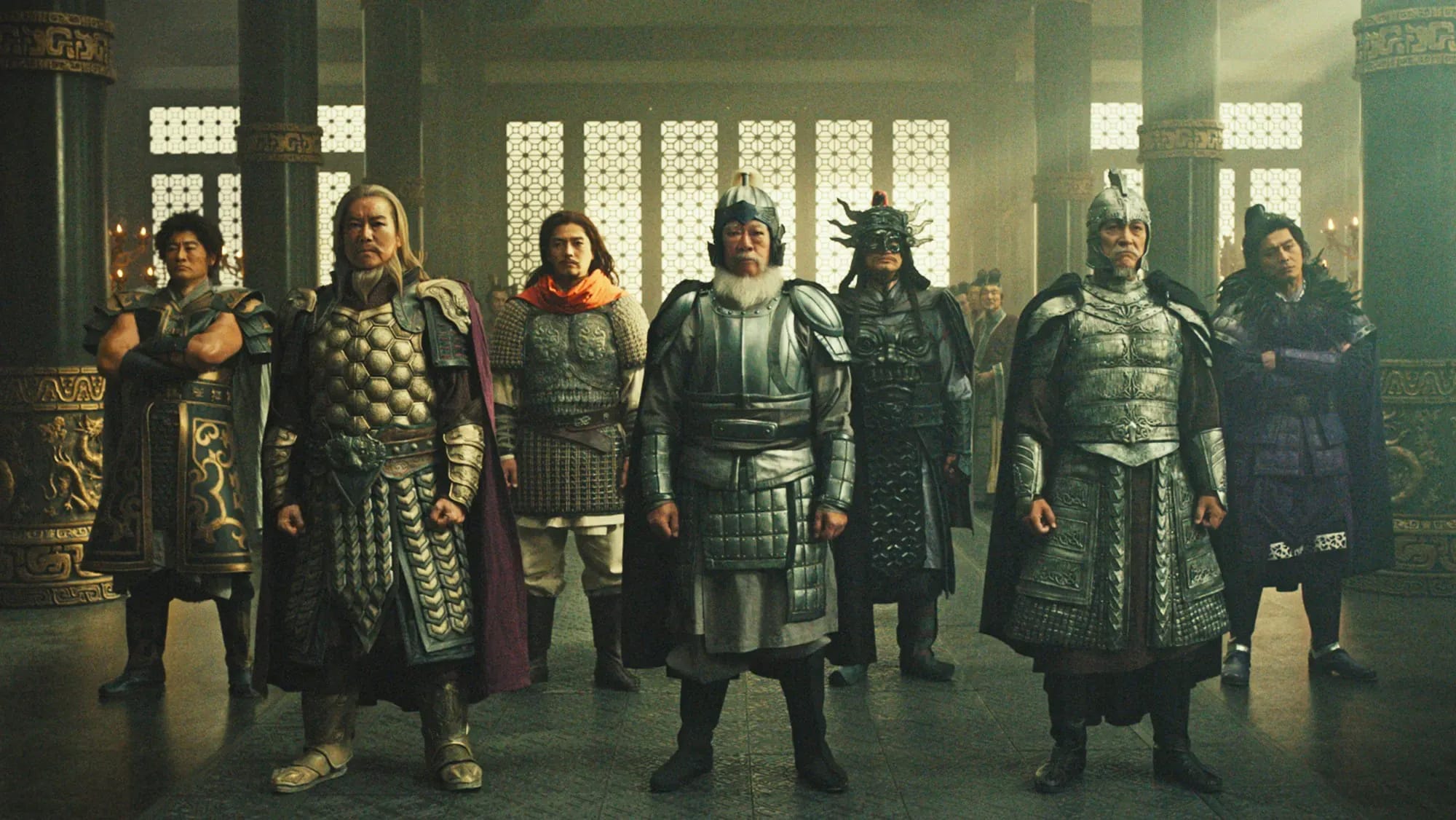
If there’s anything all the Kingdom films have achieved best, it’s in matching the spectacle of the concept of these fights with both the visuals and choreography that matches the elevated stakes. Fights remain trademark in their oversized spears and long swords flung wildly through soldiers that fly away like pawns in a Dynasty Warriors video game, without ever feeling spongy or non-existent. Thanks to how physically imposing and impeccably-costumed these characters are, accurately bringing to life their historical attire mixed with the features and attributes that give them an unreal, fictional, mythical quality, it makes sense that these fighters can throw themselves into battle in ways that defy physics but feel grandiose.
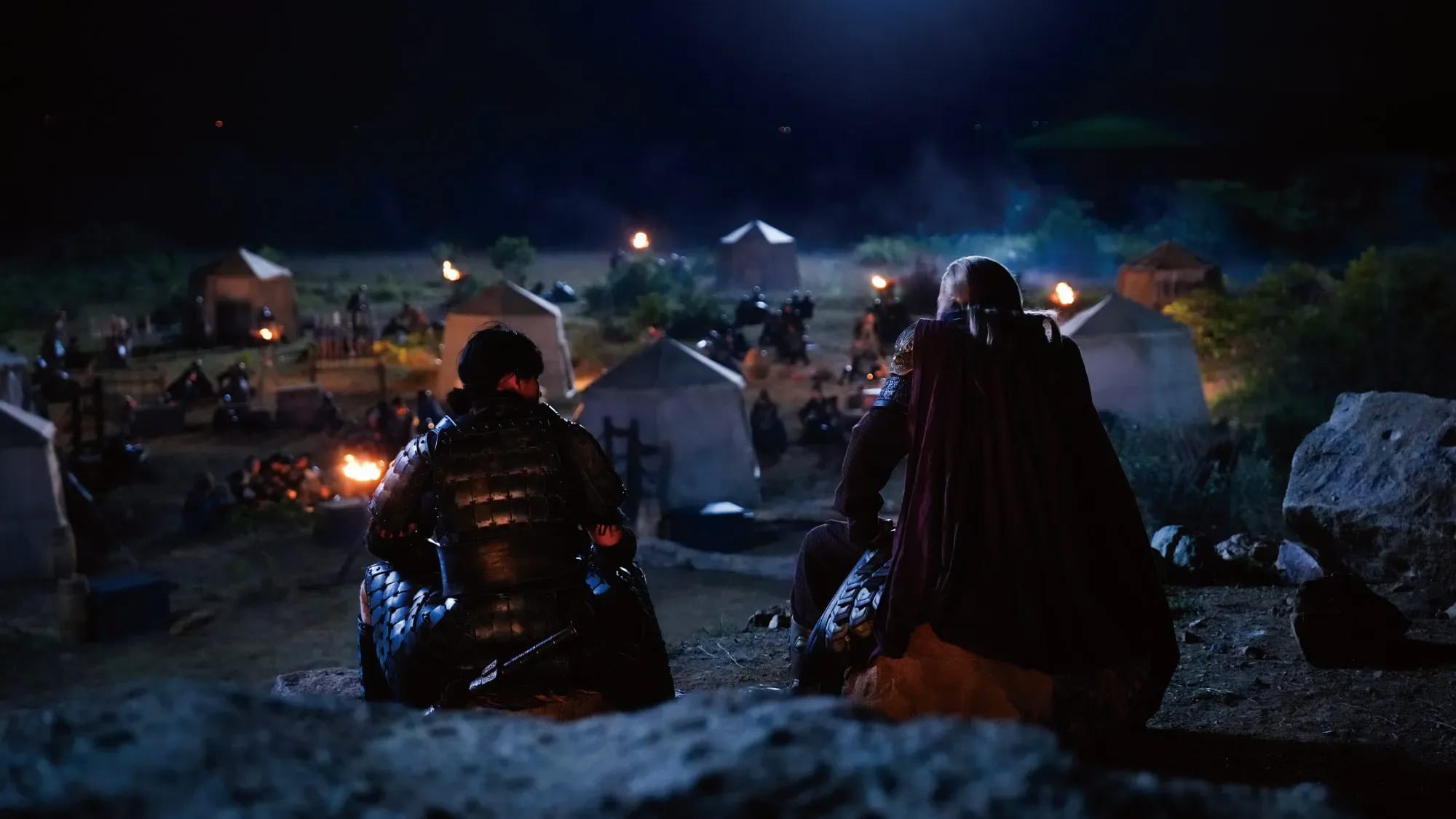
In a battle that is yet to conclude by the time the credits role and takes up most of the runtime, not only do we care for everyone involved, the non-stop action only partially interceded by strategic meetings from afar is brisk and enthralling. As swords slash and arrows pierce, we feel every strike viscerally because we can follow and have a stake in who survives, even if you’re a newcomer, and there’s always purpose to every strike.
When action, even in Hollywood but also in other action-driven anime adaptations like Sakamoto Days, can feel immaterial, this feels bluntly real. It’s this visceral power that is why, even five films in and with a movie that realistically can’t escape accusations it is structurally identical to prior entries beyond the name of its conflict, it’s hard not to be sucked in and awestruck by what you are witnessing. Kingdom is Hollywood-level popcorn action in a domestic story that typically can’t reach that scale, and it does it with costumes that only grow larger and more impressive and a story that never tires and constantly surprises. It may not be the best in the series, but with Kingdom: The Clash of Souls, there’s never been a better time to jump into what is the most consistently-entertaining and largest live-action manga franchise.