The blooming of cherry blossoms usually serves as the metaphorical sign that spring has arrived in Japan. A pretty symbol for the changing of the seasons, but not the only one. Just as telling is the start of baseball season, because Japan is crazy for the sport.
“Baseball-Crazy” By Eiichi Ohtaki
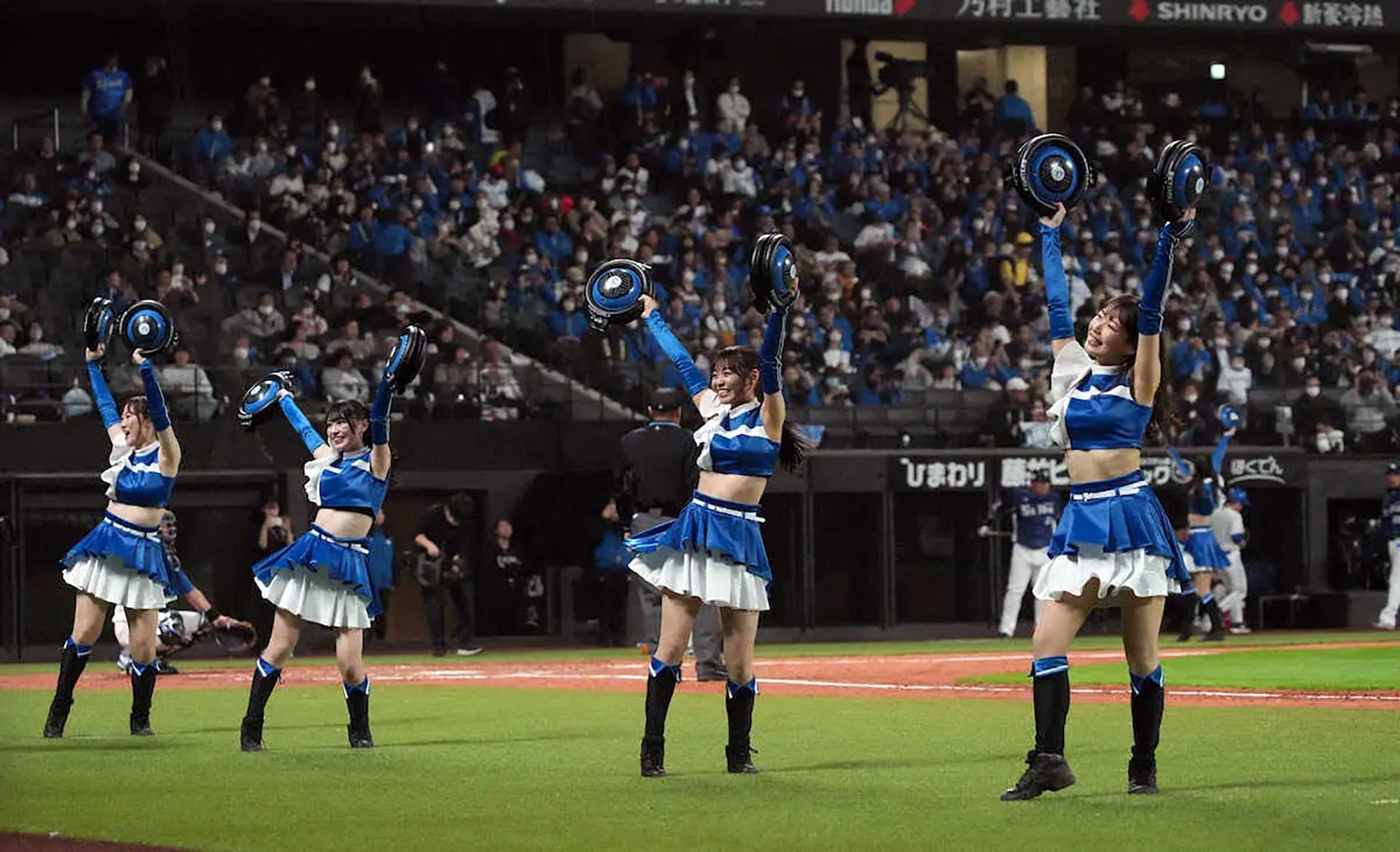
Nippon Professional Baseball (NPB) gets underway for the 2026 season tonight. There’s plenty of drama and excitement on the diamond, but part of the fun of Japanese baseball is everything happening around the game. The fandom teams inspire can be intoxicating, while the sounds of organized cheering emanating from the outfield seats feels like a summer festival lasting for seven months.
That extends to how baseball intersects with other forms of entertainment — especially music. The concert-like nature of a stadium’s outfield is part of it, but that same passion extends to pop, rock and other styles not so easily screamed from the cheap seats. There’s a stadium’s worth of singles and albums inspired by this passion for the sport, with every team having dozens of tunes about them.
With a new NPB season starting up and interest in Japanese baseball growing globally owing to Shohei Ohtani and other players from the country dazzling in the MLB, now is a good time for a beginner’s guide to songs associated with Japan’s 12 professional clubs. This is but an entry into a world that is truly staggering once you realize how much is out there — check out the essential disc guide to baseball music by F.P.M. Nakajima and Suzie Suzuki’s Baseball Music which also factors in J-pop referencing baseball in general — and one leaning into variety more than overall importance. Some of these tunes have been associated with a team for decades…others for like three years.
CENTRAL LEAGUE
Hanshin Tigers — “Rokko Oroshi”
No team inspires passion in its fans quite like the Hanshin Tigers, whose rep as sports and spiritual center of the entire Kansai region creates a kind of diehard commitment from supporters unmatched anywhere. They’ve also inspired so many songs — from idol pop to balladry to anthemic guitar instrumentals played by one half of B’z.
While you could devote a whole article to just Tigers-related songs, it’s still hard to top “Rokko Oroshi,” the most famous song associated with a team in Japan. Written in 1936, it’s also the oldest baseball song still used today and the only one from before World War II. In its original form (above), it’s a jaunty march certainly carrying an atmosphere long gone. Yet what really makes it special is how many times it has been covered by notable singers…or, in one notable case, by Tigers’ third baseman Tom O’Malley who gave it a spirited try during his tenure in Osaka.
You want a ska version of it? Here you go. A reggae take? For sure. Peppy idol? No doubt. What’s great about “Rokko Oroshi” is, despite being such a long-lasting and historic piece, that people are happy to put new spins on it regularly. Hanshin itself recruits a variety of performers to do it every year (for 2025, it was Nana Mizuki), helping to keep it alive rather than museum piece.
Yokohama DeNA Baystars — ”Be A Hero”
Recruiting a big name to make a theme song for your franchise is a common go-to move, but it has to be via an artist reflecting the vibes of the surrounding region. The Yokohama DeNA Baystars got that part right in 2004 when they called on Crazy Ken Band and Masao Onose — both of whom claim the Kanagawa city as their hometown — to make the rock number “Be A Hero.” It’s the sort of “Centerfield” style chug-a-lug built for the summer.
Honorable mention goes to idol group CoCo’s 1992 official “image song” for the Baystars “Yokohama Boy Style.” A great horn-assisted heartracer that feels just a bit outside of what a big baseball anthem should be.
Yomiuri Giants — ”Shiroi Ball”
Behind only arch rival Hanshin, Tokyo’s Yomiuri Giants boast a massive songbook of numbers inspired by them and their players. Fitting for a team with the most overall championships and one that basically monopolized attention during the entirety of the Showa era (1926 to 1989).
What’s interesting about the Giants, though, is how many of its players have dabbled in music over the years. Every team has seen at least one person within its organization attempt a music career, but something about Yomiuri spurs athletes to become singers. Former player and eventual team skipper Tatsunori Hara has multiple albums to his name, while American import Reggie Smith even got in on it during his time with the team.
The best might be also one of the defining players in team history, home run king Sadaharu Oh. His race to break Hank Aaron’s all-time mark of 755 homers inspired plenty of songs, but it's his own “Shiroi Ball” that stands out…largely because of how unexpected it is. Oh isn’t exactly showing off his pipes here, and leaves the heavy lifting to actor Chiyoko Honma. Better yet are the lyrics…which just list off happenings in a baseball game. This was made for kids and it sounds like it, but is also the equivalent of getting Barry Bonds to sing about how balls and strikes work. That’s the power of Yomiuri.
Chunichi Dragons — ”Doala No Theme”
This whole list could just be old-timey chants and tunes built for marching bands, and that would be fine. Long-running teams like Nagoya’s Chunichi Dragons have a rich history worth celebrating. But sometimes you have to leave the trumpet at home and grab some turntables for something a bit more updated. “Doala No Theme” serves as the theme for Doala, the mischievous koala acting as the club’s mascot. It’s cut-and-paste dance intensity, featuring sampled whoops and robo-talk introducing the cuddly DJ at its center. It was created by Ryutaro Nakahara aka Ryu☆, a prolific electronic producer and contributor to the Bemani series of games, offering another twist to this one.
Hiroshima Toyo Carp — ”Go Go Carp”
Baseball can nudge us out of our comfort zones…and even get a manga artist to become a recording artist.
Ichiro Tominaga is best known as a pioneering manga creator in his home country, but he was also a massive fan of the Hiroshima Toyo Carp. For most of his early life, the team stunk, a perpetual last-place presence. Tominaga, a member of a committee focused on supporting the Carp, took matters into his own hands in 1975 by releasing “Go Go Carp,” a theme featuring horns and kids galore (and references to other teams in the Central League, a nice detail). Coincidentally, Hiroshima went on to win the Central League pennant for the first time that season, helping lock this on as a Carp classic (and eventually prompt bossa nova remixes of it).
Tokyo Yakult Swallows — ”VICTORY ROAD”
While the Swallows are most connected to the “Tokyo Ondo,” played after the team scores a run or during the seventh-inning stretch, I appreciate the disco flourishes of late ‘70s tune “VICTORY ROAD” both as standalone music and as something capturing the sound of the times. There’s enough going on in here that makes it feel capable of sliding among the more traditional baseball tunes scattered throughout NPB history, but then you have all those swooshes and synthesized touches, giving it a specific flavor that still works wonders today.
PACIFIC LEAGUE
Fukuoka Softbank Hawks — ”Iza Yuke Wakataka Gundan”
The thing about tradition is it's far more malleable than you think. In 2026, “Iza Yuke Wakataka Gundan” is an established anthem for the Fukuoka Softbank Hawks, defining the Kyushu team for decades.
Yet when it was introduced in 1990, it was basically an attempt to synthesize a “Rokko Oroshi” for a club that just bolted from Osaka after a long time. As the years went on it kept mutating, first after the team’s ownership changed from supermarket company Daiei to communications behemoth SoftBank necessitated a lyric change and again a few times after the Hawks’ stadium kept changing names (currently the very snappy Mizuho PayPay Dome Fukuoka).
The history is weird — and heavily shaped by stuff better suited for Nikkei rather than a sports tabloid — but what elevates it up for me is how that same room for change has allowed for all kinds of versions of it. Pop outfit AAA erased the gruffness of the original in favor of zero-gravity funk (above), while local idol outfit Batten Girls — who have gone on to make some of the most heartracing J-pop of this decade — poured sonic rainbow sprinkles all over it. The team itself got early ‘90s staple DJ KOO to offer up a fittingly Eurobeat remix last summer. The origins are a little rocky but honestly, it has become something like “Rokko Oroshi” in how it is embraced and played with.
Hokkaido Nippon-Ham Fighters — ”Jingisukan”
Intentionally or not, the Hokkaido Nippon-Ham Fighters are the most online team in NPB. A few years back they sparked a genuine viral trend with the “kitsune dance,” a TikTok-ready choreography soundtracked by Norwegian comedy duo Ylvis’ “The Fox (What Does The Fox Say?).” Inexplicable, but what’s more internet than that? This helped turn a ten-year-old goofball tune into a hit in Japan, and resulted in the pair coming out to Sapporo to perform it at a game.
Trending gold rarely arrives twice, but Nippon-Ham and the Fighters Girls did an admirable job following it up with a kinda-sorta original. “Jingisukan” is a parody of the 1979 novelty disco song “Dschinghis Khan” by the German group of the same name. It flips the title to refer to the name given to a grilled lamb dish famous in Hokkaido, with lyrics celebrating the northern prefecture. That’s great, and selling it even further was the introduction of inflatable grills used to cook the mutton that the cheer team banged together…and which fans could purchase. Here’s hoping we get some meme material in the 2026 season too.
Orix Buffaloes — ”Diamond”
The Fighters Girls, above, landed a deal with Warner Music Japan in the wake of their success. That actually made them a successor of sorts to BsGirls, the official pop unit of the Orix Buffaloes.
Debuting just over a decade ago, this stab at LDH-inspired dance-pop coincided with a time where Osaka’s other team was largely garbage, though by the end pitcher Yoshinobu Yamamoto and outfielder Masataka Yoshida among others helped turn them into a Pacific League dynastery. Nevertheless, for a while there the fact this baseball cheer squad was signed to Avex was maybe the most compelling part of the team. The fact they dabbled in like, E-Girls-esque music makes it even more interesting.
BsGirls called it a day at the end of 2023, replaced by a unit called BsGravity which…is really quite progressive for this space in Japan? It’s a mixed-gender pop outfit also releasing EDM-speckled songs, and leaning into modern trends with YouTube uploads about auditions like its No No Girls for the DAZN set.
Tohoku Rakuten Golden Eagles — ”Koeru! Rakuten Eagles!”
Somehow, the youngest NPB club has the most intersection with idol music of the bubbly Akihabara vein. They’ve had Morning Musume provide a theme, the somewhat baffling “The Manpower!!!” and by chance drafted a hall-of-fame pitcher who happens to be a Momoiro Clover Z geek, resulting in their songs being played at Yankee Stadium and the group itself naming an entire album after him. It’s ℃-ute though who actually shout out the team itself on the name-referencing “Koeru! Rakuten Eagles!” and that’s more than enough to make it the best entryway into this team’s musical history. Besides, they are more associated with comedy duo Sandwichman than any J-pop act…let this outfit have its time in the spotlight.
Saitama Seibu Lions — ”Chihei Wo Kakeru Shishi Wo Mita”
For me, there’s a few sounds that inspire true awe — my daughter laughing, the gentle rushing of the Kamo River, and a 70-something-year-old man screaming “Lions!!!” at me.
Here’s where I let my bias through to say I’m a fan of the Saitama Seibu Lions, and that when they win they play “Chihei Wo Kakeru Shishi Wo Mita,” as performed by Shigeru Matsuzaki. In recent years, that is somewhat rare, so hearing this veteran rocker shout “Go!” at me becomes all the sweeter. Even outside of the parameters of a victory, I love this song in all its goofiness — it’s very Saitama in that way, and the kind of thing you want to shout along with in any circumstance.
Bonus fun fact — Matsuzaki sang the ending theme to the original Katamari Damacy game, which means I”ve been hearing his sweet, sweet voice since I was a teenager.
Chiba Lotte Marines — “WE LOVE MARINES”
It’s fun to share links of American ballplayers stumbling through Japanese and 70 year olds rocking out, but the real power of Japanese baseball songs lies in the live experience. That’s because of how passionately fans sing chants to try to get the players on their side to hit a double, and how they belt their souls out come the “lucky seven” (Japanese seventh-inning stretch) whether they are winning or losing.
I think the Chiba Lotte Marines “WE LOVE MARINES” theme tune works especially well in the latter scenario, and helps to make the team’s physical presence all the more memorable whether home or away. It’s the kind of arena-rock-ready anthem built for slightly tipsy sing-a-longs, which is what sports is all about. The charm of Japanese baseball lays in the atmosphere, and here’s a song helping bring out the best on that front.