The journey of Vocaloid and Hatsune Miku (and friends) from a piece of music software with an anime face to a movement that has shaped the Japanese music industry with further global interest is one defined by its roots in the community that formed around it. It found a home in online communities on Nico Nico Douga as fans shared art and original songs, expanding what was once designed as a tool to assist in making music into a unifying voice and image to create and share music. It became its own music artist, with the producers and virtual singer the centerpiece. Magical Mirai became its home.
The event was far from the first in-person Vocaloid event, whether in terms of doujin events where producers exchanged music or even official concerts. A variety of events had taken place since 2009, and there was even full-size concerts in the US and Hong Kong by the time 2013 began. What Magical Mirai promised was the first full-scale event and Expo dedicated to Vocaloid, blending an exhibition space, workshops, and concert into a unified show. In essence, a convention for like-minded Vocaloid fans.
The event has evolved drastically in the following years. The first event was a single-day affair in Yokohama Arena, moving around various locations in subsequent years around the Tokyo area before finding a permanent home at Makuhari Messe, the large multi-purpose event space designed specifically for conventions and concerts and could host a multi-purpose event most effectively. In that time the event has even been able to tour, holding secondary shows in many years in Osaka as well as more out-there regions like Sapporo, Fukuoka and Sendai, ensuring audiences without the ability to attend central shows can still experience the event.
More events have been introduced to the show as well, including a creators market where music producers and artists can sell their own music using Vocaloid alongside official booths. It emphasizes the core concept of Vocaloid as a creative software that has somehow morphed into a musical phenomenon. Even as the industry and state of the community and music surrounding it has changed rapidly, the event has proven to be a hub for bringing it together into a unifying idea. This year was no different, even as the modern renaissance and expansion further of Hatsune Miku and Vocaloid as a musical idea have brought into question just how much a show like Magical Mirai is needed to support just how diverse the scene has become.
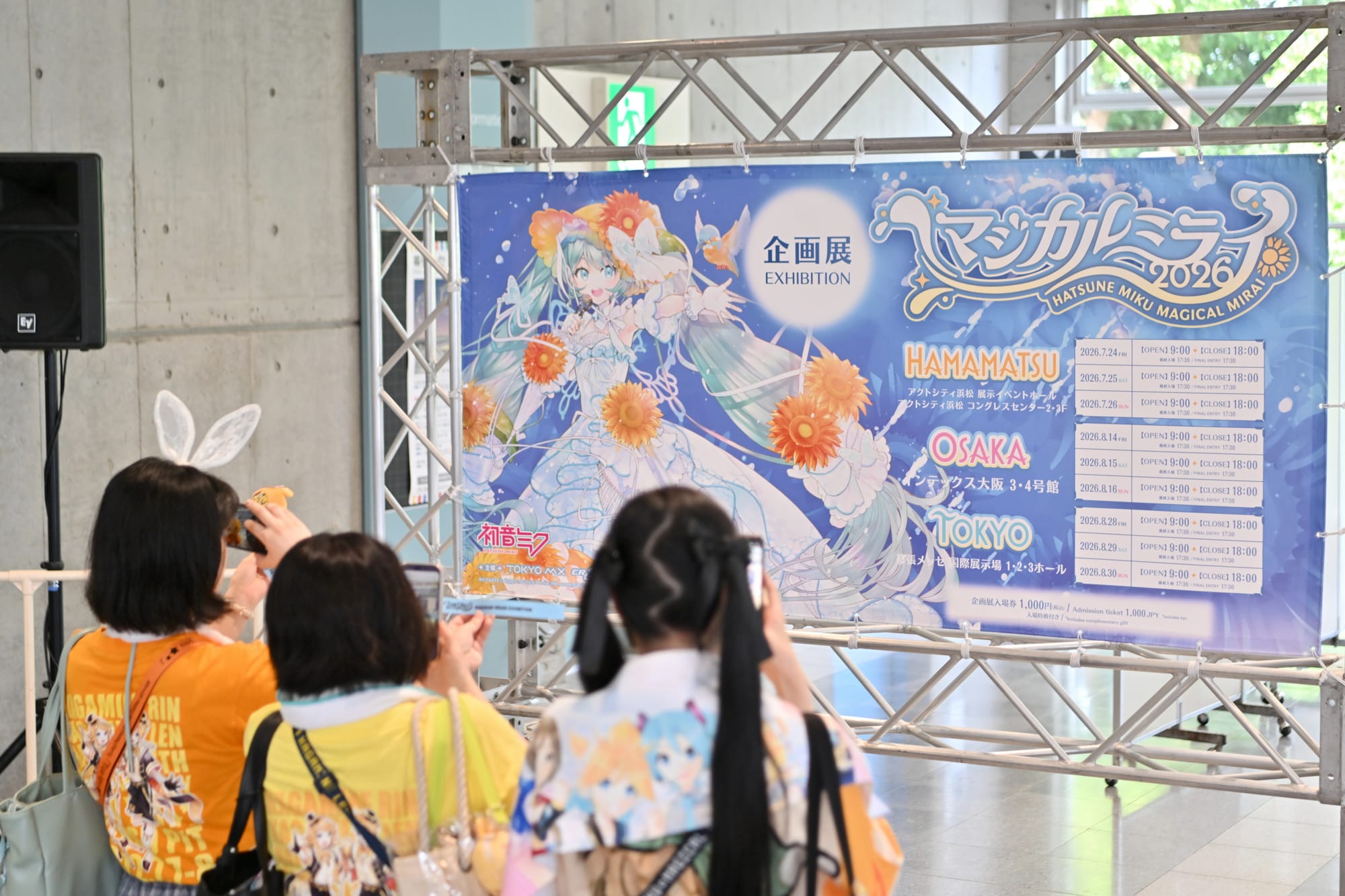
Which is in no way a comment designed to question the pure experience of attending an event like Magical Mirai 2026. This year’s event started in Hamamatsu in southern Japan in late-July with a three-day show, slowly traveling north through the country via a similar-length assembly in Osaka before arriving at Makuhari Messe over the weekend of August 28-30.
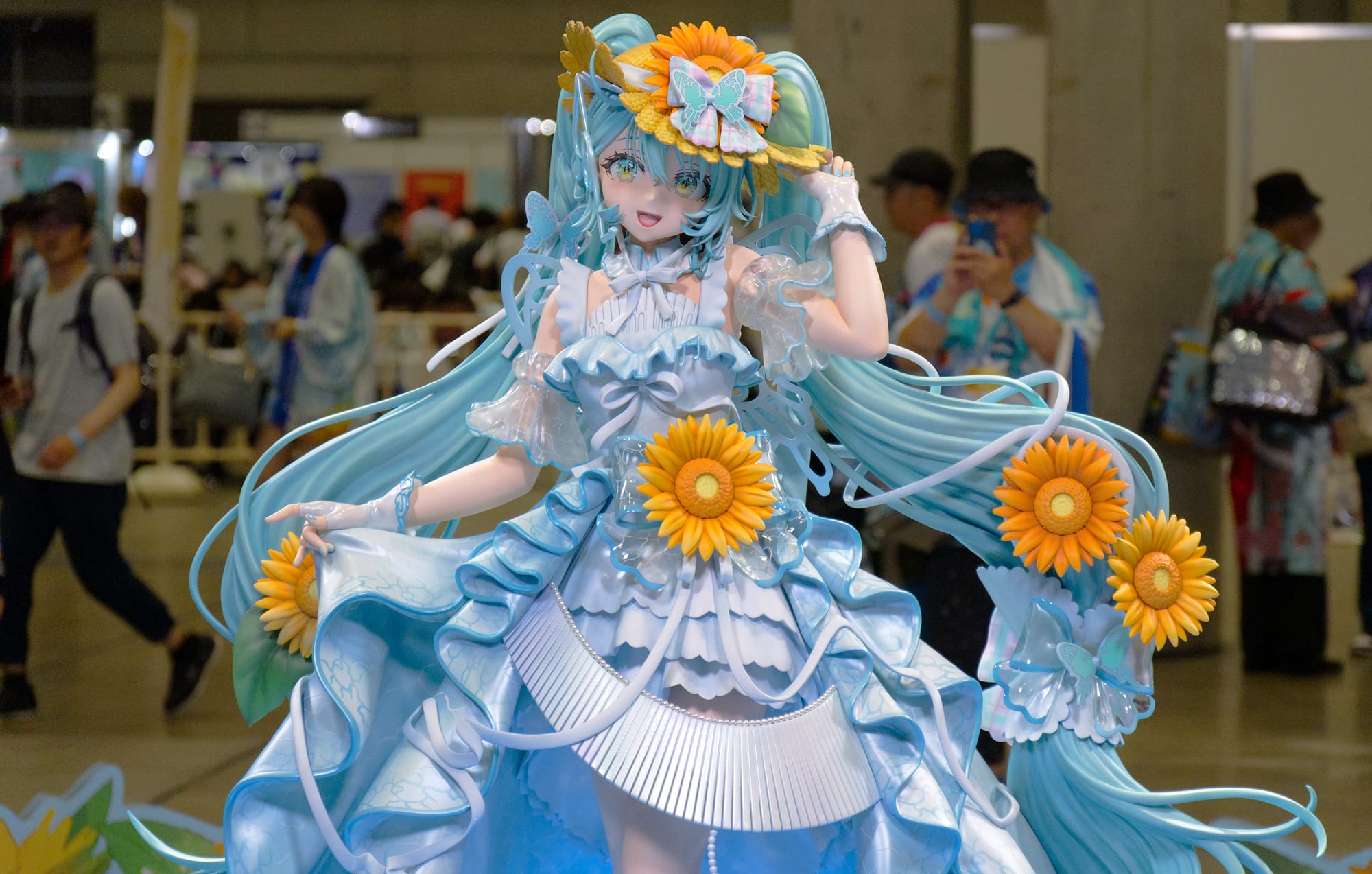
Upon entering the main hall fans were greeted to a life-size statue of the poster-girl herself, Hatsune Miku. Each year sees the production team for the event at Crypton Future Media commission a new illustrator to design the official key-art and outfit for the show, which is typically accompanied by a theme song commissioned from one of the talented producers within the community to accompany it. This year was assigned to a distinctly-summer vibe by illustrator wata with a flowing white dress accented by sunflowers, with the song being “Sora ni Menjite” by Kasamura Tota. Fittingly, the statue stood within a pool of water, like a miniaturized lake for which they are liberated to perform within.
The rest of the hall is mostly an array of official booths selling merchandise, the creators market, and open workshop and meetup spaces. The busiest areas consist of the creators market, where producers selected for the event are often selling new and exclusive CDs and merchandise, and official booths where similarly-exclusive or early early sales of merchandise are being held. It makes much of the convention space feel primarily, though not entirely, like a market, albeit one entirely centered on Vocaloid.
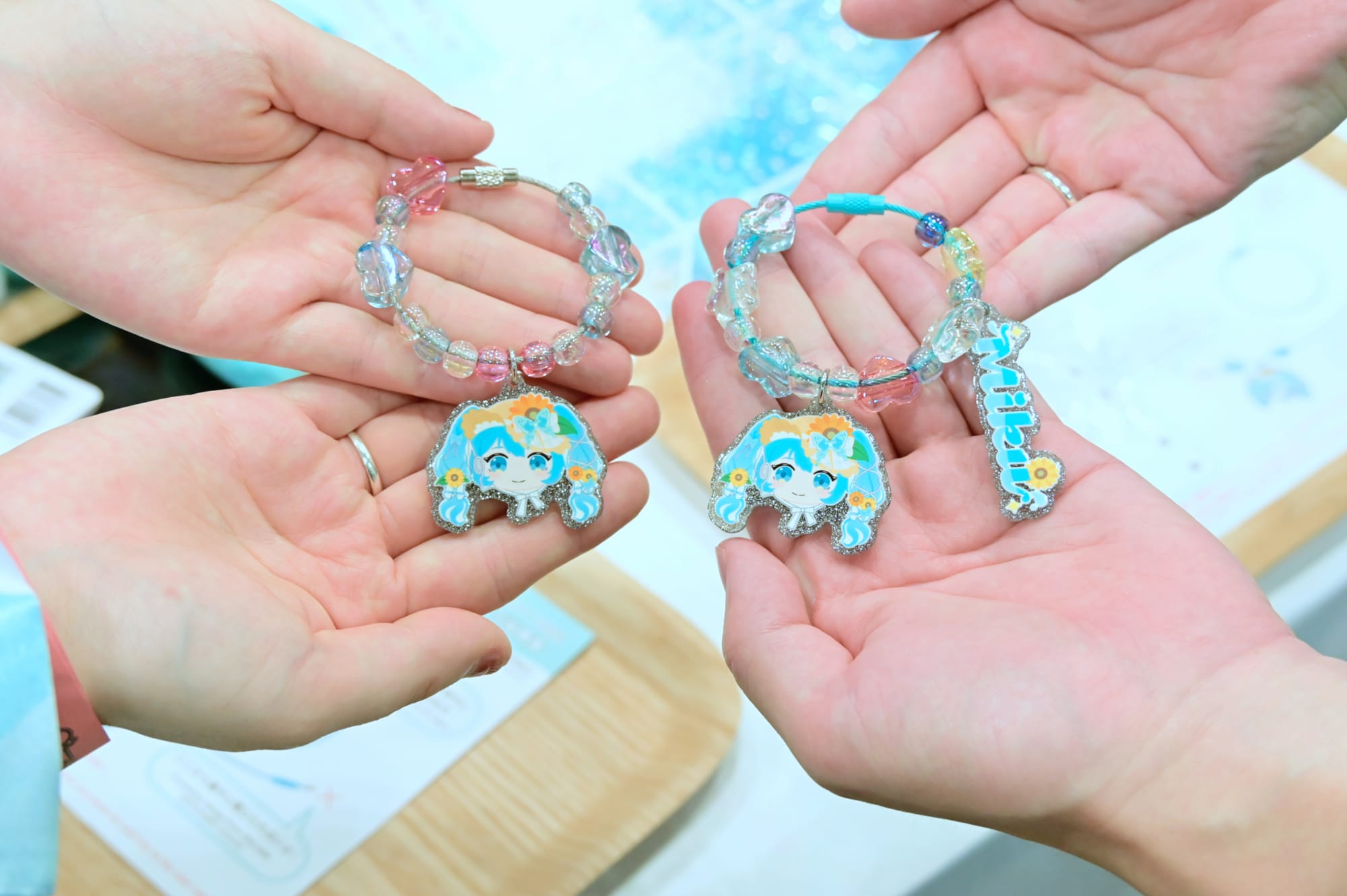
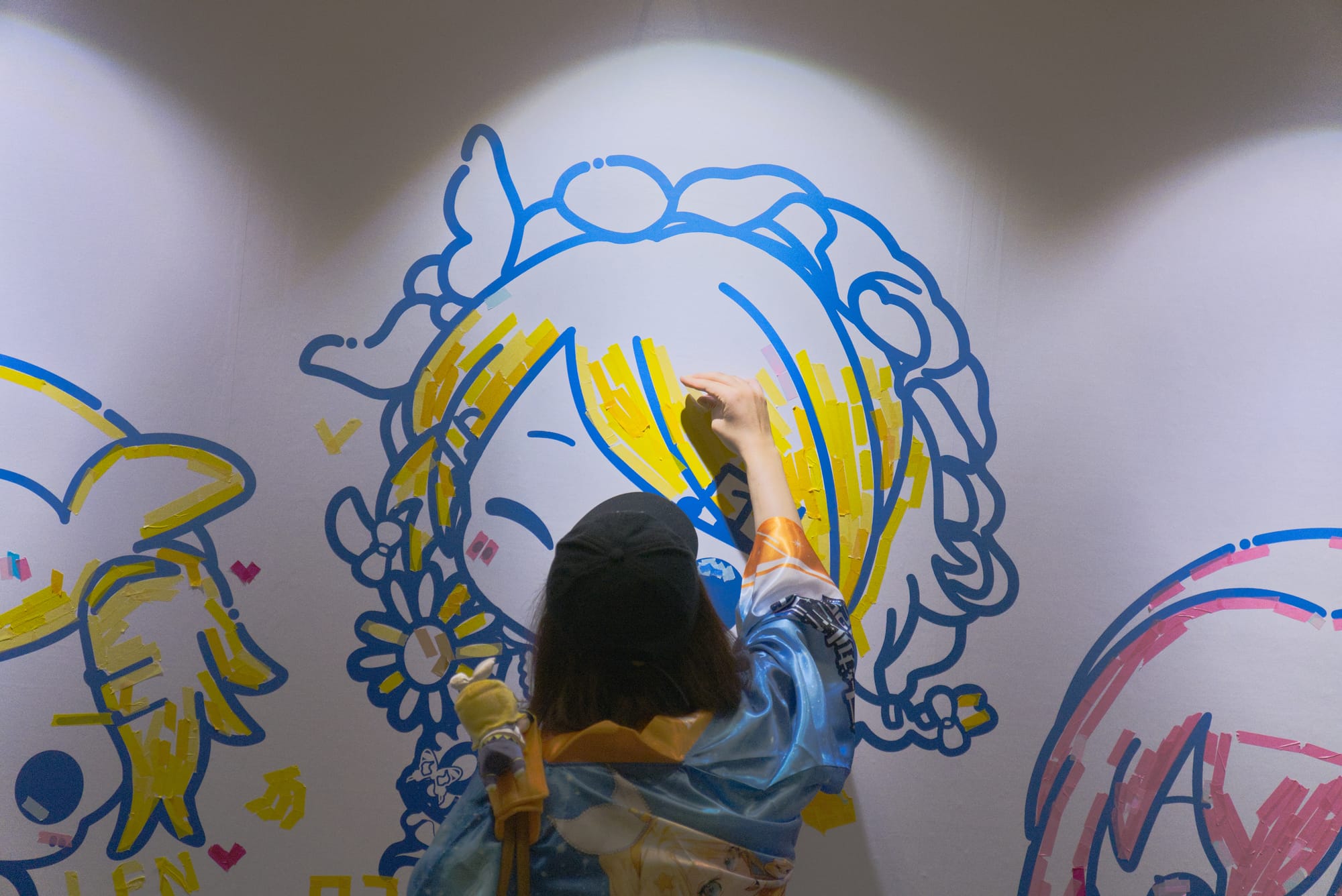
There are plenty of interactive spaces designed for fans to congregate and share experiences. One wall encouraged fans to decorate monochrome illustrations of the main Crypton Vocaloids - Miku, Kagamine Len and Rin, Kaito and Maiko - while Yamaha had a Miku-themed piano where fans were free to play their favorite songs for passersby. In workshop areas you could create wristbands, and an open hangout spot had small standees to take photos with and tables to trade goods with other fans.
For all this space may seem lacking for things to do compared to other, larger conventions, it feels fitting for the sort of event Magical Mirai aspires to be. With so much of Vocaloid culture taking place online, just the opportunity to meet in person and convene with other fans, whether friends or complete strangers, is the purpose of this event. It feels refreshingly more in line with the otaku culture of the early 2010s when this event was founded, where finding your own fun in the presence of other fans with shared interest and free from shame is the point. Many were in cosplay or themed outfits, people were carrying around 60cm+ tall plushies, while doll collectors and other groups within this fandom held their own meetups.
The space existing was the appeal, not necessarily what could be found within it, with thousands upon thousands of people just enjoying the ability to exist within a Vocaloid-themed space. What’s most striking after 13 years of Magical Mirai is just how diverse the fanbase truly is, as people from all walks of life and from around the world descended on the space. One wall display made a good case for explaining why so many groups were attracted to the show: Miku is everywhere these days! Lining one wall was a celebration of all the different events surrounding Vocaloid (and particularly Hatsune Miku) on regular cadence in just the last few months. You had banners celebrating the Snow Miku events in Sapporo every year tied to Hokkaido’s famous snow festivals, the global Miku Expo world tours, Miku With You in China, and more.
Elsewhere in the hall you had a booth dedicated to Project Voltage, the ongoing Pokémon collaboration. Even this leaves out some of the many Vocaloid-adjacent projects and live events taking place nowadays. Just this year, Japan has seen a concert dedicated to just the music of one of its producers, Deco*27, titled Deco Live, Lawson held an anniversary concert for their brand centered on Vocaloid. Miku Symphony, which first started in 2015, will once again be held later this year.
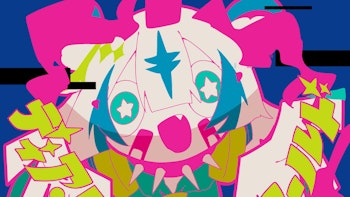
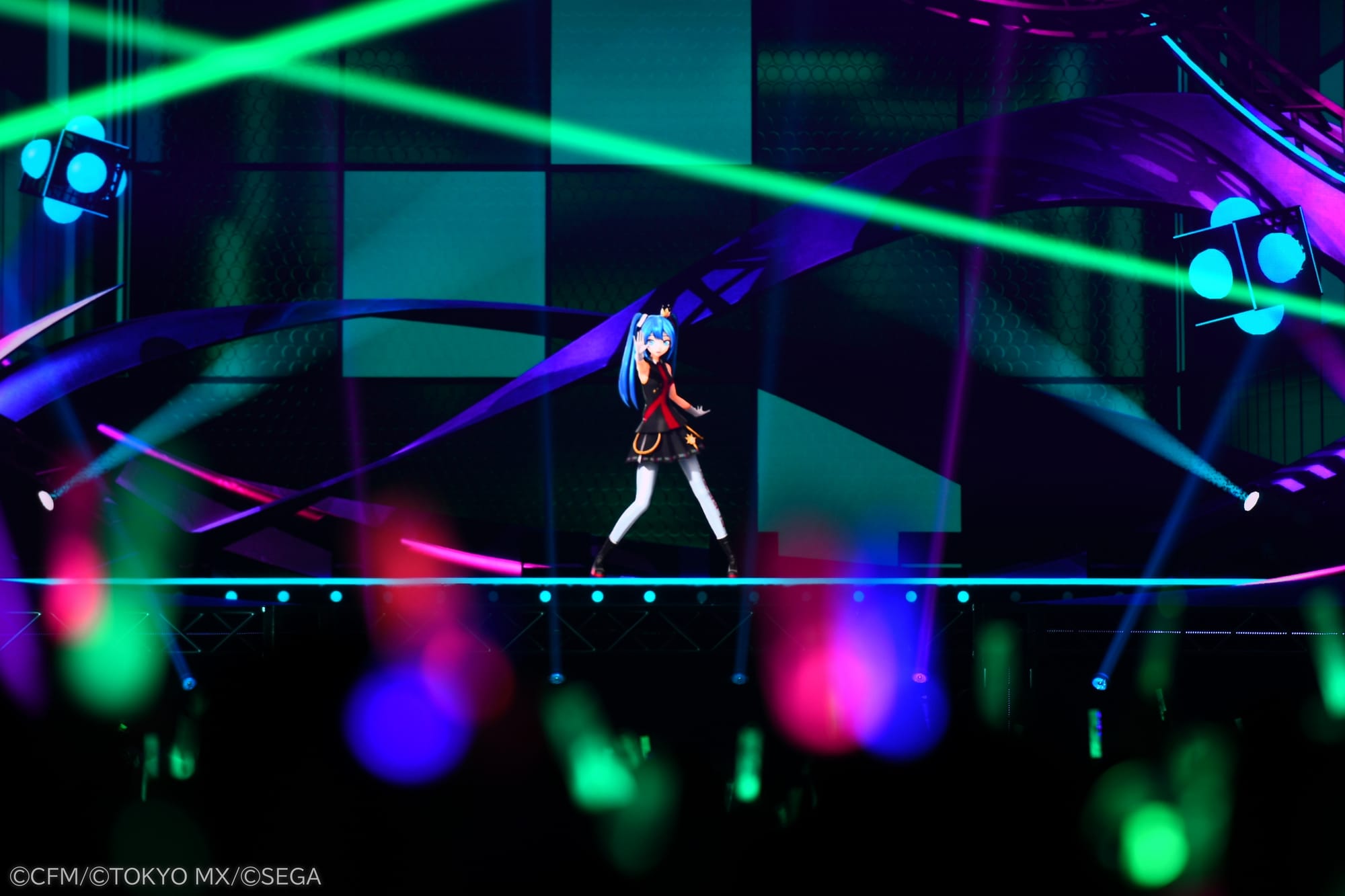
Magical Mirai, in that sense, is the fandom center for the most core of fans descended from all these events, and a chance to just exist in a Vocaloid space that’s more than just a concert. Though of course, naturally, there was a concert component also to this event, which featured its own range of songs from the early days of Vocaloid including “Sekiranun Graffiti,” all the way to new songs such as this year's theme song, “Sora ni Menjite.”
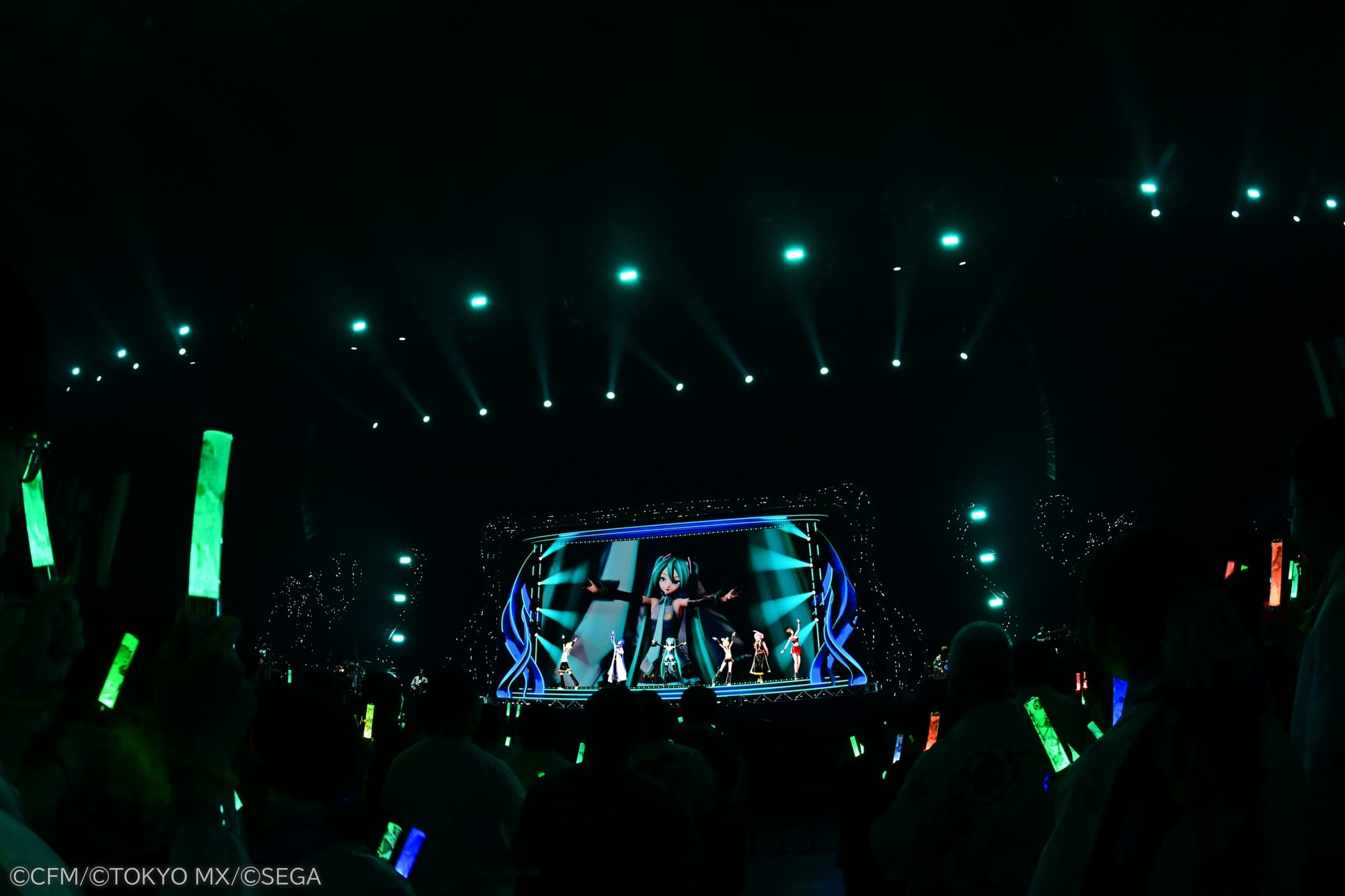
It's here where the strength of Vocaloid's collective fandom shines. As Vocaloid culture, anime culture, and otaku interests have shifted towards the mainstream, with it some aspects of the passion those earliest hardcore fans held has been lost in the process. Not here. From the particular habits of cheering prior to an artist appearing or an encore to the unison chanting far beyond what is typical for all but the most hardcore of idol performances, all supported by fans who couldn't make it to the concert who still wait with their plush Miku toys to wave at fans as they enter and exit, there is an unapologetic love that shines through.
Which is why the concert itself, in the inclusion of those unusual hits as well as rarely-seen virtual singers - extra love was given to Kaito with this being their 20th anniversary year, despite the fact their popularity has long declined since their peak - celebrated the people who care about this more than most. Rather than simply being a concert with these singers involved like many other Vocaloid events, this felt crafted by and for the people who have been here since the beginning and who have found powerful friendships and community in this world. Just as much as seeing these projections come to life in a way that, even knowing its little more than LED screens, feels real, is so much joy when you're surrounded by people who share your passion.
Yet for as entertaining as both the exhibition and live concerts are for Magical Mirai, it can’t be helped to question the purpose of this event after all these years. Vocaloid, and the scene around it, have transformed immensely since 2013. At the time, the scene was at the peak of what could be called the first wave of Vocaloid’s integration into pop culture in Japan - people knew of Hatsune Miku and the other characters, and the concept of a virtual musician like her was relatively fresh, with few alternate examples. Without many other events, this was the center of the Miku universe, which allowed it to play arenas and even Budokan, the legendary multi-purpose hall that’s testament to your musical success if you can manage to perform there.
The latter part of the 2010s saw a decline as many of the early big-name producers of music began to stop making music. Things shifted around COVID, not just because more people were spending online in ways that benefited the online nature of the Vocaloid community, but because of major shifts more broadly within Japanese music.
Those producers who stopped making music for Vocaloid didn’t quit music altogether, they merely integrated into the mainstream industry as writers for major pop artists. Some, like Ayase, one half of YOASOBI, or Kenshi Yonezu, became artists of their own. Ado, while not the first utaite (a name given to people who perform music covers of Vocaloid songs, typically anonymously, and upload them online) to make a major music debut, has grown to become one of the biggest music artists in Japan today while openly discussing how much the online community and music of the scene has influenced them.
As Japanese music became shaped by people who grew up with Vocaloid, and a younger generation increasingly online encountered it, the scene saw a new revival which has continued to the modern day. These new fans descend on Magical Mirai, also, but they don’t exclusively need this event, either. There’s so many other shows to attend, even outside of Japan. Magical Mirai has the legacy, but what is the reason to prioritize this over other Vocaloid events?
That’s something that only walking through the doors of Magical Mirai itself can answer for you. Sure, there are so many other concerts and events that cater to different niches, but few embody the meaning of the entirety of the scene like this one. Many larger events often ignore the more niche and older sides of Vocaloid history that the concerts and showcases of this embrace.
The fact Magical Mirai feels simply like a community gathering, just as much as it is a concert, exhibition and marketplace, is what most makes this feel like a second home for an online community that has become so much more. It's why this event exists, as such a home can't be recreated at a mere concert. This is about the people who cheer in near-military unison at projections that appear real enough to make you feel in the presence of a true musical star. A celebration of the people who find hope, friends, and purpose through not just the music, but this community.
The theme song for this year’s event seems out of place compared to the more energetic and upbeat sounds of many previous years, but considered from this perspective, no other song is more fitting to headline Magical Mirai 2026. It’s a song about finding a reason to keep going, which Vocaloid over these years has offered many people by allowing them to meet others like them. This is not just a show about Vocaloid but the heart of the people who love it. The fans lining up their dolls, in cosplay, meeting and sharing stories, and those who stand outside the venue after a concert waving custom signs and plushies to greet their brethren farewell, are what it’s all about.