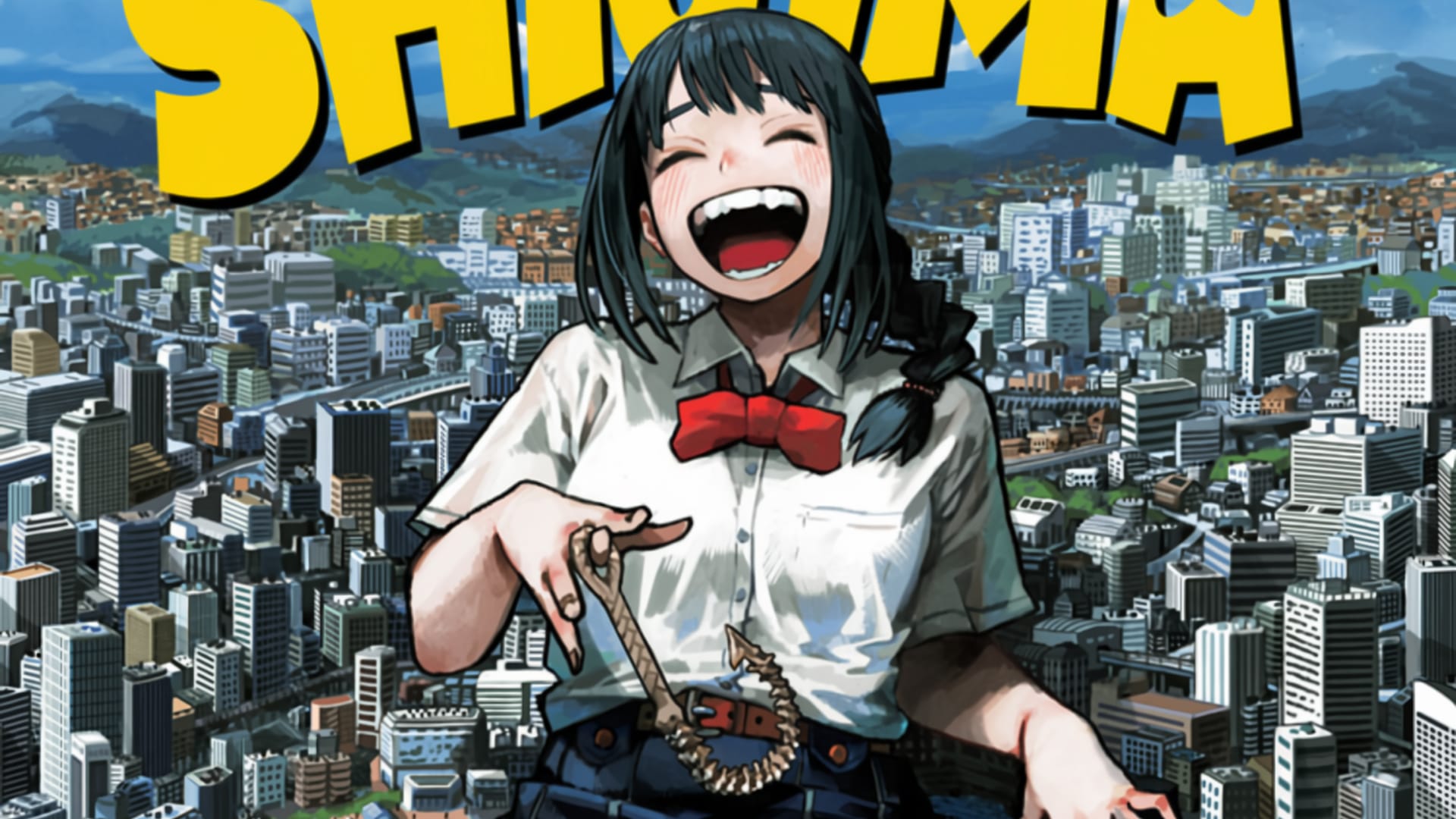
It was never a given that Kohei Horikoshi would return to the pages of Weekly Shonen Jump. Even if such contemporaries as Yusei Matsui and Kenta Shinohara did end up making a comeback, the health problems that dragged down the final half of My Hero Academia certainly seemed to suggest that he wouldn’t want to deal with the publication schedule anymore. As a result, the existence of Quit Laughing, Shijima is surprising enough even without another key aspect: its genre.
Back when the oneshot was first announced at the end of last month, much ink was spilled about the fact that it was a “girl-meets-boy horror story.” This was exciting given that Horikoshi has penned almost exclusively action and fantasy up until this point, most notably My Hero Academia, but also Barrage and Oumagadoki Doubutsuen. Nevertheless, don’t go into this short work expecting anything that looks like Junji Ito or Kazuo Umezu: any horror elements here are purely superficial, and the author ends up reverting to old tricks by the very end.
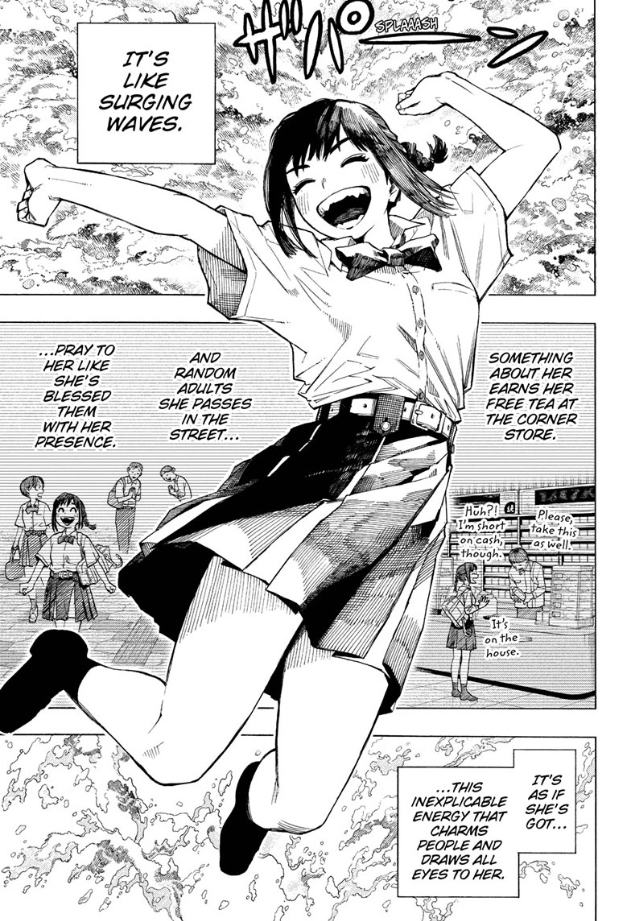
Quit Laughing, Shijima follows the story of two high schoolers by the name of Azumi and Shijima. Now in his second year with no particular life goals, Azumi finds himself utterly enchanted by the carefree attitude of Shijima, who he has crushed on since middle school. Her laugh, in particular, is described as “surging waves” and seems to represent everything that Azumi doesn’t have: love, happiness, and the ability to live without a care in the world.
Building on this romantic foundation, the horror aspect comes when Azumi reveals that he can see things that no one else can. Throughout the town, there are huge beings that look human, but can’t communicate beyond a few words and wear strange hats. One of the most unsettling visuals of the entire oneshot comes when Azumi looks out into the bay and discovers a giant figure lurking just below the waves, ignored by everyone.
The influence of H. P. Lovecraft is obvious here, most especially the maritime imagery found in such stories as The Shadow over Innsmouth. Even so, the traditional straw hat worn by the strange humanoid figures and Shijima later on lend the story a distinctly Japanese flavor, along with obvious homages to modern port cities such as Yokohama and Kobe in the setting. It’s a fascinating blend that deserves to be taken up by more works in the mainstream, not least in Weekly Shonen Jump.
In any case, it turns out that the city where Azumi and Shijima live is only kept safe by the offering of a human sacrifice to the aforementioned figure that lurks beneath the ocean’s surface. Known as the Deep Dweller, Shijima was chosen for this duty all the way back in middle school, which is why she has always been able to stay in such high spirits. The bulk of the action in Quit Laughing, Shijima then comes when Azumi attempts to save his crush from the fate of death in a high speed motorcycle chase that culminates in both a confession and an end to the centuries-long ritual.
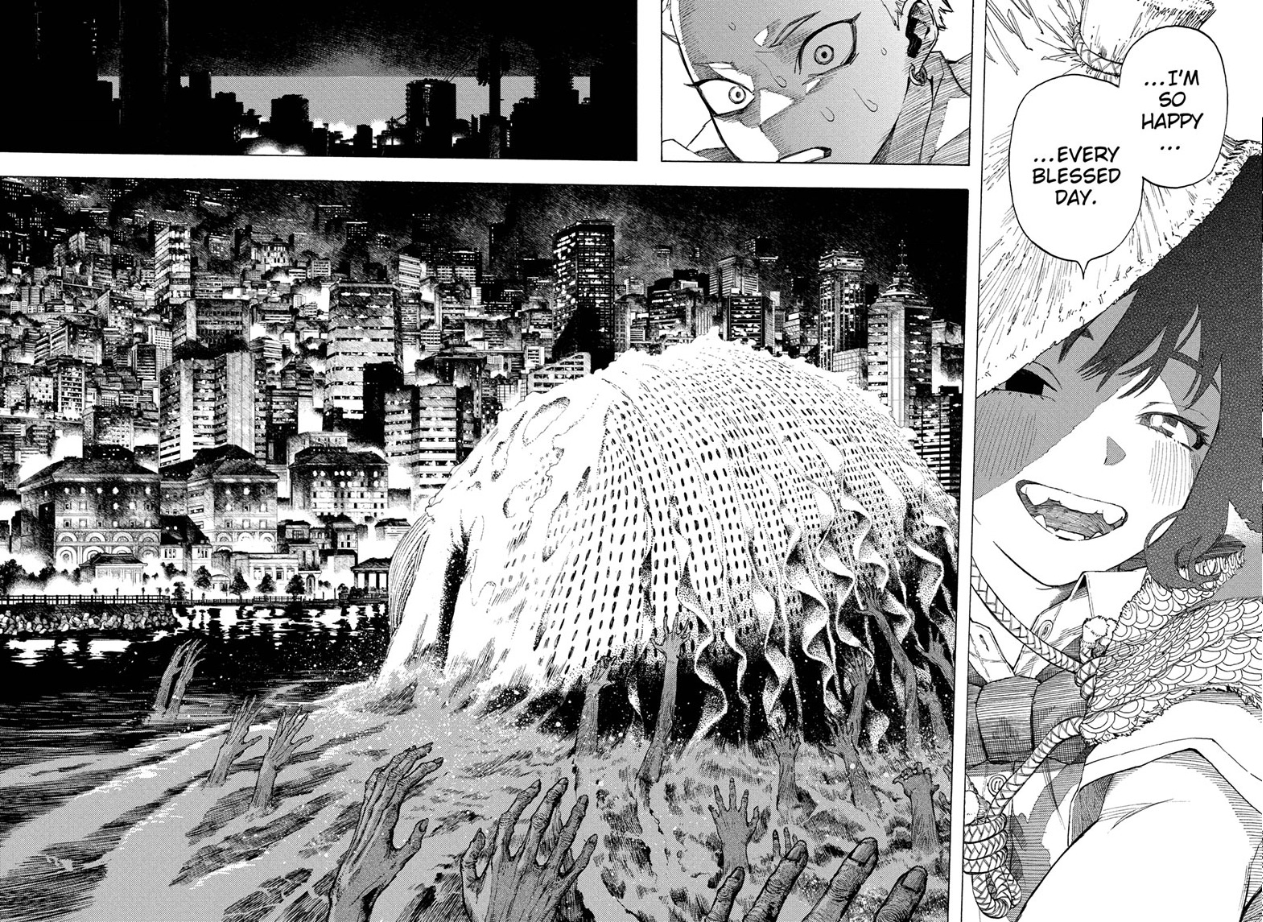
Although Horikoshi’s talent for creating distinctive character designs and eye-catching page layouts is present from the very beginning, this chase is where the oneshot unleashes its most grandiose visuals. The image of the Deep Dweller looming over the city in search of its sacrifice is genuinely scary and helps to sell the Lovecraftian sense of sheer helplessness, but there is some evidence to suggest that Horikoshi is a little out of practice after some time away. Just how a hook-like object functions as the MacGuffin to defeat the monster is communicated somewhat poorly with jumbled panels and vague dialogue.
Moreover, the conclusion to the oneshot should cause eyeballs to roll with any knowledge of Horikoshi’s previous works. Thanks to his ability to see phantom beings, Azumi ends up being recruited to act as a superhero of sorts after defeating the Deep Dweller, wielding the hook as a weapon to take down other malevolent spirits. His position on the roof wearing a straw hat even looks like the image of Deku during the Dark Hero arc with his ragged uniform and mask.
On the whole, Quit Laughing, Shijima definitely wasn’t much of a horror story, nor was it a strong indication that Horikoshi’s creative spirit is alive and well. If he wants to make a comeback, chances are that he’ll have to come up with something a little more focused and catered to the mainstream. That’s assuming he does want to work as a manga artist again, because he sure as hell doesn’t have to.