March Comes in Like a Lion is one of my favorite anime series from the mid-2010s, and although it may not have been as popular as it should’ve been, it still has its diehard fans, especially from those who love mature dramas. It’s a shogi anime that appeals to those who enjoy complicated, nuanced slice of life titles. As such, the first episode of any anime has to set a tone and an impactful first impression, and I feel this anime accomplishes that.
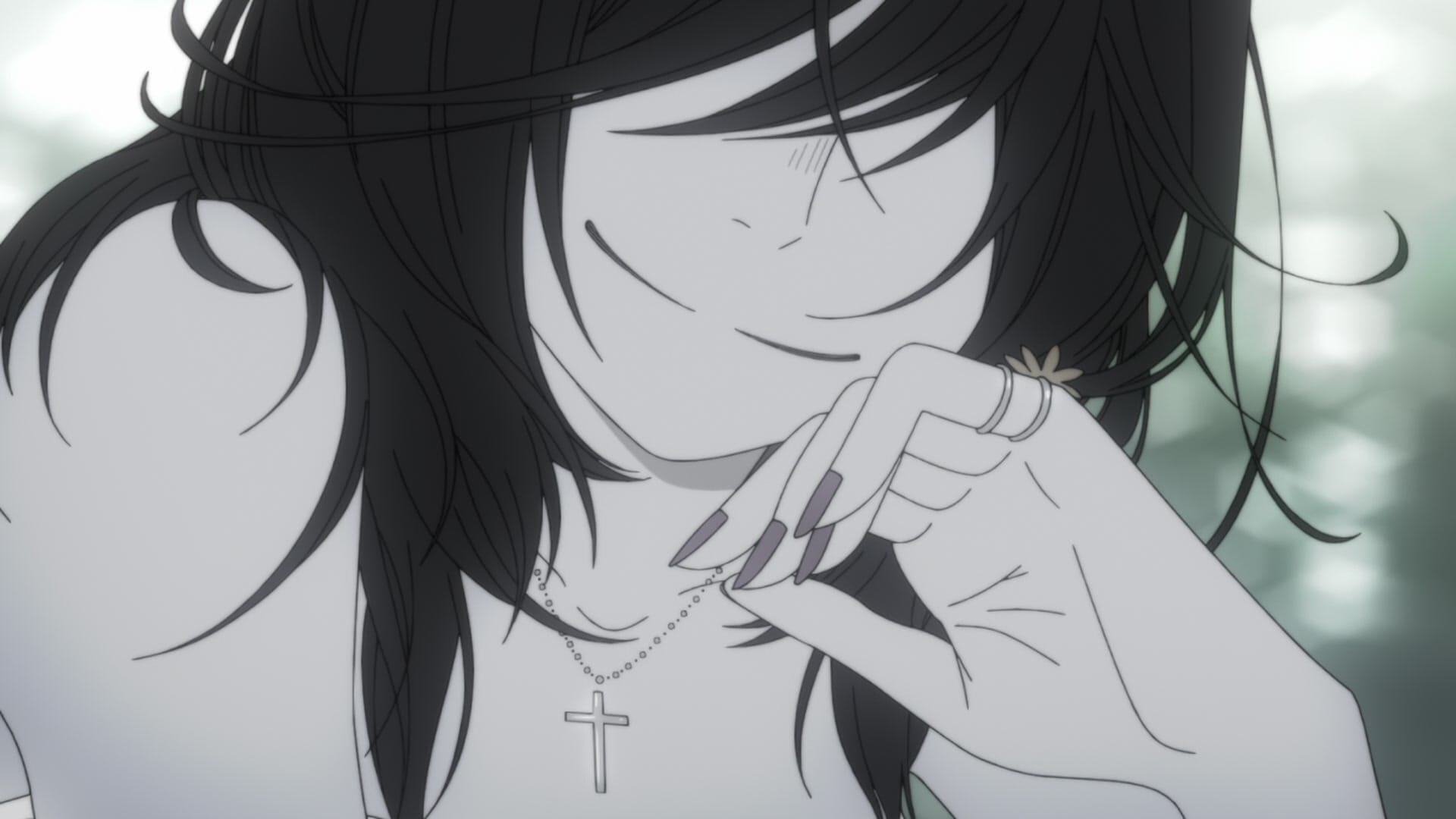
The first scenes of March Comes in Like a Lion’s debut episode (from its first season) paints a heartbreaking picture of its protagonist, Rei Kiriyama, and the intense loneliness that haunts him on a daily basis. It begins with a dreamlike sequence of water flowing down the drain and Rei being tormented by the words of his estranged stepsister, Kyoko.
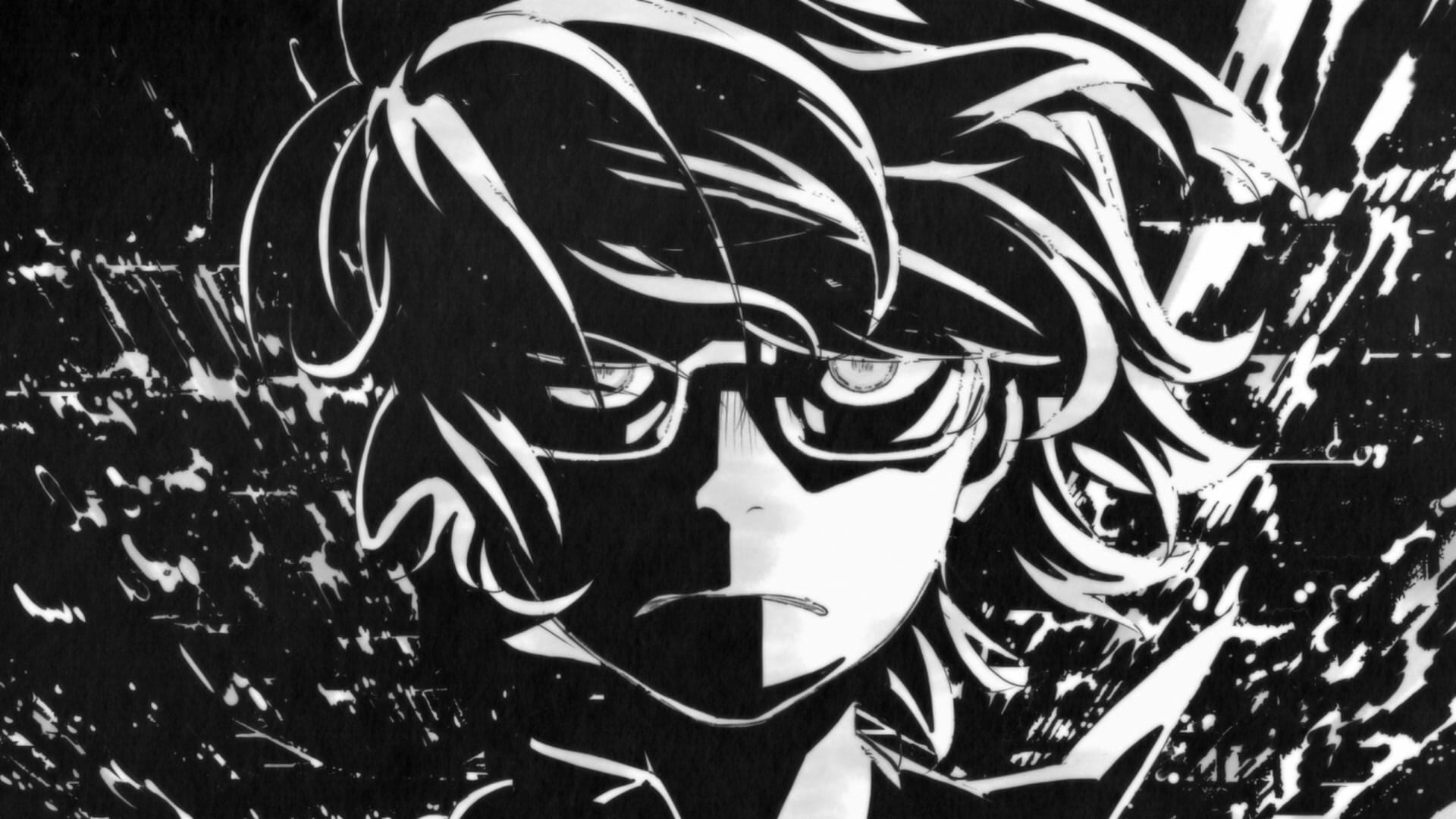
There’s a shot of him afterwards looking towards something as he’s surrounded in a windy, chaotic space mixed with black and white shading. The next thing he knows, he’s drowning and enveloped by water as he awakes from a dream. These opening shots are what got me hooked into the series and wanting to see more of this character and his story.
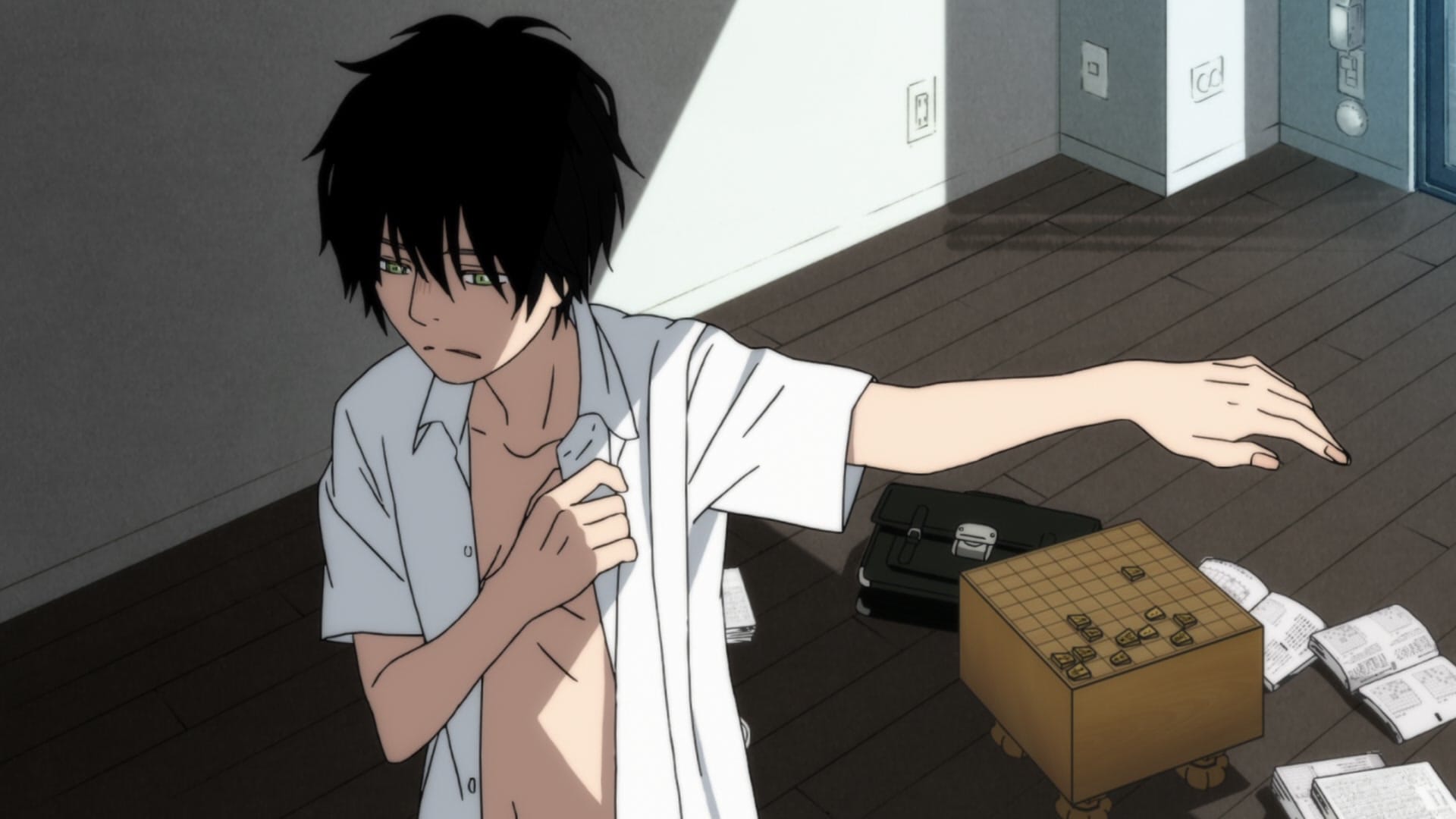
What follows is an effective sequence of moments with sparse dialogue, spotlighting Rei’s mundane routines and pensive silence. It really engages an audience by getting them to read between the lines and shining a light into who he is. Simple moments like him waking up groggily from his sleep, picking which pants to wear, and quietly putting on his shirt reveal parts of Rei’s personality and lifestyle. We know he lives alone in a pretty much empty room and that it’s a challenge for him to wake up. He also has a shogi board and a notebook thrown around to show that he’s a regular shogi player.
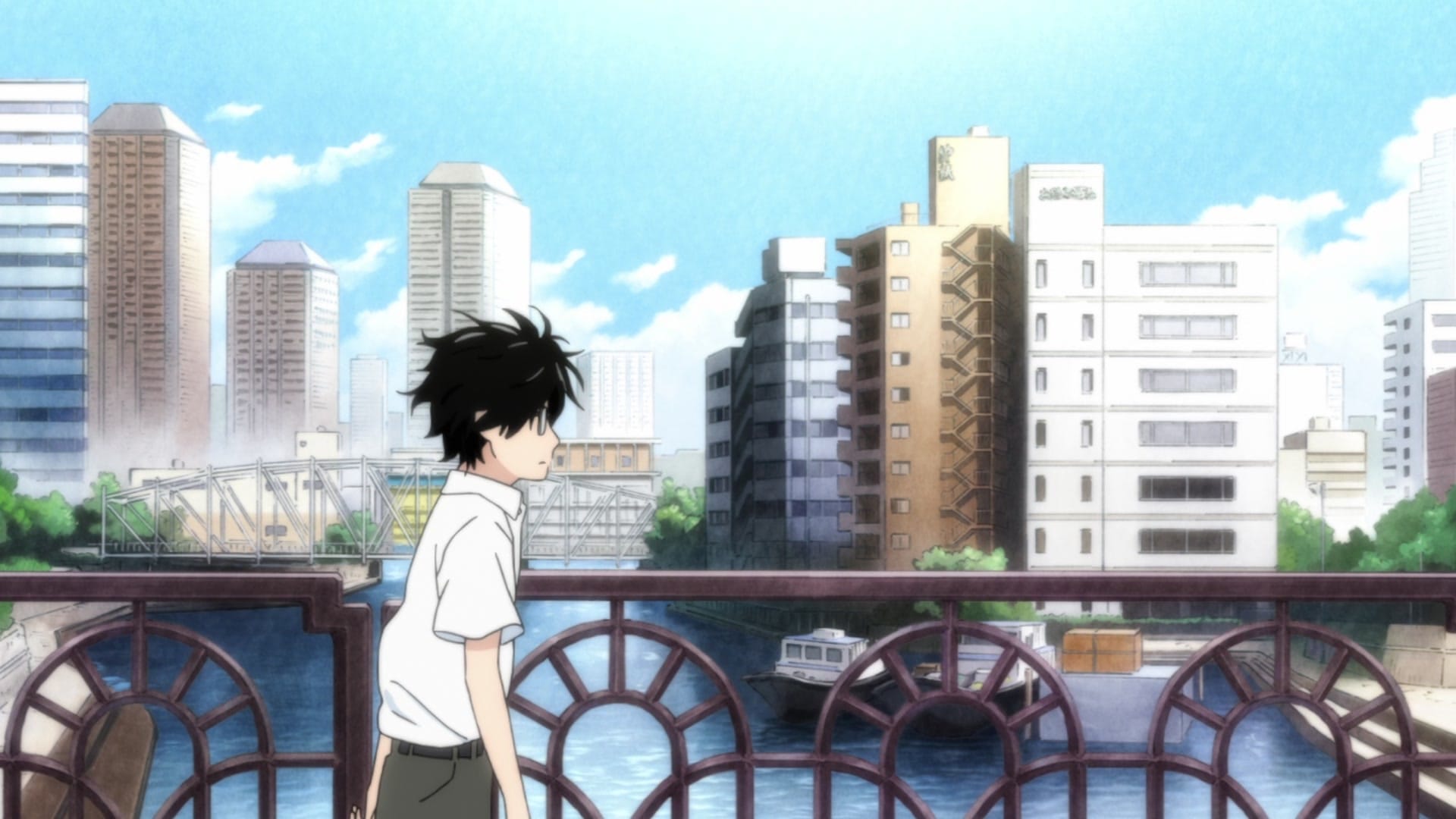
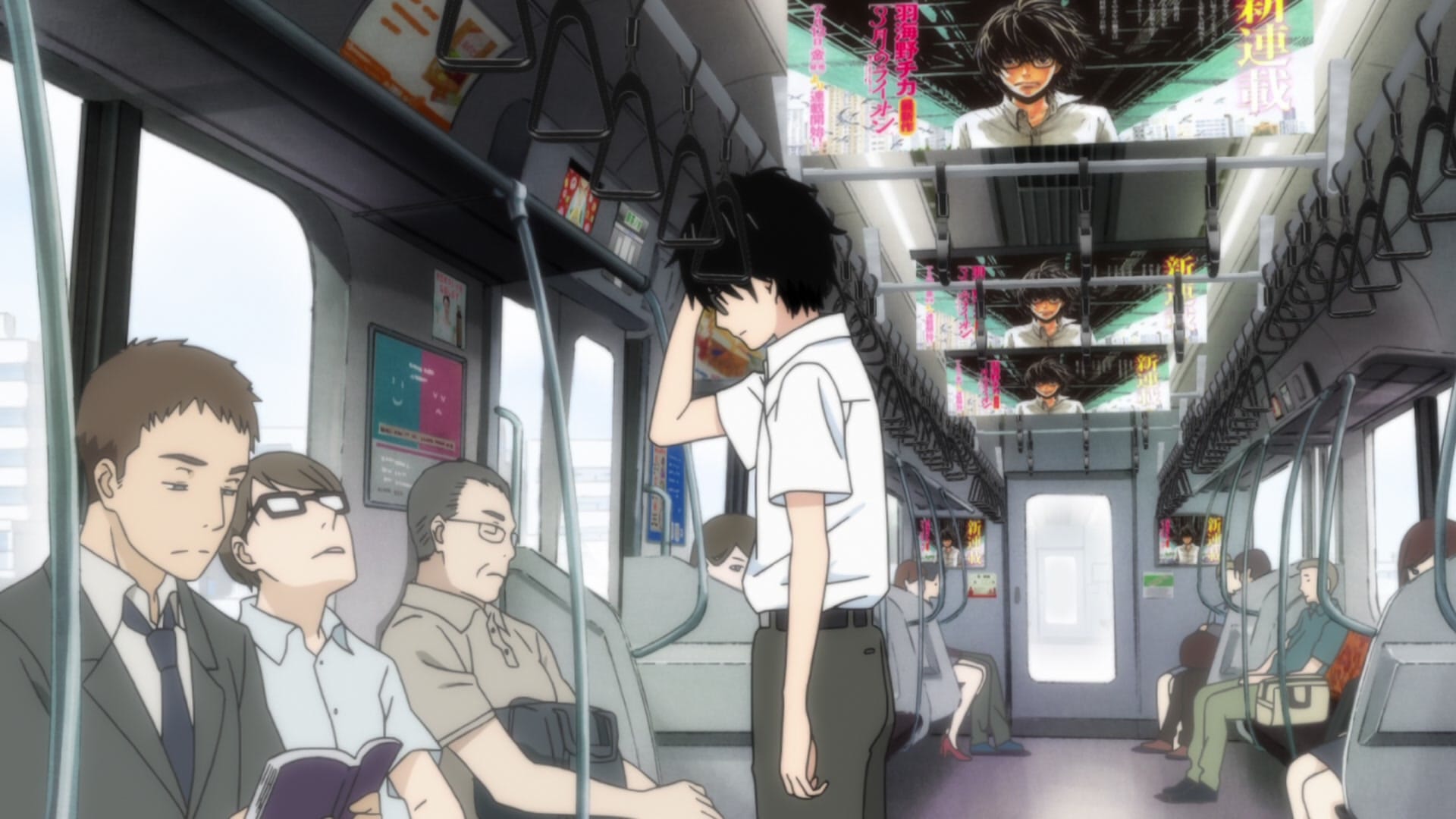
The scene then transitions to Rei walking into the city and boarding a crowded subway as a calm French language background song begins playing. The setting is bright, colorful, and relaxing; contrasting with Rei’s stoic demeanor. Even though he’s a member of society, he somehow feels out of place. It becomes easy to become absorbed in Rei’s trancelike daily routine, which isn’t anything special. However, his loneliness and distance from everything is very pronounced.
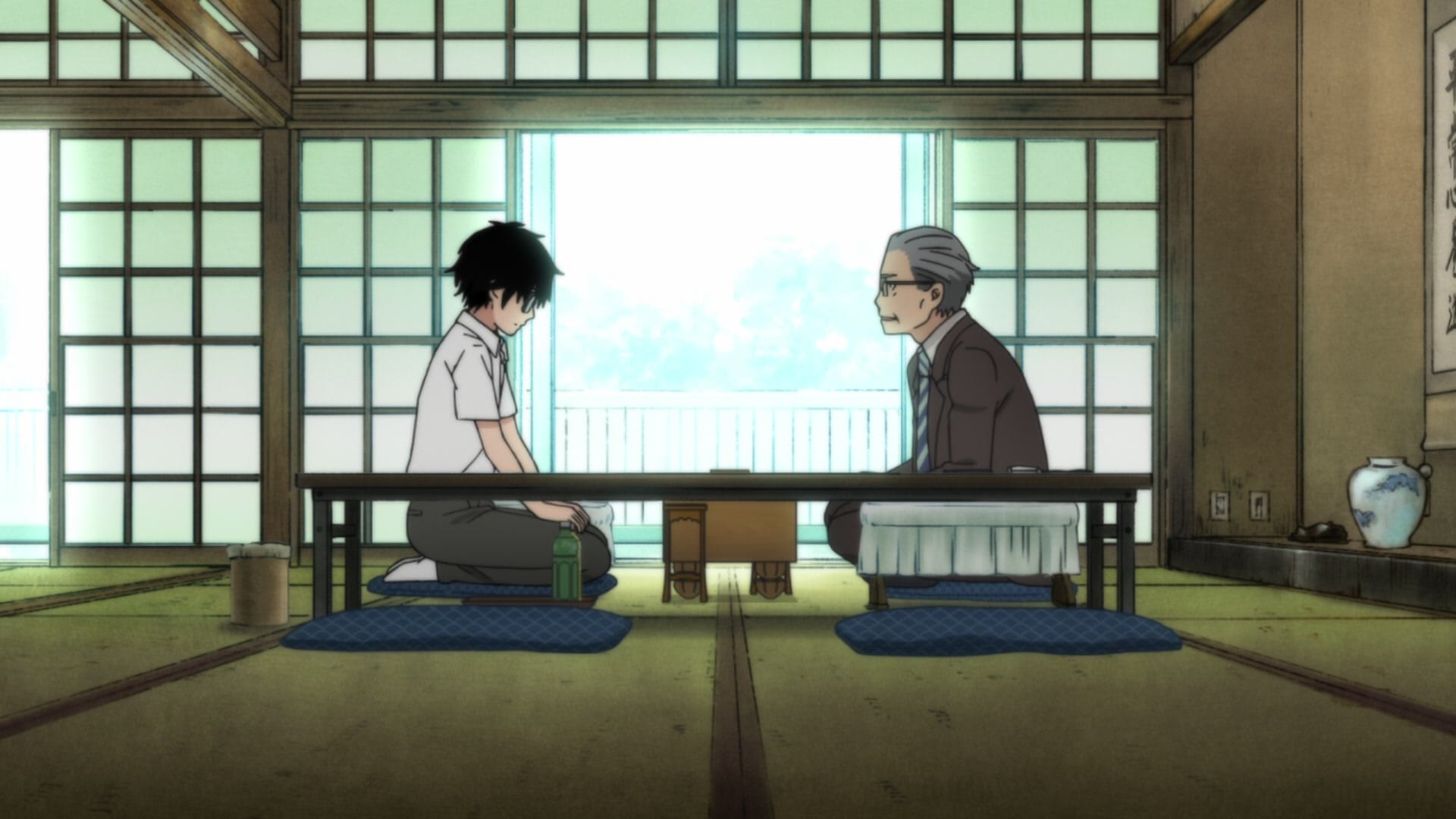
This calm sequence then transitions to a building where Rei is slated to begin a shogi match against his mentor and foster father, Masachika Koda. Once the match starts, the silence between them lingers with every move made, with Masachika trying to initiate some small talk and Rei letting the wooden clank of his shogi pieces do the talking instead.
Brief memories of Rei’s childhood with Masachika’s biological family are Interspersed in this scene, showing the former winning a trophy at a shogi tournament and Masachika consoling his son, Ayumu, and daughter, Kyoko, on their losses. Masachika asks Rei if he’s eating properly and taking care of himself after he abruptly leaves his foster family’s home. He says his stepsiblings are worried about him, but Rei tells himself that was a lie. The whole sequence, from him waking up to the shogi match, takes a little over seven minutes before Rei’s silence is broken in a largely dialogue-free scene.
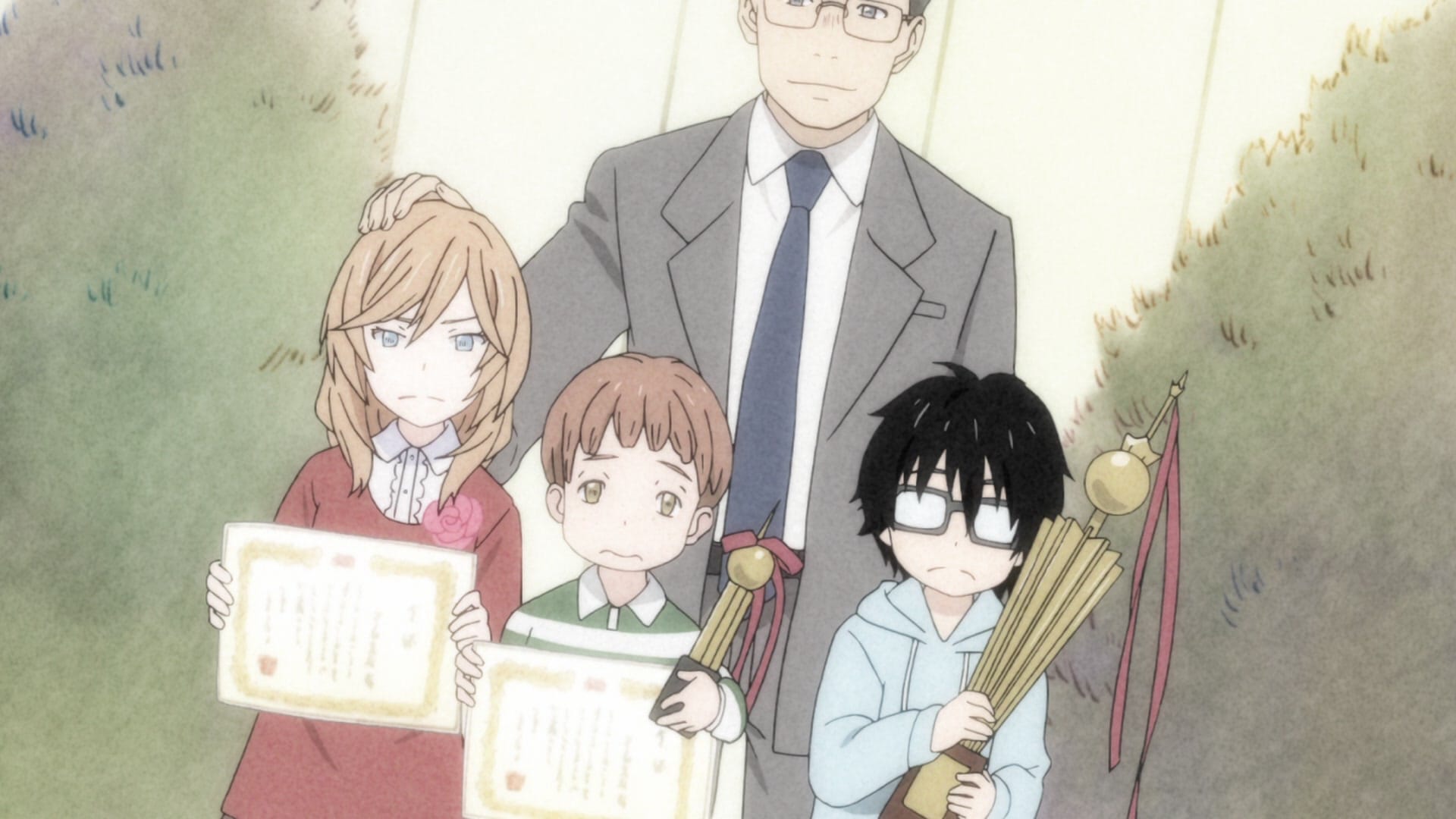
Nonetheless, I love how this moment shows the friction between Rei and his foster family that adds to his loneliness. He was orphaned at a young age and wanted to gain his foster father’s approval by showing off his shogi skills and winning the tournament. However, his success resulted in a deep resentment from his biological children, especially with the stepsister Kyoko (who we heard at the beginning of the episode), who believes Rei stole their father from them and that they can never measure up to him. Rei, however, just wanted to feel like he belonged somewhere and it reached a point where he had to leave to save himself.
After the shogi match, Rei hangs around a river bank and receives a text from someone to buy dinner ingredients and ice cream from the corner store. He makes his way to the small, cozy home of the Kawamoto sisters, which include the oldest Akari, middle child Hinata, and youngest child Momo. It’s in this environment that Rei’s melancholy and loneliness is alleviated, as Hinata and Momo happily greet him at the door.
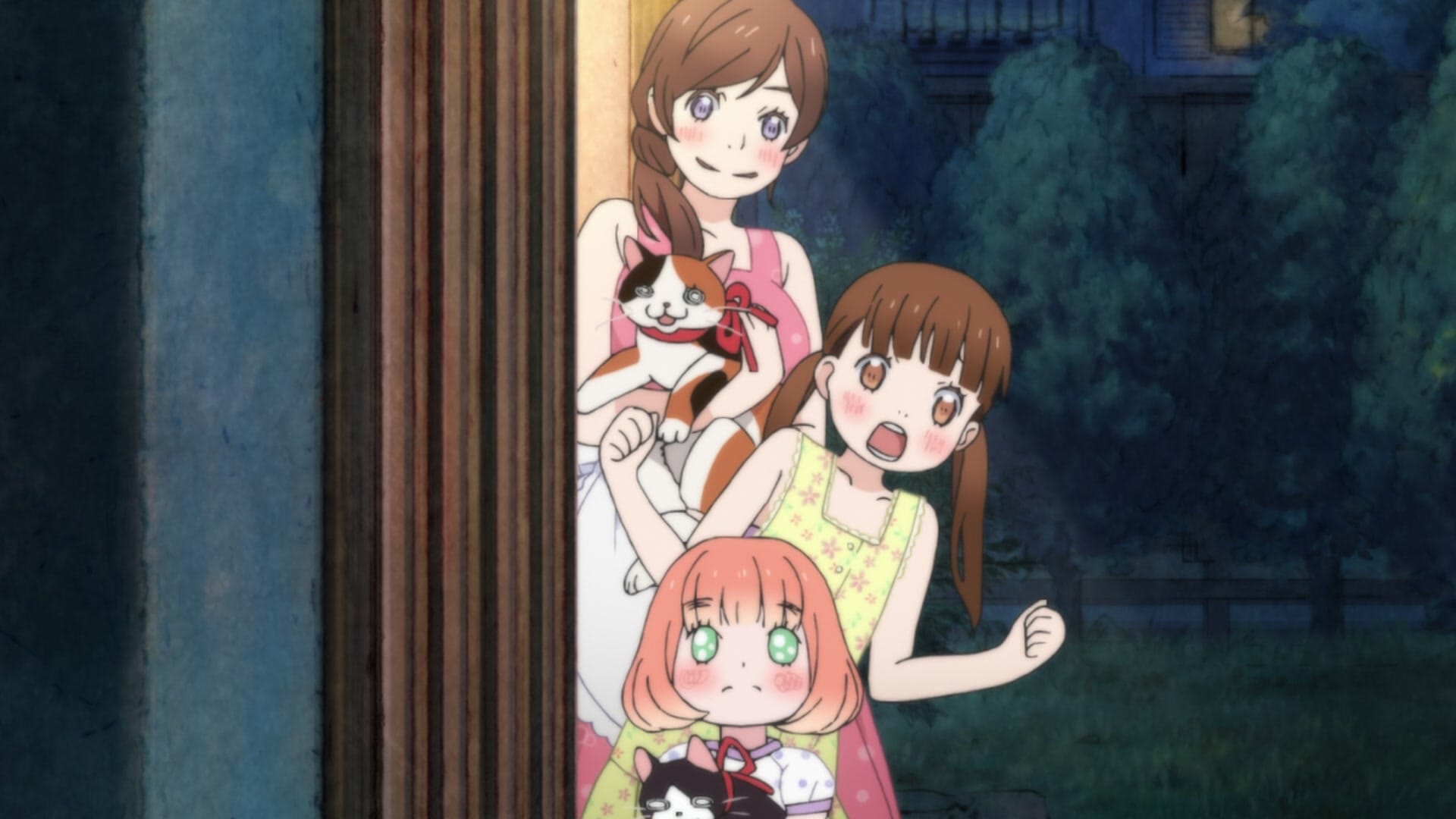
Throughout most of the first episode, we’re shown the depressing aspects of Rei Kiriyama’s everyday life, but once the Kawamoto sisters appear, the anime becomes much lighter and cheerful, giving Rei some more optimism from a dreary lifestyle. The sisters’ presence greatly affects and changes him, as he feels like a family member instead of a stranger. It’s something he hasn’t experienced in a while after his parents’ death and estrangement with his foster siblings.
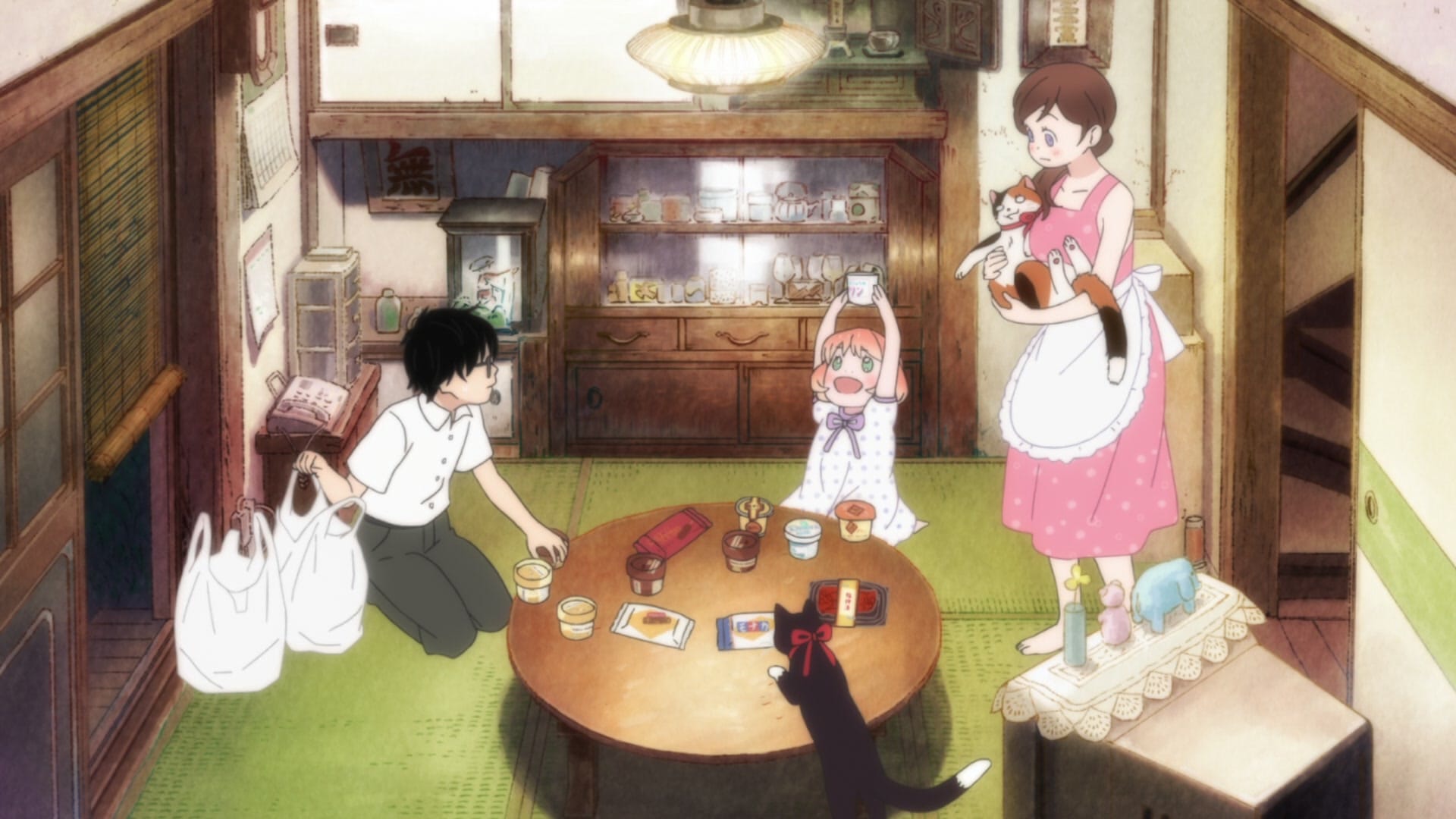
The first minutes of March Comes in Like a Lion’s debut episode shows two halves of a person whose life could be much better than what it is. Although the majority of the episode was silent and melancholic, it paints a perfect picture of who Rei Kiriyama is and the type of person he can transform into. He doesn’t have to accept things as they are because change is possible and hope will always be there.