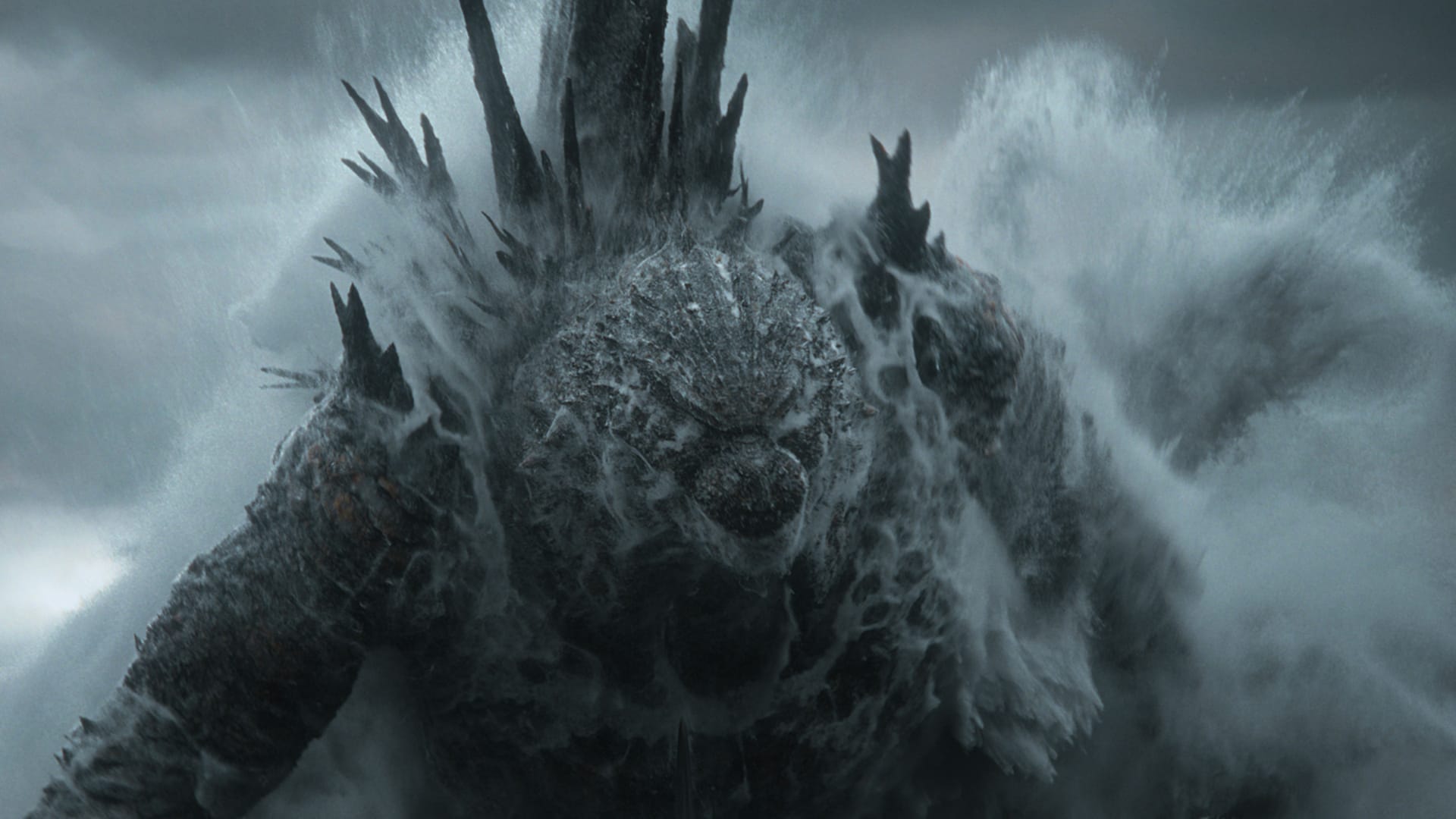
Is Godzilla ever going to die? After 72 years, the perennial return of the king of kaiju has become one of those inevitabilities in life, like death and taxes. There is always going to be another Godzilla movie sooner or later, and never has one felt more ripe for a true sequel than Godzilla Minus One, writer-director Takashi Yamazaki’s Oscar-winning, international hit reboot of the longest-running movie series in history. The film, set in the years after World War II when Japan was struggling to rebuild itself, even ended with a mid-credits-sequence scene of the monster’s destroyed body seeming to regenerate at the bottom of the ocean.
So now, three years after Minus One, that inevitable sequel is here, and it feels like a more than knowing commentary on the constant renewal of the franchise. Godzilla Minus Zero opens with another kaiju attack, except from a different monster: Ghidorah, the dragon-like creature frequently cast as Godzilla’s opponent. This version of the rival kaiju has landed on Earth as a formless entity and taken on aspects of various animals, wrecking havoc on the city of Matsumoto with lightning beams and gravity-manipulation attacks. After a disastrous setback midway through the film, the situation for Japan becomes even more desperate as Godzilla rises from the depths again.
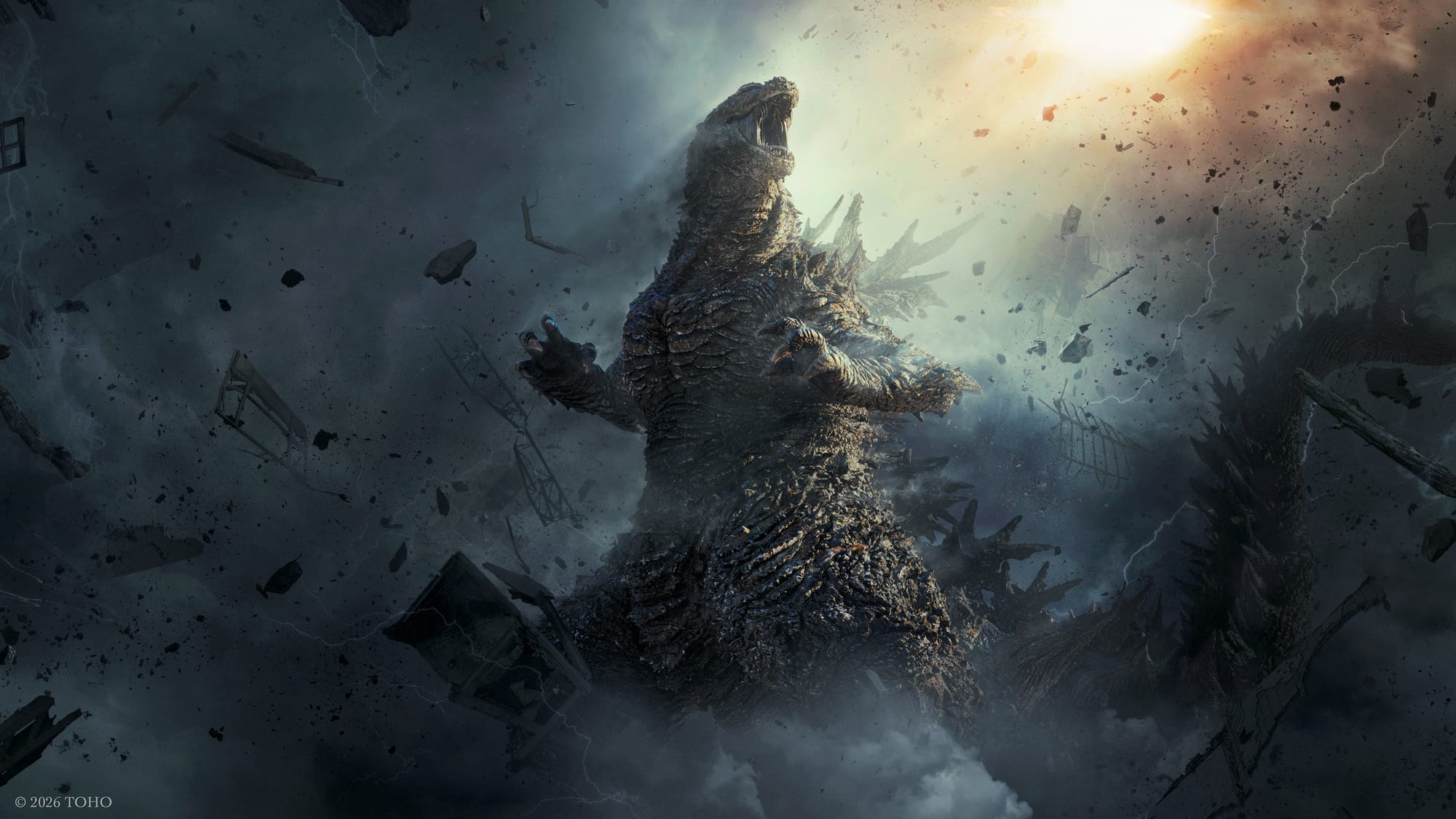
What makes these versions of Godzilla and Ghidorah so uniquely formidable in Minus Zero is that both monsters have mutant, regenerative abilities that enhance the allegorical qualities of each character. Godzilla, of course, has always represented the specter of nuclear devastation – the fear of another Hiroshima or Nagasaki, of a Japan re-destroyed by the depravities of war. And this metaphor becomes more explicit when we see how certain characters and entities hope to utilize the monster’s destructive power. Ghidorah, meanwhile, chases stormy weather across the country, which links it with natural disasters such as earthquakes and (increasingly frequent) typhoons.
But these new powers, put on display in the bravura action setpieces that make the film even more visceral and spectacular than Minus One, make the eternal recurrence of these monsters much more impactful both inside and out of the bounds of the film’s world. They are manifestations of both natural and unnatural forces of death and destruction, and Yamazaki cannily lets them be as fearsome and vicious as the phenomena they represent. The eventual battle between the two monsters is one of ripping and tearing, all teeth and claws, a brutally nasty scrap that’s certainly one of the series’ most violent and gory. The film’s score by Naoki Sato enhances the feelings of awe and terror the monsters evoke with alarm-like strings and ominous choir vocals.
Of course, the human characters in the film suffer in more ways than one. Charged with dealing with the kaiju are the returning cast of Minus One: Shikishima (Ryunosuke Kamiki), the former kamikaze pilot who reluctantly returns to the cockpit to help quell the beasts; Noda (Hidetaka Yoshioka), the now-leader of an anti-kaiju task force who recruits Shikishima from his modest family life; and Noriko (Minami Hamabe), Shikishima’s wife, whose survival of Godzilla’s last attack gives her an ability that makes her uniquely suited to assisting in the new fight. They’re joined by Aoyama (Masami Nagasawa), a meteorologist who uses weather patterns to track Ghidorah, and Professor Murakami (Min Tanaka), a scientist and perennial survivor of the horrors visited upon Japan during and after World War II. The monsters and their constant recurrence are a source of significant dread and anxiety for the humans, who have already suffered war and disasters and are constantly re-traumatized by successive crises. Shikishima understandably freaks out when he learns of Godzilla’s revival, for instance.
Yet the enhanced emphasis on fear and trembling also forces Yamazaki to downplay one of the things that made Minus One so indelible, its human drama. The patchwork of characters in this sequel make it a far more scattershot narrative than the first film’s tale of guilt and redemption amid the ruins of postwar Japan. Minus One was a Godzilla movie, but it was about Shikishima as an individual and his inner turmoil as much as it was about the kaiju. In Minus Zero the monsters are prioritized and the humans are narratively dwarfed, with character arcs that don’t feel nearly as full and cathartic as in the first film.
Certainly, Minus Zero is a step forward from its predecessor in terms of spectacle and fanservice. I roared with joy at the film’s most indelible monster moments. It’s a shame that comes at the cost of what made the first film so special. Godzilla is never going away, but without the fine storytelling of Yamazaki’s first brush with the franchise, I wonder if the next time he stomps back into theaters will be an occasion to dread rather than celebrate.