The Edo-Tokyo Open Air Architectural Museum, located in west Tokyo’s Musashi-Koganei neighborhood, was founded in 1993 to preserve some of Tokyo’s everyday architectural treasures. Standing at the centre of Koganei park, the museum has assembled a world between place and time, preserving a cross-section view of Tokyo past.
The museum is divided into three zones: West, which focuses on the shifting style of Tokyo from the Edo period to the 1950s, Center, which preserves the ostentatious Kokaden palace and the stately home of assassinated prime minister Korekiyo Takahashi, and East, which collects a high-street of historic storefronts from across the city.
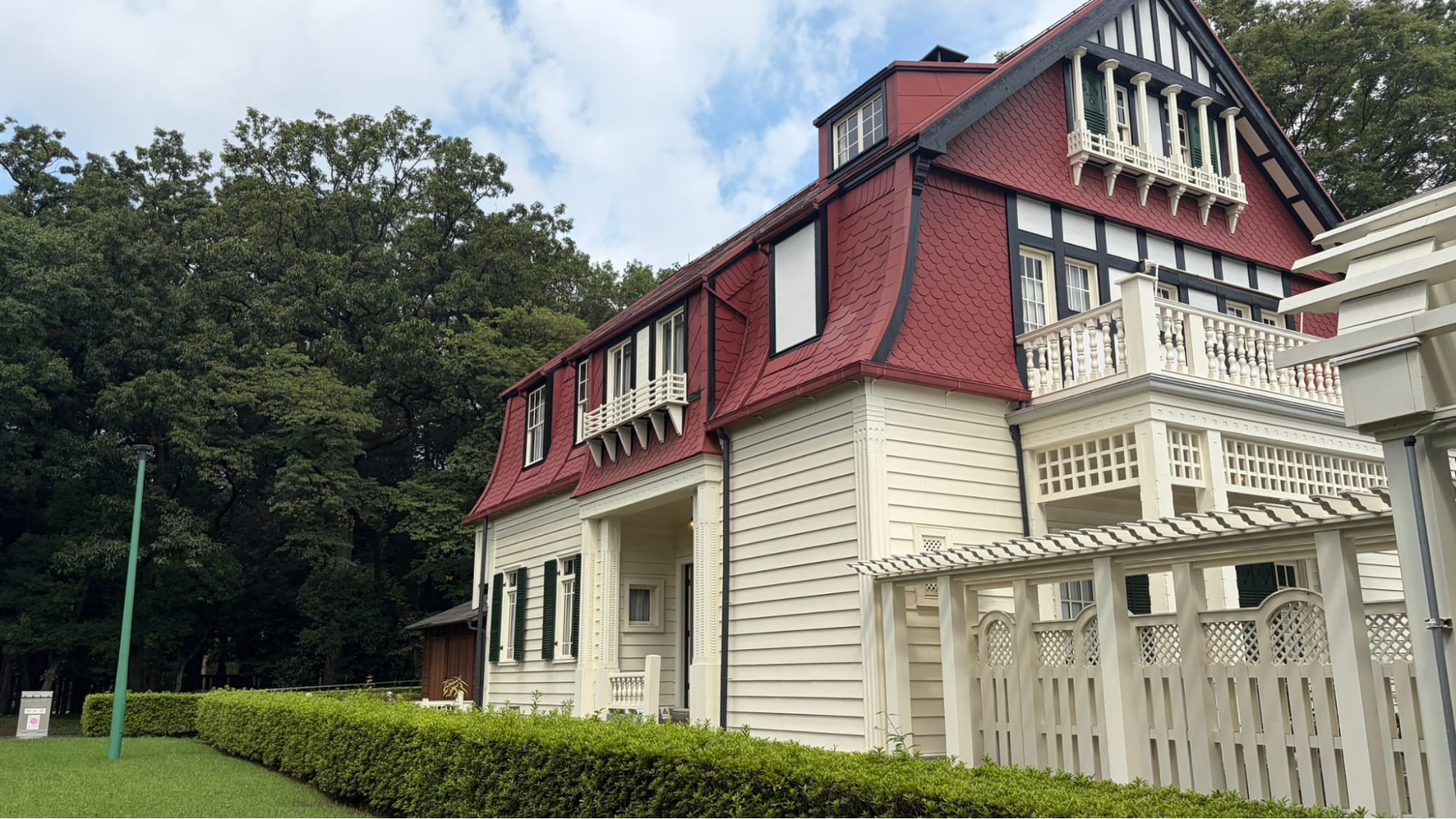
Walking the grounds of the village, I was impressed by the variety of architectural styles displayed throughout the grounds. The three-storied house of architect Georg de Lalande, for example, resembles a Jugendstil interpretation of a classic German house. After the architect’s death, the building would become entangled in the lives of two important men who shared the surname Mishima— becoming home to Calpis creator Kaiun Mishima in 1953, the Lalande house would serve as inspiration for Yukio Mishima’s 1955 novel Kyoko’s House.
The rest of the area showcases the shifting shape of style over the 20th century: Across from the Lalande house stands the 1930s Tokiwadai Photo Studio, a prime example of Modernism’s stylistic influence on imperial Japan. Further along stands the Kunio Maekawa house, a pioneering fusion of midcentury modern and the Japanese aesthetic.
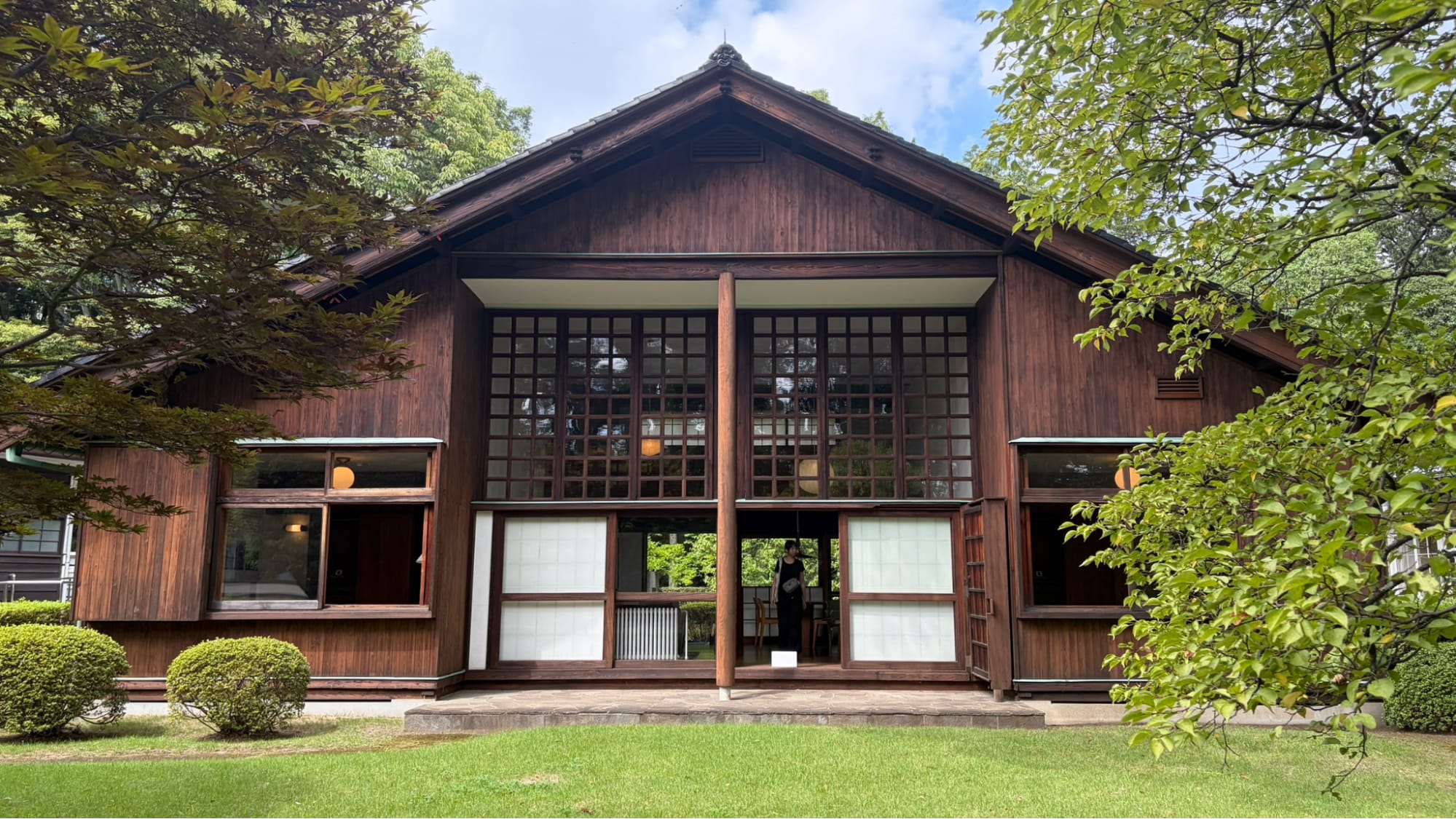
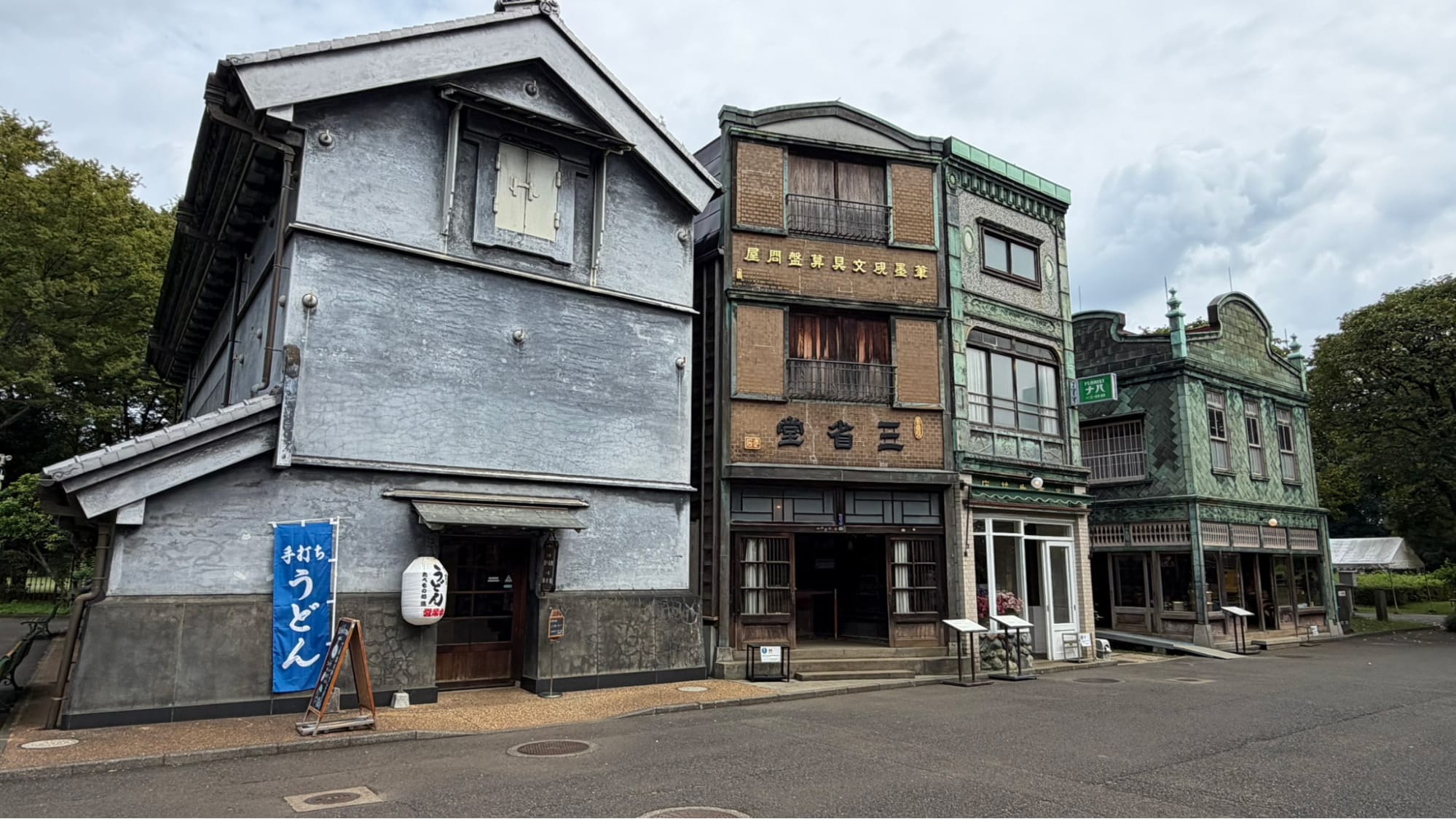
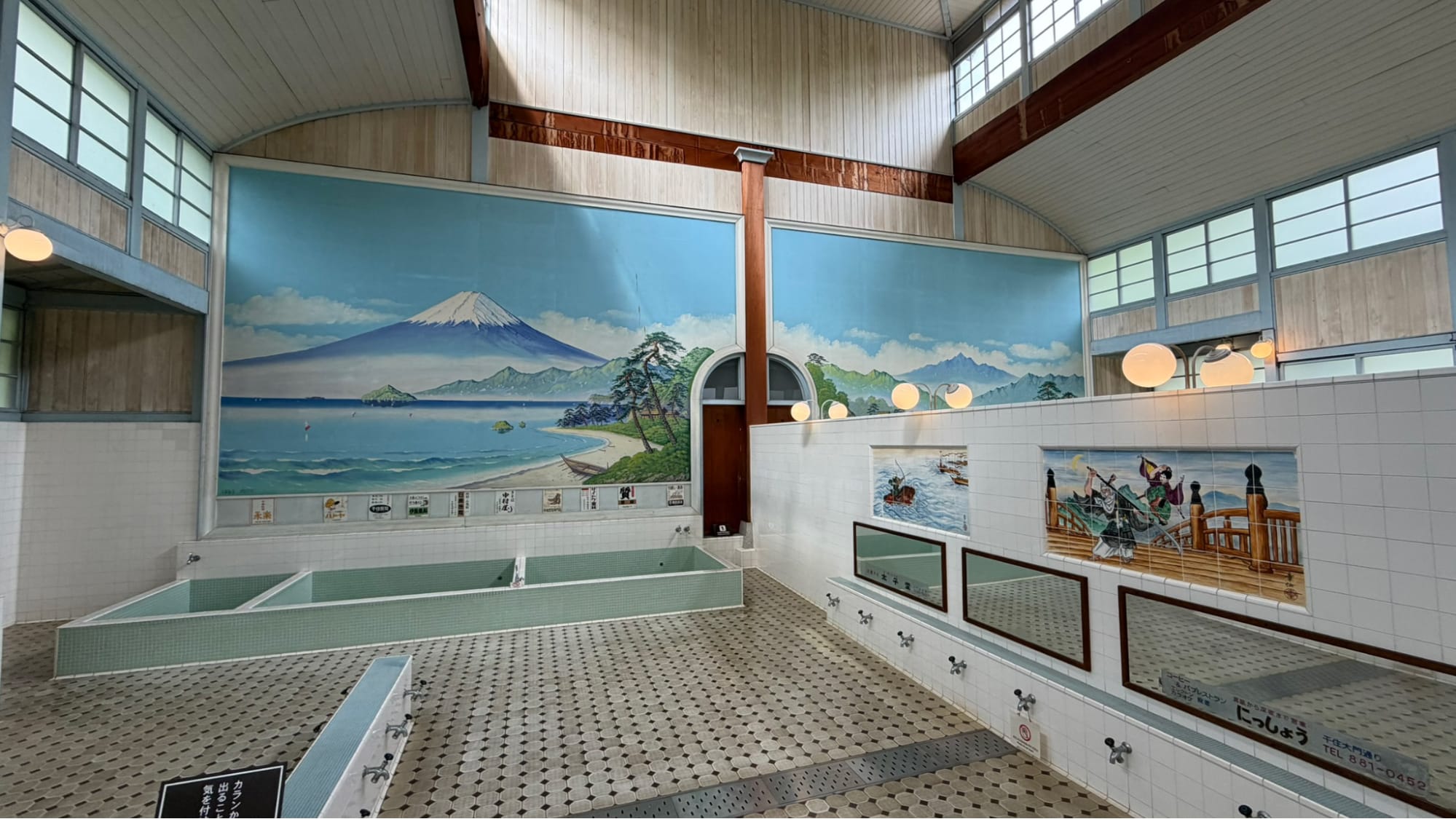
While the western side of the museum juxtaposes buildings of differing eras and styles against one another, the eastern side constructs an imaginary high-street from stores and restaurants that could well have existed alongside one another. The townscape features storefronts selling flowers, stationery, kitchenware, umbrellas, cosmetics, and groceries, the row of copper-plated facades culminating at the tiled roof of a grand 1929 bathhouse.
As I wandered the museum, I began to imagine something strange: although these buildings made convincing neighbors, the street was actually assembled with structures whose origins spanned distances and decades. How might a map of Tokyo appear if you were to fold it until each origin converged at their new home? How big of a map might you need to do so legibly? Would that new shape be anything recognisable? It would be a nice surprise to discover that you’d folded a crane, for example. Perhaps you’d reveal some deep, secret truth about the city. I began to feel a little disoriented, as though stepping in and out of any building might whisk me back to another place and time.
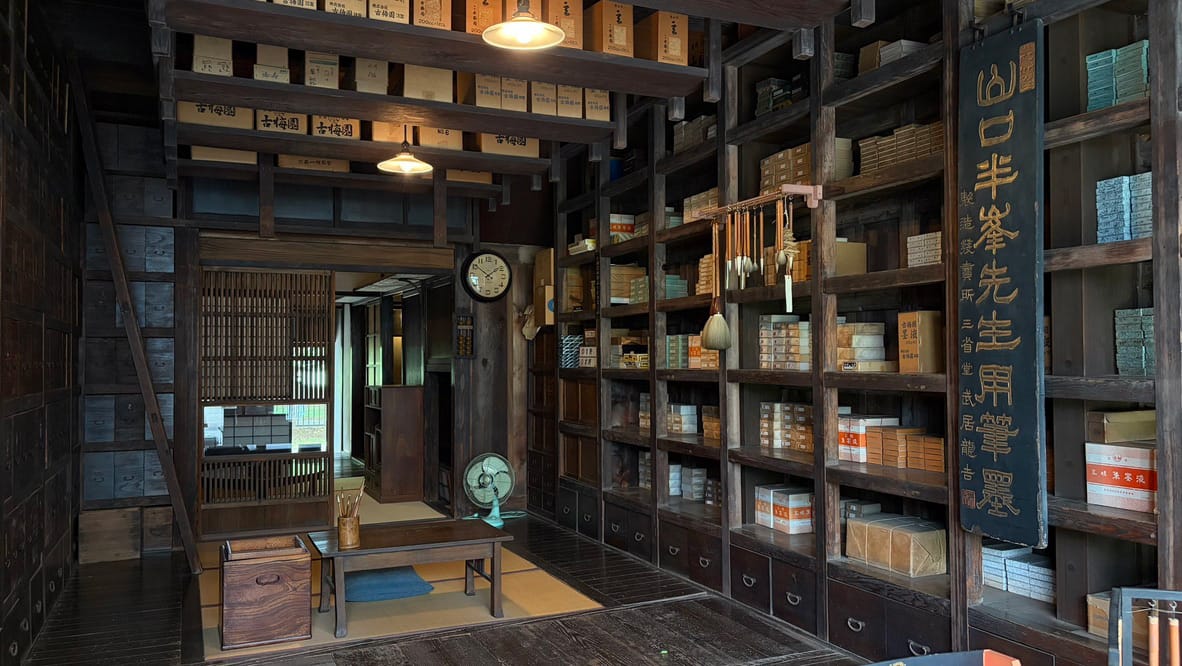
If the supernatural atmosphere of the retro townscape feels unexpectedly familiar, it’s not just you. The museum is a favorite source of inspiration for Studio Ghibli, whose animation offices (closed to the public) are a short walk from the museum. The grand bathhouse and mishmash facades of the eastern high street were a direct inspiration for the ghost town setting of Spirited Away, with the stationery store’s uncountable wooden drawers serving as an inspiration for Kamaji’s boiler-room.
Director Hayao Miyazaki has been outspoken in his appreciation of the park– the museum’s caterpillar mascot ‘Edomaru’ was designed by the acclaimed director. Another notable creative taking inspiration from the museum is Serial Experiments Lain creator Yoshitoshi ABe, whose long-awaited followup ‘Despera’ explores an alternative vision of 1920s Japan. You can watch a ABe exploring the park in this interview from 2018.
The Edo-Tokyo Open Air Architectural Museum is a perfect visit for anyone with a passion for architecture, history, or design, and makes a great excursion for Ghibli fans visiting West Tokyo for Mitaka’s Ghibli Museum. For those seeking a wider history of Japan's crowded capital, the Edo Tokyo Museum in Sumida is another great visit– and its indoor setting may be preferable on particularly humid or rainy days.
| Edo-Tokyo Open Air Architectural Museum | |
|---|---|
| Website | tatemonoen.jp/english |
| Admission | Adults: ¥400 | College Students: ¥320 | High Schoolers: ¥200 | Children 12 and under: Free |
| Hours |
April–September: 9:30 AM – 5:30 PM October–March: 9:30 AM – 4:30 PM |
| Closed | Mondays, New Year's holidays |