There’s a specific turn-of-the-millennium ennui to All About Lily Chou-Chou that makes Shunji Iwai’s classic such an enduring yet incomparable classic; it’s a convergence of the rise of the internet, the turn of the millennium, the changing fate of Japan’s future, and the growth of digital filmmaking. It’s a film that could not have been made sooner in the themes and ideas it explores, and due to the development of technology, could not have been made at any moment after its release in 2001. Few films capture the specific feeling of that era from the perspective of the left-behind, befallen young like this.
Set in a town on the outskirts of Tokyo, the film follows Yuichi Hasumi, a young boy relentlessly bullied by others in his school whose only escape is the ethereal pop star Lily Chou-Chou. Escaping from the bullies is the headphones that transports him to the supernatural sound of her voice, or the online ‘liliphilia’ forum where he can talk to other fans. It didn’t used to be like this, though. Before discovering their music, the head of these bullies, a boy named Shusuke Hoshino, was actually a good friend, albeit they weren’t exactly the most well-behaved of young students as they stole money and shoplifted.
But Shusuke’s shift to a bully who takes things out on Yuichi pushes him to be further isolated in a world where it can feel like there’s no prospects for the future. Their town offers nothing to excite any of them, leading them to take out their frustrations on each other in increasingly depraved way - the only place to be honest is on an online forum where a shared interest and belief in their soul can push them to be honest and vulnerable. The music is the only escape, though even that can be exploited if the truth behind the screen is unveiled.
The film is a non-linear, dreamy story driven by an idea more than its narrative. At its core, this is a story of young people without a path for a brighter future, with Lily Chou-Chou being the only hope they can cling to and thus consuming their identity into an otherworldly space beyond the physical. The real world, after all, is driven by trauma and the decline of a society that once seemed to have everything together. Lily Chou-Chou and her sound, a mix of Bjork and Debussy, is unclouded. If you don’t believe in the future, why would you fight for the real world anymore? Wouldn’t the virtual, and its endless potential, become the place you commit your true self?
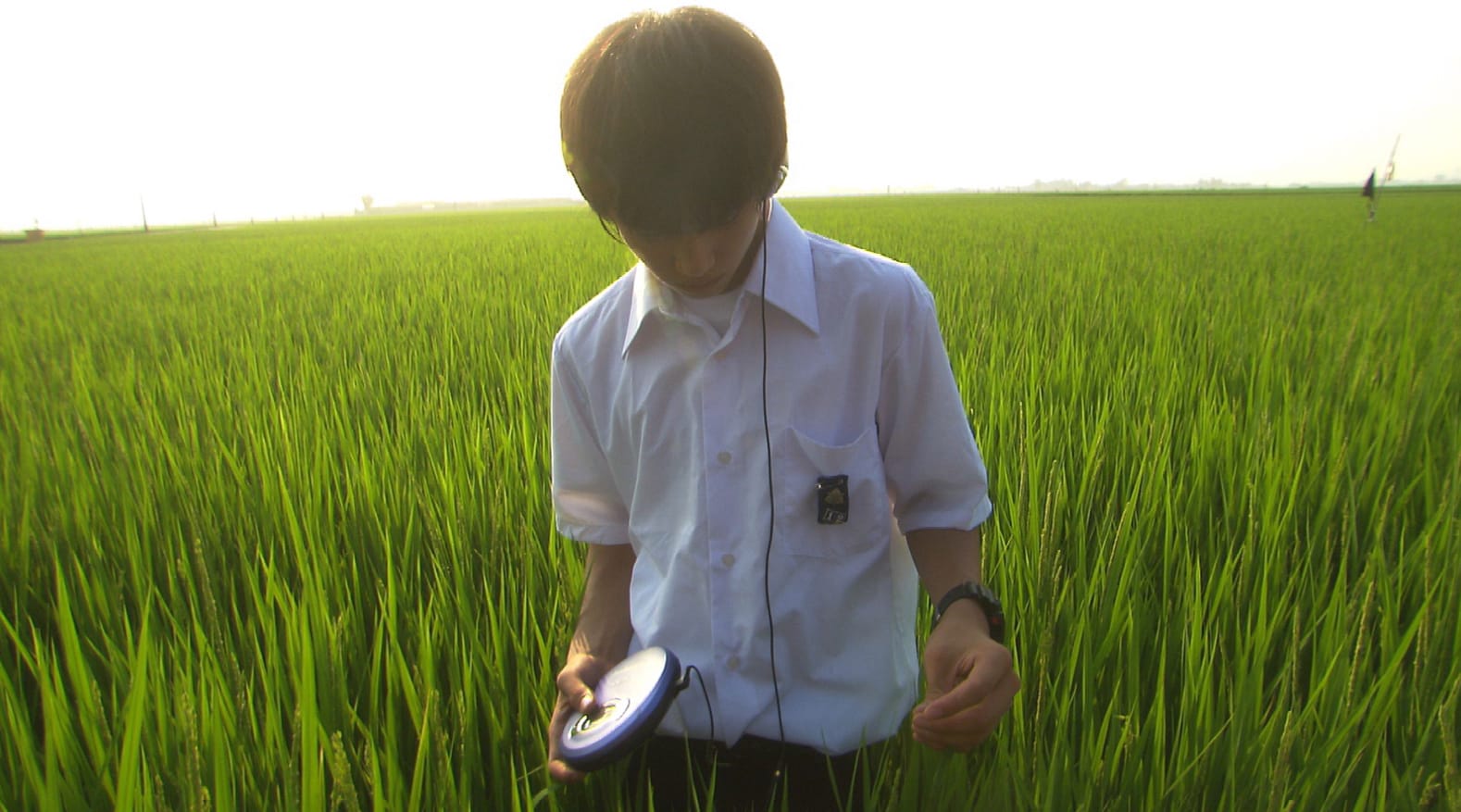
Notable to discussing this film is its origin: not an original story or a traditional book, but adapted from a real virtual forum created as a social experiment for people to role-play a fascination with a non-existent musician. It seeps into every aspect of the story. The opening minutes of the film are almost beyond description, set in fractured shots of a field of rice with Yuichi wandering through, holding his compact CD player and listening to the music of Lily. Popping on screen are typed messages from the forum, all extracted from that place and used for this story, that give us an immediate impression of Lily being less a person we should view as real (despite truly existing in this world) and more a figure for people to project themselves towards.
People cry of their love for what they think she is, discuss her sound and what it all means. All while in the real world, it’s disorder. Shoplifting, egged on or done to lash out at a world that no longer cares, is common. Even when we flash back to before Yuichi’s current bullying, and these two boys were friends as part of a larger group the idea that a rule of respect and order existed in the minds of these children is soon disproven, replaced with their wanton theft of thousands in cash from a salaryman to fund a trip to Okinawa.
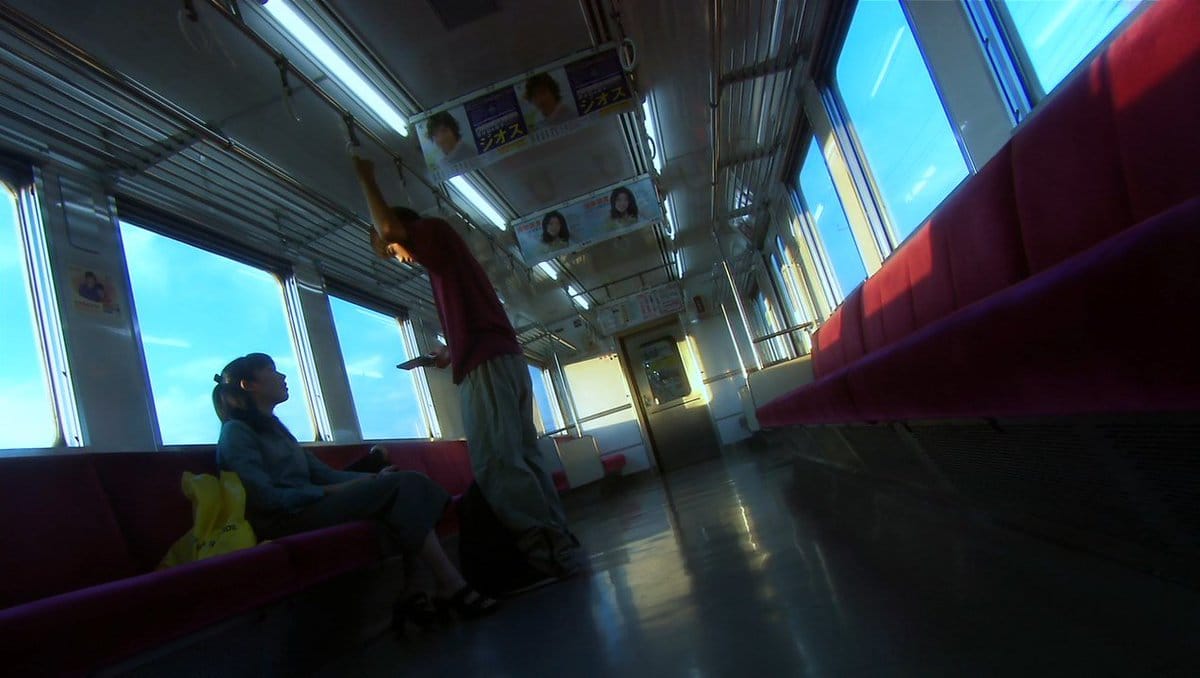
For these kids, they have grown up feeling there is nothing left for them. The economic miracle of Japan until the early 1990s is over, replaced by a stagnant or shrinking economy and the belief that no one will earn more than their parents, the social contract broken. If they don’t see hope for the future, why protect it? This was the biggest concern for Japanese media and the general public in the 1990s, seeping into movies like Bullet Ballet and Battle Royale and the news reporting of the time as crime states increased.
It also no longer becomes a mutual camaraderie but a selfish fight for your own and a backlash against peers as a way to feel something. They may have suffered trauma, but they take it out on others, sometimes in the most sadistic ways. In one scene, overwhelmed by the crowd puppeteered by Shusuke, Yuichi is forced to strip and masturbate for their amusement in front of them.
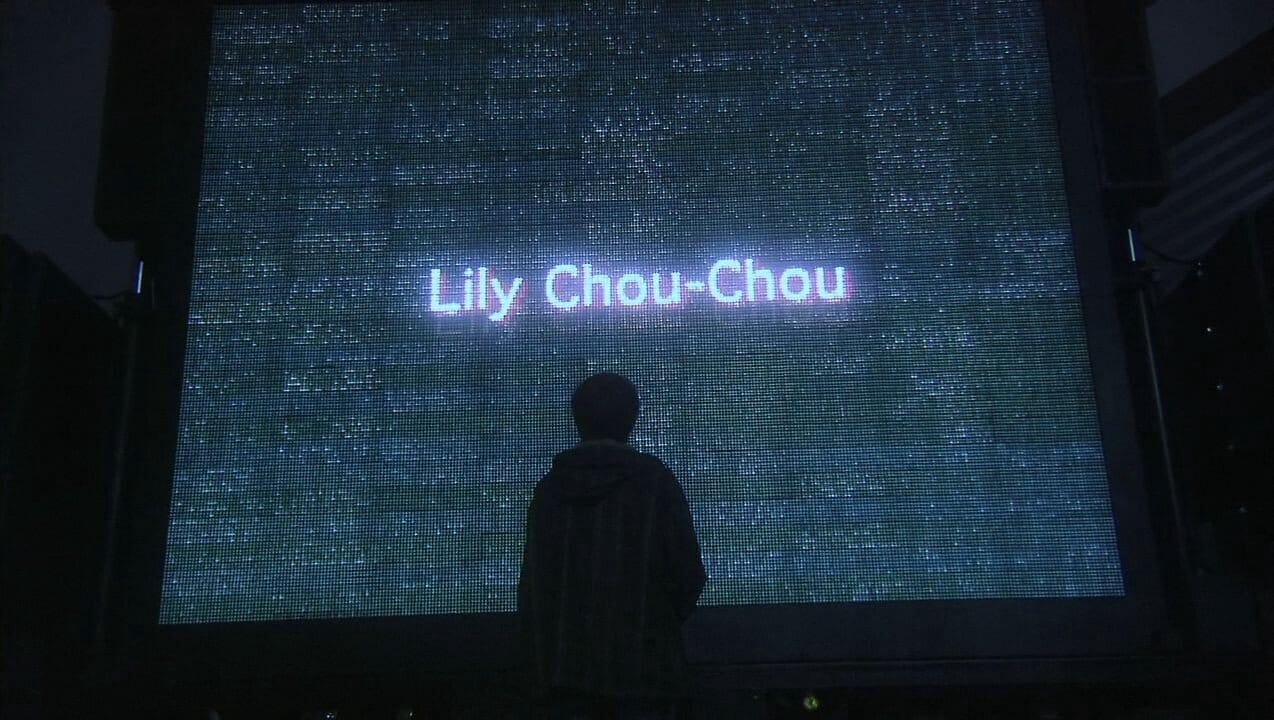
The contrast between the unbreakable despair of a lost future at the turn of the millennium is only sold thanks to its cinematography, taking advantage of the contradictions of technology’s promise and role in the film. The whole thing was shot on early HD digital video cameras to give an artificial look that contrasts the pristine nature of 35mm. Highlights are completely blown out that make the world feel disconnected and cut off, a far cry from the very online message boards, the remnants of IRC communities that almost don’t exist in the modern day. It’s a feeling that can only work by being in the moment, community-driven, and using the cutting-edge to capture an analogue tragedy.
Then there’s the music. Shunji Iwai by the time of Lily Chou-Chou’s development was already funding his work through a broad multimedia strategy that in this case saw him bring on Salyu to create the dreamlike soundscape of the in-world musician at the film’s center. Most enduring of the movie is that sound, lyrics and wistful sounds that scream louder than the characters of a hope for something that can give them escape from the crushing reality they have now fallen trapped within. By us also never seeing the musician herself through the film beyond the already-surreal posters and images for in-world music promotion, she also begins to transform into less of a singer and more of an angel overseeing and guiding them. At least, trying to.
This is just another space where it almost feels ahead of the curve. Musicians we don’t fully interact with or see, keeping anonymity, mirrors the rising anonymous artists that have grown with the internet and digital world. A chance to pour everything out without being exposed, the ability to be perceived having an impact on your ability to be honest. Which is something these characters, amidst their sadistic bullying and hopeless claustrophobia in a town that never changes, heading towards a future that doesn’t exist, want most. It’s also a haunting, endlessly-repeatable album in its own right.
There isn’t another movie like All About Lily Chou-Chou, and there also never could be. The way this ties the music and its ability to resonate and represent people, to the online chatrooms that keeps its message, all while being so specifically grounded from how its shot to the technology and where and when its set, somehow modern and timeless. If you tried to make this same story in the same way today, you simply couldn’t. The technology has moved on, the moment has moved on. But it’s captured here, eternally. That’s the power of cinema.
scrmbl's Classic Film Showcase shines a light on historical Japanese cinema. You can check out the full archive of the column over on Letterboxd.