30 minutes from downtown Shinjuku sprawls Tokyo’s Tama New Town, a massive development that serves as the setting for Studio Ghibli’s Pom Poko (1994) and Whisper of the Heart (1995). The area was developed in 1965 in the midst of Japan’s Post-war economic miracle, and is home to Sanrio’s Puroland theme-park, a massive Parthenon-inspired theatre, and even a monorail.
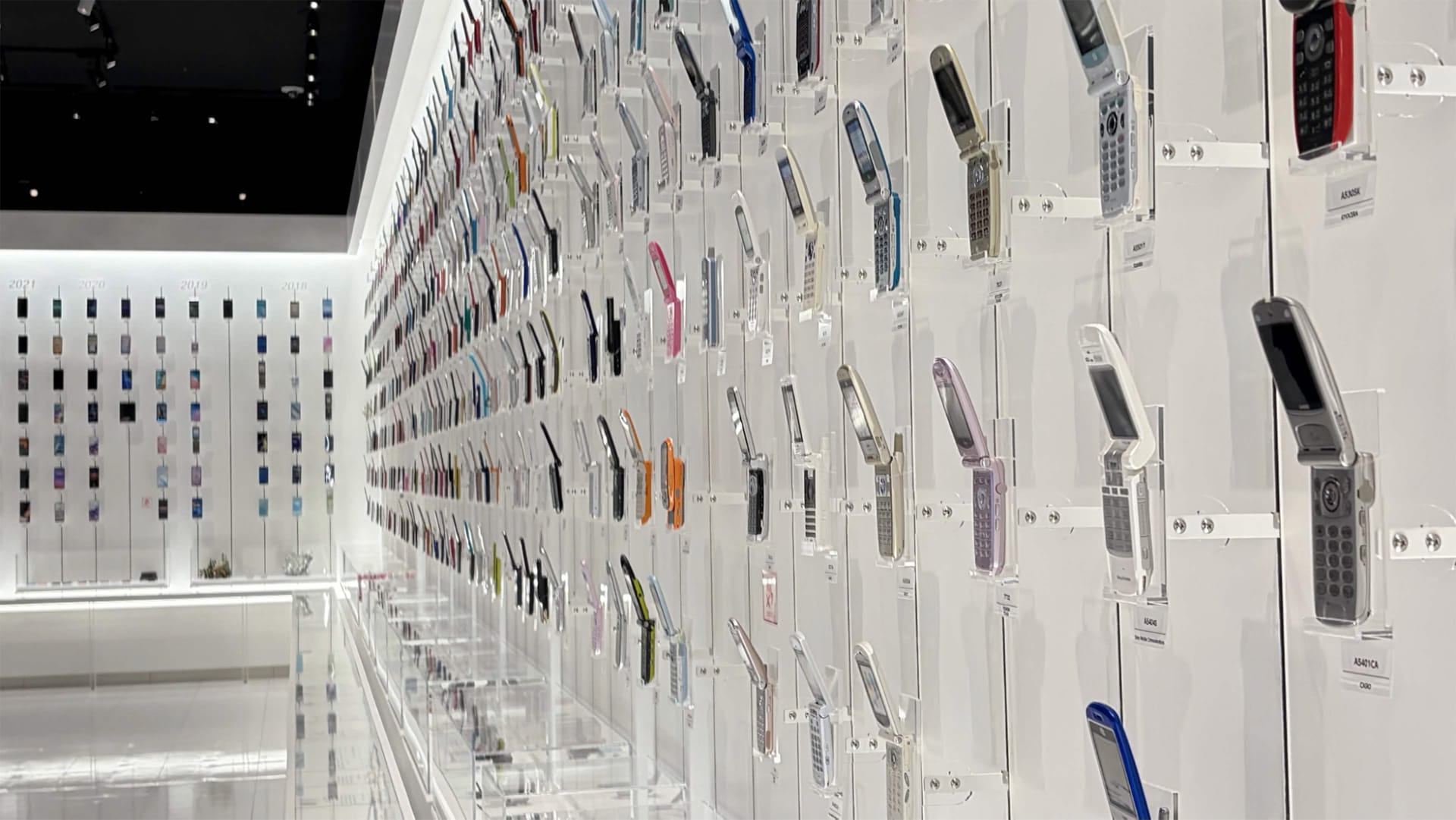
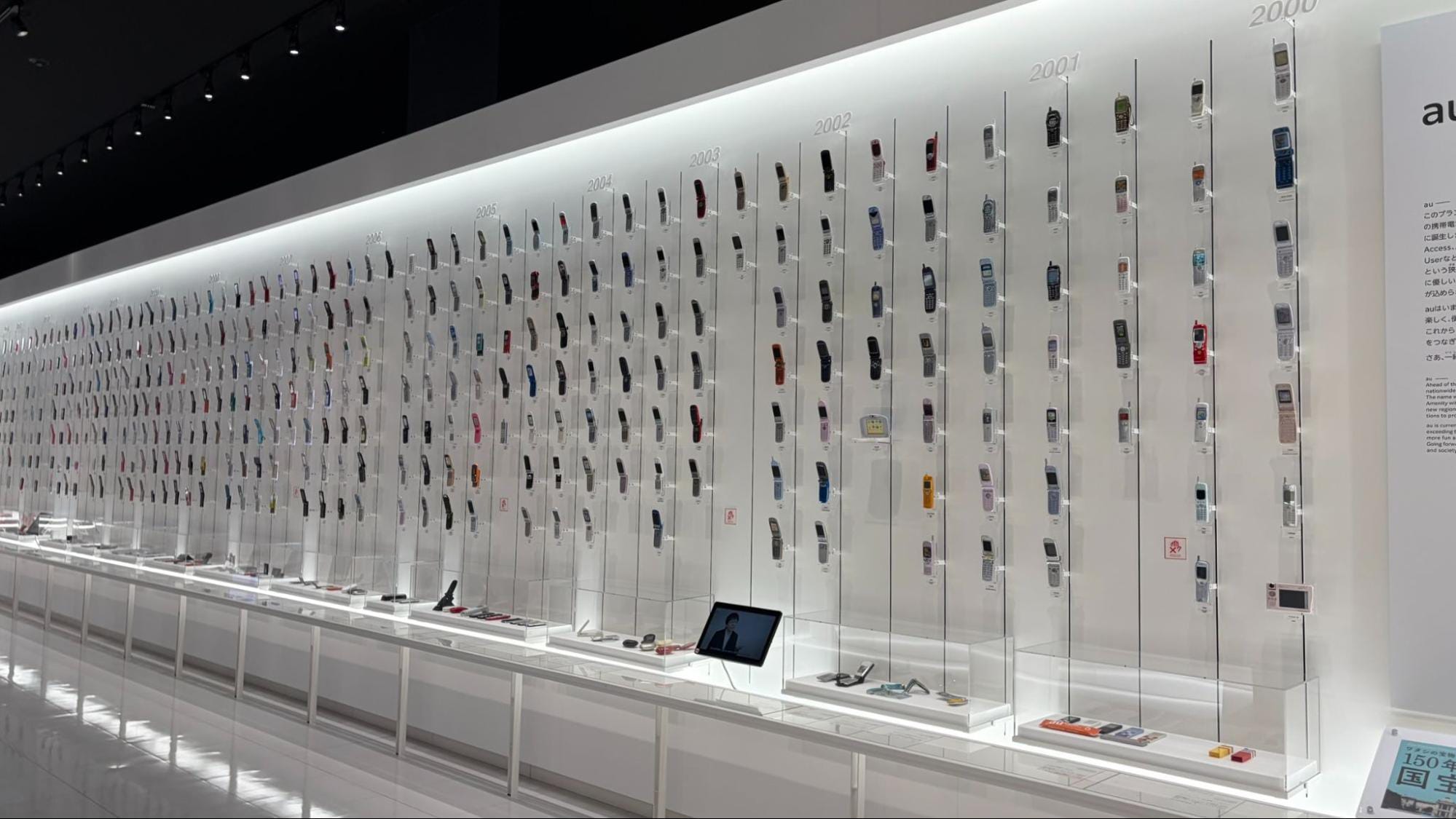
The area is also home to a massive complex of offices for KDDI, one of Japan’s biggest telecommunications companies. Hidden on the second floor of a nondescript office building is a museum displaying over 500 flip-phones from the height of the devices’ cultural dominance.
Since 2000, KDDI has operated au, a major cell-phone carrier and competitor to NTT’s Docomo. Between 1995 and 2015, these two companies were the progenitors of an innovative but isolated market: the Japanese flip-phone boom. These flip-phones were incredibly high-tech compared to those in the west, but the infrastructure they relied on was absent beyond Japan.
The twin forces of geographic isolation and fierce commercial competition drew comparisons to the harsh environment of the Galapagos Islands, the isolated atoll that inspired Charles Darwin to develop his theory of evolution. As such, these phones (Keitai) became known as Garapagosu-Keitai, or Gara-Kei for short.
Although most of the market was wiped out by the advent of the smartphone, the innovation of Japanese flip-phones has continued to exert influence on modern technology: These devices were the first to feature internet connections, texting, cameras, mobile banking, travel passes, and emoji.
The cutthroat competition of the mobile phone market would create a wild west for the bizarre and beautiful, with experimental forms and features springing up and dying out at a precambrian pace. A driving force of this experimental attitude was the au design project, which worked with established designers and artists such as Naoto Fukasawa, Yayoi Kusama, and Marc Newson to re-imagine the forms and features of the mobile phone. The infobar, designed by Naoto Fukasawa, would go on to become a design icon and received a series of successor models, as well as a variety of merchandise based on the beloved design.
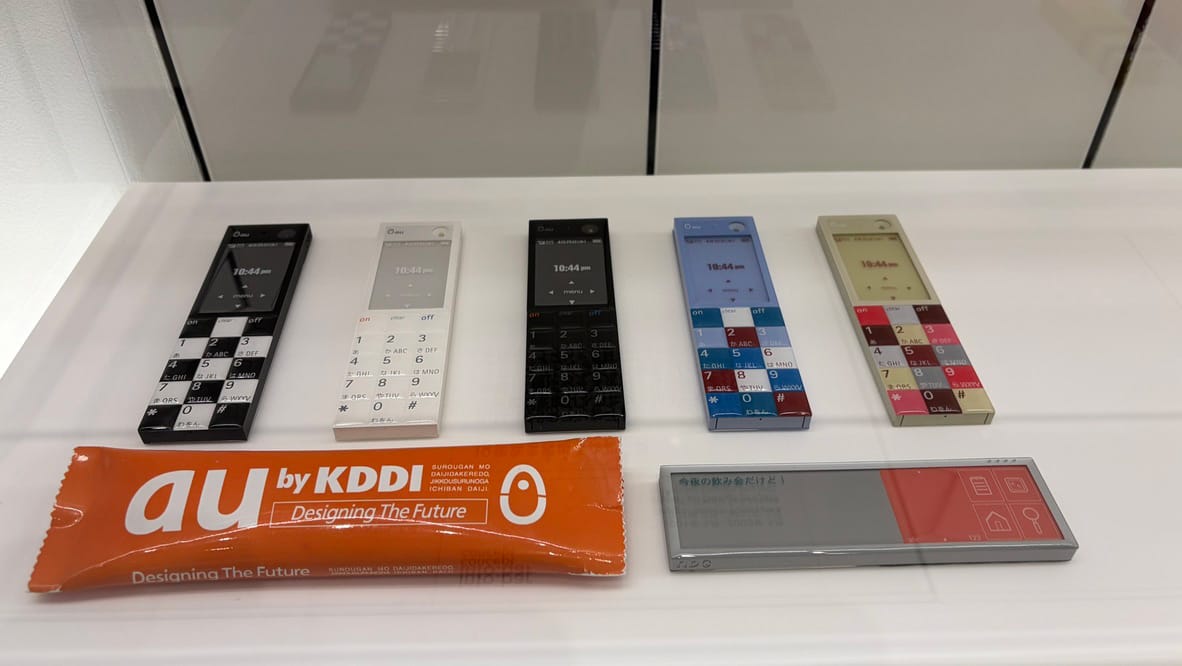
The museum collects hundreds of these flip-phones from the au archive, showcasing their prototypes, evolution, diversity, and eventual replacement by the dominance of the smartphone. Alongside its impressive centerpiece, the museum also explores the history of communications and information technology in Japan. The exhibition details the first efforts to connect the island to international telegraph networks, wartime development of radio technology, and the postwar boom in consumer technology that would eventually give rise to cell-phone technology.
While certainly niche, this museum is a great visit for design and technology lovers. For those wanting to explore an even greater range of obsolete technology, the staff at the KDDI museum also sing the praises of the Extinct Media Museum in Kanda.