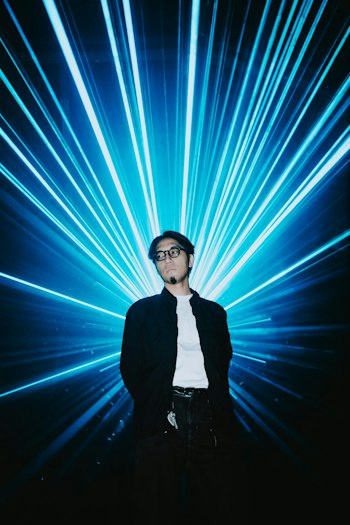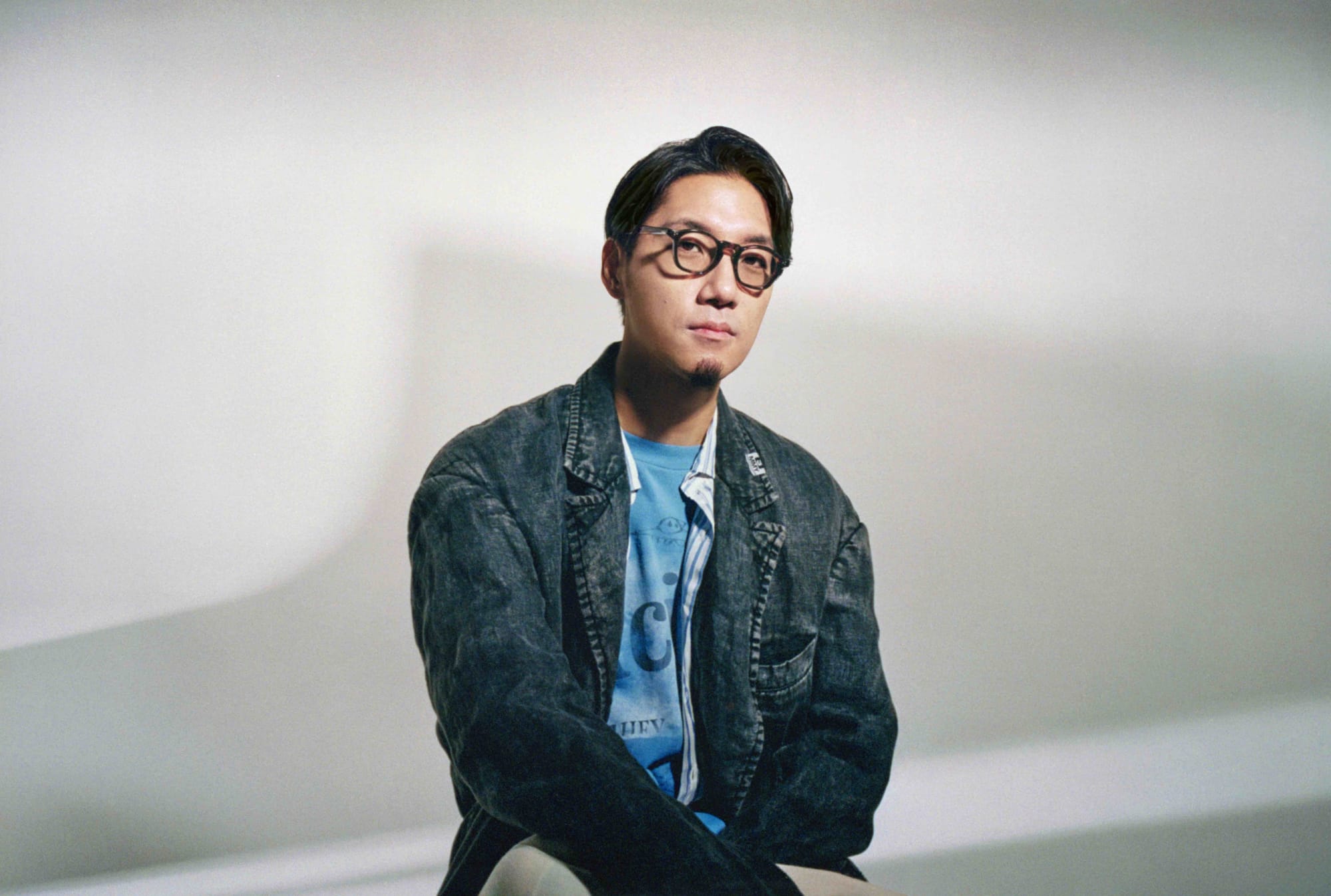
Yusuke Kawai has always offered a critical view of his past work. The artist better known as tofubeats frequently looks back on his songs and albums with a focus on what could have been better, and how the 35-year-old can grow from it.
For latest release Angels On The Dancefloor, Kawai decided to make sure his latest set of tracks got a proper test in clubs and at festivals across Japan, to make sure he wouldn’t have too many second thoughts once his floor-focused latest arrived.
The latest result of the creator’s recent infatuation with the genre “J-Club,” nearly every song on Angels popped up in his DJ rotation over the last couple of years. Browse through the sets Kawai uploads on his YouTube channel and you’ll hear the percolations of “let me tell u” or the house euphoria of the title track long before this set arrived. You’ll also see crowds losing it, particularly to the piano melody and vocal samples of the latter, so much so plenty in the comments practically begging for “Angels” to get a proper release.
“After releasing music before, there have been times I’ve thought ‘I should have done this differently’ or ‘this isn’t quite it.’ So instead of that, this time I wanted to include only tracks that I’d actually played in a club and confirmed ‘this works,’” he tells scrmbl from the offices of his label HIHATT on a Monday afternoon, a space split between a recording studio and space for the less exhilarating elements of running a business.
Angels also acts as Kawai celebrating the club sounds that shaped him. Born and raised near Kobe in Japan’s Kansai region — he remembers shopping at the same supermarket as baseball legend Ichiro Suzuki while he played for the area’s Orix Blue Wave — he gravitated to all sorts of strains of electronic and club music as a teenager, with Angels nodding to his love of house along with French Touch, disco and more.
He played with those interests along with an attraction to Japanese net culture to become a fixture of the country’s netlabel scene, emerging as an early star for Maltine Records under the sample-centric alias dj newtown. From there he started releasing more pop and rap-influenced music via major labels while still staying in the club scene via sets and parties such as the long-running “LOST DECADE.”
He continues to balance both sides, while also expanding into soundtrack work, most recently with his peppy and goosebump-triggering tracks for the anime You and I Are Polar Opposites, which saw its second season premier last week. His focus on getting people moving in physical spaces seems to be growing even more, though.
“When I was younger I wanted to do more DJ-type work, but looking back now, I probably wasn’t able to, simply because I hadn’t spent enough time yet as a DJ or producer. I feel like I’ve become capable of bringing out that kind of strength in a track now.”
Kawai talked with scrmbl about Angels On The Dancefloor, working on anime soundtracks, early memories of the club and much more. This interview has been edited for length and clarity.
scrmbl: We’re already halfway through the year. How has this year been for you? Aside from releasing Angels On The Dancefloor, is there anything that’s really stood out to you?
tofubeats: Hmm, what has stood out… I can’t talk about the details, but I made music for a big theme park in Osaka. Because of an NDA I can’t give the name, but that job was tough yet really fun. But actually…not that much has happened. I guess it was mostly making Angels On The Dancefloor.
Let’s jump into that one then. You’ve mentioned the songs that appeared on Angels are ones you’ve been playing in your DJ sets for a while already. Why did you want to emphasize that?
It started with my previous EP, TBEP. There’s this term, “J-Club,” which is really just a genre classification used by record stores and video rental shops. [laughs] Nobody ever calls themselves “J-Club.” It’s a classification invented for record stores. It’s the same with Shibuya-kei; nobody at the time actually called themselves “Shibuya-kei” either. I thought that was interesting, so we started calling ourselves “J-Club.” There was TBEP, and then NOBODY after that. That’s where the concept really started to take shape. I felt like I could take this idea and push it further, so that’s the direction I went in.
I’ve seen that term hovering around your releases and everything you put out via HIHATT. What about it really connects with you as an artist?
If I had to sum up in one word the music I loved, the stuff I was listening to when I first got into music in the 2000s, I thought maybe that word would be “J-Club.” Maybe the records on that shelf at the rental store were what influenced me the most, and if that’s the case, I thought that giving something back to what influenced me is what I should be doing as a musician. So because it was my first influence, it’s partly about wanting to understand it properly.
There’s also a bit of a gag to it, kind of a joke behind it, but I think it’s an interesting stance to take when thinking about “Japanese-ness.” I mean, we call it “J-Club,” but what we’re actually creating is house music, and a lot of the songs feature English vocals. But I really love that, in a good way, it’s kind of sloppy. There’s nothing strict about it as a genre. So if everyone started defining “this is what J-Club is,” I’d probably stop using the term. I really love that fringe, anything-goes kind of space.
Did being conscious of how the songs on Angels would function in the club or live impact how you approached creating them?
I’ve always been conscious of that to some degree, but this time…hmm, how do I put it, that consciousness…after releasing music before, there have been times I’ve thought “I should have done this differently” or “this isn’t quite it.” So instead of that, this time I wanted to include only tracks that I’d actually played in a club and confirmed “this works.” So even though this is an album, I wasn’t going for the feeling of hearing something for the first time. Honestly, it includes songs people may have already heard, and I was aiming for a kind of strength and intensity that would land with people who listen through DJ sets.
Is there anything from your years as a DJ that you feel you were able to bring to this record?
The more I DJ, the more I realize that house music, or anything that really works well in a club, isn’t easy to make. So I think the kind of sturdiness a track needs to hold up when you’re using it while DJing is something I couldn’t have brought out if I hadn’t kept DJing and making music for this long. To put it another way, when I was younger I wanted to do more DJ-type work, but looking back now, I probably wasn’t able to, simply because I hadn’t spent enough time yet as a DJ or producer. I feel like I’ve become capable of bringing out that kind of strength in a track now.
Are there any moments of playing these songs for the first time live that stuck with you? Whenever I watch one of the DJ sets you upload to YouTube, people go bonkers for “Angels On The Dancefloor” well before it came out.
Actually, when I first made “Angels On The Dancefloor,” I didn’t expect it to turn into a song like that. But it got a huge response at sets like the one at Mori Michi Ichiba Festival last year (above), and that’s when I thought, “maybe this song really does have some strength to it,” and finished it with that in mind. Originally I thought something like “let me tell u” would work better on the floor, but in the end “Angels On The Dancefloor” became the single.
I’m curious, do you remember the first time you ever went to a club?
There are actually a few potential “firsts” here [laughs]. Just in terms of going out for fun, when I was in high school I went with Onomatope Daijin to a venue in Osaka called Bridge, a livehouse that doesn’t exist anymore. Since I was under 18 at the time, I couldn’t go at night, so I went during the day, but that place…how should I put it…the place was like ruins. [lauhgs] It was this completely empty building in Osaka, and only the top floor was the club. It was a real, genuine kind of place. It had a capacity of about 1,000, this place called Bridge, and it had artists ranging from DE DE MOUSE to people who weren’t really DJs doing DJ sets. That kind of event was my first experience of a DJ event.
But the first time I went to an all-night club was when I was 17, at Aoyama OATH. I think Cherryboy Function and peechboy were playing. I was 17, so technically I wasn’t allowed to go in, but a senior of mine took me. That was my first time. After I turned 18, I started going out normally to places in Osaka like Saomai and Noon. As a paying customer, the place I went most often at first was Saomai.
I want to talk a bit more about that OATH night, what do you remember from it?
Cherry Boy Function’s “The Endless Lovers,” for sure, and I also remember when “baby’s star jam” was played. There’s a track on this new album called “Don’t You Know My Love?,” and the kind of thing that inspired that was Mark E, or Daniel Wang’s disco-dub stuff, or Crazy P, or house around 110 BPM, disco-dub type works. That was really popular then, and it made a strong impression on me.
From around age 18 I was already DJing at the same venues as okadada, and I distinctly remember that the first time we played together, he played “Junior Wants To Play.” That left an impression on me [laughs].
Just hearing all these names you were watching as a teenager…DE DE MOUSE, Cherryboy Function…is it weird to now be like in the same world as them? Like going from fans to, dare I say, almost equals?
[laughs] Yeah, one or two years later actually, by the time I was 19 or 20, we started inviting people like DE DE MOUSE and Cherryboy Function to the regular event that okadada and I ran, so within about a year we were already working together. I connected with people pretty quickly.
That’s amazing.
So I got to meet a lot of people pretty quickly. In my early twenties, at 21, I met Yasutaka Nakata, and FPM, and other J-Club legends. I feel like, in my twenties, I basically got to meet just about everyone I wanted to meet. The only ones I never met were YMO. That’s about it, I think.
How has your relationship with clubs changed as you’ve gotten older?
Since COVID, I don’t really go out and stay at clubs all the way until morning like I used to. There’s also my hearing loss…since developing that, it’s less that being in a club itself is bad for me, and more that I’ve been told over and over that staying up all night in general isn’t good for me. And that’s true! So staying at a club until 6 or 7 in the morning, staying on the floor the whole time, that’s decreased a bit.
Even now when I DJ, I try to keep the set from running too deep into the night. Separately from that, I also got married, and I’m already in my late 30s, so staying on the floor all night and really going all out…that’s decreased a bit too, just naturally.
I can understand that, as someone who also in his late 30s feels like I have to prepare for a night out. But for you it is a part of your job, so how do you keep yourself physically able to do all this?
Back in my twenties I used to go swimming and go to the gym, so I was really working on my body a lot. But since the pandemic I stopped all of that. The gym and everything. And lately I’ve put on a lot of weight. My wife got pretty mad at me about it earlier this year, maybe around spring. I wasn’t feeling great either, so lately I’ve been doing squats and other exercises. But I’m not really doing that much anymore — maybe I’ve stopped again. But if I get too heavy I try to slim back down.
I do feel like it has the chance to become a genuinely real problem soon. Also, last year I threw out my neck…twice. So lately I’ve been trying to do some stretching and light strength training. But that’s about it. But hearing what my seniors say, it sounds like I really need to do something or it’ll get bad.
What do you think of the Tokyo club scene nowadays?
I probably haven’t been out enough since the pandemic to know the details, but it feels like the big venues have decreased a bit, and so-called DJ bars have really increased significantly. Rather than the kind of big-venue club events we used to think of, there are more live-show-type events, or DJ acts, more showcase-style offerings, I’d say, and I feel like there are more events where the crowd shows up to watch it like a live performance.
Honestly, right now in Tokyo, there isn’t really anywhere I find especially interesting, and I don’t feel connected to that kind of thing either. I do go out DJing and hanging out, looking around, but I can’t really think of any community or place that stands out as interesting right now.
Also, as I’ve gotten older, I feel like I’ve become less directly involved with the kind of communities younger people are building now.
Gotcha. Let’s pivot back to the release. Is there anything you did on this one that you didn’t try before?
Honestly, I don’t think I was able to properly focus on the kind of intensity a track needs for the floor, even on something like NOBODY. It still only had the concept behind it, without the actual strength. That was something I really wanted to fix in myself. I felt that part was lacking. So in the end, there’s only a few tracks from back then I still play now.
They were just a bit too simple, I think. The kind of song that would fit the scale of the events I play now on the floor just didn’t have quite enough power, and that’s what I wanted to address.
In more technical, musical terms — overall it’s something of a revival of the 2000s, or around 2010. For example, “Be With You” has that French Touch feel, and there are some ’90s elements too, but this time I was conscious of tracing back through the club music I loved and seeing whether I could make something new out of it.
The two exceptions from the club-first development of these songs feature guest vocalists, Hitomitoi on “Don’t You Know My Love” and Satoko Shibata on “Daijyoubu.” Tell me how those came together.
Both of them are vocalists I’ve had an existing artistic relationship with before. For Hitomitoi, there was actually a track I’d been playing in full for about six months, featuring an AI vocal on the hook. I had the melody, but I couldn’t come up with lyrics, and I hadn’t figured out what to do with the song. It wasn’t finished. After thinking it over, I felt Hitomitoi might be able to make it work. Plus, I could ask her to write the lyrics, and I felt she’d write something matching the image I had, so I asked her. It was kind of like sending it to her the way you’d send a package to someone.
As for Satoko Shibata, I’ve been a fan of hers since about nine or ten years ago. I’d always thought I wanted to make a track with her someday. There was even talk of maybe bringing her in for “I Can Feel It,” but I respect her so much that I only wanted to ask her once I could make a song that really suited her. But this time I felt, “maybe it’s okay to reach out to Shibata-san now,” so I went ahead and made the offer.
You mentioned AI vocals when talking about “Don’t You Know My Love.” You’ve played around with that before, most notably on NOBODY, but I’m curious what your relationship to the technology is now?
When it comes to AI software that writes an entire song for you, a lot of people sample from programs like that, but I don’t really use it much for that purpose. I mainly use it for vocals, like when I want to add a chorus to my own track and I want a voice that’s close to mine but not actually my own voice, to add some range. That’s the kind of thing I use it for. I wouldn’t say I use generative AI all that much.
It’s actually pretty hard to use as a tool. I’ve been making music without AI up until now, so I haven’t really done the mental exercise of building it into my process. I’m not against it at all, but I just haven’t incorporated it. That said, I definitely do get help from it with more technical things, splitting stems and automatic mastering, that kind of support.
Shifting to something completely different, this week the second season of You and I Are Polar Opposites started airing. You do the soundtrack for that series, having started that for the first season that aired this past winter. You’ve worked on a variety of soundtracks over the year, what have you learned from those experiences and how did you apply it here?
Every time I make a soundtrack, the content is completely different, and it’s a lot of fun. The very first one I did — actually, the soundtrack itself was never released — was for a Fuji TV drama. For that kind of project, I’d usually receive something like a menu: “a sad song,” “a happy song.” I’d make those and hand them over for them to use.
Later, when I worked on director Ryusuke Hamaguchi’s Asako I & II, I learned more about expressing something closer to atmosphere through sound, rather than writing “songs” in the ordinary sense. It’s different every time, but for You and I Are Polar Opposites this time, it was more like a text-based menu when I was writing the music, only the script existed and there was no footage at all yet, so I worked more in the sense of “this will probably be used for this part of the script.” But the sheer number of tracks was huge. With two seasons, I think I made around 65 songs total. I’d never had a job that massive before, so that was a new experience.
Personally, I found the soundtrack to sound very “tofubeats-like” while I was watching. What did you make sure to prioritize while making the music, and how did the script affect the musical direction?
Since they specifically asked for me, there was some expectation of a “tofubeats-like” sound, but for important scenes, like a love confession scene, I did make the music match the footage pretty closely. I’d make it more dramatic in places like that. There were also cases, after recording, where they’d say, “there’s dialogue coming in here, so pull the music back a bit.” Overall I wasn’t given much strong direction about style or taste.
The one exception was a request for live instruments. I don’t usually use live instruments much, but this time they wanted them utilized in a few spots, so I brought in a string quartet. More specifically, a double quartet, eight players. It was kind of like a “soundtrack within the soundtrack.” I used live strings for the music featured in the film-within-the-show. That was because I was given that instruction, but I found it an interesting new challenge.
What are some of your favorite soundtracks?
I get asked that sometimes, but honestly, there isn’t a soundtrack I love so much that it really stands out. Eiko Ishibashi’s score for Drive My Car was really great, that’s a recent one that comes to mind. I actually haven’t properly watched the film itself, but there was a soundtrack Yoshinori Sunahara did called No Boys, No Cry a long time ago for a movie of the same name. This was back in 2009 for me, when I was still in an audition group at Sony Music called the SD Group, and you could grab a ton of Sony’s promo CDs, so I picked it up from among whatever they had out and listened to it. This was before I’d ever made a soundtrack myself, and listening to it, I remember thinking, “oh, so this is how you do it.” It might be that record.
I don’t think I’ve ever asked you before…when you were younger, were you into anime? Or was that not really your thing?
I’d say…so-so. I’m not a huge otaku, but I do like anime. So I watched things like Neon Genesis Evangelion, but I definitely wasn’t watching anime obsessively the way some people around me were. My favorite is Revolutionary Girl Utena. But I didn’t watch it in real time.
I partially ask because anime has been such a major driver for Japanese music globally as of late, if you think the situation has changed in any way.
I don’t really feel like it’s changed all that much. Japan has always had music tightly linked to anime. But what I can say about recently is that Japanese songs that become global hits are basically always tied to anime. There don’t seem to be any that aren’t, and I feel that’s both a good and a bad thing at the same time. So a lot of people who want to reach the global charts go after anime theme songs. I think the fact that anime has become a kind of tool is a big part of what defines the 2020s.
Yeah, that’s right. When I talk to artists, I always find that people have different opinions on this. Obviously a lot of people see the potential in it — how Japanese music can travel because of anime — but others get worried it becomes too dependent on anime as a vehicle to move it. And I know plenty of Japanese people online have had this same debate, but it’s always interesting to hear what everyone thinks.
But the fact that a song spreads if it gets an anime tie-in, and doesn’t spread if it doesn’t, means, essentially, that you can’t really reach people unless you sign with a major company. I think that’s part of it too. With You and I Are Polar Opposites, it’s not quite that situation, but the fact that I did the soundtrack but not the theme song — that feels very “Japan” to me, in a way.
Alright, I have a few more questions and then I’ll let you get on with your afternoon. What are you doing for the rest of today?
I’m meeting up with Onomatope Daijin for the first time in a while, and the designer Shunsuke Sugiyama along with one more friend who’s a director. I’m really looking forward to it. I haven’t seen Daijin in a long time.
When was the last time you saw him?
Maybe 2020, or something. Oh wait…we performed at the Maltine Records anniversary event last December [laughs].
Yep, very start of December.
Oh, right, right. So it’s already been half a year? Huh, scary. Sorry, that startled me. Scary, scary. Out of nowhere.
Sorry about that! Let’s talk about that Maltine Records show…half a year later, what are your memories of it?
It was also a lot of fun, and it really reminded me that I grew up together with Maltine. I was also really happy to be able to play a lot of dj newtown tracks. Lately, with all sorts of legal issues, you really can’t sample in music as much anymore, and honestly, I don’t even feel like trying because there’s real risk in it now. But still, that time was fun…I really am an old man now. [laughs]
But it was great, really, it felt good to do it again after so long. But I did think, “everyone’s gotten older,” honestly, just a little. Within that first era of Maltine, I think I was probably the youngest member. But I think it’s up to about the third generation now. The younger people are young, but at the top, okadada turns 40 this year, and there’s a generation a bit older than you too, like Silvanian Families. But getting to see people like that again…everyone’s gotten older, but everyone’s still making music.
That’s wonderful to hear.
People haven’t quit. Members who were performing 20 years ago are still showing up and performing quite normally, and that made me really happy. And more members than I imagined are still making music as their job, aren’t they? That’s amazing.