scrmbl contributor Patrick St. Michel runs an email newsletter called Make Believe Mailer, an offshoot of his long-running blog Make Believe Melodies. Every week, he shares essays and round-ups of new Japanese music, from J-pop to independent releases, including albums that might have flown under listeners' radar. Here are some of the highlights from the past month, shared with readers of scrmbl.
Kabanagu — Zu No Zu
Few sounds come across as fun as Lil John letting off a trademark “yeah!” or “OK!” That’s something Japanese artist Kabanagu recognizes, and a detail he peppers into his first solo album in four years Zu No Zu, alongside supermarket-ready MIDI and thin-sliced air horns and distorted voices and guitar galore. It’s all in service of showing how elastic melody can be, and the joy of just playing around with familiar structures.
Before getting into the more oddball details, Zu No Zu largely works because of Kabanagu’s ear for catchy melodies. Whether zipping ahead or playing it a bit slower, his previous solo offerings have always been hooky, and it feels ability to turn even the most left-field collection of noises into something hummable plays a central role in PAS TASTA. This man makes Mizuho Bank ads sound like candy, for goodness sakes! So it isn’t a surprise here that his full range of catchiness is on display, whether on the skip of “Oka Ni Iru” or the guitar chug of “Plot” or the tipsy stumble of “Boro.”
Writing a great melody is probably a blast, but I imagine what is even more of a delight is seeing how weird you can make it while retaining its charm. Can rap samples and skittering percussion become the foundation of a pop song? Kabanagu says “absolutely,” and adds some air horn mutations into the mix to make “Oka Ni Iru” even more unpredictable. There’s a thrill to hearing the Aeon-built synths rubbing up against scream samples and assorted pops on “Magao,” but something downright impressive about Kabanagu making this basket of sounds coherent. Zu No Zu is a playful 19 minutes, showcasing how much pop can be stretched without losing its catchiness. Listen above.
Cosmic — noisepop
The songs on noisepop can be downright spacious in how producer Cosmic puts them together. An acoustic guitar strum here, a wispy keyboard melody there, samples of birds chirping in the background to give it a sense of place. Rather than crowd their songs, Cosmic lets them ripple and fizz, leaving room for guest vocalists to offer heartfelt singing over plinks (nagi on opener “Noise”) or rap (ksr:3 on the lithe “Rasseera”). That skeletal frame holds until the finale “Change,” where something like sonic catharsis emerges via an uptempo twinkling chug. Listen above.
Various Artists — vocagazer
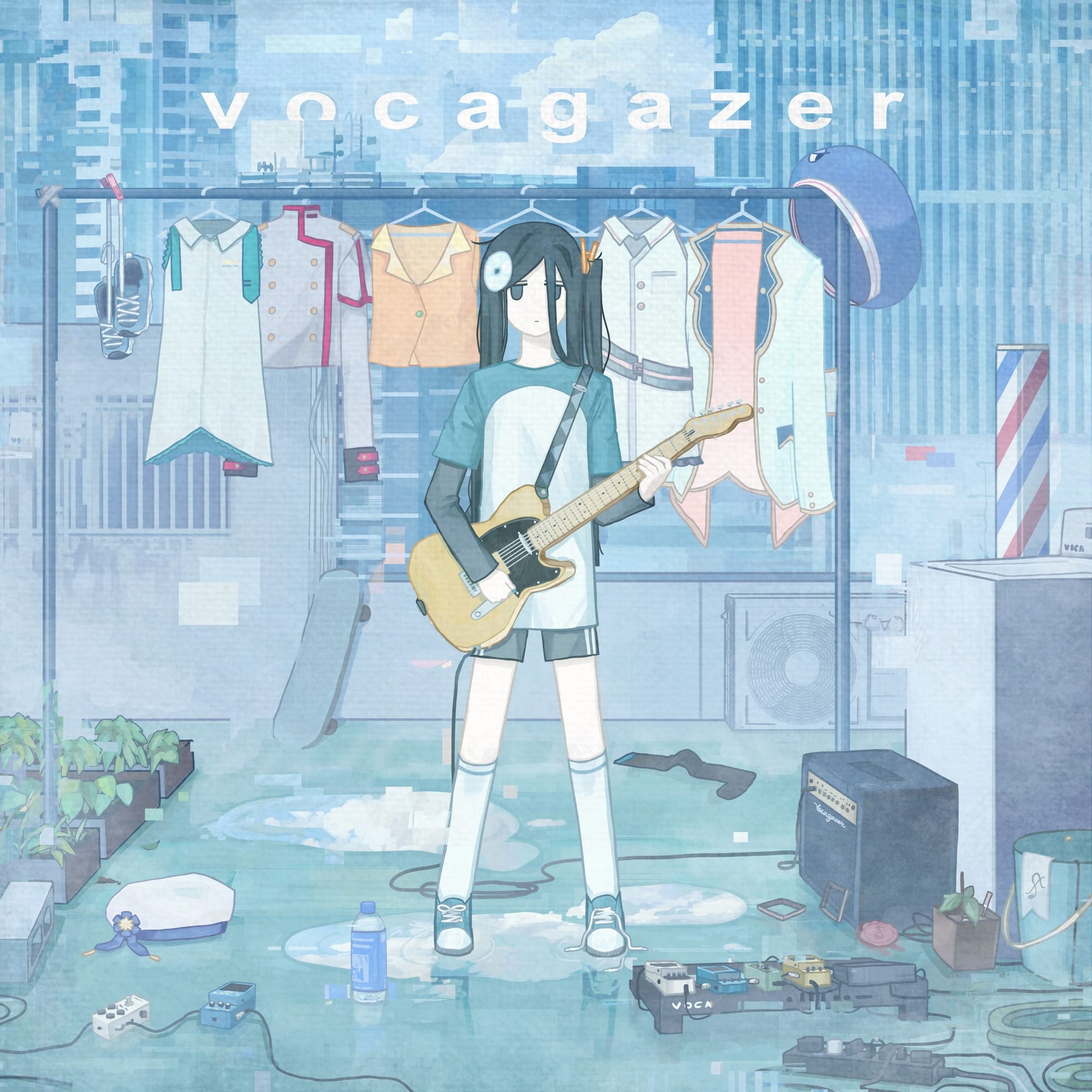
Vocaloid shoegaze is no rare sight around this blog, but what I appreciate about vocagazer — the latest compilation to emerge from the long shadow of Mikgazer Vol. 1 — is the international focus, highlighting how far this merger of rock and singing-synthesizer has come. It opens with Chicago’s quantta offering some emo-tinged melancholy via “my flower will now bloom” before Gaizer Dragon takes it in a more Modest Mouse guitar direction on “Shoe on My Head,” two songs instantly touching on ideas I haven’t heard bubbling up in Japan. That’s the charm of a wide-reaching set like this, showing how a single combination can be interpreted around the globe. Of course, we do focus on Japanese music around here so…also worth noting more chug-dramatics from Magnolia Cacophony, a particularly feedback-laced cut from nerdneko, and an ex. happyender girl spotting that leans into indie-pop! Listen above.
MEZZ — 27
Rapper MEZZ’ testament to turning 27 works best when letting a little bleariness smudge her work. That’s what this period of life is all about — still having the energy to go for it, but with a little more tiredness lurking in the back and a bit more wisdom to know how trying to navigate the world tends to go. The first two songs stand out here, with “c u later” revealing that tension (MEZZ boasting about not sleeping, but also revealing it “could be worse / could be better”) and fully embracing a more complicated look on city life that an early 20-something just can’t grasp. “MUSEUM” takes it a step further…here, MEZZ heads to California and wants to light it up…in order to go to a museum. If that’s not growing up, I don’t know what is. Listen above.
Yuki Chiba — 〇
When Yuki Chiba believes in something, it comes through in his bounce-around rap songs. Which is why his ending theme for Steel Ball Run fell so flat. The MC had a massive uphill battle from the start given the franchise’s history of using non-Japanese music over its credits, and whoever at his label or Netflix gave the greenlight should maybe think this stuff through a bit more next time. The Dr. Luke part didn’t help either.
Yet I’d argue the biggest reason it missed the mark was how dispassionate Chiba sounded. When he’s celebrating friendship or getting female attention, he’s locked in and repetition turns ecstatic. When he’s just saying the name of an anime over and over again like Ted Sarandos is glaring at him…not so much.
I urge all those who first encountered Chiba via this ending…and who are open to actually listening to music outside of two 30 second spans attached to anime…to check out the latest album from him. It’s a far better representation of what he’s all about, both in terms of euphoric shout-along cuts (“Annyeonghaseyo,” “Okane Hitsuyo”) and more melancholy moments showing his range (“Koko Made Kita,” “Charles Chaplin”). For those familiar, it’s one of his more globally minded pushes to date too, as he links up with Juicy J, DRAM, Bb tricks and more, though Chiba’s always operating in his own idiosyncratic way. That Steel Ball Run song is tacked on at the very end, but just cut it off after “Monogatari,” because up to that point it’s a study in what gets his attention. Listen above.